In This Article
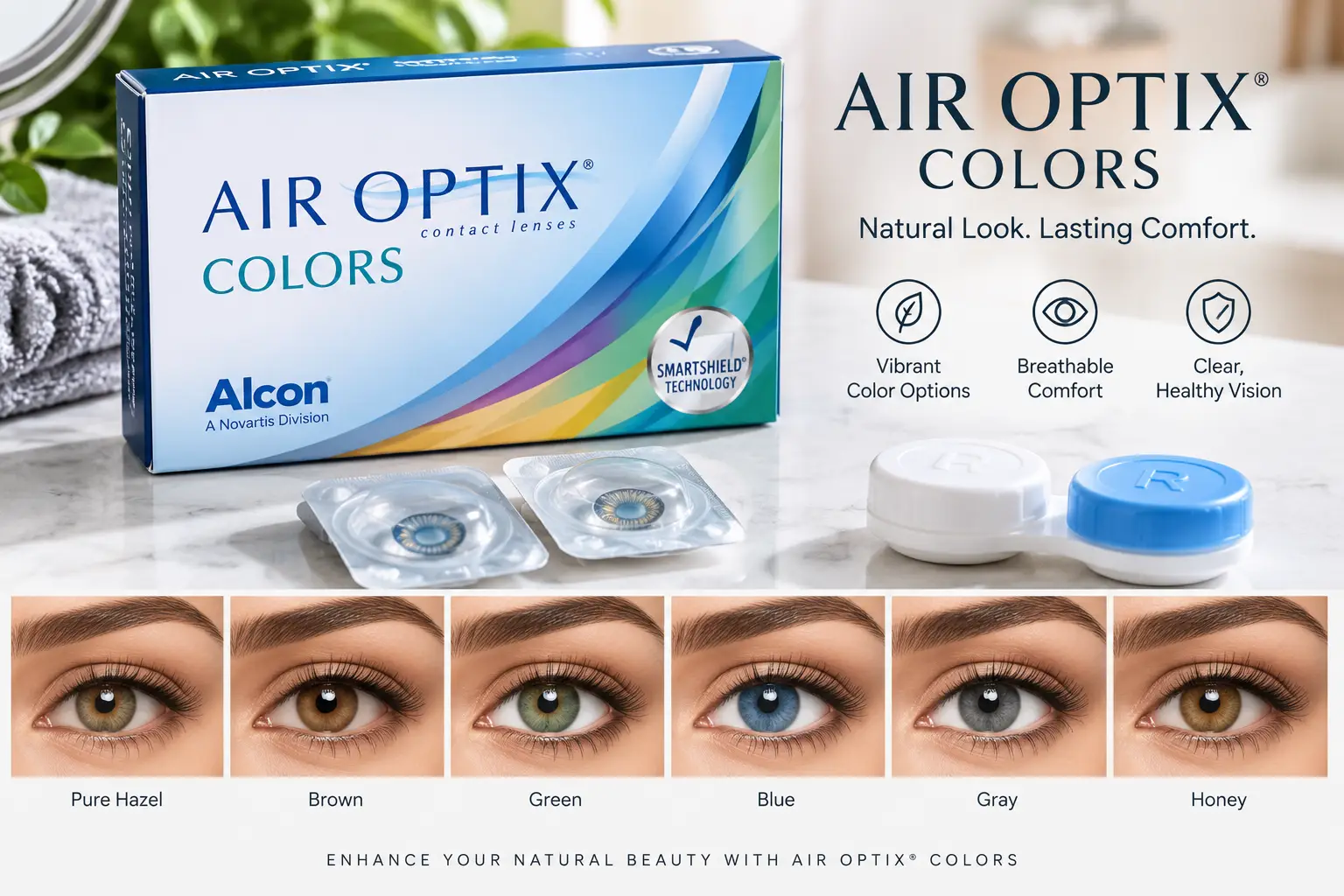
If you’ve ever wondered what it would feel like to look in the mirror and see emerald-green eyes staring back, air optix gemstone green is probably the first name that came up in your research. It’s one of the most searched green colored contact lenses in the United States, and for good reason — it delivers a saturated, jewel-toned green without looking like a costume-shop novelty. Air Optix Gemstone Green is a monthly disposable, silicone hydrogel colored contact lens made by Alcon that uses a 3-in-1 color-blending technique to layer green tones over your natural iris color. It’s available with or without vision correction, but like every colored contact lens sold in the US, it legally requires a prescription and a proper eye exam.
That said, Gemstone Green isn’t the only green lens worth considering, and it isn’t automatically the right choice for every eye color, budget, or wear schedule. Some buyers want a lens that lasts a full year instead of a month. Others care more about daily hygiene than color intensity. And a few just want the most affordable, FDA-cleared option they can find. This guide breaks down seven real green contact lens products, compares them side by side, and walks through exactly how to choose, use, and budget for colored contacts the right way — without any of the marketing fluff you’d get from a standard product listing.
What Is Air Optix Gemstone Green? Quick Comparison of the Top Green Contact Lenses
Air Optix Gemstone Green is a monthly, opaque green cosmetic contact lens made from lotrafilcon B silicone hydrogel, with SmartShield Technology designed to resist deposits from makeup and skincare products. Below is a fast snapshot of how it stacks up against six other real, purchasable green lens options before you dive into the full breakdown.
| Lens | Wear Schedule | Material | Best For |
|---|---|---|---|
| Air Optix Gemstone Green | Monthly | Silicone hydrogel | Bold, saturated color with breathability |
| Solotica Hidrocor Jade | Yearly | Polymacon hydrogel | Most natural finish, no limbal ring |
| Bella Elite Emerald Green | 3-month | Polymacon | Budget-conscious buyers |
| Acuvue Define (1-Day) | Daily | Hydrogel + LACREON | Daily hygiene and subtle enhancement |
| FreshLook ColorBlends Gemstone Green | Monthly | Hydrogel (phemfilcon A) | Same-brand alternative shade to Air Optix |
| Bausch + Lomb SofLens Natural Colors Emerald | Monthly | Polymacon | Legacy wearers already fitted to this lens |
| TTDeye Profound Green | Yearly | Polymacon | Entry-level, plano or prescription |
Looking at the table, the clearest split is between lenses built for intensity versus lenses built for subtlety. The Air Optix Gemstone Green and Solotica Hidrocor Jade both deliver strong color payoff, but they get there through different routes — silicone hydrogel breathability on one side, a limbal-ring-free natural blend on the other. Meanwhile, Acuvue Define isn’t really competing on color saturation at all; its value is in daily disposability and enhancement rather than transformation, which matters if hygiene and convenience outrank drama for you.
💬 Ready to compare specs side by side? Check current availability and pricing for these lenses before you decide. 😊
Top 7 Green Colored Contact Lenses: Expert Analysis
1. Air Optix Gemstone Green — richest jewel-toned saturation
Air Optix Gemstone Green earns the top spot here because it’s the closest thing to a true, richly saturated emerald on the market from a mainstream, widely available brand. The lens uses Alcon’s 3-in-1 color technology, layering three tones to avoid the flat, “painted-on” look that cheaper opaque lenses can have, and it’s built on lotrafilcon B silicone hydrogel — a material that lets significantly more oxygen reach the cornea than older hydrogel lenses. In practice, that breathability matters most for people who wear their lenses eight-plus hours a day; low-oxygen materials are more strongly associated with end-of-day dryness and redness. SmartShield Technology adds a thin protective layer meant to resist deposits from lotion, makeup, and hand cream, which is a real, practical advantage if you tend to apply lenses right after your morning skincare routine.
Based on comparing the spec sheet against competing monthly lenses, Air Optix Gemstone Green‘s standout is the combination of high oxygen permeability with a genuinely bold color — most lenses force you to trade one for the other. Reviews consistently report that the color reads as more “grass-after-rain green” than a subtle enhancement, and buyers with darker natural eye colors tend to get more dramatic, opaque coverage than lighter-eyed wearers. A common theme in customer feedback is that comfort holds up well through the full month, though a handful of reviewers note the lens edge is noticeable for the first few wears — typical of any new lens material. This is a cosmetic lens with an optional vision-correction range, so it does not offer any correction unless you order it in your prescription power.
Pros:
- ✅ Genuinely saturated, jewel-toned green color
- ✅ Silicone hydrogel material breathes well for full-day wear
- ✅ SmartShield layer helps resist cosmetic product buildup
Cons:
- ❌ Monthly replacement means more ongoing cost than yearly lenses
- ❌ Edge awareness reported by some first-time wearers
Prices for Air Optix Gemstone Green typically land in the $30–$45 range per box of two lenses at the time of writing, and given the material quality and color payoff, it represents solid value for buyers who want a premium look without stepping up to a full custom-fit lens.
2. Solotica Hidrocor Jade — most natural finish, zero limbal ring
Solotica Hidrocor Jade takes a different design philosophy than Air Optix: instead of a dark ring around the color to frame the iris, Hidrocor lenses skip the limbal ring entirely, which is exactly why they’re frequently described as the most natural-looking colored lenses available. What that means in practice is the green blends into the edge of your iris rather than stopping abruptly, so from a normal conversational distance the color reads as “your eyes, but green” rather than “you’re wearing colored contacts.” The lens is a yearly replacement, made from a 38% water content polymacon material, which is lower water content than Air Optix’s silicone hydrogel — a trade-off worth understanding rather than glossing over.
What most buyers overlook with Hidrocor is the replacement math: because it’s a one-year lens rather than monthly, the per-wear cost can actually come out lower than mid-range monthly lenses even though the upfront box price looks steeper. On paper, this means heavier long-term wearers save money over a 12-month period, while occasional or seasonal wearers may not get enough use out of a full year’s lens to justify it. Aggregated reviews describe Hidrocor Jade as one of the more comfortable colored lenses for extended wear, with color opacity strong enough to fully cover dark brown eyes — a genuine limitation for many cheaper green lenses that only work well on lighter natural eye colors.
Pros:
- ✅ No limbal ring for the most natural-looking green
- ✅ Full opacity covers dark eyes completely
- ✅ One-year lifespan can lower cost-per-wear for daily users
Cons:
- ❌ Lower water content than silicone hydrogel alternatives
- ❌ Higher upfront box price than most monthly lenses
Expect to pay somewhere in the $50–$90 range for a single pair, depending on retailer and whether you need vision correction, and the value proposition improves the more consistently you wear the lenses.
3. Bella Elite Emerald Green — budget-friendly, FDA-cleared option
Bella Elite Emerald Green is built for buyers who want an FDA-cleared colored lens without paying premium-brand pricing. It’s a three-month disposable lens made from polymacon, with roughly 38% water content, and it ships in pairs meant to last up to three months of regular wear before replacement. Bella positions this as a middle ground between cheap novelty lenses and premium monthly brands, and the spec sheet backs that up — it’s not silicone hydrogel, so it won’t match Air Optix on oxygen permeability, but it also isn’t the ultra-thin, low-durability material found in bargain-bin decorative lenses.
Here’s what to weigh with Bella Elite: the three-month replacement schedule sits in an awkward middle zone — longer than a monthly lens (less frequent reordering) but shorter than Hidrocor’s full year, so the cost-per-wear math depends heavily on how often you actually put them in. Reviews aggregated from Bella’s own storefronts and third-party retailers frequently mention the green tone reading as slightly warmer and less “jewel-toned” than Air Optix Gemstone Green, closer to a forest or olive green depending on lighting. That’s not a flaw, just a different aesthetic — worth knowing before you order if you have your heart set specifically on a cool-toned emerald.
Pros:
- ✅ Lower price point than premium monthly brands
- ✅ FDA-cleared with documented material specs
- ✅ Three-month cycle reduces reorder frequency versus monthly lenses
Cons:
- ❌ Warmer green tone than the classic gemstone shade
- ❌ Lower water content than silicone hydrogel options
Pricing generally sits under $50 per pair, making it one of the more accessible entries here, and the value holds up well for buyers who wear colored lenses a few times a week rather than daily.
4. Acuvue Define (1-Day) — best for daily hygiene and subtle enhancement
Acuvue Define takes a fundamentally different approach than the other lenses on this list: instead of changing your eye color to green, it’s designed to enhance and define your existing iris with a daily disposable lens, using Johnson & Johnson’s LACREON moisture technology and a proprietary process that seals pigment inside the lens material so it never directly touches your eye. If your natural eye color already has green or hazel tones and you want it to look brighter and more defined rather than completely transformed, this is the more honest fit — it will not turn brown eyes green.
The practical upside here is daily disposability. There’s no cleaning, no case, and no monthly deposit buildup to worry about, which meaningfully reduces infection risk compared with reused lenses that aren’t cared for properly. Reviews consistently report that Acuvue Define feels closer to wearing a regular clear contact lens than a cosmetic one, with the added UV-blocking layer as a bonus most colored lens competitors don’t include. The trade-off is obvious: if bold color transformation is your goal, this isn’t the lens, and daily disposables cost more over a year than a monthly or yearly colored lens used at the same frequency.
Pros:
- ✅ Daily replacement lowers infection risk versus reused lenses
- ✅ Class 2 UV protection built into every lens
- ✅ Pigment sealed inside the lens material, not on the surface
Cons:
- ❌ Enhances rather than transforms eye color
- ❌ Daily disposables cost more per year than monthly or yearly lenses
A 30-count box typically runs in the $45–$55 range at the time of writing, and for buyers prioritizing comfort and hygiene over dramatic color change, that’s a reasonable trade.
5. FreshLook ColorBlends Gemstone Green — closest shade match to Air Optix, availability limited
FreshLook ColorBlends Gemstone Green is manufactured by the same company as Air Optix, Alcon, and shares the same “Gemstone Green” shade name and similar 3-in-1 color-blending approach, but on a hydrogel (phemfilcon A) base rather than silicone hydrogel. Here’s the honest caveat every buyer needs before considering this lens: Alcon has been discontinuing FreshLook ColorBlends, with several major retailers confirming the line was phased out starting in late 2024, though some zero-power and select colors remained available afterward while supplies lasted. If you find it in stock, treat it as a limited-time option rather than a long-term brand you can reliably reorder.
Assuming stock is available, what most buyers overlook is that this lens delivers a very similar green payoff to Air Optix Gemstone Green at a lower material cost, because hydrogel is generally less expensive to produce than silicone hydrogel. The trade-off is oxygen permeability — hydrogel lenses transmit less oxygen than silicone hydrogel, meaning extended daily wear may feel drier by the end of the day for sensitive eyes. Reviews collected before the discontinuation announcement consistently described the color as nearly identical to Air Optix’s version of the same shade, which makes sense given the shared manufacturer and color-naming convention.
Pros:
- ✅ Color nearly identical to Air Optix Gemstone Green
- ✅ Historically priced lower than silicone hydrogel competitors
- ✅ 3-in-1 blending technology avoids a flat, opaque look
Cons:
- ❌ Being discontinued by Alcon, with inconsistent availability
- ❌ Lower oxygen permeability than silicone hydrogel lenses
Where still in stock, pricing has generally sat in the $25–$40 range per box, but given the discontinuation, always confirm current availability and freshness before ordering rather than assuming a shelf stock is recent.
6. Bausch + Lomb SofLens Natural Colors Emerald — legacy option for existing wearers
Bausch + Lomb SofLens Natural Colors Emerald is a longtime staple in the colored lens category, built on polymacon with roughly 39% water content and a bi-curve design intended to make handling easier for less experienced lens wearers. Like FreshLook, this needs an upfront honesty check: Bausch + Lomb has been discontinuing SofLens Natural Colors, and several major retailers point wearers toward FreshLook ColorBlends or newer alternatives as replacements. If you’re already fitted to this lens and it still works for your prescription, buying remaining stock can make sense; if you’re starting fresh, it’s a riskier long-term pick than currently produced lenses.
What the spec sheet doesn’t say, but reviews reveal, is that SofLens Natural Colors tends to run slightly more subtle and less saturated than Air Optix or FreshLook’s Gemstone Green shade, closer to what its name suggests — a natural enhancement rather than a bold transformation. The improved color-printing technology, where pigment sits within the lens core rather than on the surface, has historically been praised for comfort during extended wear, and the lens is available in both prescription and non-prescription (plano) versions, which broadens who it fits.
Pros:
- ✅ Subtle, natural-leaning emerald tone
- ✅ Pigment embedded in the lens core for comfort
- ✅ Available in both prescription and plano versions
Cons:
- ❌ Being phased out by Bausch + Lomb, limited long-term availability
- ❌ Less dramatic color payoff than gemstone-style lenses
Pricing has typically ranged from $15–$35 per box depending on retailer stock, and given the discontinuation, this is best treated as a value pick only if you can confirm fresh, current inventory.
7. TTDeye Profound Green — most affordable entry point
TTDeye Profound Green is the budget pick on this list, offered as a yearly disposable lens available in both prescription and plano (zero-power) versions, built from a 38–40% water content polymacon material. TTDeye markets its manufacturing as compliant with US FDA standards, CE marking, and ISO 13485 quality management certification, but because it’s a smaller, direct-to-consumer overseas brand rather than an Alcon, Johnson & Johnson, or Bausch + Lomb product, it deserves a more cautious verification step than the established brands on this list — always confirm current FDA clearance status and buy only through a retailer that requires a valid prescription, exactly as the FDA and AAO both recommend for any decorative lens.
Based on comparing the material specs against the premium options here, TTDeye Profound Green uses a no-limbal-ring design similar in concept to Solotica’s approach, blending pistachio-green tones with lighter veining for a look the brand describes as natural rather than opaque block color. Reviews aggregated across retail listings describe it as a reasonable entry point for buyers who are testing whether they like wearing colored contacts at all before committing to a premium brand, though comfort and material consistency from smaller overseas manufacturers can vary more between batches than from major medical device companies with tighter quality control.
Pros:
- ✅ Lowest price point on this list by a wide margin
- ✅ Yearly wear reduces long-term reordering
- ✅ Available in both prescription and plano options
Cons:
- ❌ Smaller brand with less quality-control track record than majors
- ❌ Requires extra diligence to confirm current FDA clearance before buying
Pricing generally lands under $20–$25 per pair, making it the cheapest way to try a green lens, provided you buy through a retailer that properly requires a prescription rather than one of the unauthorized sellers the FDA specifically warns against.
Comparing the Full Lineup: Features, Price Range, and Best Use Case
| Lens | Wear Schedule | Water Content | Price Range | Best For |
|---|---|---|---|---|
| Air Optix Gemstone Green | Monthly | N/A (silicone-based) | Around $30–$45 | Bold color + breathability |
| Solotica Hidrocor Jade | Yearly | 38% | Around $50–$90 | Most natural, dark-eye coverage |
| Bella Elite Emerald Green | 3-month | 38% | Under $50 | Budget mid-range |
| Acuvue Define (1-Day) | Daily | Not disclosed (hydrogel) | Around $45–$55 | Daily hygiene, subtle enhancement |
| FreshLook ColorBlends Gemstone Green | Monthly | 55% | Around $25–$40 | Air Optix-matching shade (limited stock) |
| B+L SofLens Natural Colors Emerald | Monthly | 39% | Around $15–$35 | Existing wearers, subtle look |
| TTDeye Profound Green | Yearly | 38–40% | Under $25 | Lowest-cost entry point |
Looking at the comparison table above, the split between the two discontinued legacy lenses — FreshLook ColorBlends and B+L SofLens Natural Colors — and the actively produced options is the single most important factor for a first-time buyer, since availability risk outweighs a small price advantage. If long-term reorder reliability matters more than upfront cost, Air Optix Gemstone Green, Solotica Hidrocor Jade, and Acuvue Define are the three currently in active, stable production among the options here. Budget-focused buyers without a strong brand preference get the best value-to-risk ratio from Bella Elite Emerald Green or TTDeye Profound Green, provided they buy through a prescription-verifying retailer.
💬 One click helps other shoppers make an informed choice too! 😊
Getting Started: How to Insert, Remove, and Maintain Colored Contacts
The single biggest mistake first-time colored lens wearers make isn’t picking the wrong shade — it’s skipping proper handling habits in the first 30 days. Start by washing and drying your hands thoroughly before every single insertion or removal; residue from lotion, soap, or makeup is one of the most common causes of early lens discomfort. Use only the lens case and multi-purpose solution your eye doctor recommends, and never top off old solution with new solution in the case — always empty and refill completely, since reused solution loses its disinfecting power fast.
For insertion, place the lens on your fingertip and check it’s not inside-out (it should form a smooth bowl shape, not a saucer with flared edges) before using your other hand to hold your eyelids open. For monthly and yearly lenses like Air Optix Gemstone Green or Solotica Hidrocor Jade, build a simple maintenance routine: rub-and-rinse the lens with solution every night even if your solution claims to be “no-rub,” since the CDC has found that manual rubbing meaningfully improves disinfection over soaking alone. Replace your lens case every one to three months regardless of how clean it looks, and never sleep in lenses that aren’t specifically approved for overnight wear. If you experience redness, pain, unusual discharge, or blurred vision at any point, remove the lenses immediately and see a licensed eye doctor rather than waiting it out — the CDC notes that decorative and colored contact lenses carry the same infection risks as any other contact lens and require identical care discipline.
Real-World Scenarios: Who Each Green Lens Actually Fits
Consider a college student who wants dramatic green eyes for a handful of weekend events and Halloween but doesn’t wear contacts daily — for this profile, a yearly lens like Solotica Hidrocor Jade or TTDeye Profound Green makes more financial sense than a monthly lens, since the cost gets spread across occasional use rather than wasted on unused wear-days before the monthly expiration date. A working professional who wants a subtle, everyday shift in eye color without anyone immediately clocking it as a colored lens is a better match for Acuvue Define or Bausch + Lomb SofLens Natural Colors, both of which favor enhancement over transformation.
Now picture a cosplayer or content creator who needs the lens to read as bold and saturated on camera under studio lighting — Air Optix Gemstone Green or FreshLook ColorBlends Gemstone Green (while stock lasts) deliver the most camera-ready intensity thanks to their 3-in-1 blending technology. And for someone on a tight budget who mainly wants to test whether they even like wearing colored contacts before investing in a premium brand, starting with Bella Elite Emerald Green or TTDeye Profound Green limits financial risk while still requiring — and this bears repeating — a valid prescription and a proper fitting from a licensed eye care provider.
How to Choose the Right Green Colored Contact Lenses
- Confirm you actually need or want a prescription lens. Even zero-power, purely cosmetic lenses are classified as medical devices in the US and legally require a valid prescription and fitting.
- Match wear schedule to your actual usage frequency. Occasional wearers save money with yearly lenses; daily wearers often do better with monthly or daily disposables for hygiene.
- Prioritize oxygen permeability if you wear lenses long hours. Silicone hydrogel materials like Air Optix’s lotrafilcon B transmit more oxygen than standard hydrogel.
- Consider your natural eye color’s darkness. Darker natural eyes typically need more opaque lenses like Hidrocor or Air Optix to fully cover the original iris color.
- Decide between transformation and enhancement. Bold gemstone-style lenses change your eye color; enhancement lenses like Acuvue Define brighten what’s already there.
- Check current brand availability before falling in love with a shade. Some historically popular lenses, including FreshLook ColorBlends and SofLens Natural Colors, are being discontinued.
- Buy only from retailers that require a prescription upload. This is both a safety requirement and a strong signal of a legitimate, compliant seller.
Common Mistakes to Avoid When Buying Colored Contacts
A surprising number of colored lens complaints trace back to avoidable mistakes rather than product defects. First, buying from novelty shops, beauty supply stores, or websites that don’t ask for a prescription is illegal under federal law and dramatically increases infection risk — the FDA explicitly warns that decorative contact lenses sold without a prescription have caused serious injuries, including corneal ulcers that can progress to vision loss within 24 hours. Second, assuming a “zero power” or plano lens doesn’t need professional fitting is a common and dangerous misconception; base curve and diameter still need to match your eye’s shape regardless of whether the lens corrects vision.
Third, sharing lenses with a friend to “try before you buy” spreads bacteria and is one of the fastest ways to develop an eye infection. Fourth, sleeping in lenses that aren’t rated for extended wear — including nearly every colored lens on this list — significantly raises infection risk. Finally, ignoring the manufacturer’s stated replacement schedule to “stretch” a monthly lens into two or three months is a false economy; degraded lens material and protein buildup increase discomfort and health risk far more than the money saved.
Colored Contacts vs. Standard Clear Contact Lenses
| Factor | Colored/Cosmetic Lenses | Standard Clear Lenses |
|---|---|---|
| Primary purpose | Change or enhance eye color | Correct vision only |
| FDA classification | Class II medical device | Class II medical device |
| Prescription required | Yes, always | Yes, always |
| Oxygen permeability | Varies; often lower than premium clear lenses | Generally higher in top-tier materials |
| Typical price premium | Moderate to high | Lower for standard designs |
The core takeaway from this table is that colored and clear contact lenses are regulated identically under US law, even though public perception often treats decorative lenses as lower-stakes. In practice, colored lenses can carry slightly higher risk simply because the opaque tint layer sits directly over the pupil and iris, meaning any manufacturing inconsistency has a more direct path to affecting vision and eye health. Buyers switching from clear lenses to a colored option like Air Optix Gemstone Green should treat the transition as a genuinely new fitting, not a cosmetic add-on to their existing prescription.
Safety, Regulations, and Standards for Colored Contact Lenses
Every contact lens sold in the United States, cosmetic or corrective, is regulated by the FDA as a Class II medical device and legally requires a valid prescription — this has been federal law since 2005. The American Academy of Ophthalmology has documented cases of permanent vision damage from illegally sold, non-prescription decorative lenses, and the organization specifically recommends buying only from retailers that require prescription verification and sell FDA-cleared products. On the consumer protection side, the FTC’s Contact Lens Rule requires sellers to properly verify prescriptions before shipping any lens, whether or not it corrects vision.
Practically, this means every product on this list — including budget and overseas options like TTDeye — should only be purchased through a retailer that asks for your prescription details and doctor information before completing the sale. If a site sells colored contacts the way it would sell sunglasses, with no prescription step at any point in checkout, that is a clear warning sign to walk away, regardless of how attractive the price or color looks.
Long-Term Cost and Maintenance
Thinking about colored contacts purely in terms of the sticker price on a single box misses the bigger picture. A monthly lens like Air Optix Gemstone Green, worn daily, requires roughly 12 boxes per year per eye, which adds up meaningfully faster than a yearly lens like Solotica Hidrocor Jade, even though Hidrocor’s single-pair price looks higher upfront. Daily disposables like Acuvue Define sit at the most expensive end of the spectrum for full-time wear, since you’re buying a fresh lens for every single day rather than reusing one lens for weeks or months.
Beyond the lenses themselves, factor in solution costs (typically $8–$15 per bottle, lasting roughly a month with regular use for reusable lenses), a lens case replaced every one to three months, and — critically — the cost of the eye exam and fitting itself, which typically runs $50–$150 depending on your provider and insurance coverage but is not optional for any lens on this list. Total cost of ownership over a year can range from roughly $150 for a budget yearly lens used occasionally to $400 or more for daily disposables used every day, so matching your wear frequency to the right replacement schedule is where the real savings happen.
✨ Don’t miss these exclusive deals! 🔍 Take your look to the next level with this carefully curated lineup of green contact lenses. Click a highlighted item to check current pricing and availability. These picks will help you get the vibrant, comfortable eyes you’re after!
Features That Actually Matter (and Ones That Don’t)
Not every spec on a contact lens listing deserves equal weight. Oxygen permeability (measured as Dk/t) and water content genuinely matter for comfort during long wear — this is where silicone hydrogel lenses like Air Optix Gemstone Green have a real, physiologically meaningful edge over older hydrogel materials. Limbal ring presence or absence is a legitimate aesthetic factor, not marketing fluff — it’s the single biggest reason Solotica Hidrocor reads as more natural than block-color opaque lenses.
On the other hand, marketing terms like “3-in-1 color technology” or “advanced pigment printing” are largely brand-specific descriptions of a similar underlying process — layering multiple color tones to avoid a flat, painted look — rather than proof of a meaningfully superior product. Similarly, claims about a lens being “the most natural-looking ever” should be treated as subjective marketing language rather than a verifiable spec, since natural appearance depends heavily on your original eye color, skin tone, and lighting.
Frequently Asked Questions
❓ Can air optix gemstone green change dark brown eyes to green?
❓ Do I need a prescription for zero-power colored contacts?
❓ How long can I wear green colored contact lenses each day?
❓ Are Air Optix Gemstone Green lenses comfortable for sensitive eyes?
❓ Why were FreshLook ColorBlends and SofLens Natural Colors discontinued?
Conclusion
Choosing the right green contact lens comes down to matching the product to how you actually plan to wear it, not just which shade looks best in a product photo. Air Optix Gemstone Green remains the strongest all-around pick for buyers who want a bold, breathable, reliably available monthly lens, while Solotica Hidrocor Jade wins on natural appearance and long-term cost-per-wear for daily users willing to pay more upfront. Budget-conscious buyers have real, legitimate options in Bella Elite Emerald Green and TTDeye Profound Green, and anyone who wants subtlety over transformation should look at Acuvue Define instead of a full opaque lens.
Whichever lens you choose, the non-negotiable steps stay the same: get a proper eye exam, buy only through a retailer that verifies your prescription, and follow the wear-and-replacement schedule exactly as labeled. Colored contacts can be a genuinely fun way to change up your look, but they’re medical devices first and fashion accessories second — treating them that way is what keeps the experience safe and enjoyable long after the first compliment on your new eye color.
✨ Found the perfect green lens for you? Check current pricing and grab a pair before your next big event! 🌿👁️
Recommended for You
- 7 Best White Colored Contacts With Prescription (2026 Guide)
- Tinted Prescription Eyeglasses for Indoors: 7 Best Picks
- Light Tint Shades: 7 Best Window Films for a Brighter, Legal Look in 2026
Disclaimer: This post contains affiliate links. As an Amazon Associate, I earn from qualifying purchases made through these links, at no additional cost to you.
✨ Found this article helpful? Share it with someone who needs it! 💬🤗