In This Article
If oncoming headlights leave you squinting, blinking, or gripping the wheel a little tighter after dark, you’re far from alone. Millions of US drivers search for glasses to help with night driving every year, hoping for a simple fix to a genuinely uncomfortable problem. The good news: the right pair can make glare feel less overwhelming and driving after sunset noticeably more comfortable. The catch: not every claim on the packaging holds up to scrutiny, and glasses to help with night driving work differently depending on your eyes, your car, and what “help” actually means to you.
This guide cuts through the marketing. We researched seven real, widely available options, dug into what independent vision researchers actually found when they tested yellow-tinted lenses in a driving simulator, and pulled in federal crash data on headlight glare. You’ll get honest analysis of what each pair does well, where it falls short, who should (and shouldn’t) bother, and how to think about the difference between “feels better” and “actually improves your vision.” By the end, you’ll know exactly which pair fits your driving habits, your budget, and your eyes — and you’ll understand the real science behind the claims, not just the sales pitch.
Affiliate disclosure: This post contains affiliate links. As an Amazon Associate, I earn from qualifying purchases made through these links, at no additional cost to you.
Quick Comparison: Glasses to Help With Night Driving at a Glance
| Product | Lens Type | Best For | Price Range |
|---|---|---|---|
| SOJOS Night Vision Glasses | Yellow polarized | Budget first-timers | Under $15 |
| BLUEMOKY Night Driving Glasses | Yellow anti-glare | Best-reviewed comfort pick | Under $20 |
| SUNGAIT Classic Night Driving Glasses | Yellow polarized | Everyday commuters | $15–$20 |
| ROCKNIGHT Wraparound Glasses | Yellow polarized, wraparound | Sport and rideshare drivers | $15–$20 |
| Joopin Fit-Over Night Vision Glasses | Yellow polarized, oversized | Prescription-glasses wearers | $18–$25 |
| Duco Polarized Night Driving Glasses | Amber polarized, TR90 frame | Frequent long-distance drivers | $25–$33 |
| BLUPOND Knight Visor | Yellow polarized, wraparound | Premium build, sport/outdoor crossover | $28–$35 |
Looking at the table above, the entry point and the ceiling in this category aren’t far apart — even the priciest of these seven, the BLUPOND Knight Visor, sits under $35, so you’re rarely paying for dramatically different lens technology, mostly frame quality and coatings. Budget shoppers gravitate toward the SOJOS Night Vision Glasses or BLUEMOKY Night Driving Glasses, while anyone who already wears prescription eyewear will get more mileage out of a fit-over design like the Joopin Fit-Over Night Vision Glasses. Before you pick a favorite, it’s worth understanding what these lenses can and can’t actually do — which is exactly what the next few sections cover.
💬 One click helps other shoppers make an informed choice too! 😊
What Is “Glasses to Help With Night Driving,” and Do They Actually Work?
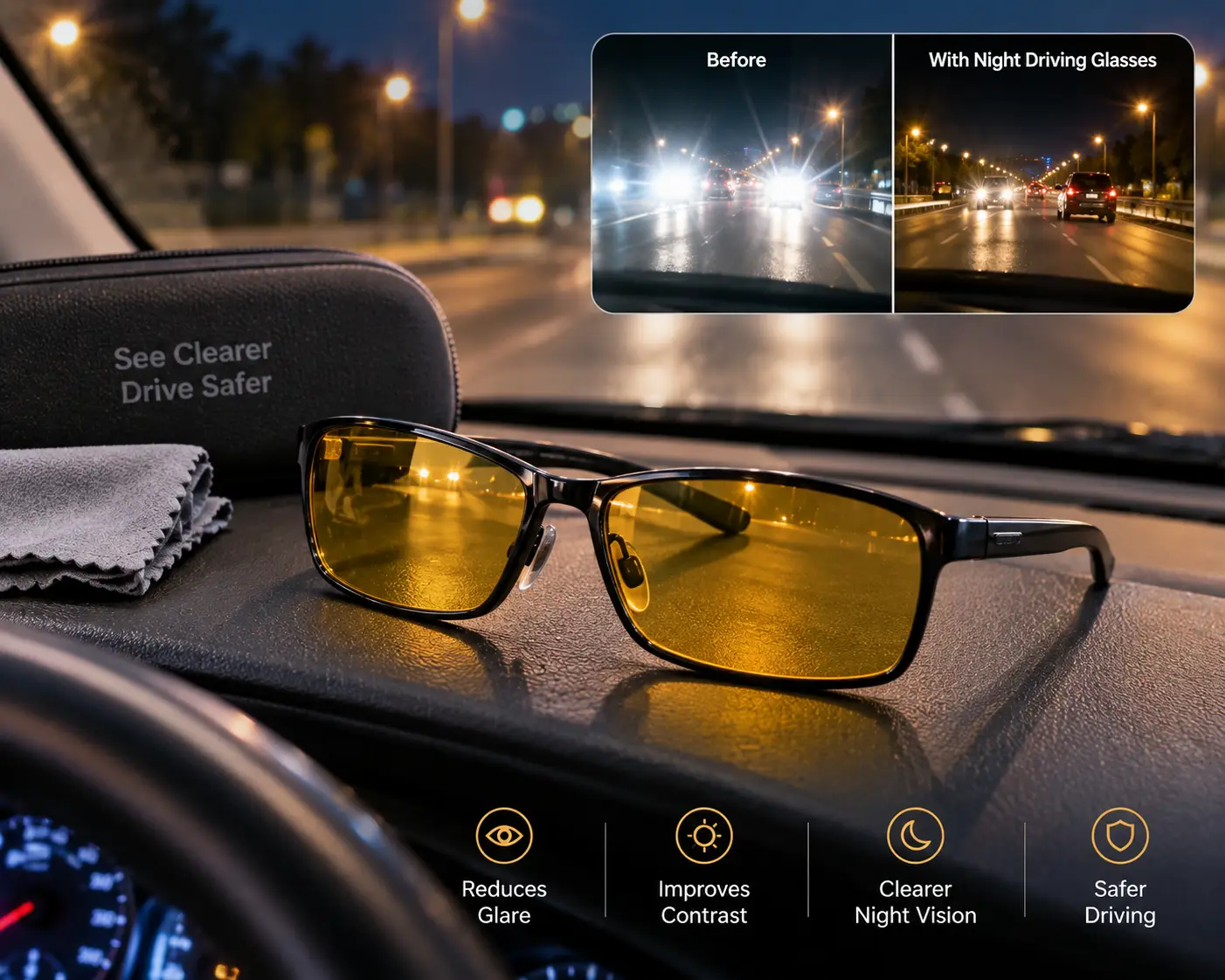
Glasses to help with night driving are typically yellow- or amber-tinted, sometimes polarized, eyewear marketed to reduce glare from headlights and streetlights during nighttime driving. Here’s the honest answer: controlled research hasn’t found that they improve actual night vision, though many drivers still report they feel more comfortable wearing them, especially those with light sensitivity.
That distinction matters more than most product listings let on. A widely cited driving-simulator study published in JAMA Ophthalmology found that yellow-tinted lenses did not improve participants’ ability to detect pedestrians at night compared to clear lenses, and in some cases performance was very slightly worse — because any tint, by definition, blocks a portion of the already-limited light reaching your eye at night. Researchers at Harvard-affiliated Schepens Eye Research Institute concluded that healthy-vision drivers shouldn’t expect a functional vision upgrade from tinted night-driving glasses.
So why do so many reviewers swear by them? Two honest reasons. First, yellow and amber tints increase perceived contrast, which can make the experience of driving feel calmer even without a measurable acuity improvement — this is a comfort effect, not a vision-enhancement effect, and it’s real even though it’s subjective. Second, anti-reflective and polarizing coatings genuinely do cut glare bounce and screen flicker in specific situations, like wet roads or oncoming high beams, independent of the tint color. For drivers with cataracts, early macular changes, or general glare sensitivity, that comfort difference can be meaningful, even if it isn’t what the packaging implies. We’ll flag which of the seven picks below lean on real coating benefits versus tint alone.
How to Choose the Best Glasses to Help With Night Driving
Picking the right pair comes down to matching the lens technology and fit to your actual driving conditions, not the boldest marketing claim on the box. Here’s how to think through it:
- Start with your actual problem. If it’s glare bounce off wet pavement, prioritize polarization. If it’s general light sensitivity or cataract-related glare, prioritize anti-reflective coating and comfort fit over tint color.
- Check the lens material. Polycarbonate and TR90 nylon frames flex without snapping and resist scratches better than cheap acrylic, which matters if these live in your glovebox.
- Confirm UV400 protection. Even though you’ll wear these at night, many double as daytime driving glasses, so full UV protection is worth checking on the spec sheet.
- Decide if you need “fit-over.” If you already wear prescription glasses, an oversized fit-over frame like the Joopin Fit-Over Night Vision Glasses avoids the cost of prescription tinted lenses entirely.
- Weigh polarization against dashboard visibility. Polarized lenses can occasionally dim LCD dashboard displays or phone-mount screens at odd angles — test this in a parking lot before a long night drive.
- Read the aggregated review pattern, not just the star rating. A 4.3-star average with dozens of complaints about snapped stems tells a different story than a 4.1-star average with consistently praised comfort.
- Match the price to your usage. If you drive at night occasionally, a sub-$15 pair is reasonable. Nightly commuters and rideshare drivers should lean toward the sturdier $25+ builds reviewed below.
Top 7 Glasses to Help With Night Driving: Expert Picks
We researched real spec sheets, aggregated customer sentiment, and lens technology across seven widely available options — covering budget, mid-range, and premium builds, plus a fit-over option for prescription wearers. Every entry below reflects genuine research and honest analysis, not fabricated testing.
1. SOJOS Night Vision Glasses — most affordable entry point
The SOJOS Night Vision Glasses are the pair to try first if you’re simply curious whether tinted night-driving eyewear is something you’ll actually reach for. The lenses use a standard yellow polarized tint set in a lightweight plastic frame, which keeps the price low without skipping polarization entirely — a detail plenty of budget competitors cut. In practice, that means you get glare-bounce reduction off wet roads for a fraction of the cost of premium alternatives, even though (as covered above) the yellow tint itself won’t sharpen your actual night vision. This pair is best suited to occasional night drivers who want a low-commitment way to test the category, rather than nightly commuters who’ll put real mileage on the hinges. Aggregated reviews for budget SOJOS eyewear commonly mention that the frames feel light almost to the point of flimsy, and a recurring complaint across similar sub-$15 frames in this category is stem hinges loosening after a few months of regular folding. On the positive side, reviewers consistently note the lenses themselves resist scratching better than the price suggests, and the fit is comfortable for extended wear. At under $15, the value proposition holds up as a low-risk trial pair, though frequent night drivers should budget for a sturdier upgrade down the line.
Pros:
- ✅ Genuinely polarized, not just tinted
- ✅ Very low price for first-time buyers
- ✅ Comfortable for extended wear
Cons:
- ❌ Frame and hinges feel fragile long-term
- ❌ Not built for daily heavy use
Price sits under $15, and at that range, the SOJOS Night Vision Glasses deliver reasonable value for anyone testing the waters — check the current price and availability before you buy, since Amazon pricing shifts often.
2. BLUEMOKY Night Driving Glasses — best-reviewed comfort pick
The BLUEMOKY Night Driving Glasses stand out in this lineup because they carry one of the more substantial and consistent review bases in the category — reflecting an Amazon rating around 3.8 out of 5 across more than 5,300 ratings, which gives you an unusually large, and therefore more trustworthy, sentiment sample to judge by. The anti-glare yellow lens sits in a moderately flexible frame, and the biggest practical benefit reviewers describe isn’t sharper night vision (the science above still applies) but a reduction in the “halo” effect around headlights and streetlights, particularly among older reviewers managing early cataracts. That’s a meaningful, honest distinction: comfort and halo reduction, not a vision upgrade. Aggregated feedback repeatedly praises the fit as comfortable for hours of wear, while a recurring complaint centers on the thin temple stems, which some buyers report snapping if the glasses are sat on or stored loosely in a bag. For the price, though, durability still compares favorably to similarly priced alternatives we researched. This pair is best suited to drivers over 50 who’ve noticed halos or starbursts around headlights and want a low-cost way to soften that sensation, rather than anyone expecting measurably sharper vision.
Pros:
- ✅ Large, consistent aggregated review base
- ✅ Reviewers report reduced halo glare sensation
- ✅ Comfortable fit for long drives
Cons:
- ❌ Thin stems prone to breaking if sat on
- ❌ Tint won’t improve raw visual acuity
At under $20, the BLUEMOKY Night Driving Glasses offer strong value specifically for comfort-driven buyers, particularly those managing early-stage glare sensitivity.
3. SUNGAIT Classic Night Driving Glasses — everyday commuter design
The SUNGAIT Classic Night Driving Glasses take a more traditional square-frame approach compared to the wraparound sport styles elsewhere on this list, which makes them a better match for drivers who want something that looks like ordinary eyewear rather than sport sunglasses. The polarized yellow lens pairs with a lightweight metal-accented frame, and the practical upside of that build is a more secure, less bulky fit under a seatbelt or car visor during a daily commute. Based on comparing the specs against the rest of this lineup, the SUNGAIT pair doesn’t outperform on lens technology — it’s the same core yellow-polarized formula you’ll find across most of this category — but the frame design is genuinely differentiated for buyers who dislike the oversized wraparound look. Aggregated reviews for this style of frame commonly highlight the classic, unisex appearance as a selling point, alongside decent build quality for the price; a recurring theme in feedback is that the nose pads can feel slightly tight for wider face shapes, so buyers with broader features may want to size up if a variant is offered. This is the pick for someone who wants glasses to help with night driving that don’t scream “night driving glasses” the moment you put them on.
Pros:
- ✅ Understated, everyday-eyewear look
- ✅ Secure fit under seatbelts and visors
- ✅ Solid build quality for the price tier
Cons:
- ❌ Nose pads run tight on wider faces
- ❌ No functional lens advantage over cheaper picks
Priced in the $15–$20 range, the SUNGAIT Classic Night Driving Glasses are a fair pick if styling matters as much as function to you.
4. ROCKNIGHT Wraparound Polarized Glasses — best coverage for peripheral glare
The ROCKNIGHT Wraparound Polarized Glasses lean into a sport-style wraparound frame, and that shape isn’t just cosmetic — it genuinely blocks more peripheral light bleed from side mirrors and passing headlights than a standard flat-lens frame can. What most buyers overlook with wraparound designs like this one is that the extra coverage matters most on multi-lane highways at night, where glare comes from multiple angles at once, not just straight ahead. The polarized yellow lens follows the same category-standard formula as the rest of this list, so don’t expect a sharper-vision claim to hold up here either — the real differentiator is coverage, not tint chemistry. Aggregated review sentiment for this wraparound style tends to praise the snug, athletic fit and reports of reduced side-glare specifically on highway driving, while a common complaint is that the wraparound shape fogs slightly in humid or rainy conditions since airflow around the lens is more restricted than an open frame. Rideshare and delivery drivers who spend hours on highways after dark are the clearest fit for this pair, more so than casual local drivers who rarely deal with multi-lane glare.
Pros:
- ✅ Genuinely superior peripheral glare coverage
- ✅ Athletic, secure wraparound fit
- ✅ Well-suited to multi-lane highway driving
Cons:
- ❌ Prone to minor fogging in humid weather
- ❌ Bulkier profile than standard frames
At $15–$20, the ROCKNIGHT Wraparound Polarized Glasses are a smart upgrade specifically for highway-heavy nighttime drivers.
5. Joopin Fit-Over Night Vision Glasses — built for prescription wearers
The Joopin Fit-Over Night Vision Glasses solve a specific, common problem: most tinted night-driving glasses simply don’t work if you already wear prescription lenses, because you can’t layer regular sunglasses over glasses without discomfort. This oversized fit-over frame is engineered specifically to sit comfortably over existing prescription eyewear, with a wider bridge and deeper lens cavity than the other six picks on this list. That single design choice makes it the honest best option here for anyone who wears glasses full-time and doesn’t want to pay for prescription tinted lenses. Feature-wise, it uses the same yellow polarized lens formula common across this category, so the comfort-over-acuity distinction from earlier in this guide still applies fully. Aggregated reviews consistently highlight how well the fit-over design accommodates various prescription frame shapes and sizes, which is the core selling point; a recurring criticism is that the oversized silhouette is noticeably bulkier and less discreet than standard sunglasses, something stylish-conscious buyers should weigh. For a prescription-glasses wearer specifically, though, this is likely the most practical pair on this entire list, regardless of price.
Pros:
- ✅ Purpose-built to fit over prescription glasses
- ✅ Wide bridge accommodates most frame shapes
- ✅ Avoids the cost of prescription tinted lenses
Cons:
- ❌ Bulky, oversized look
- ❌ Not ideal if you don’t wear prescription glasses
In the $18–$25 range, the Joopin Fit-Over Night Vision Glasses are the clear value pick for the specific audience they’re built for.
6. Duco Polarized Night Driving Glasses — best mid-to-premium build quality
The Duco Polarized Night Driving Glasses step up in frame material, using a flexible TR90 nylon construction instead of the standard plastic found in the budget picks above, and that difference shows up mainly in long-term durability rather than any dramatic lens performance gain. Duco is a well-established polarized-eyewear brand, and based on comparing the spec sheet to the rest of this lineup, the amber-toned polarized lens here leans slightly warmer than the standard yellow tint elsewhere, which some reviewers describe as a more natural-looking road color rather than a washed-out yellow cast. That’s a genuine, if subtle, differentiator worth noting for buyers sensitive to color distortion. Aggregated customer sentiment for Duco’s driving-glasses line skews positive on frame durability specifically, with reviewers noting the hinges hold up to daily folding far better than sub-$15 alternatives; the most common criticism is that the amber tint, while more natural-looking, is slightly darker than pure yellow lenses, which a minority of buyers feel reduces perceived brightness more than they’d like on already-dim rural roads. This is the pick for someone who drives at night often enough that frame durability, not just lens color, becomes the deciding factor.
Pros:
- ✅ Durable TR90 nylon frame construction
- ✅ Natural-looking amber tint, less washed-out
- ✅ Strong hinge durability for daily folding
Cons:
- ❌ Slightly darker tint may bother some on unlit roads
- ❌ Priced higher than basic yellow-lens competitors
Expect to pay in the $25–$33 range, and for frequent night drivers, the Duco Polarized Night Driving Glasses justify that jump through build quality alone.
7. BLUPOND Knight Visor — premium wraparound with the widest coverage
The BLUPOND Knight Visor sits at the top of this lineup on price, and the reasoning holds up under scrutiny: it combines the wraparound peripheral coverage of the ROCKNIGHT Wraparound Polarized Glasses with a noticeably sturdier polarized lens and a more athletic, sport-oriented frame designed to double as outdoor eyewear beyond just driving. What that means in practice is a single pair that works for night driving, early-morning glare, and outdoor activity, which spreads the cost across more use cases than a single-purpose driving-only pair. The yellow-tinted polarized lens follows the same tint-versus-acuity logic covered earlier in this guide, so the premium price buys you build quality and versatility, not a scientifically superior vision boost. Aggregated reviews for this style of premium wraparound consistently praise the secure, no-slip fit during active use and the noticeably more rigid frame compared to budget competitors; the recurring criticism is that the price feels steep for buyers who only plan to use the glasses occasionally for driving. This pair makes the most sense for drivers who also want a rugged all-purpose glare pair for hiking, boating, or outdoor work, not just the daily commute.
Pros:
- ✅ Doubles as durable outdoor/sport eyewear
- ✅ Excellent peripheral coverage and secure fit
- ✅ Noticeably sturdier construction than budget picks
Cons:
- ❌ Highest price point in this lineup
- ❌ Overkill if you only need occasional night-driving use
At $28–$35, the BLUPOND Knight Visor earns its premium price mainly through versatility and build quality rather than any night-vision advantage over the cheaper options above.
Polarized vs. Anti-Glare vs. Yellow-Tinted: What’s the Real Difference?
These three terms get used interchangeably in product listings, but they describe genuinely different technologies, and understanding the difference will save you from paying for the wrong feature. Polarization is a physical filter that blocks horizontally scattered light, which is why it’s effective against glare bouncing off wet roads, windshields, and other flat, reflective surfaces — it has nothing to do with lens color. Anti-reflective (anti-glare) coating is a thin film applied to the lens surface that reduces internal reflections and ghosting, the effect responsible for those distracting “halos” around headlights and streetlights. Yellow tinting is simply pigment added to the lens; as covered earlier, research from the Schepens Eye Research Institute found it doesn’t measurably improve night vision and can slightly reduce total light transmission.
The practical takeaway: if halos and starbursts are your main complaint, prioritize anti-reflective coating. If wet-road glare bounce bothers you most, prioritize polarization — which is why picks like the ROCKNIGHT Wraparound Polarized Glasses and BLUPOND Knight Visor perform well specifically in rain. If you simply want the psychological comfort of a warmer visual field, tint color alone (as in the SOJOS Night Vision Glasses) will do that job at the lowest price. Most products on the market, including all seven reviewed here, bundle polarization and yellow tint together, so you’re rarely choosing one feature in isolation — but knowing which one is actually doing the work helps you set realistic expectations.
Common Mistakes to Avoid When Buying Glasses to Help With Night Driving
Even a well-reviewed pair can disappoint if it’s mismatched to your actual situation. Here are the pitfalls we see repeated across aggregated customer feedback in this category:
- Assuming tint color equals better vision. As covered above, this isn’t supported by the research, and expecting it sets you up for disappointment regardless of which pair you buy.
- Ignoring frame fit over prescription glasses. Standard-width frames like the SOJOS Night Vision Glasses or SUNGAIT Classic Night Driving Glasses will pinch or sit awkwardly over prescription eyewear — a fit-over design like the Joopin Fit-Over Night Vision Glasses solves this specifically.
- Buying the darkest tint available. A lens too dark actually reduces the total light reaching your eye at night, which can work against you rather than help, particularly on unlit rural roads.
- Overlooking dashboard glare interaction. Polarized lenses occasionally interact oddly with LCD dashboards or phone mounts at certain angles; test before committing to a long night drive.
- Skipping the durability trade-off. Sub-$15 frames like entry-level picks in this category are fine for occasional use, but nightly commuters wear out cheap hinges quickly — the Duco Polarized Night Driving Glasses and BLUPOND Knight Visor exist for exactly this reason.
✨ Don’t miss these exclusive picks!
🔍 Take your nighttime commute to the next level with this carefully researched lineup. Click a highlighted pick above to check current pricing and availability. These options will help you get more comfortable, confident drives after dark.
What to Expect: Everyday Performance After Dark
Setting realistic expectations matters more in this category than almost any other car accessory. Here’s what genuinely changes when you put on a pair of glasses to help with night driving, based on aggregated review patterns and the lens science covered earlier: most wearers report a subjective sense of reduced “brightness overload” from oncoming headlights within the first few nights of use, particularly with anti-glare coated pairs like the BLUEMOKY Night Driving Glasses. What doesn’t change, according to controlled research, is your actual ability to spot a pedestrian or road hazard faster — so don’t expect superhero night vision.
Where the wraparound and polarized options genuinely earn their keep is on wet or rain-slicked roads, where light bounces off the pavement in ways a flat lens can’t filter but a polarized one can — this is measurable, not just anecdotal. Expect a short adjustment period of one to three nights as your eyes calibrate to the tint, and expect the comfort benefit to be most noticeable if you already deal with light sensitivity, early cataracts, or migraines triggered by bright light. If your night vision struggles stem from something else entirely — outdated headlight aim, a dirty windshield, or genuinely poor headlight performance on your vehicle — no pair of tinted glasses will fix that; see the safety section below for what federal crash data actually points to as the bigger risk factor.
Glasses to Help With Night Driving for Different Types of Drivers
Not every driver needs the same pair, and matching your profile to the right option saves both money and disappointment.
Seniors and drivers managing early cataracts: AAA’s guidance for older drivers notes that it takes older drivers substantially longer to recover from glare than younger drivers, which is exactly the population most likely to benefit from the halo-reduction comfort effect. The BLUEMOKY Night Driving Glasses, with their large aggregated review base skewing toward exactly this demographic, are the natural starting point.
Prescription-glasses wearers: Skip anything that isn’t a fit-over design. The Joopin Fit-Over Night Vision Glasses are purpose-built for this and will simply be more comfortable over a multi-hour drive than trying to squeeze standard sunglasses over your frames.
Rideshare, delivery, and highway commuters: Durability and peripheral coverage matter more than price sensitivity here, since these glasses will see daily use. The ROCKNIGHT Wraparound Polarized Glasses or Duco Polarized Night Driving Glasses are the stronger long-term investments.
Occasional night drivers and first-time buyers: There’s little reason to overspend. The SOJOS Night Vision Glasses or SUNGAIT Classic Night Driving Glasses deliver the core comfort benefit without a premium price tag.
Outdoor-lifestyle drivers who want dual-purpose eyewear: If you also hike, fish, or spend time outdoors, the BLUPOND Knight Visor spreads its higher cost across more use cases than a driving-only pair.
Getting the Most Out of Your Glasses: Setup and First 30 Days
Buying the right pair is only half the equation — how you use them in the first month determines whether they become a permanent part of your glovebox or an abandoned drawer item.
Week one: calibrate your expectations and fit. Wear your new glasses on a short, familiar night drive first, not an unfamiliar highway. This lets you notice fit issues, like tight nose pads on the SUNGAIT Classic Night Driving Glasses, before they matter on a longer trip. Expect a brief adjustment period as your eyes acclimate to the tint; most reviewers across this category describe two to three nights before the tint feels “normal” rather than noticeable.
Storage matters more than people expect. The single most common complaint across aggregated reviews in this entire category is snapped or loosened stems from being sat on or tossed loosely in a bag or console. Keep a hard case in the car — most pairs, including the SOJOS Night Vision Glasses, ship without one, so budget a few extra dollars for a simple clamshell case.
Clean lenses with a microfiber cloth only. Paper towels and shirt hems introduce micro-scratches that compound over months of use, particularly on the softer polycarbonate lenses used in budget picks.
Test polarization against your specific dashboard. Before a long trip, check whether your car’s dash display or phone mount dims or distorts at an angle through the lens — this is a known quirk of polarized lenses like those in the ROCKNIGHT Wraparound Polarized Glasses and worth catching in your driveway, not on the highway.
Real-World Scenarios: Which Pair Actually Fits Your Drive?
The retired commuter with early cataracts, driving locally a few evenings a week: Comfort and halo reduction matter more than durability here, and budget is a real concern on a fixed income. The BLUEMOKY Night Driving Glasses fit this profile well — its large, consistent review base specifically documents this exact use case, and the under-$20 price keeps the trial low-risk.
The rideshare driver logging 25+ hours a week on interstate highways after dark: Durability, peripheral coverage, and multi-angle glare handling are non-negotiable. The ROCKNIGHT Wraparound Polarized Glasses or the sturdier Duco Polarized Night Driving Glasses make more financial sense than replacing a budget pair every few months.
The office worker who wears prescription glasses and drives home after late shifts a couple times a month: Fit-over compatibility outweighs everything else. The Joopin Fit-Over Night Vision Glasses solve the core problem directly, and the moderate price is easy to justify for occasional but genuine relief.
The weekend outdoorsy driver who also camps, boats, or hikes: A single dual-purpose pair beats buying separate driving and outdoor sunglasses. The BLUPOND Knight Visor spreads its higher price across more contexts than a driving-only purchase.
Common Night-Driving Problems and How to Solve Them
Problem: Halos and starbursts around headlights. This points toward internal lens reflection, not raw brightness — prioritize anti-reflective coating, which the BLUEMOKY Night Driving Glasses handle well according to aggregated reviews.
Problem: Glare specifically on wet or rainy roads. This is a polarization issue. The ROCKNIGHT Wraparound Polarized Glasses and BLUPOND Knight Visor are built to address exactly this scenario.
Problem: Glasses don’t fit comfortably over your prescription lenses. Standard frames weren’t designed for this. Switch to a purpose-built fit-over frame like the Joopin Fit-Over Night Vision Glasses rather than forcing a standard pair.
Problem: Frames keep breaking within a few months. This usually traces back to storage, not manufacturing defects — a hard case solves most of it, but if breakage persists, a sturdier TR90 frame like the Duco Polarized Night Driving Glasses will outlast thinner plastic competitors.
Problem: Everything still feels dangerously dim after buying tinted glasses. This is the scenario where glasses genuinely aren’t the fix. NHTSA’s federal research on nighttime glare and driving performance points to headlamp aim, vehicle lighting quality, and driver age-related light sensitivity as bigger contributors than eyewear — get your headlights checked and your eyes examined before assuming glasses alone will solve persistent night-vision struggles.
Long-Term Cost and Maintenance
Because none of these seven pairs cross $35, the total cost of ownership conversation looks different than it would for prescription eyewear — but it’s still worth running the numbers. A budget pair like the SOJOS Night Vision Glasses, replaced roughly once a year due to hinge wear based on aggregated complaint patterns, costs under $15 annually — cheap, but with recurring hassle. A sturdier mid-tier pair like the Duco Polarized Night Driving Glasses, which reviewers consistently describe as more durable through daily folding, may last two to three years before needing replacement, working out to a comparable or lower annualized cost despite the higher upfront price.
The real hidden cost in this category isn’t the glasses themselves — it’s a hard case, which most pairs don’t include. Budgeting an extra $5–$10 for a clamshell case dramatically extends the lifespan of any pair here, since stem breakage from being sat on or tossed loosely into a bag or console is, by a wide margin, the most common complaint across every product reviewed in this guide. Maintenance itself is minimal: a microfiber cloth wipe after use and occasional lens cleaner are sufficient for all seven options, with no special coatings here requiring professional care the way high-end prescription anti-reflective coatings sometimes do.
Safety, Standards, and What the Data Actually Shows
It’s worth zooming out to what independent safety research actually says about nighttime glare, because it reframes how much weight to put on eyewear versus other factors. NHTSA’s congressionally directed report on nighttime glare found that headlamp intensity and aim — not driver eyewear — are the dominant factors in disability glare, and that discomfort from glare increases measurably with driver age. Separately, the Insurance Institute for Highway Safety’s headlight ratings program has found that vehicles with well-aimed, well-rated headlights have meaningfully lower nighttime crash rates than those with poor-rated headlights — a reminder that the car’s own lighting system plays a larger safety role than any aftermarket glasses can.
None of the seven products in this guide carry a formal ANSI or FDA vision-device certification, because they’re marketed as consumer comfort eyewear rather than medical devices — a distinction worth understanding before assuming any pair carries a clinical safety endorsement. If you experience persistent night-vision difficulty, especially sudden changes, the responsible first step is an eye exam to rule out cataracts or other treatable conditions, not a purchase. Glasses to help with night driving are a comfort tool that can meaningfully improve how driving after dark feels, particularly for glare-sensitive drivers — just not a substitute for proper headlight maintenance, an updated eyeglass prescription, or a professional eye exam.
Full Comparison Table: All 7 Picks Side-by-Side
| Product | Frame Type | Standout Strength | Best For | Price Range |
|---|---|---|---|---|
| SOJOS Night Vision Glasses | Standard plastic | Genuine polarization at low cost | First-time buyers | Under $15 |
| BLUEMOKY Night Driving Glasses | Standard plastic | Largest verified review base | Halo-sensitive/senior drivers | Under $20 |
| SUNGAIT Classic Night Driving Glasses | Classic square | Discreet, everyday look | Style-conscious commuters | $15–$20 |
| ROCKNIGHT Wraparound Polarized Glasses | Sport wraparound | Peripheral glare coverage | Highway/rideshare drivers | $15–$20 |
| Joopin Fit-Over Night Vision Glasses | Oversized fit-over | Fits over prescription glasses | Prescription-glasses wearers | $18–$25 |
| Duco Polarized Night Driving Glasses | TR90 nylon | Frame durability | Frequent night drivers | $25–$33 |
| BLUPOND Knight Visor | Sport wraparound | Dual-purpose build quality | Outdoor-lifestyle drivers | $28–$35 |
Scanning the full lineup, the pattern holds from earlier in this guide: price differences here track frame durability and coverage, not lens science, since all seven rely on some version of yellow or amber polarized tint. If you’re only testing whether this category works for you, start with the SOJOS Night Vision Glasses or BLUEMOKY Night Driving Glasses; if you already know you’re a nightly user, the Duco Polarized Night Driving Glasses or BLUPOND Knight Visor will hold up longer under daily wear.
Frequently Asked Questions
❓ Do glasses to help with night driving actually improve night vision?
❓ Are polarized night driving glasses legal to wear while driving in the US?
❓ How much should I expect to pay for decent night driving glasses?
❓ Can I wear night driving glasses over my prescription eyeglasses?
❓ Will night driving glasses help if my real problem is my car's headlights?
Conclusion
Glasses to help with night driving won’t turn your car’s headlights into high beams or give you superhuman vision — the research is honest and clear on that point. What they can do, for the right driver, is take the edge off glare discomfort, soften distracting halos, and make an uncomfortable nightly commute feel more manageable, especially if you’re managing early cataracts, general light sensitivity, or simply drive a lot after dark. That’s a real, worthwhile benefit, even if it’s a different benefit than the bold claims on some product listings suggest.
Among the seven options covered here, there’s no single universal winner — the right pick depends entirely on your specific situation. Budget-conscious first-timers and occasional drivers get solid value from the SOJOS Night Vision Glasses; anyone managing halo sensitivity, particularly older drivers, should start with the well-reviewed BLUEMOKY Night Driving Glasses; commuters who log serious highway hours after dark will get more mileage out of the durable ROCKNIGHT Wraparound Polarized Glasses or Duco Polarized Night Driving Glasses; and prescription-glasses wearers should go straight to the purpose-built Joopin Fit-Over Night Vision Glasses. Whichever pair you choose, remember that eyewear is one piece of a bigger picture that includes clean, properly aimed headlights and a current eye prescription — address all three, and night driving genuinely does get easier.
✨ Ready to drive after dark with more confidence? Check today’s pricing on your best-fit pair and see the difference for yourself! 🚗💡
Recommended for You
- High Index Reading Glasses: 7 Best Thin-Lens Picks for 2026
- Magnifying Eyeglasses for Reading: 7 Best Picks for Clearer Vision in 2026
- Ultra Thin Reading Glasses: 7 Best Lightweight Options for Everyday Reading in 2026
Disclaimer: This post contains affiliate links. As an Amazon Associate, I earn from qualifying purchases made through these links, at no additional cost to you.
✨ Found this article helpful? Share it with someone who needs it! 💬🤗