
In This Article
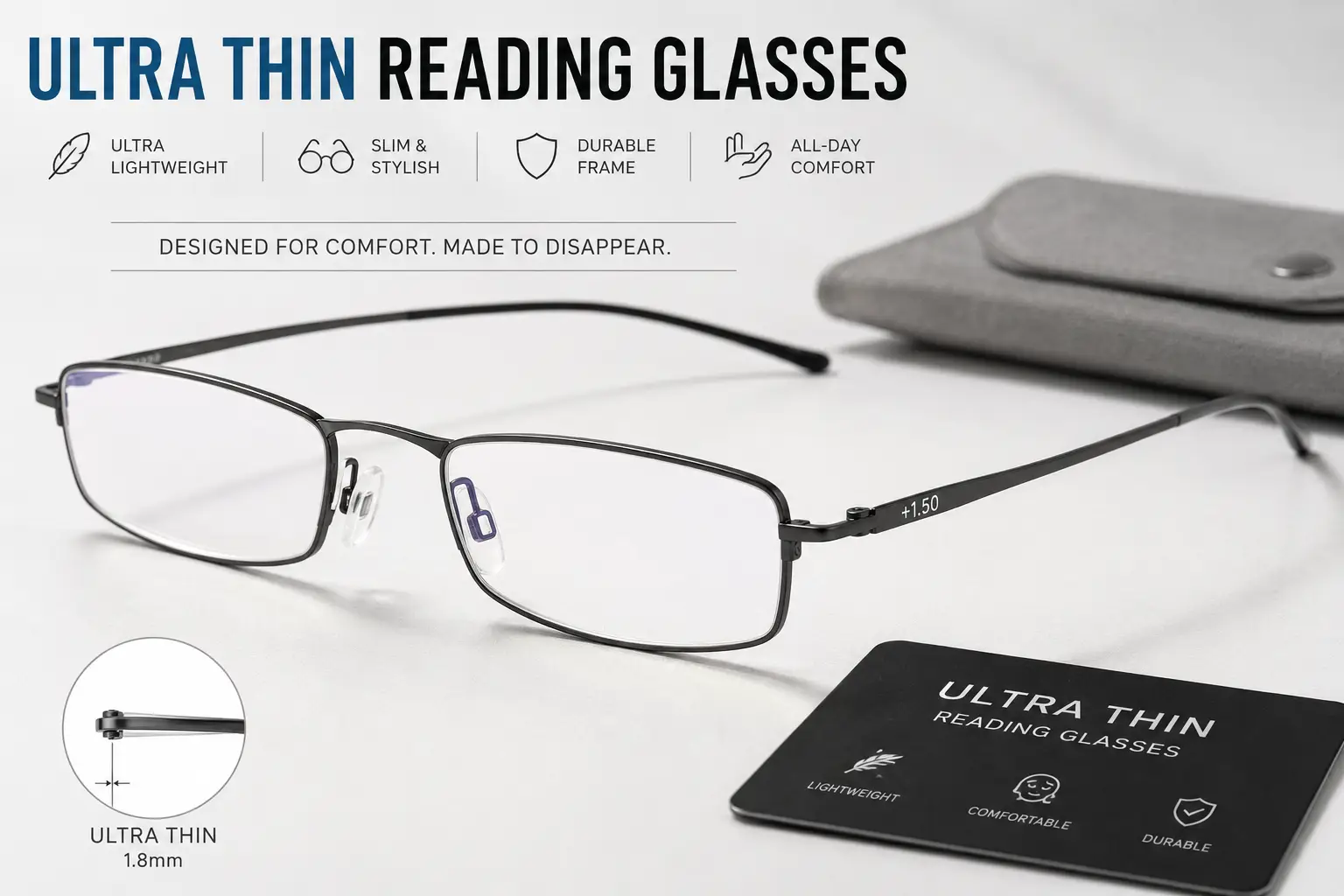
Finding the right pair of ultra thin reading glasses can make everyday reading more comfortable without adding unnecessary weight or bulk around your face. Traditional reading glasses can sometimes feel heavy, particularly when worn for long periods or carried throughout the day. Ultra-thin designs focus on creating a slimmer, lighter profile while maintaining the basic functionality needed for close-up reading tasks such as books, newspapers, menus, labels, smartphones, and other everyday materials.
The appeal of ultra thin reading glasses is largely connected to portability and comfort. A lightweight frame can be easier to wear for extended periods, while a slim construction can make the glasses easier to store in a pocket, handbag, desk drawer, or travel case. For people who frequently move between reading glasses and normal activities, a compact pair can also be convenient because it takes up very little space when not being worn.
The lenses are equally important. Ultra-thin reading glasses can use different lens materials and designs, and the overall thickness may vary depending on the lens strength, frame dimensions, and construction. A thinner lens profile can create a more discreet appearance, while lightweight materials can reduce the overall weight of the glasses.
Frame design also plays a major role. Some ultra thin reading glasses use very slim metal frames that create a minimalist appearance, while others use thin flexible plastic or TR-style materials designed to provide more durability without becoming bulky. Folding designs take portability even further by allowing the glasses to collapse into a much smaller package.
However, thin does not automatically mean better. A frame that is extremely lightweight but poorly fitted may still be uncomfortable, while an ultra-thin lens with poor optical quality can create unwanted distortion. The best choice therefore depends on the combination of lens clarity, frame dimensions, material, strength, comfort, and intended use.
In this guide, we’ll compare seven different styles of ultra thin reading glasses and explain what makes each option useful for different situations. We’ll look at minimalist metal frames, lightweight plastic designs, flexible frames, folding reading glasses, blue-light filtering options, rimless designs, and premium lightweight models. The goal is to help you understand which characteristics matter before choosing a pair for reading, work, travel, or everyday use.
Quick Comparison: 7 Best Ultra Thin Reading Glasses at a Glance
| Product Style | Frame Material | Best For | Main Appeal | Approx. Price |
|---|---|---|---|---|
| Slim Metal Reading Glasses | Stainless steel/alloy | Everyday reading | Minimalist profile | $15–$35 |
| Ultra Thin Plastic Reading Glasses | Lightweight plastic | Daily wear | Light and affordable | $10–$30 |
| Flexible Ultra Thin Readers | TR-style material | Active use | Flexible construction | $15–$35 |
| Folding Ultra Thin Readers | Metal/plastic | Travel | Compact storage | $15–$40 |
| Blue Light Ultra Thin Readers | Plastic/metal | Screen reading | Reading + screen use | $20–$45 |
| Rimless Reading Glasses | Metal + lens | Minimalist styling | Nearly invisible frame | $25–$60 |
| Premium Lightweight Readers | Titanium/alloy | Long wear | Lightweight construction | $40–$100+ |
The comparison shows that ultra thin reading glasses are available in several different constructions, and each design emphasizes a slightly different advantage. Slim metal frames are attractive to people who want a traditional but discreet appearance, while thin plastic frames can provide a combination of affordability and low weight.
Flexible frames are useful when durability matters because they can tolerate more everyday handling than some rigid lightweight frames. Folding models are particularly practical for people who carry reading glasses everywhere because they occupy considerably less space when stored.
Blue-light filtering readers are designed for people who combine reading with frequent screen use, although the filtering feature should not be viewed as a guaranteed treatment for digital eye strain. Rimless glasses provide the most minimal visual appearance, while titanium and other premium lightweight frames focus on reducing weight and improving long-term comfort.
💬 Compare lens strength, frame weight, dimensions, material, flexibility, optical clarity, and intended use before choosing your ultra thin reading glasses! 👓
Top 7 Ultra Thin Reading Glasses: Expert Analysis
1. Slim Metal Reading Glasses — Best for Everyday Wear
Slim metal ultra thin reading glasses provide a minimalist appearance without completely eliminating the structure of a traditional frame. Thin metal temples and narrow rims can create a lightweight visual profile, making the glasses look less bulky when worn.
This style works particularly well for people who want reading glasses that can transition between home, office, restaurants, and other everyday environments. The understated frame doesn’t dominate the face, allowing the glasses to function as a practical accessory rather than becoming the primary feature of an outfit.
Stainless steel and lightweight alloys are commonly used because they can create a thin frame while maintaining sufficient structural strength. The temples can also be relatively narrow, which contributes to the overall compact appearance.
The nose bridge is an important part of the design. A lightweight frame should sit securely without creating excessive pressure, particularly when the glasses are worn for an extended reading session. Adjustable nose pads can provide additional flexibility for users who need a more customized fit.
Slim metal ultra thin reading glasses are particularly attractive for people who want a clean, professional appearance combined with a lightweight frame.
2. Ultra Thin Plastic Reading Glasses — Best Affordable Option
Ultra-thin plastic reading glasses provide an alternative to metal frames for people who prioritize affordability, color selection, and lightweight construction. Modern lightweight plastics can create relatively thin frames without the substantial appearance associated with traditional thick acetate eyewear.
The frame can be produced in a wide range of colors and shapes, allowing users to choose something that matches their personal style. Black and tortoiseshell remain classic choices, while transparent and translucent colors can create a more contemporary appearance.
Plastic frames can also feel comfortable because the material doesn’t conduct temperature in the same way as metal. This can make them pleasant to wear in different environments.
The main consideration is frame quality. Thin plastic can vary significantly between manufacturers, so inspect the hinges, temples, and bridge construction before choosing a pair.
For buyers looking for affordable ultra thin reading glasses that remain lightweight and visually discreet, a thin plastic design can provide excellent everyday value.
3. Flexible Ultra Thin Readers — Best for Active Use
Flexible ultra thin reading glasses are designed for people who frequently carry, remove, and handle their eyewear throughout the day. Instead of relying on a completely rigid frame, flexible materials allow the temples and frame to tolerate a greater degree of movement.
This can be particularly useful for people who keep reading glasses in a pocket, handbag, car, or desk drawer. The glasses are likely to experience more handling than a pair that remains on a desk, so flexibility can provide an additional layer of practicality.
TR-style materials and flexible polymers are commonly used for this type of frame. They can remain lightweight while offering a degree of resistance to bending.
The frame still needs to fit properly. Flexibility isn’t a substitute for appropriate dimensions, and an oversized or undersized frame can remain uncomfortable regardless of the material.
For people who are hard on their eyewear or frequently move their glasses between different locations, flexible ultra thin reading glasses can provide a useful balance between portability, comfort, and durability.
4. Folding Ultra Thin Readers — Best for Travel
Folding ultra thin reading glasses are designed primarily around portability. The frame incorporates hinges or folding sections that allow the glasses to collapse into a much smaller shape than conventional readers.
This can be particularly convenient when traveling. Instead of carrying a full-size glasses case, users can place the folded readers into a small protective container, purse, backpack, or even a dedicated pocket.
The compact design also makes folding glasses useful as a backup pair. Many people who rely on reading glasses prefer having an additional pair available in case their primary glasses are misplaced. A folding model can be stored almost anywhere without consuming much space.
The hinges are the most important mechanical component. Because the glasses are repeatedly folded and unfolded, the hinge construction should be strong enough to withstand regular use.
Folding ultra thin reading glasses are therefore particularly attractive for travelers, commuters, and anyone who wants a compact backup pair available whenever close-up vision correction is needed.
5. Blue Light Ultra Thin Readers — Best for Reading and Screen Use
Blue-light ultra thin reading glasses combine reading magnification with lenses marketed to filter some blue wavelengths from digital displays. These glasses are particularly popular among people who read ebooks, work on computers, use smartphones, or spend long periods switching between printed material and screens.
The lightweight construction is useful because screen-related tasks can last for several hours. A heavy frame may become noticeable around the nose and ears, while a slimmer lightweight design can feel less intrusive.
However, blue-light filtering should be viewed as an optional lens feature rather than a guaranteed solution for digital eye strain. Screen discomfort can be influenced by viewing distance, lighting, prolonged focusing, reduced blinking, glare, and other factors.
Lens clarity remains important. A blue-light coating or tint should not introduce distracting reflections or excessive color distortion.
For people who need reading magnification and prefer a lightweight pair for screen-heavy routines, blue-light ultra thin reading glasses can be a practical option.
6. Rimless Reading Glasses — Best for Minimalist Styling
Rimless ultra thin reading glasses provide one of the most discreet appearances available because the lenses are not surrounded by a traditional full frame. Instead, the temples and bridge are attached directly to the lenses through specialized hardware.
This design significantly reduces the visual presence of the glasses. When worn, the lenses can appear almost invisible from a distance, which is particularly attractive for people who want reading glasses without changing their overall appearance.
The reduced frame structure can also contribute to a lightweight feeling. However, rimless glasses require careful handling because the lenses and mounting points are more exposed.
They can be particularly attractive in professional environments where the wearer wants a refined and understated appearance.
For users who prioritize the thinnest possible visual profile, rimless ultra thin reading glasses are one of the most distinctive options.
7. Premium Lightweight Readers — Best for Long-Term Comfort
Premium lightweight ultra thin reading glasses often use titanium or advanced metal alloys to achieve a combination of low weight and structural strength. These materials can create very thin frames without requiring substantial bulk.
The benefit becomes especially noticeable for people who wear reading glasses frequently. When glasses remain on the face for hours each day, even small differences in weight can affect comfort.
Titanium frames can also provide a refined appearance. Thin temples, subtle bridges, and minimalist lens rims can create an understated professional aesthetic.
The main drawback is price. Premium materials and construction typically cost more than basic plastic or alloy readers.
For someone who uses reading glasses extensively and prioritizes comfort, durability, and low weight, premium titanium ultra thin reading glasses can justify the additional investment.
Full Comparison: All 7 Ultra Thin Reading Glasses
| Style | Material | Main Purpose | Weight | Price Range |
|---|---|---|---|---|
| Slim Metal Readers | Steel/alloy | Everyday reading | Lightweight | $15–$35 |
| Ultra Thin Plastic Readers | Lightweight plastic | Daily wear | Very light | $10–$30 |
| Flexible Ultra Thin Readers | Flexible polymer | Active use | Very light | $15–$35 |
| Folding Ultra Thin Readers | Metal/plastic | Travel | Lightweight | $15–$40 |
| Blue Light Ultra Thin Readers | Plastic/metal | Screen reading | Lightweight | $20–$45 |
| Rimless Readers | Lens + metal | Minimalist wear | Extremely light | $25–$60 |
| Premium Lightweight Readers | Titanium/alloy | Long-term wear | Very light | $40–$100+ |
The comparison demonstrates that the thinnest appearance isn’t necessarily the same as the lightest overall construction. Rimless glasses can have an exceptionally minimal appearance, while titanium frames can provide a particularly effective balance between strength and low weight.
Plastic models tend to provide the best affordability, while flexible frames are more appropriate for users who frequently handle their glasses. Folding readers are ideal for travel because their compact form makes them easy to store.
The best ultra thin reading glasses therefore depend on whether your priority is weight, portability, durability, screen use, style, or long-term comfort.
Ultra Thin Reading Glasses vs. Regular Reading Glasses
The primary difference between ultra thin reading glasses and standard reading glasses is the emphasis on reducing bulk and weight. Traditional readers can use relatively substantial plastic frames and thicker lens materials, while ultra-thin designs generally focus on a slimmer profile.
This can make a noticeable difference when glasses are worn for long periods. A lighter frame may create less pressure on the nose and ears.
The difference can also be useful for portability. Slim or folding readers can occupy less space in a case, drawer, purse, or travel bag.
However, ultra-thin construction shouldn’t come at the expense of lens clarity or proper fit. A lightweight pair that doesn’t provide clear vision or stays poorly positioned on the face isn’t necessarily better.
What Are Ultra Thin Reading Glasses?
Ultra thin reading glasses are non-prescription readers designed with a particularly slim and lightweight frame and/or lens construction. They are intended to provide magnification for close-up tasks while minimizing the physical bulk associated with conventional reading glasses.
They are available in a range of magnification strengths, frame materials, shapes, and lens treatments. The appropriate strength depends on the user’s near-vision needs.
Some models use very thin metal frames, while others use flexible plastic, rimless constructions, or premium titanium.
The term “ultra thin” doesn’t guarantee a particular lens thickness because actual lens dimensions can vary according to magnification strength and frame size. Always check the product specifications when thickness is important to you.
How to Choose the Best Ultra Thin Reading Glasses
Choosing the best ultra thin reading glasses begins with determining the magnification strength you need. Reading glasses are commonly sold in different strengths, and choosing the wrong level can make close-up work uncomfortable.
Frame width is equally important. A pair that is too narrow can place pressure on the temples, while an excessively wide frame may slide down the nose.
Consider the material according to your routine. Metal is attractive for minimalist professional styling, flexible plastic is practical for active users, and titanium is appealing when long-term comfort is the priority.
If portability is important, folding glasses can be especially convenient. If screen use is a major part of your routine, you may prefer a model with an anti-reflective or blue-light filtering lens treatment.
Most importantly, prioritize clear lenses and a comfortable fit over marketing claims about extreme thinness.
How to Use Ultra Thin Reading Glasses
Use ultra thin reading glasses when performing close-up tasks such as reading books, checking labels, looking at menus, crafting, or viewing a smartphone.
Place the glasses securely on your nose and make sure both lenses remain centered in front of your eyes. If the glasses continually slide or create pressure around your ears, the frame may not be the right size.
Reading glasses are designed for near tasks rather than general distance vision. You may need to remove them when looking across a room or performing activities that require clear distance vision.
Keep the lenses clean with a suitable microfiber lens cloth and store the glasses in a protective case when they aren’t being worn.
Real-World Scenarios: Matching Ultra Thin Reading Glasses to Your Lifestyle
Imagine someone who keeps a pair of reading glasses beside their computer and uses them several times throughout the workday. A slim metal or lightweight plastic pair can provide the right balance between professional appearance and everyday comfort.
For someone who travels frequently, folding ultra thin reading glasses can be more convenient because they occupy very little storage space. They can remain in a handbag, backpack, luggage compartment, or small travel case until needed.
A person who spends considerable time reading on a smartphone or computer may prefer lightweight readers with anti-reflective or optional blue-light filtering lenses. The lightweight frame can be particularly useful during long sessions.
Someone who strongly dislikes the appearance of traditional glasses may prefer rimless readers. Their minimal frame can provide magnification without creating a bold visual accessory.
For users who wear readers for many hours every day, premium titanium models can provide a more refined combination of low weight and durability.
Common Mistakes to Avoid When Buying Ultra Thin Reading Glasses
One common mistake is choosing glasses solely because they are advertised as ultra thin. Thickness doesn’t tell you whether the lenses are clear, the frame fits properly, or the magnification is appropriate.
Another mistake is choosing the wrong reading strength. If the magnification is too strong or too weak, close-up work may become uncomfortable.
Ignoring frame measurements is also problematic. A lightweight frame can still be uncomfortable if the bridge or temples don’t match the wearer’s face.
Some buyers also assume that blue-light filtering automatically makes computer use safer or eliminates eye strain. The evidence doesn’t support treating these lenses as a universal solution.
Finally, extremely lightweight glasses are sometimes handled carelessly because they feel almost disposable. Even thin frames need proper storage and cleaning to maintain their condition.
Safety, Regulations, and Standards for Ultra Thin Reading Glasses
Ultra thin reading glasses are generally designed for near-vision magnification and should be used according to their intended purpose. They are not a substitute for a comprehensive eye examination or prescription eyewear when corrective lenses are medically required.
If you experience persistent blurred vision, headaches, double vision, eye pain, or difficulty focusing even while using appropriate readers, professional eye care is more appropriate than simply increasing the magnification.
Reading glasses should also not be confused with certified protective eyewear. Ordinary thin lenses don’t automatically provide impact, chemical, or workplace protection.
When using glasses around children or in situations where they may be dropped, inspect the frame and lenses regularly for cracks, sharp edges, or other damage.
Proper cleaning and storage also help maintain lens clarity and prevent unnecessary scratches.
Long-Term Cost and Maintenance: What Ultra Thin Reading Glasses Really Cost
The cost of ultra thin reading glasses varies considerably depending on the frame material, lens treatment, construction quality, and brand. Basic lightweight plastic readers can be relatively inexpensive, while titanium or rimless designs can cost significantly more.
For people who frequently misplace reading glasses, inexpensive multipacks can provide good practical value because several pairs can be kept in different locations.
Users who wear the same pair for many hours each day may prefer investing in a higher-quality frame. A comfortable lightweight frame can become a daily-use item rather than a temporary accessory.
Maintenance is relatively simple. Clean the lenses using an appropriate lens cleaner and microfiber cloth, and avoid wiping them with clothing or rough paper products.
Store the glasses in a case whenever possible. This is particularly important for ultra-thin frames because their slim construction can be more vulnerable to accidental bending or pressure.
Features That Actually Matter in Ultra Thin Reading Glasses
The most important features are lens clarity, appropriate magnification, frame dimensions, weight, bridge comfort, temple construction, hinge quality, and lens coatings.
A thin frame is useful, but only when it remains comfortable and structurally sound. Flexible materials can provide durability, while titanium can provide a combination of strength and low weight.
Anti-reflective coatings can reduce distracting reflections, particularly when reading under artificial lighting. Blue-light filtering is an optional feature that some users prefer for screen use, but it shouldn’t be considered a guaranteed treatment for eye strain.
Folding mechanisms are valuable for portability, while rimless construction is mainly beneficial for users who prefer a minimalist appearance.
The best ultra thin reading glasses are therefore those that combine genuinely useful specifications rather than simply having the thinnest-looking frame.
Comfort and Fit of Ultra Thin Reading Glasses
Comfort becomes particularly important with ultra thin reading glasses because their main advantage is often the ability to remain almost unnoticed during use.
The frame should sit securely on the nose without constantly sliding downward. The temples should provide enough contact to keep the glasses stable without creating excessive pressure.
Lens positioning also matters. The centers of the lenses should align appropriately with your eyes so that the magnification works as intended.
A frame that is extremely lightweight but poorly fitted can still become uncomfortable. For this reason, measurements should be considered alongside weight.
Ultra Thin Reading Glasses for Travel
Travel is one of the situations where thin reading glasses can provide a significant practical advantage. A lightweight pair takes up very little space, while folding designs can become even more compact.
Keeping an extra pair in luggage can also provide peace of mind if your primary readers are lost or damaged.
A protective case remains important even when the glasses are small. Putting thin readers loose into a bag can expose them to keys, electronics, cosmetics, and other objects that can scratch or bend the frame.
For frequent travelers, the ideal ultra thin reading glasses are lightweight, compact, durable enough for regular handling, and easy to clean.
Ultra Thin Reading Glasses for Computer Use
Many people use reading glasses while working on computers, tablets, and smartphones. In this situation, lightweight construction can make extended wear more comfortable.
The appropriate magnification depends on the distance between your eyes and the screen. Reading glasses designed for very close material may not always be ideal for a computer monitor positioned farther away.
Anti-reflective coatings can also be useful when overhead lighting creates reflections on the lenses.
Blue-light filtering may be an optional feature, but good workstation positioning remains important. Keep the display at a comfortable distance, adjust the lighting to reduce glare, and take regular breaks from close-up focusing.
What to Expect From Ultra Thin Reading Glasses
The biggest difference you’ll notice with ultra thin reading glasses is generally the reduced feeling of bulk. Slim frames and lightweight materials can make the glasses feel less substantial on the face.
They can also be easier to carry. A thin pair can fit into small spaces where traditional readers may feel cumbersome.
However, the thinner design shouldn’t be interpreted as automatically stronger or more durable. Some ultra-light frames require more careful handling.
With the right fit and lens strength, however, a well-designed pair can provide comfortable magnification while remaining discreet and portable.
Frequently Asked Questions
❓ What are ultra thin reading glasses?
❓ Are ultra thin reading glasses comfortable for long periods?
❓ Are ultra thin reading glasses good for computer use?
❓ Are folding ultra thin reading glasses durable?
❓ How do I choose the right strength for ultra thin reading glasses?
Conclusion
Choosing the right ultra thin reading glasses is ultimately about finding a practical balance between low weight, optical clarity, comfort, portability, and frame durability. The appeal of these glasses comes from their ability to provide useful reading magnification without the bulk associated with heavier traditional frames.
Slim metal readers are an excellent choice for people who want a professional and understated appearance. Lightweight plastic designs provide an affordable alternative with plenty of frame colors and styles, while flexible frames are particularly useful for people who frequently handle or transport their glasses.
Folding readers take portability further by collapsing into a compact package, making them especially useful for travel or as backup glasses. Blue-light filtering readers can appeal to people who regularly switch between printed material and digital screens, although the filtering feature should be considered optional rather than a guaranteed solution for eye strain.
Rimless designs provide the most minimal visual appearance, making them attractive to users who don’t want their glasses to become a prominent part of their appearance. Premium titanium models focus more heavily on long-term comfort, low weight, and refined construction.
Regardless of the style, magnification strength should be one of the first things you consider. The thinnest or lightest glasses won’t be useful if the lenses aren’t appropriate for your near-vision requirements.
Frame measurements are equally important. A properly fitted frame should remain stable on the nose without creating uncomfortable pressure around the temples or ears. Lightweight construction can improve comfort, but good fit is what makes that lightweight design genuinely useful.
Lens quality should also remain a priority. Clear, distortion-free lenses with appropriate coatings can provide a better reading experience than simply choosing the thinnest lens available.
For travel, portability may be the deciding factor. A folding pair can be stored almost anywhere and can serve as a convenient backup. For office work, a slim metal or titanium frame may provide the professional appearance and long-term comfort you need.
Ultimately, the best ultra thin reading glasses are not necessarily the glasses with the smallest frame or lowest weight. They are the ones that provide the right magnification, comfortable fit, clear lenses, reliable construction, and convenient portability for your daily routine.
Whether you’re looking for a discreet pair to keep beside your favorite book, a compact pair for travel, lightweight readers for computer use, or premium eyewear for extended daily wear, choosing based on actual specifications rather than marketing claims will help you find a pair that remains comfortable and useful over time.
✨ Ready to make everyday reading easier? 👓 Compare magnification strength, lens clarity, frame dimensions, weight, material, portability, and comfort before choosing the ultra thin reading glasses that best fit your daily routine.
Recommended for You
- Gray Glasses: 7 Best Picks for 2026 (Pros, Cons & Buying Tips)
- Zoom Eyeglasses: 7 Best Adjustable-Focus Picks for 2026 (Pros & Cons)
- Best Bike for a Petite Frame: 7 Top Picks for 2026
Disclaimer: This post contains affiliate links. As an Amazon Associate, I earn from qualifying purchases made through these links, at no additional cost to you.
✨ Found this article helpful? Share it with someone who needs it! 💬🤗