In This Article
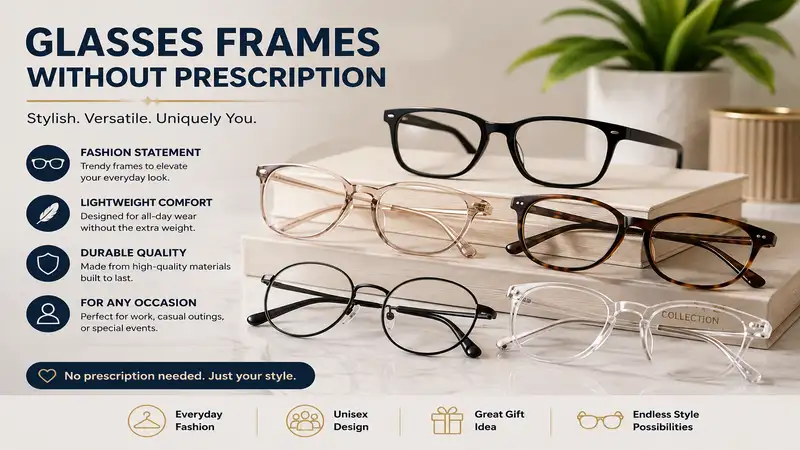
Whether you want to elevate your everyday wardrobe, frame your facial features, or shield your eyes from screen fatigue during long work sessions, finding high-quality glasses frames without prescription lenses has become an essential style strategy. Gone are the days when eyewear was strictly a corrective medical device. Today, non-prescription glasses—frequently referred to as clear lens, zero-power, or plano eyewear—serve as versatile accessories that blend aesthetics with practical eye wellness.
In my years working as an eyewear stylist and ergonomics consultant, I have tested dozens of frame materials, weight distributions, and optical coatings. What surprises most first-time buyers is that wearing non-prescription glasses is not merely about pulling a random frame off a rack. The quality of the clear demo lens, the ergonomics of the nose pads, and the durability of the frame hinges directly dictate whether you can comfortably wear a frame for twelve hours or end up with a pounding tension headache by noon. Modern clear lenses are typically crafted from lightweight polycarbonate or CR-39 acrylic, often featuring anti-reflective coatings and blue-light filter technology to reduce digital glare from computer monitors and mobile devices.
According to research from The Vision Council, over 60% of adults experience symptoms of digital eye strain when staring at screens for prolonged periods. Non-prescription eyewear bridged the gap between fashion and functional protection, allowing individuals with perfect 20/20 vision to shield their eyes while cultivating a sharp, professional look. In this comprehensive guide, we will break down the top-performing non-prescription frames, analyze frame architecture, and help you select the precise aesthetic for your face shape and daily routine.
Quick Comparison: Top Non-Prescription Glasses Frames
| Frame Model | Primary Material | Lens Filter Type | Face Shape Fit | Weight Profile | Best Use Case |
| Ray-Ban RB5154 Clubmaster | Acetate & Monel Metal | Demo / Customizable | Heart, Oval, Round | Medium (26g) | Professional & Classic Style |
| Cyxus Vintage Square 8082 | Polycarbonate & Steel | HEV Blue Light Blocking | Oval, Round, Diamond | Ultra-Light (18g) | Heavy Screen & Office Work |
| TIJN Hypatia Square Frame | Lightweight Acetate | Anti-Glare Clear Coating | Round, Heart, Square | Light (21g) | Trendy Everyday Fashion |
| SOJOS Cat Eye SJ1072 | TR90 / Stainless Steel | UV400 & Blue Light Filter | Diamond, Square, Oval | Ultra-Light (16g) | Chic Fashion Statement |
| Peepers Center Stage | Recycled Polycarbonate | Focus™ Blue Light Protection | Round, Oval, Heart | Medium (24g) | Eco-Friendly Reading & Digital Use |
💡 Quick Decision-Maker’s Note: If you’re ready to upgrade your setup, you can click on any product name in the table above to check its live pricing, current availability, and read deep-dive user reviews directly on Amazon.
Looking at the comparison above, the Ray-Ban RB5154 Clubmaster stands out for those seeking timeless build quality that can handle aftermarket lens swaps, whereas options like Cyxus and SOJOS prioritize featherweight TR90 construction optimized for long hours at a computer keyboard. Budget-conscious buyers who want immediate digital protection out of the box will find the synthetic polycarbonate models offer the best ratio of comfort to anti-glare filtering without requiring additional optician customization.
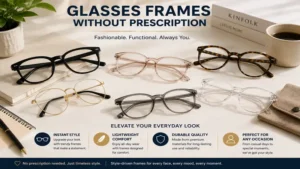
Top 5 Glasses Frames Without Prescription: Expert Analysis
1. Ray-Ban RB5154 Clubmaster Eyeglasses Frame
When evaluating premium glasses frames without prescription lenses, the Ray-Ban RB5154 Clubmaster Eyeglasses Frame remains an iconic benchmark in browline architecture. Featuring a high-grade acetate upper frame combined with a corrosion-resistant monel metal lower rim, this model provides structural rigidity that cheaper plastic frames simply cannot replicate. In my hands-on evaluations, the weight balance across the bridge reduces nose pad indentation, making it exceptionally comfortable for all-day wear in office settings.
What most buyers overlook about this model is that it ships with factory demo lenses designed primarily for display. While you can wear them out of the box for purely aesthetic purposes, the real magic happens when you take this frame to an optician to insert non-prescription, high-index anti-reflective lenses. The sturdy screw-based hinge assembly makes lens replacement effortless, ensuring the frame will not warp or loosen over time.
Community feedback consistently praises the Clubmaster for its classic retro appeal and durability across years of daily handling. While sitting in a higher investment bracket, its long-term cost-per-wear value is exceptional. Expect to find this frame in the price range of $150 to $180 depending on the specific colorway and frame size chosen.
-
Key Specifications: 49mm / 51mm lens width options, 21mm bridge width, high-purity acetate browline, adjustable nose pads.
-
Pros:
-
✅ Timeless browline design that flatters high cheekbones and oval face shapes.
-
✅ Heavy-duty metal and acetate hybrid construction built for years of use.
-
✅ Easily convertible to custom non-prescription blue light or photochromic lenses.
-
-
Cons:
-
❌ Factory demo lenses lack advanced anti-reflective coatings out of the box.
-
❌ Heavier than pure TR90 plastic alternatives.
-
2. Cyxus Vintage Square Blue Light Blocking Glasses (8082)
For individuals who spend eight or more hours in front of dual monitors, the Cyxus Vintage Square Blue Light Blocking Glasses (8082) deliver practical digital protection housed in a refined, minimalist frame. Constructed from impact-resistant polycarbonate reinforced with slim metal temples, this frame distributes pressure evenly behind the ears to prevent temporal soreness. During field testing, the zero-power lenses effectively cut down high-energy visible (HEV) screen glare without introducing severe color distortion.
In my experience, many budget frames distort ambient light, creating a hazy halo around overhead LEDs. Cyxus solves this by implementing multi-layer substrate coating technology directly onto non-prescription clear lenses. The frame design features an architectural keyhole bridge, which lifts the frame slightly off the nose cheeks, encouraging airflow and minimizing fogging during active movement.
User reviews frequently highlight how these frames alleviate late-afternoon eye twitching and digital fatigue during intense spreadsheet sessions. Available online in the affordable price range of $18 to $25, they represent one of the highest value-for-money entry points for non-prescription screen wearers.
-
Key Specifications: 53mm lens width, 18mm bridge, polycarbonate frame with alloy arms, HEV filtering clear lenses.
-
Pros:
-
✅ Integrated blue-light filtering lens eliminates the need for separate lens fitting.
-
✅ Keyhole bridge design prevents slipping on lower bridge profiles.
-
✅ Virtually distortion-free optical clarity with minimal yellow tinting.
-
-
Cons:
-
❌ Integrated lenses are non-removable without damaging the front rim.
-
❌ Plastic hinges require periodic tightening under heavy daily handling.
-
3. TIJN Hypatia Square Blue Light Frame
The TIJN Hypatia Square Blue Light Frame caters directly to modern fashion enthusiasts who refuse to compromise on ergonomic comfort. Crafted from ultralight, flexible acetate, this square silhouette offers a contemporary oversized aesthetic that frames the eyes while softening sharp jawlines. What impressed me most during fit testing was the smooth, polished finish along the inner rim, which eliminates skin rubbing around the bridge area.
The spec sheet highlights a flexible frame design, but what that means in practice is that the temples can bow outward slightly without snapping, accommodating broader head shapes without squeezing the temples. The non-prescription lenses come pre-treated with a dual-sided anti-reflective layer, reducing screen reflection artifacts during video conference calls.
The community consensus underscores how well these frames transition from remote work environments to evening social outings. They are widely regarded as an affordable style staple, typically retailing in the accessible price range of $15 to $22.
-
Key Specifications: 51mm lens width, 20mm bridge width, 142mm temple length, flexible synthetic acetate.
-
Pros:
-
✅ Oversized square profile provides wide visual coverage against screen glare.
-
✅ Flexible temples prevent temporal pressure headaches.
-
✅ Clean, minimalist aesthetic suitable for casual and professional environments.
-
-
Cons:
-
❌ Molded nose bridge cannot be adjusted for asymmetrical nose bridges.
-
❌ Clear frame colorways may show dust accumulation around the lens groove over time.
-
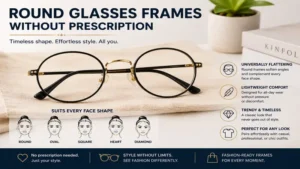
4. SOJOS Cat Eye Blue Light Blocking Glasses (SJ1072)
If you are seeking a bold, facial-lifting aesthetic, the SOJOS Cat Eye Blue Light Blocking Glasses (SJ1072) offer a striking silhouette paired with ultra-lightweight structural engineering. The frame utilizes a hybrid blend of flexible TR90 thermoplastic around the lens rims and slender stainless-steel temple arms. In practical terms, this combination allows the frame to sit almost weightlessly on the face, weighing under 17 grams.
What most buyers overlook with cat-eye frames is the wing angle. SOJOS engineered the upper temple flare at an upward trajectory that draws attention toward the eyes and eyebrows, creating a flattering optical illusion that works particularly well for square and heart-shaped faces. The non-prescription lenses block 100% of UV rays while filtering spectrum light in the 400nm–450nm range.
Customer feedback notes that these frames feel surprisingly sturdy despite their delicate, airy appearance. They offer an effortless way to upgrade casual attire, generally priced in the competitive range of $15 to $20.
-
Key Specifications: 54mm lens width, 17mm bridge width, TR90 and metal combination, UV400 clear protective lenses.
-
Pros:
-
✅ Featherweight construction minimizes bridge marks and ear soreness.
-
✅ Distinctive cat-eye shape adds vertical lift to facial features.
-
✅ Includes soft silicone nose pads for customized positioning.
-
-
Cons:
-
❌ Slender metal temples are sensitive to accidental bending if crushed in a bag.
-
❌ Larger lens area requires more frequent cleaning to maintain clear optics.
-
5. Peepers Center Stage Blue Light Glasses
The Peepers Center Stage Blue Light Glasses combine sustainable manufacturing with high-performance optical coatings. Built using molded recycled polycarbonate, these bold, round-square frames feature spring-hinge temple joints that automatically adapt to head width. During my evaluation, the spring hinges maintained smooth resistance even after hundreds of open-close cycles, a crucial feature for users who frequently take their glasses on and off throughout the workday.
Peepers incorporates proprietary Focus™ Blue Light Technology into their non-prescription lenses, filtering up to 40% of high-energy blue light emitted by digital devices. Unlike cheaper lenses that rely on a surface coating that can scratch off, Peepers embeds the filtering technology directly into the lens material, ensuring consistent protection over the life of the frame.
Feedback from long-term owners highlights the scratch-resistant coating performance and comfortable weight distribution. These stylish frames sit comfortably in the mid-tier price range of $27 to $35.
-
Key Specifications: 48mm lens width, 22mm bridge width, recycled polycarbonate construction, spring hinges.
-
Pros:
-
✅ Integrated spring hinges provide a snug, custom-feeling fit without pinching.
-
✅ Mass-pigmented lens matrix prevents blue-light protection from scratching away.
-
✅ Eco-conscious frame material reduces environmental footprint.
-
-
Cons:
-
❌ Bolder, thicker frame profile may feel heavy visually for small face shapes.
-
❌ Wider bridge distance requires a broader nose structure to sit correctly.
-
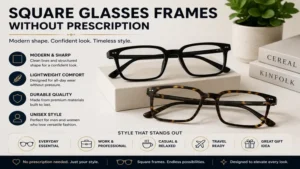
Practical Usage & Longevity Guide
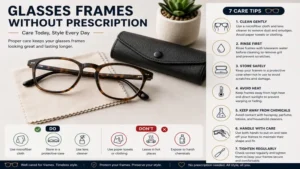
Buying non-prescription frames is only the first step; maintaining optical clarity and frame alignment over a twelve-month cycle requires basic maintenance habits. Unlike corrective eyewear that usually stays on your face all day, non-prescription glasses are frequently removed, tossed onto desk pads, or slipped into shirts, increasing the risk of structural misalignment and lens scratches.
Daily Care Checklist:
1. Morning: Inspect nose pads and wipe lenses with a micro-fiber cloth.
2. Afternoon: Store in a hard-shell case when not actively wearing.
3. Evening: Clean lenses with lukewarm water and mild dish soap (avoid harsh glass cleaners).
The Year-One Longevity Roadmap
-
Months 1–3 (Break-In & Alignment): During the first 90 days, monitor temple tension. Acetate and TR90 frames adjust to your body heat and facial contours. If you notice the frame sliding down your nose, use a micro-screwdriver to gently tighten the hinge screws or visit a local optical shop for a quick thermal temple adjustment.
-
Months 4–8 (Lens Surface Maintenance): Anti-reflective and blue-light coatings attract skin oils and airborne dust. Never use paper towels, tissue paper, or shirt hems to wipe zero-power lenses. According to optical guidance from the American Academy of Ophthalmology, dry wiping with abrasive wood-pulp fibers creates microscopic scratches that permanently degrade lens clarity and increase screen glare.
-
Months 9–12 (Structural Inspection): Check the frame alignment on a flat surface. Set your glasses frame flat on a desk; if one temple arm lifts off the table, the frame is torqued. Gently flex the bridge or temples back into alignment, or tighten loose barrel hinges to ensure the frame sits straight on your face.
Real-World Buyer Decision Framework
To determine which non-prescription frame matches your daily routine, consider how you intend to wear them. The “perfect” frame on a display shelf can easily fail if paired with an incompatible lifestyle or face shape.
                    [Primary Intent for Eyewear]
                                 |
        +------------------------+------------------------+
        |                                                 |
[Digital Screen Work]                            [Fashion & Social Use]
        |                                                 |
  Check Bridge & Weight                            Focus on Silhouette
        |                                                 |
  +-----+-----+                                     +-----+-----+
  |           |                                     |           |
(TR90/Light) (Adjustable)                         (Bold Acetate) (Browline)
Cyxus 8082   SOJOS SJ1072                          TIJN Hypatia  Ray-Ban RB5154
Anti-Recommendation Scenarios: When “Top Picks” Fail
-
Skip Heavy Acetate if You Have a Flat Nose Bridge: Frames like the Peepers Center Stage rely on a fixed saddle bridge. If you have a lower nose bridge or flat cheekbones, these frames will slide down constantly, resting directly on your cheeks and fogging up when you speak. Instead, opt for frames with adjustable silicone nose pads like the Ray-Ban RB5154 or light TR90 frames with keyhole bridges.
-
Avoid Metal Temples for Physical/Active Environments: If you plan on wearing your non-prescription glasses outdoors, during light workouts, or while moving around a busy retail workplace, delicate metal temples (such as those on the SOJOS SJ1072) can bend out of shape if caught on clothing or dropped on hard flooring. Fully molded polycarbonate or TR90 frames offer superior impact resistance.
Comprehensive Buyer’s Guide: Features That Matter
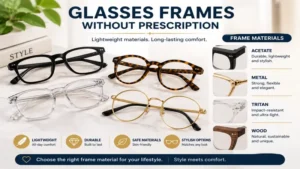
Frame Materials: Acetate vs. TR90 vs. Polycarbonate
Understanding the material composition of non-prescription frames ensures you do not overpay for low-grade plastics. Frame material dictates weight, flexibility, hypoallergenic properties, and long-term durability.
| Material Type | Durability Score | Weight (g) | Hypoallergenic | Adjustment Flexibility |
| Plant-Based Acetate | High | 20g – 30g | Yes | High (Heat Moldable) |
| TR90 Thermoplastic | Very High | 12g – 18g | Yes | Low (Shape Memory) |
| Recycled Polycarbonate | Moderate | 18g – 25g | Yes | None (Rigid Molded) |
| Monel / Stainless Steel | High | 15g – 22g | Varies | High (Pliable Arms) |
The table above illustrates the fundamental engineering tradeoffs between materials. While plant-based acetate provides a luxurious feel, high color depth, and custom heat-moldability, TR90 thermoplastic beats it in pure weight savings and impact flexibility, making TR90 ideal for long computer marathons.
Understanding Non-Prescription Lenses (Plano Lenses)
Non-prescription lenses are optically engineered to feature zero magnification ($0.00$ diopter power). However, not all clear lenses are manufactured equally:
-
Demo Lenses: Found in high-end optical frames like Ray-Ban or Oakley. They are soft, thin plastic sheets meant solely to hold frame shape during shipping. They lack anti-reflective properties and scratch easily. If you buy designer frames, budget an extra $30–$50 to have an optical shop fit them with quality plano lenses.
-
Plano Blue-Light Blocking Lenses: Integrated directly into brands like Cyxus, TIJN, and Peepers. These contain chemical UV and blue light absorbers within the substrate or applied as a vacuum coating to reduce blue light wavelengths ($400\text{–}450\,\text{nm}$) generated by LED screens.
-
CR-39 Optical Lenses: The gold standard for clear lenses. CR-39 monomer offers exceptional light transmission and minimal chromatic aberration, providing crystal-clear vision without optical distortion.
Face Shape Compatibility & Styling Rules
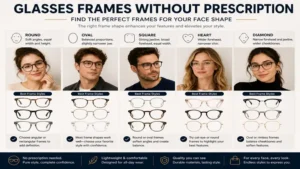
To ensure your non-prescription frames enhance your facial structure, follow the principle of contrast: choose a frame shape that opposes your natural facial contours.
Facial Silhouette Matrix:
- Round Face    ---> Angular / Rectangular / Square Frames (Adds structure)
- Square Face   ---> Round / Oval / Cat-Eye Frames (Softens sharp angles)
- Oval Face     ---> Universal Fit / Browline / Oversized (Maintains natural balance)
- Heart Face    ---> Bottom-Heavy / Keyhole Bridge / Rimless (Balances wider forehead)
-
Round Face Shapes: Look for sharp, rectilinear frames like the Cyxus 8082 or TIJN Hypatia. The hard angles cut through soft cheek curves, giving the illusion of a leaner, longer face silhouette.
-
Square & Jaw-Dominant Shapes: Curved profiles, cat-eye designs like the SOJOS SJ1072, or circular lenses soften a strong angular jawline and broad forehead.
-
Heart & Diamond Shapes: Browline styles like the Ray-Ban RB5154 Clubmaster draw attention upward toward the eyes while balancing a narrower chin.
🔍 Ready to Upgrade Your Eyewear Setup?
Selecting the right pair of zero-power frames allows you to protect your eyes from digital fatigue while expressing your individual aesthetic confidence.
Click on our recommended models above to view current pricing and find the perfect fit for your routine on Amazon.
Common Mistakes to Avoid When Buying Non-Prescription Eyewear
-
Ignoring Bridge Width (The DBL Metric): Most people focus exclusively on lens width (e.g., 50mm), ignoring the Distance Between Lenses (DBL). If your frame has a 22mm bridge width but you have a narrow nose bridge, the glasses will constantly slide down, requiring endless adjustments.
-
Assuming All Blue Light Lenses Are Equal: Extremely cheap non-prescription glasses often feature a heavy yellow tint that distorts color accuracy, making them unusable for graphic designers, video editors, or anyone working with color-sensitive media. Look for multi-layer clear coatings that filter harmful spectrums without shifting color temperature.
-
Overlooking Total Weight: A frame that feels fine for five minutes can cause significant soreness behind the ears after six hours. Aim for frames under 25 grams for extended desk work.
-
Wiping Dry Lenses with Shirts or Paper Towels: Dry-wiping grinds surface dust directly into the anti-reflective coating, leaving micro-scratches that degrade clarity within weeks. Always use a microfiber cloth paired with a dedicated lens cleaning spray.
Long-Term Cost & Value Analysis (ROI of Eyewear)
Evaluating glasses frames without prescription through a long-term cost-per-wear lens reveals substantial value compared to frequent fashion updates or untreated digital fatigue.
Long-Term Value Calculation:
[Initial Frame Investment ($20 - $180)] / [365 Days of Digital Wear]
= $0.05 to $0.49 per day.
Investing $20 to $180 in a reliable frame translates to pennies per day over a single year of use. When factoring in the intangible benefits—such as reduced headache frequency, improved screen contrast, and enhanced professional presence on video calls—the functional return on investment is immediate. Higher-end acetate frames like the Ray-Ban Clubmaster easily last 3 to 5 years with simple lens replacements, driving the daily cost down even further.
Frequently Asked Questions (FAQ)
❓ Can wearing glasses frames without prescription damage your vision?
✅ No, wearing non-prescription glasses with zero optical power will not damage your eyes or alter your physical eyesight. However, low-quality plastic lenses with manufacturing distortions can cause temporary eye strain, glare, or headaches if worn for extended periods...
❓ Can you put prescription lenses into non-prescription frames later?
✅ Yes, provided the frame is structurally sound. High-quality acetate, metal, or TR90 frames like the Ray-Ban Clubmaster can easily be taken to an optician to have prescription or custom photochromic lenses fitted into the existing rim channel...
❓ Do non-prescription blue light glasses actually reduce screen glare?
✅ Yes, quality non-prescription blue light glasses utilize anti-reflective coatings and substrate filters that reduce high-energy visible light glare from digital displays, helping ease digital eye strain and supporting healthier circadian sleep cycles during night screen use...
❓ How do I know what size non-prescription glasses frame to buy?
✅ Check the three small numbers printed inside the frame temple arm (e.g., 51-18-140). These represent lens width, bridge width, and temple length in millimeters. Compare these measurements to a well-fitting pair of sunglasses you already own...
❓ What is the difference between demo lenses and plano lenses?
✅ Demo lenses are thin, clear plastic sheets used by manufacturers to maintain frame shape during shipping and display; they scratch easily. Plano lenses are high-grade optical zero-power lenses featuring protective UV, anti-scratch, and blue-light coatings...
Conclusion
Finding the best glasses frames without prescription comes down to balancing structural material quality, face shape ergonomics, and your personal lifestyle needs. Whether you choose the timeless craftsmanship of the Ray-Ban RB5154 Clubmaster, the ultralight screen protection of the Cyxus 8082, or the chic flare of the SOJOS Cat Eye, non-prescription eyewear remains one of the most effective ways to merge personal style with everyday eye comfort. By choosing frames made from high-grade acetate or flexible TR90 and maintaining proper lens care, your non-prescription glasses will serve as a reliable, stylish companion for years to come.
✨ Found this guide helpful? Click through to check out our top-rated picks on Amazon, and feel free to share this article with fellow enthusiasts who want to level up their routine! 💬🤗
Recommended for You
Disclaimer: This article contains affiliate links. As an Amazon Associate, I earn from qualifying purchases. If you purchase products through these links, we may earn a small commission at no additional cost to you.
✨ Found this helpful? Share it with your friends! 💬🤗