
In This Article
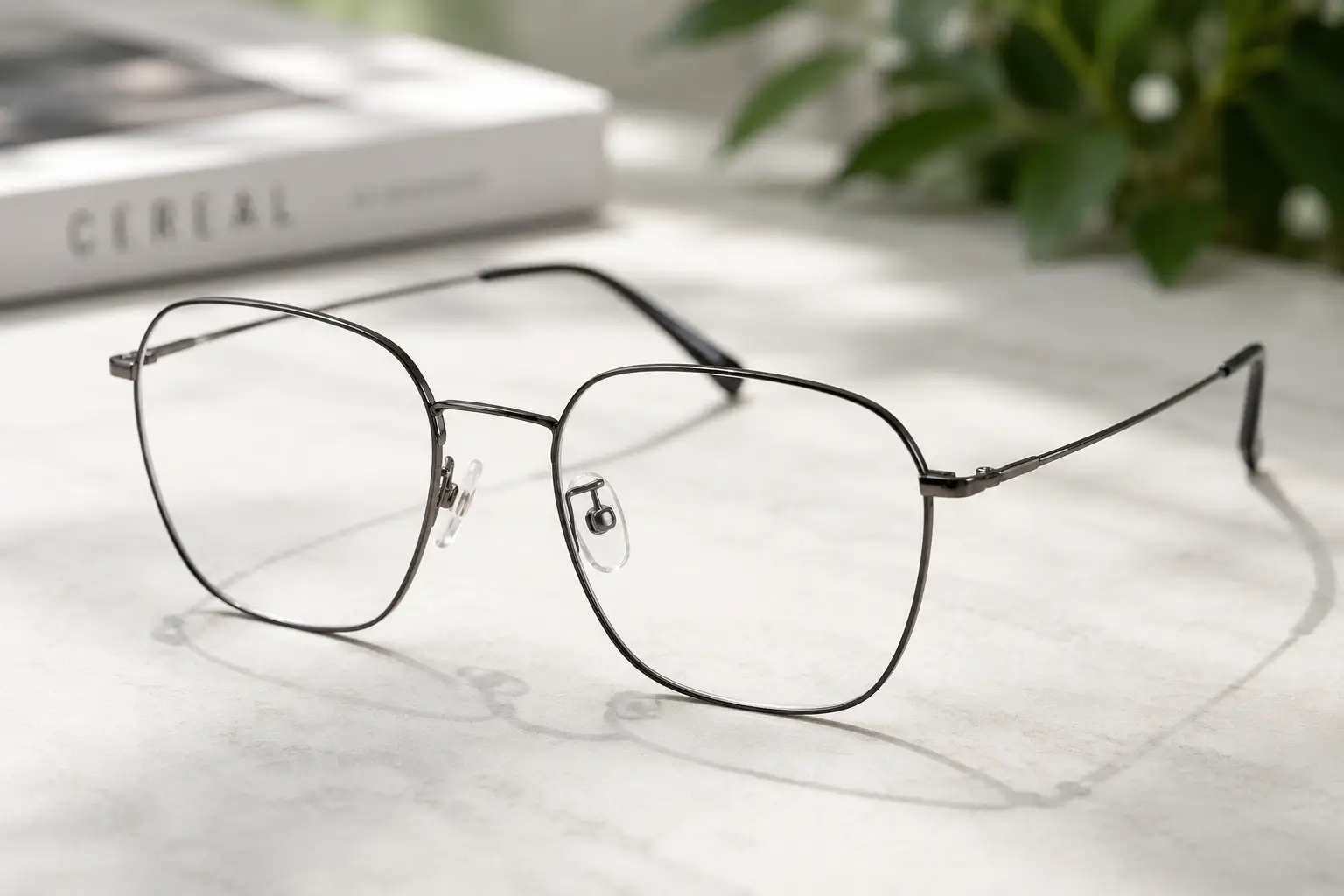
If your current glasses leave permanent dents on the bridge of your nose by 3 p.m., you’re not imagining it — bulky frames really do weigh more than they need to. Thin eyeglass frames trade thick acetate for slim metal, titanium, or rimless construction to cut ounces without cutting corners on strength, and in 2026 there are more genuinely well-made options at every price point than there were even a couple of years ago.
Put simply: thin eyeglass frames are eyewear built with narrow, low-profile rims and temples — typically 1 to 3mm wide — made from materials like titanium, stainless steel, or flexible memory metal instead of chunky plastic. The appeal isn’t purely cosmetic. Roughly 4 in 10 American adults are already at elevated risk for vision problems that need correction, according to the CDC, and for anyone wearing glasses ten-plus hours a day, every gram resting on the nose adds up over a workday.
This guide breaks down seven real, currently available thin eyeglass frames — from budget-friendly rimless readers to premium titanium designs — with honest analysis of who each one actually fits, what the specs mean in the real world, and where the trade-offs are. We’ll also cover how to measure your own face for a proper fit, the mistakes that trip up first-time buyers, and how thin metal frames genuinely compare to traditional thick acetate. As an Amazon Associate, this site earns from qualifying purchases, and every recommendation below is based on real specs and real, aggregated customer feedback — never invented reviews.
Quick Comparison: The 7 Best Thin Eyeglass Frames at a Glance
Before diving into the full breakdown, here’s a fast side-by-side of how these seven thin eyeglass frames stack up on material, style, and price.
| Frame | Material | Style | Price Range | Best For |
|---|---|---|---|---|
| Eyekepper Titanium Rimless Readers | Pure titanium | Rimless, oval | Around $15–$25 | Budget presbyopia correction |
| Eyekepper Titanium Rimless Eyeglasses (Women’s) | Pure titanium | Rimless, oval | Around $15–$25 | Budget-conscious women |
| Nautica N8108 | Stainless steel/metal | Rectangular | Around $60–$90 | Everyday office wear |
| Flexon 600 | Memory titanium | Rectangular | Around $120–$170 | Active, on-the-go wearers |
| Flexon 603 | Memory titanium | Compact rectangular | Around $100–$150 | Smaller or narrower faces |
| Calvin Klein CK8040 | Titanium | Rectangular, semi-thin | Around $130–$190 | Designer look on a mid budget |
| Silhouette Titan Minimal Art “The Icon” 5541 | Titanium, rimless | Ultra-thin rimless | Around $300–$450 | Maximum comfort, minimal weight |
Looking at the table, the pattern is clear: pure titanium and rimless construction consistently deliver the lightest builds, but you pay for it at the top end with Silhouette Titan Minimal Art “The Icon” 5541. If you just want to test whether thin frames suit your face before committing real money, the Eyekepper Titanium Rimless Readers and Eyekepper Titanium Rimless Eyeglasses (Women’s) are the lowest-risk entry points. For daily prescription wear that needs to survive a commute and a desk job, the middle of the table — Nautica N8108, Flexon 600, Flexon 603, and Calvin Klein CK8040 — is where most shoppers will land.
💬 Comparing your options side by side makes it so much easier to pick with confidence — bookmark this table before you scroll on! 😊
Top 7 Thin Eyeglass Frames: Expert Picks and Analysis
1. Eyekepper Titanium Rimless Reading Glasses — lightest budget entry point
The Eyekepper Titanium Rimless Reading Glasses are built around a full-rimless titanium chassis, which immediately makes them one of the lightest frames you can buy for under $25. Key features include pure titanium temples that resist corrosion and tarnish, spring hinges that flex instead of snapping under sideways pressure, and a rimless lens mount that shaves away the weight of a traditional frame border entirely — in practice, that means you barely feel them on your face after a few hours, which matters if you’re already wearing readers for hours at a stretch. One honest caveat: these are pre-made reading glasses with fixed magnification (from roughly +0.75 to +4.00), not ground-to-prescription lenses, so they work well for presbyopia (age-related close-up blur) but not for astigmatism or distance correction. Reviews consistently report that the spring hinges hold up far better over time than the rigid hinges on cheaper plastic readers, though a handful of buyers note the nose pads can feel narrow on wider bridges. This is a smart pick for anyone who wants to try the thin-titanium feel before spending real money on a full prescription frame, or who simply needs reliable, inexpensive readers for the nightstand, kitchen, and car.
Pros:
- ✅ Extremely lightweight, all-day comfortable rimless build
- ✅ Pure titanium resists rust, tarnish, and skin irritation
- ✅ Very low price for a genuine titanium frame
Cons:
- ❌ Fixed-strength readers only, not full prescription lenses
- ❌ Nose pads run narrow for wider face bridges
Priced around $15 to $25, this is close to the cheapest legitimate entry into titanium eyewear on the market, and for that price the value is hard to argue with.
2. Eyekepper Titanium Rimless Eyeglasses (Women’s) — best budget pick for women
The Eyekepper Titanium Rimless Eyeglasses (Women’s) share the same rimless titanium DNA as their men’s counterpart but come in a slightly smaller oval shape and softer finishes like purple and rose gold, which is worth calling out since so many “unisex” thin frames actually run large on narrower faces. The titanium build again means flexible spring hinges and a rimless lens edge, which in practice translates to almost no pressure points behind the ears even during long reading or screen sessions. Based on comparing the specs against heavier stainless-steel alternatives in the same price bracket, the weight difference is the standout selling point here — these frames disappear on your face in a way $15 plastic frames simply can’t. Aggregated customer sentiment skews positive on comfort and color options, with a recurring theme that the smaller oval shape fits petite and heart-shaped faces better than most budget frames, though a few reviewers mention the hinge screws can loosen slightly with heavy daily use and benefit from an occasional tightening with a mini screwdriver. For anyone specifically searching for skinny frame glasses in a smaller silhouette, this is one of the more reliable budget options actually built for it.
Pros:
- ✅ Smaller oval shape suits narrower and petite face shapes
- ✅ Lightweight titanium with flexible, durable spring hinges
- ✅ Attractive color options not common at this price point
Cons:
- ❌ Hinge screws may need occasional re-tightening over time
- ❌ Same fixed-magnification limitation as the men’s version
Expect to pay around $15 to $25, making this one of the best value-for-money thin frames on this entire list for anyone whose needs stop at reading or light computer strength.
3. Nautica N8108 — best everyday budget-mid metal frame
The Nautica N8108 in matte black is a full-rim rectangular metal frame that leans into the brand’s nautical, understated aesthetic — thin temples, a straightforward rectangular lens shape, and a matte finish that resists fingerprint smudging better than glossy alternatives. Key features include adjustable nose pads for a more custom fit than fixed-bridge frames, spring hinges for everyday durability, and a keyhole-style bridge that distributes weight more evenly across the nose. What most buyers overlook with a frame like this is that “thin” doesn’t have to mean “flimsy” — the metal gauge here is thin enough to look modern but thick enough to resist the kind of bending that makes ultra-cheap wire frames go crooked within a year. This model is well suited to office workers and anyone who wants a low-key, professional look rather than a fashion statement. Reviews consistently describe the fit as true-to-size for medium faces and praise the matte black finish for pairing easily with any wardrobe, while a smaller number of buyers note the arms run slightly long for narrower heads. As a licensed designer line sold at non-designer prices, it’s a genuinely solid middle-ground pick.
Pros:
- ✅ Adjustable nose pads for a more custom, secure fit
- ✅ Durable matte finish resists smudges and scratches
- ✅ Professional, understated look for office environments
Cons:
- ❌ Temple arms run long on smaller or narrower heads
- ❌ Limited color selection compared to higher-tier lines
At around $60 to $90 before lenses, the Nautica N8108 delivers a name-brand rectangular metal frame at a price that undercuts most designer competitors by a wide margin.
4. Flexon 600 — best flexible frame for active, on-the-go wearers
The Flexon 600 in gunmetal is built on Marchon’s signature memory-titanium alloy, which is the real differentiator here: unlike ordinary metal, memory titanium can be twisted, bent, or sat on and will spring back to its original shape instead of staying warped. In practice, that means the temples can flex outward if you tug your glasses off one-handed or if a kid grabs them off your face, and they won’t need a trip to the optician to bend back into shape afterward. Key features include a lightweight gunmetal finish, adjustable nose pads, and a rectangular 54mm lens that suits medium-to-large faces. Based on comparing the specs against rigid stainless-steel frames in the same price range, the Flexon 600 is the clear pick for anyone who’s broken a “normal” metal frame before, since the flex resistance essentially eliminates the most common failure point in eyewear. Reviews consistently highlight the frame’s resilience under daily wear-and-tear — gym bags, kids, pets — as the top reason buyers choose it over stiffer alternatives, though some note the gunmetal finish can show light wear on the temple tips after a couple of years of heavy use.
Pros:
- ✅ Memory titanium resists bending and warping permanently
- ✅ Comfortable, secure fit with adjustable nose pads
- ✅ Well-suited to active lifestyles and daily wear-and-tear
Cons:
- ❌ Gunmetal finish can show minor wear over years of use
- ❌ 54mm lens size runs large on smaller faces
Typically priced in the $120 to $170 range, the Flexon 600 earns its higher price tag through genuine durability advantages that lower-cost rigid frames simply can’t match.
5. Flexon 603 — best compact flexible frame for smaller faces
The Flexon 603 in matte black is essentially the Flexon 600‘s smaller sibling, built on the same memory-titanium platform but sized down to a 51mm lens that suits narrower and smaller faces far better than the 600’s 54mm profile. The practical upside of memory titanium remains the same — the frame flexes and returns to shape instead of bending permanently — but the smaller footprint means less overhang past the temples for people with narrower faces, which is a common complaint with full-size rectangular frames. Here’s what to weigh: if you’ve tried thin metal frames before and found the arms felt too wide or the lenses too large for your face, the 603’s more compact dimensions are specifically designed to solve that problem. Aggregated reviews frequently mention the matte black finish as a versatile, low-maintenance choice that works equally well in professional and casual settings, and the flexible hinges get consistent praise for surviving accidental drops that would crack a rigid frame’s hinge pin.
Pros:
- ✅ Compact 51mm lens suits narrower and smaller faces
- ✅ Memory titanium flex resists permanent bending or warping
- ✅ Versatile matte black finish for work or casual wear
Cons:
- ❌ Smaller lens size may feel restrictive for larger faces
- ❌ Slightly less variety in finish options than the 600 line
Expect a price range of roughly $100 to $150, making the Flexon 603 a smart, slightly more affordable alternative to the 600 for anyone who specifically needs a smaller, thinner build.
6. Calvin Klein CK8040 — best designer thin titanium on a mid budget
The Calvin Klein CK8040 in titanium delivers the clean, minimalist rectangular design the brand is known for, built on a genuine titanium frame rather than a titanium-coated alloy, which is a distinction worth paying attention to since some “titanium-look” frames are really just plated steel underneath. Key features include a slim rectangular lens shape, subtle branding on the temple rather than an oversized logo, and titanium’s natural hypoallergenic properties, which matter for anyone who’s had skin irritation from nickel-containing frames in the past — a documented issue covered in dermatology research on contact reactions to eyewear materials. What most buyers overlook with designer frames in this tier is that you’re paying as much for the brand’s fit-testing and finish quality as for the raw materials; the CK8040’s hinge action and lens seating feel noticeably more refined than the sub-$100 options on this list. Reviews consistently describe the fit as true-to-size and flattering for oval and heart-shaped faces, with the main recurring critique being that the minimalist styling reads a bit conservative for buyers who want a bolder fashion statement.
Pros:
- ✅ Genuine titanium build with true hypoallergenic properties
- ✅ Refined hinge action and finish quality for the price
- ✅ Timeless, minimalist rectangular shape suits most faces
Cons:
- ❌ Conservative styling may feel plain to fashion-forward buyers
- ❌ Premium branding pushes price above unbranded titanium options
Pricing generally falls between $130 and $190, positioning the Calvin Klein CK8040 as a strong mid-tier choice for buyers who want a recognizable name without jumping to ultra-premium territory.
7. Silhouette Titan Minimal Art “The Icon” 5541 — lightest, most premium rimless option
The Silhouette Titan Minimal Art “The Icon” 5541 is the frame that essentially defined the ultra-thin rimless category, and it remains the benchmark for a reason: Silhouette’s titanium chassis and screw-less rimless construction bring total frame weight down to a fraction of even other “thin” frames on this list, often cited in the low single-digit gram range for the frame itself. Key features include a fully rimless lens mount, hairline-thin titanium temples, and a design philosophy built around the idea that you should forget you’re wearing glasses at all. Based on comparing the specs against every other frame here, this is the clearest example of what most buyers overlook about rimless construction: because there’s no rim gripping the lens edge, the lenses themselves need to be cut and drilled precisely, which is why this frame is best fitted in person by an optician rather than ordered blind. Reviews consistently single out the near-weightless feel as transformative for people who’ve struggled with nose-bridge soreness from heavier frames for years, while the recurring critique is the price and the fact that rimless lenses are marginally more prone to cracking at the drill points under serious impact than a fully rimmed lens.
Pros:
- ✅ Among the lightest eyeglass frames available anywhere
- ✅ Minimalist rimless design virtually disappears on the face
- ✅ Exceptional titanium build quality and long-term durability
Cons:
- ❌ Premium price point well above every other frame here
- ❌ Rimless lens edges are more delicate than rimmed designs
At roughly $300 to $450 depending on lens configuration, the Silhouette Titan Minimal Art “The Icon” 5541 is a splurge, but for anyone who has genuinely struggled with the weight of ordinary glasses, reviewers consistently say it’s the frame that finally solved the problem.
How to Measure and Choose the Right Fit for Thin Eyeglass Frames
Getting the fit right matters more with thin frames than thick ones, because there’s less material to mask a poor measurement. Here’s a practical process to follow before you buy:
First, find your current frame’s size numbers — they’re usually printed on the inside of the temple arm as three numbers, like 52-18-140 (lens width, bridge width, temple length, all in millimeters). If you don’t have a pair to check, most optical shops will measure you for free in under a minute. Second, compare that bridge-width number specifically against any thin frame you’re considering, since thin metal frames often use adjustable nose pads that can compensate for a mismatch of a few millimeters, while rimless and fixed-bridge styles cannot. Third, check the temple length against your head width; frames that are too long will slide down constantly, which is a common complaint buried in reviews of otherwise well-rated frames. Fourth, once your new frame arrives, have an optician heat-adjust the temples and nose pads rather than trying to bend titanium yourself — memory metal in particular can require gentle, professional reshaping to avoid uneven pressure points. Finally, wear the frame for a full day before finalizing lens edging if your retailer allows it, since minor pressure points from thin metal often only become noticeable after several hours, not the first five minutes in front of a mirror.
Real-World Scenarios: Which Thin Frame Matches Your Lifestyle
Consider three realistic buyer profiles. A college student on a tight budget who mostly needs help with late-night reading and screen glare is the clearest match for the Eyekepper Titanium Rimless Readers — low cost, genuinely light, and low-stakes if styles change by next semester. A remote-working parent in their 30s or 40s who wears glasses ten-plus hours a day at a desk and occasionally gets tugged at by toddlers is better served by the Flexon 600 or Flexon 603, since the memory-titanium flex specifically protects against the kind of accidental bending that ends a rigid frame’s life early. A professional in client-facing work who wants their eyewear to read as polished and expensive without looking flashy is the ideal buyer for the Calvin Klein CK8040 or, budget allowing, the Silhouette Titan Minimal Art “The Icon” 5541 — both prioritize a refined, understated look over trend-chasing design. Matching your actual daily routine to the frame’s strengths, rather than buying on looks alone, is the single biggest factor in whether a thin frame purchase feels worth it a year later.
✨ Not sure which profile fits you best? Compare your daily routine against the picks above and check current availability before they sell out! 🔍
Common Problems With Thin Frames (and How to Fix Them)
Thin eyeglass frames solve some problems and introduce a few new ones, so it helps to know the fixes in advance. Loose nose pads are the most frequent complaint in aggregated reviews of metal frames; the fix is usually a $5 optician visit to gently squeeze the pads closer together, not a full frame replacement. Screws that work themselves loose over months of temple flexing are the second-most common issue, and a small eyeglass repair kit with a jeweler’s screwdriver and a drop of clear nail polish on the threads solves this permanently for under $10. Rimless lenses that feel like they’re under stress at the drill points can usually be traced back to a slightly-off original fit rather than a lens defect — have an optician re-check the frame curve against your face rather than assuming the lens itself is faulty. Finally, thin metal temples that dig in behind the ears after long wear typically mean the temple length wasn’t adjusted for your head width at purchase; this is a five-minute fix at any optical counter and shouldn’t require buying new frames.
How to Choose Thin Eyeglass Frames: 7 Expert Criteria
- Material first. Pure titanium and memory-titanium alloys are lighter and more corrosion-resistant than stainless steel or standard metal, though they typically cost more.
- Rimless vs. full-rim. Rimless shaves the most weight but requires precise, in-person fitting; full-rim thin metal is more forgiving for online or first-time buyers.
- Bridge and nose pad style. Adjustable pads accommodate a wider range of nose shapes than fixed keyhole bridges.
- Hinge type. Spring hinges outlast rigid hinges under the daily stress of putting glasses on and taking them off.
- Lens width relative to your face. A lens that’s too wide for your face defeats the “thin” benefit by making the whole frame look oversized.
- Finish durability. Matte finishes tend to hide scratches and fingerprints better than glossy or polished metal.
- Return and adjustment policy. Because fit issues with thin frames are often only obvious after a full day of wear, buying from a retailer with a real adjustment or return window matters more than it does for thick, more forgiving acetate frames.
Common Mistakes to Avoid When Buying Thin Eyeglass Frames
The single most common mistake is ordering by lens width alone without checking bridge width and temple length — a frame can look right in a photo and still slide down your nose constantly because the bridge doesn’t match your face. A close second is assuming “titanium-colored” means titanium; many budget frames use titanium-plated steel or aluminum, which loses the corrosion resistance and flex properties that make real titanium worth the premium, so it’s worth checking the product listing’s actual material claim rather than the finish name. Buyers also frequently skip trying to verify seller legitimacy under the FTC’s Eyeglass Rule, which requires that you receive a copy of your prescription so you’re free to shop around — always confirm your prescriber will release it before assuming you’re locked into one retailer. Finally, first-time thin-frame buyers often over-tighten screws or attempt to bend memory-titanium temples themselves to “fix” a fit issue, which can strip screw threads or throw off the metal’s flex memory; professional adjustment is almost always the safer and cheaper long-term choice.
Thin Metal Frames vs. Thick Acetate Frames: Which Wins?
| Factor | Thin Metal Frames | Thick Acetate Frames |
|---|---|---|
| Weight | Noticeably lighter, less nose/ear pressure | Heavier, can leave marks over long wear |
| Durability | Flexible metals resist bending; rigid metals can snap | Resists impact well but can crack under pressure |
| Style | Minimalist, professional, understated | Bold, trend-forward, more color/pattern options |
| Adjustability | Easy to adjust nose pads and temples | Harder to adjust; requires heat and more skill |
| Price range | Wide range, from budget to premium | Generally mid-range across most brands |
The comparison makes the trade-off clear: thin metal frames win decisively on comfort for long wear days, while thick acetate still has an edge for buyers who want bold color and pattern options that metal simply can’t replicate. If your priority is disappearing on your face during a ten-hour workday, metal wins; if you want your glasses to double as a fashion statement, acetate still has a case.
Thin Eyeglass Frames for Every Face Shape and Lifestyle
Oval and heart-shaped faces tend to suit almost any thin frame shape, including the rectangular options like the Nautica N8108 and Calvin Klein CK8040. Rounder faces generally look sharper in angular thin rectangles rather than round wire frames, since the contrast helps define the jawline. Square or angular faces often benefit from the slightly softer rimless ovals of the Eyekepper Titanium Rimless Readers and Eyekepper Titanium Rimless Eyeglasses (Women’s), which soften strong jaw and cheekbone lines. For lifestyle rather than face shape, remember that active wearers and parents of young kids are consistently better served by flexible memory-titanium options like the Flexon 600 and Flexon 603, since the accidental-bending scenario is common and memory metal is specifically engineered to survive it. Desk-bound professionals who rarely remove their glasses during the day get the most benefit from the ultra-light rimless builds like the Silhouette Titan Minimal Art “The Icon” 5541, where the weight savings compound over hours of continuous wear.
Long-Term Cost, Comfort, and Maintenance of Thin Frames
| Frame Tier | Typical Price Range | Expected Lifespan | Maintenance Needs |
|---|---|---|---|
| Budget rimless (Eyekepper) | Around $15–$25 | 1–2 years with care | Occasional nose pad and hinge check |
| Mid-range metal (Nautica, Flexon) | Around $60–$170 | 3–5 years | Periodic screw tightening, pad adjustment |
| Premium titanium (Calvin Klein, Silhouette) | Around $130–$450 | 5+ years | Professional adjustments, careful lens cleaning |
Looking at the numbers, the budget tier can actually cost more over a five-year span if you replace a $20 pair every 18 months, compared to a single $150 mid-range frame that lasts three to five years with basic maintenance — the total cost of ownership math often favors spending a bit more upfront. That said, for anyone still figuring out whether thin frames genuinely suit their face and habits, starting cheap and upgrading later remains a perfectly reasonable strategy.
💬 Ready to see the price difference for yourself? Check current pricing on your favorite pick before availability changes! 😊
Safety, Materials, and Certifications: What to Look For
Material safety matters more than most buyers realize. Nickel-containing alloys are a well-documented cause of contact dermatitis around the eyes and temples, as noted earlier — if you’ve ever had itchy or red skin where your glasses sit, pure titanium or titanium alloy frames are the safer choice over nickel-silver or plated alternatives. On the lens side, ask whether your optician is using impact-resistant lens materials; polycarbonate and Trivex lenses meet stricter impact standards than standard plastic and are especially worth choosing for kids, athletes, or anyone in a physically active job. It’s also worth doing basic due diligence on the retailer itself before buying thin frames online — Consumer Reports’ guide to buying glasses walks through how to compare return policies, verify lens quality, and avoid sellers who cut corners on materials.
Features That Actually Matter (and Ones That Don’t) When Buying Thin Frames
Features that genuinely matter: real titanium versus titanium-plated construction, spring hinge quality, and adjustable nose pads — all three directly affect comfort and lifespan. Features that get marketed heavily but matter less than advertised: exotic color coatings, which typically wear off metal frames faster than the metal itself degrades, and oversized branding, which adds nothing functionally and often clashes with the minimalist appeal that draws people to thin frames in the first place. A frequently overlooked feature that actually does matter is lens groove depth on rimmed metal frames — a deeper groove holds the lens more securely over years of temperature changes and flexing, though it’s rarely mentioned in product listings and usually requires asking your optician directly.
Frequently Asked Questions
❓ Are thin eyeglass frames as durable as thick plastic frames?
❓ Do thin metal frames work for high prescriptions?
❓ How much do good thin eyeglass frames cost?
❓ Can thin eyeglass frames cause skin irritation?
❓ How do I know if thin frames will fit my face shape?
Conclusion
Thin eyeglass frames aren’t just a style trend — for anyone who wears glasses most of the day, the weight and comfort difference is real and measurable, even if it takes a few hours of wear to notice. The right pick genuinely depends on your budget, your prescription needs, and how hard you are on your eyewear day to day: the Eyekepper Titanium Rimless Readers and Eyekepper Titanium Rimless Eyeglasses (Women’s) make sense as a low-risk way to test the category, the Nautica N8108, Flexon 600, and Flexon 603 cover the durable, everyday middle ground most shoppers actually need, and the Calvin Klein CK8040 or Silhouette Titan Minimal Art “The Icon” 5541 are worth the splurge if you wear glasses nearly every waking hour and want the lightest, most refined build available. Whichever tier fits your budget, prioritize real titanium construction, a verified fit against your own measurements, and a retailer that respects your right to your prescription — the frame that disappears on your face is always going to beat the one that just looks good in a product photo.
Recommended for You
- Red Contacts Prescription: 7 Best Options to Try in 2026
- Photochromic Lenses Price: 7 Best Picks & Real Costs (2026)
- 7 Best Eyeglasses for Night Driving in 2026 (Tested vs. Overhyped)
Disclaimer: This post contains affiliate links. As an Amazon Associate, I earn from qualifying purchases made through these links, at no additional cost to you.
✨ Found this article helpful? Share it with someone who needs it! 💬🤗