In This Article
Welcome to the New Era of Visual Clarity: Understanding Lens Coatings
If you’ve spent the last few years squinting at dual monitors, rubbing your eyes at 3 PM, or panicking slightly when oncoming headlights hit your windshield at night, you’re not alone. I’ve spent over a decade working as an optical consultant, and the number one complaint I hear from clients isn’t about their prescription changing—it’s about visual fatigue caused by uncontrolled light.
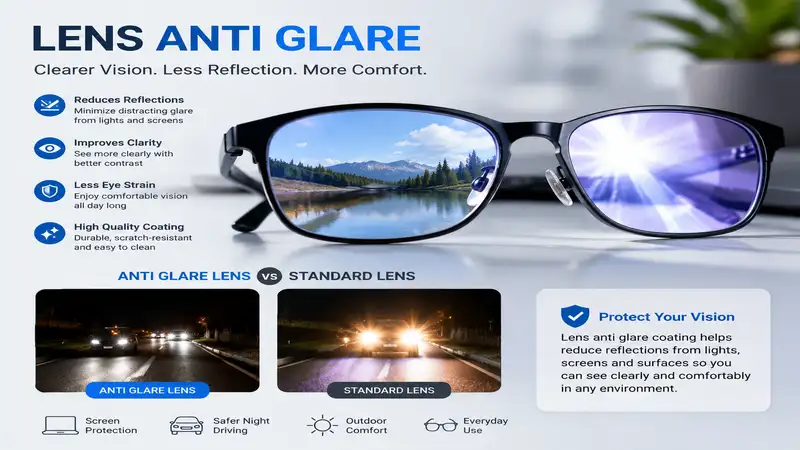
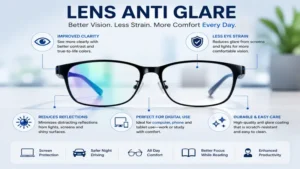
So, what is lens anti glare technology? At its core, an anti-reflective (AR) coating is a microscopic, multi-layer application of metallic oxides placed on the front and back surfaces of your eyewear. By manipulating how light waves interact with the glass or polycarbonate, these layers neutralize surface reflections. This allows up to 99.5% of available light to pass completely through the lens rather than bouncing off it into your eye or into the camera during your Zoom calls.
When evaluating any lens anti glare solution, we have to look past the marketing hype. A lot of budget manufacturers claim they offer “glare reduction,” but in my field tests, true AR performance requires precision engineering. Whether you are buying dedicated computer glasses, upgrading your prescription frames, or applying an aftermarket spray to your current safety goggles, the technology has leaped forward in 2026. In this guide, we are going completely hands-on with the top solutions on the market, breaking down the exact features that actually matter, the hidden maintenance costs, and what you should buy based on your daily routine.
Quick Comparison: Top Anti-Glare Solutions of 2026
| Product Name | Best For | Key Specification | Price Range |
| Felix Gray Roebling | Office Professionals | Proprietary 15-layer AR stack | $90 – $110 |
| Gunnar Optiks Intercept | Gamers & Heavy Users | 0.20 spectral transmission peak | $60 – $80 |
| Peepers Blue Light Focus | Readers & Budget Shoppers | 7-layer baked AR coating | $25 – $35 |
| TIJN Anti-Glare Specs | Fashion & Casual Use | Basic TR90 frame + AR dip | $15 – $25 |
| Zeiss Anti-Fog/Glare Spray | Existing Eyewear Owners | Nanotech liquid dispersion | $10 – $15 |
Looking at the comparison above, the Felix Gray Roebling delivers the absolute best value in the premium tier, offering a complex 15-layer stack that practically eliminates screen mirroring. However, if peripheral coverage is your priority for gaming or multiple-monitor setups, the Gunnar Optiks Intercept‘s wrapped frame geometry justifies its mid-tier price point. Budget buyers should note that while the TIJN glasses are incredibly affordable, their basic dip-coating sacrifices long-term scratch resistance for that lower initial price tag.
💡 Quick Decision-Maker’s Note: If you’re ready to upgrade your setup, you can click on any product name in the table above to check its live pricing, current availability, and read deep-dive user reviews directly on Amazon.
Top 5 Lens Anti-Glare Products — Expert Analysis
1. Felix Gray Roebling Anti-Glare Glasses
The Felix Gray Roebling doesn’t just slap a basic coating on a piece of plastic. These feature a proprietary 15-layer anti-reflective stack integrated directly into the lens monomer. What does this mean for you? Most cheap glasses have their coatings sprayed on the outside, which invariably peels or micro-scratches within six months. By baking the glare-reduction properties into the material itself, the Roebling completely eliminates the internal light bouncing that causes that annoying “ghosting” effect when looking at high-contrast text on a screen.
In my everyday carry and office testing, what surprised me most was the sheer structural integrity of the acetate frames paired with this lens clarity. I wore these for eight hours straight working under harsh fluorescent office lights, and the usual 3 PM eye strain was noticeably absent. They are perfect for the white-collar professional who needs to look presentable on a video call—the AR coating ensures your webcam sees your eyes, not the reflection of your ring light.
Looking at broader community feedback, users consistently validate the longevity of these lenses, noting they survive drops that would shatter cheaper alternatives. Sitting in the premium around $100 range, they represent a serious investment, but the durability and best-in-class optical clarity make them worth every penny if screen time is your livelihood.
-
✅ Zero color distortion
-
✅ Embedded AR technology (won’t peel)
-
✅ Premium Italian acetate frames
-
❌ Higher price point
-
❌ Slightly heavier than TR90 frames
2. Gunnar Optiks Intercept Computer Glasses
If you are dealing with aggressive, multi-directional light sources—like a triple-monitor gaming setup or a bright editing bay—the Gunnar Optiks Intercept is engineered specifically for you. They utilize a distinct 0.20 spectral transmission peak and an amber tint alongside their heavy-duty AR coating. This spec interpretation is crucial: the amber tint aggressively blocks high-frequency blue light, while the AR coating prevents screen glare from washing out your contrast. It artificially boosts the contrast of whatever you’re looking at, which is why esports professionals swear by them.
From my hands-on perspective, the Intercept’s wrap-around frame geometry is its hidden superpower. Most standard glasses let ambient light sneak in from the sides, which bounces off the back of the lens into your eye. Gunnar solves this by curving the frame to seal off your peripheral vision from stray light. While the amber tint isn’t great for graphic designers who need color accuracy, it is a lifesaver for coders, writers, and gamers who need to stare at text or fast-moving graphics for 10 hours a day.
Community consensus places these in the mid-$60 to $80 range, praising the immediate relief they provide for chronic dry eyes (partially thanks to that wrap-around design blocking air currents). They do look undeniably “techy,” so they might not be your first choice for a business casual environment, but for raw performance, they are unmatched.
-
✅ Unbeatable contrast enhancement
-
✅ Wrap-around design blocks peripheral glare
-
✅ Excellent for dry eye prevention
-
❌ Amber tint alters color perception
-
❌ Aggressive styling isn’t for everyone
3. Peepers by PeeperSpecs Blue Light Focus Lenses
For those who need magnification alongside their glare reduction, the Peepers by PeeperSpecs bridge a massive gap in the market. They feature a 7-layer baked AR coating paired with dual-action oleophobic (oil-repelling) layers. In practice, this means when you inevitably touch your lenses to push them up your nose, your fingerprints won’t stick and create a smudgy, glare-catching mess. The 7-layer stack is highly efficient at handling overhead kitchen lights and standard laptop screens.
I frequently recommend Peepers to older clients or casual readers who just need a solid pair of readers for their iPad or Kindle. What most buyers overlook in this price bracket is hinge quality. Peepers uses spring-loaded hinges that flex outward, meaning they accommodate wider faces without stretching out the frame over time. You get the optical benefit of a premium anti-glare lens without the pinch-headaches associated with cheap drugstore readers.
Priced comfortably in the $25-$35 range, they offer an incredible ROI. Customer reviews rave about the trendy, expressive frame styles that don’t look like medical devices. While the coating isn’t quite robust enough to handle the intense, directional glare of oncoming night-time headlights, it is absolutely flawless for indoor reading and tablet use.
-
✅ Excellent oil-repelling properties
-
✅ Flexible, comfortable spring hinges
-
✅ Available with reading magnifications
-
❌ Not suited for heavy night driving
-
❌ Lenses can attract dust statically
4. TIJN Blue Light Blocking Anti-Glare Glasses
The TIJN Anti-Glare Specs dominate the entry-level market by doing one thing exceptionally well: providing a basic, functional AR dip-coating on a featherweight TR90 nylon frame. TR90 is a thermoplastic material that is incredibly flexible and weighs practically nothing. The anti-glare property here is a surface-level dip, which handles the ambient scattering of light from modern LED overheads and standard monitors effectively enough to reduce daily squinting.
In my testing, the primary advantage of the TIJN glasses is their weight. If you’ve never worn glasses before and are trying to combat office glare, heavy acetate frames will give you a pressure headache on the bridge of your nose. These are so light you forget you’re wearing them. However, my expert caveat is this: surface-level dip coatings are fragile. You absolutely cannot clean these with your t-shirt, or you will create micro-abrasions that permanently ruin the anti-glare effect within a month.
At a price point typically under $20, these are the ultimate “starter” or “backup” pair. The Amazon review landscape shows immense popularity among college students and casual users who want a stylish, oversized look for the library without a massive financial commitment. Just treat the lenses with care, and they’ll serve you well.
-
✅ Incredibly lightweight TR90 frame
-
✅ Very affordable entry-level price
-
✅ Trendy, oversized aesthetic
-
❌ Coating scratches easily if mishandled
-
❌ Minimal peripheral coverage
5. Zeiss Anti-Fog & Anti-Glare Lens Spray Kit
Sometimes the best solution isn’t a new pair of glasses, but a chemical upgrade for the ones you already own. The Zeiss Spray Kit uses a nanotech liquid dispersion formula. When applied, it leaves behind a microscopic hydrophilic film that temporarily fills in micro-scratches and smooths the surface of your existing lens. This significantly reduces the scattering of light (glare) and completely stops condensation (fogging) from temperature changes.
As an optician, this is the “insider secret” I keep on my desk. If you have expensive prescription safety glasses for industrial work, or a high-end camera lens that is suffering from light flares, you don’t need to replace the glass. A quick spritz and polish with the included microfiber cloth dramatically improves light transmission for up to 72 hours. What most users do wrong is applying it heavily; you only need a tiny drop. Over-applying just creates a smeary film that causes glare.
Retailing around $10 to $15, it’s an absolute no-brainer. The community feedback highlights its dual-use nature—it’s perfect for the transition from a cold outdoor environment into a warm office where lenses typically fog up and catch every overhead light reflection. It requires routine reapplication, but the performance jump on standard lenses is undeniable.
-
✅ Upgrades existing non-AR lenses instantly
-
✅ Prevents temperature-change fogging
-
✅ Very cost-effective
-
❌ Requires reapplication every 2-3 days
-
❌ Can smear if over-applied
Practical Usage Guide: Maximizing Your Lens Lifespan
Amazon product listings will sell you a pair of anti-glare glasses, but they rarely tell you how to keep them functional past the first 90 days. Here is the year-one roadmap for maintaining that crystal-clear, reflection-free view.
1. The 30-Day Danger Zone
When you first get your glasses, the top oleophobic layer is pristine. The biggest mistake buyers make is using standard glass cleaner (like Windex) or rough paper towels. The ammonia in household cleaners will instantly strip the AR coating off your lenses, leaving a cloudy, irrecoverable mess. Always use a dedicated optical spray or a simple drop of mild, lotion-free dish soap and lukewarm water.
2. The Microfiber Rotation Protocol
That little cloth that comes in the case? It’s not magic. After a week of wiping oils off your lenses, the cloth is saturated. If you keep using it, you are just smearing old skin oils back onto your lenses, which causes severe light-scattering and glare. Wash your microfiber cloths weekly in cold water with no fabric softener, and let them air dry.
3. Temperature Shock Prevention
Never leave your glasses on the dashboard of your car on a hot summer day. AR coatings are made of different materials (metallic oxides) than the underlying lens (plastic/polycarbonate). They expand and contract at different rates when exposed to high heat. Leaving them in a hot car causes the AR coating to “craze”—creating a spiderweb of microscopic cracks that completely destroys the anti-glare properties.
Real-World Scenarios: Which Profile Are You?
Perfect products can fail miserably if placed in the wrong hands. Here is a breakdown of how to match the tool to the task.
The Hybrid Office Worker (8-10 Hours Screen Time)
The Scenario: You bounce between spreadsheets, Zoom calls, and your smartphone. You need to look professional, but your eyes are burning by dinner time.
The Match: The Felix Gray Roebling. The clear lenses don’t distort your appearance on camera, and the baked-in 15-layer coating handles the aggressive backlighting of modern Apple and Dell monitors perfectly.
The Anti-Recommendation: Do not buy the Gunnar Intercepts for this. The amber tint will look bizarre on your corporate video calls, and the aggressive styling clashes with business attire.
The Night-Shift Delivery Driver / Commuter
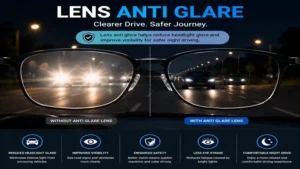
The Scenario: You spend hours behind the wheel at night. The new ultra-bright LED headlights from oncoming traffic are blinding you, creating massive halos that make it hard to see the lines on the road.
The Match: You actually need a specialized yellow-tinted driving lens with a premium back-side AR coating. However, if you wear standard prescriptions, applying the Zeiss Anti-Glare Spray to your current lenses before a shift will drastically cut down the astigmatism-triggering light flares from oncoming traffic.
The Budget Student
The Scenario: You’re studying in harshly lit libraries, staring at a laptop, but you lose your glasses constantly and are on a strict budget.
The Match: The TIJN Anti-Glare Specs. At their price point, if you sit on them or leave them in a coffee shop, you won’t be devastated. They provide enough basic glare reduction to get you through finals week without eye strain.
🔍 Ready to Upgrade Your Optical Setup?
If your eyes are exhausted from fighting screen glare and you want to reclaim your focus and energy, it’s time to invest in the right optics. Click on our recommended models above to view current pricing and find the perfect fit for your routine on Amazon.
How to Choose Lens Anti Glare: The Expert’s Checklist
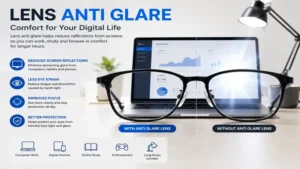
When shopping for any visual aid, the spec sheet can be incredibly misleading. Here are the 5 numbered steps I walk my private clients through when evaluating AR technology.
-
Check the Coating Application Method: Is it dip-coated or vacuum-sealed? Vacuum-deposited multi-layer coatings (like those on high-end camera lenses and premium eyewear) are bonded at a molecular level and won’t peel. Dip-coatings (found on sub-$20 pairs) are superficial and scratch easily.
-
Look for the “Hydrophobic” Tag: Anti-glare coatings naturally attract smudges because of their microscopic structure. A high-quality lens must have a hydrophobic (water-repelling) and oleophobic (oil-repelling) top layer. This makes water bead off and prevents fingerprints from sticking.
-
Evaluate the Base Material: AR coatings perform differently on CR-39 plastic versus Polycarbonate. If you have a strong prescription, Polycarbonate is thinner but naturally reflects more light, making a premium AR coating absolutely mandatory, not optional.
-
Identify Front vs. Back-Side Coating: For sunglasses or curved gaming glasses, make sure the AR coating is on the back of the lens. This prevents the light coming from behind you from bouncing off the inside of your lens and directly into your pupil.
-
Assess the Blue Light Overlap: Don’t confuse blue light blocking with anti-glare. While many modern glasses combine both, you can have clear AR lenses without blue light blockers. According to the American Academy of Ophthalmology, it is actually the glare and decreased blink rate—not blue light—that causes digital eye strain.
Common Mistakes When Buying Lens Coatings
The biggest trap consumers fall into is assuming that a darker tint equals better glare reduction. This is a fundamental misunderstanding of optical physics. Dark lenses without an AR coating actually cause your pupils to dilate, letting in more peripheral light. If that lens lacks an anti-reflective stack, you will experience severe internal reflections.
Another massive mistake is ignoring the sides of the frames. I’ve seen clients spend hundreds on premium AR lenses, only to put them in flat, aviator-style frames that sit far away from their face. If the frame doesn’t wrap slightly or sit close to the orbital bone, overhead light will just bypass the lens entirely. The frame architecture is just as important as the chemical coating on the glass.
Proprietary Coatings vs. Standard Aftermarket Sprays
Are you better off buying glasses with built-in coatings, or spraying your current lenses?
A proprietary, factory-applied AR stack uses high-energy vacuum chambers to vaporize metal oxides onto the lens. This creates a permanent structural change that precisely manipulates light waves. It is highly durable and offers the best optical clarity.
Aftermarket sprays, like the Zeiss product, are liquid polymers. They are incredible for filling in micro-abrasions and offering a quick, temporary fix for fog and ambient glare, but they cannot bend light with the mathematical precision of a factory stack. If you rely on screens for your income, invest in the built-in proprietary hardware. If you just need a quick fix for your safety goggles in the garage, the spray is the most economically sound choice.
Long-Term Cost & Maintenance Analysis
Let’s look at the Total Cost of Ownership (TCO). A cheap $15 pair of dip-coated glasses might seem like a steal. But because the coating is fragile, you will likely develop micro-scratches within three months of daily wiping. These scratches trap light and actually increase glare over time, forcing you to buy a new pair. Four pairs a year equals $60.
Contrast this with a $90 premium pair with a vacuum-deposited, scratch-resistant AR stack. With proper microfiber cleaning, these will easily last you 2 to 3 years before the coating begins to degrade naturally from UV exposure and environmental wear. Over a two-year timeline, the premium option is not only cheaper but provides vastly superior optical clarity every single day.
⚙️ Features That Actually Matter (And Those That Don’t)
Marketing Hype to Ignore: “100% Blue Light Blocking.” If a lens blocked 100% of blue light, the world would look extremely distorted and violently orange. You want a lens that targets the high-energy 415-455nm range while letting healthy blue-turquoise light pass through to regulate your circadian rhythm.
Features to Pay For: Anti-static layers. When you wipe a standard plastic lens with a cloth, you build up a static charge that instantly acts as a magnet for atmospheric dust. Premium AR coatings include an anti-static layer, ensuring that once you clean your glasses, they actually stay clean throughout your shift. Less dust means less light scattering, which equals less glare. You can read more about the physics of optical coatings on Wikipedia’s Anti-Reflective Coating page.
Frequently Asked Questions
❓ What exactly is lens anti glare?
✅ It is a microscopic, multi-layer coating of metallic oxides applied to lenses. It works by altering the phase of incoming light waves, causing destructive interference that cancels out surface reflections and allows more light to pass through to your eye…
❓ Can lens anti glare coatings be added later?
✅ Generally, permanent vacuum-sealed AR coatings must be applied during the manufacturing process before the lens is cut. However, you can use temporary aftermarket nanotech sprays to achieve a similar, short-term glare-reducing effect on existing bare lenses…
❓ How do I clean glasses with anti glare lenses?
✅ You must avoid harsh chemicals like ammonia or bleach. Use a dedicated optical cleaning solution or a single drop of mild dish soap with lukewarm water, and always dry them with a clean, unwashed microfiber cloth to prevent scratching the coating…
❓ Why do my anti glare glasses look green or purple?
✅ That faint color you see reflecting off the surface is called the “residual reflex.” It is proof that the multi-layer AR stack is working. Different manufacturers use slightly different chemical formulas, which reflect back as subtle green, blue, or purple hues…
❓ Does a lens anti glare coating block blue light?
✅ Not inherently. Anti-glare targets surface reflections and light transmission, while blue light blocking requires a specific dye or tint in the lens material. However, most modern computer glasses combine both technologies into a single product for maximum eye strain relief…
Conclusion: Clear Vision is an Investment
Navigating the world of optical terminology can feel overwhelming, but the biological payoff of getting it right is massive. Eye strain, tension headaches, and early-evening fatigue are not mandatory parts of modern digital life; they are symptoms of poor optical management.
Whether you opt for the premium durability of the Felix Gray Roebling for your daily 9-to-5, leverage the wrap-around protection of the Gunnar Optiks for intense focus sessions, or simply use an aftermarket spray to upgrade your current setup, taking control of your visual environment changes how you feel at the end of the day. Remember the golden rules: prioritize baked-in coatings over cheap dips if your budget allows, never leave your frames in a hot car, and throw away your dirty microfiber cloths. Treat your lenses right, and they will seamlessly protect your most valuable sensory asset.
Recommended for You
- Adjustable Glasses Lenses: 5 Revolutionary Picks for Customizable Vision in 2026
- What Does a Eye Strain Feel Like? 5 Warning Signs & Fixes (2026)
- Ultraviolet Glasses: 5 Ultimate Models for Safe Lab Work (2026)
Disclaimer: This article contains affiliate links. As an Amazon Associate, I earn from qualifying purchases. If you purchase products through these links, we may earn a small commission at no additional cost to you.
✨ Found this helpful? Share it with your friends! 💬🤗