In This Article
Introduction: Why Ice Blue Eye Contacts Are Worth Doing Right
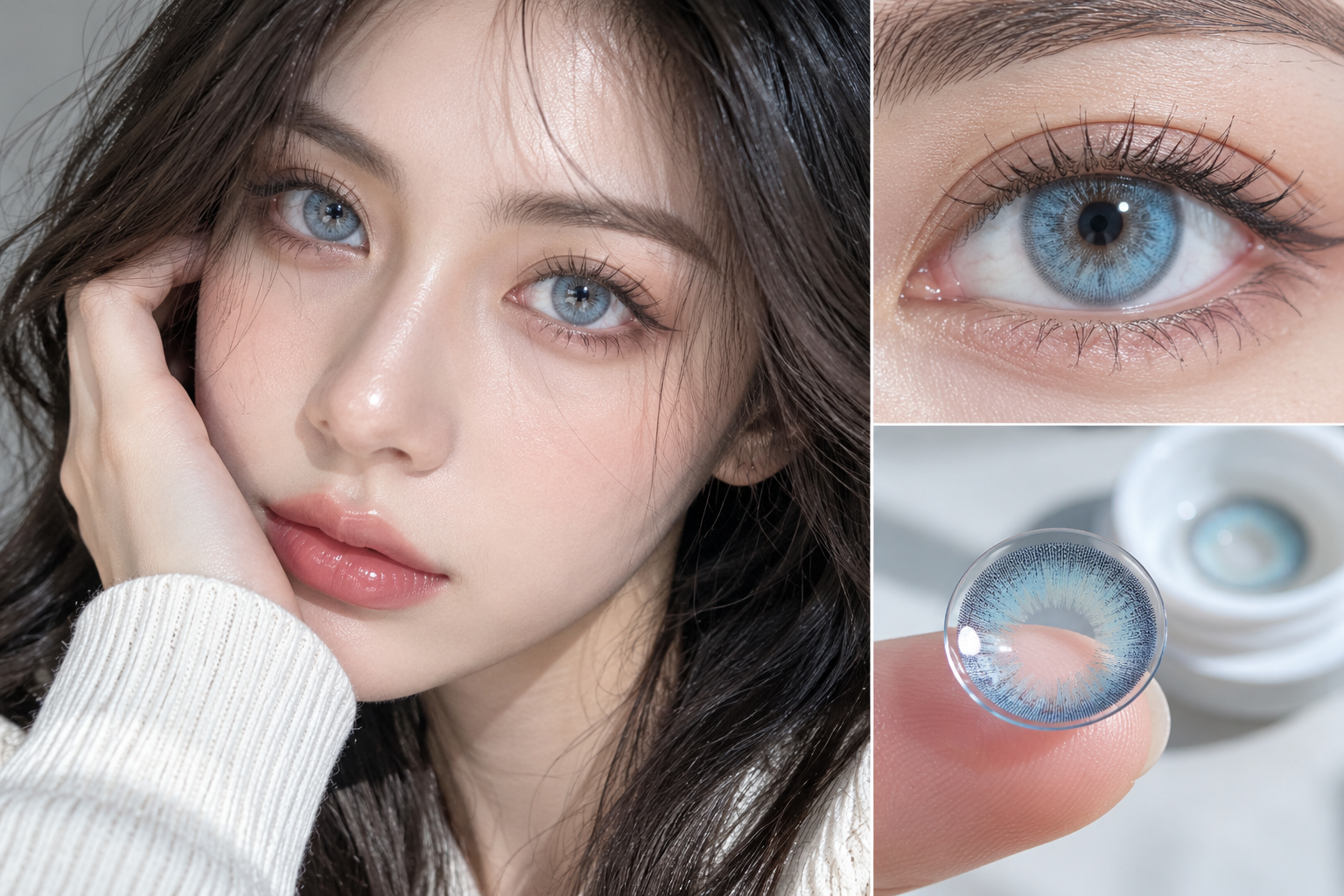
Few beauty upgrades are as instantly dramatic as ice blue eye contacts. One blink and your eyes go from familiar to frosty, the kind of color that catches the light in photos and earns a double take from across the room. No wonder searches climb every fall, right around costume season, and stay strong through holiday parties and wedding season.
But here’s the part most “best of” lists conveniently skip. In the US, every contact lens is a regulated medical device, including a plano (zero-power) lens worn purely for looks. The FDA’s consumer guidance on colored and decorative contact lenses is blunt about it: you need a valid prescription, even if your vision is perfect. That’s also why Amazon doesn’t allow sellers to list corrective or cosmetic contact lenses at all. So if you spot an ice blue lens on a random marketplace listing, treat it as a red flag, not a bargain.
This guide takes the honest route instead. You’ll learn which FDA-approved blue shades come closest to that icy look, how to get them legally without overpaying, and how to keep them comfortable, clean, and bright through their full replacement cycle. And because colored lenses are only as safe as the routine around them, we’ve analyzed 7 real care essentials sold on amazon.com (solutions, drops, and saline) that colored-lens wearers genuinely use every day.
Think of it this way: the lens gives you the color, but the care kit protects your eyes. Get both right and you can wear light blue contact lenses with confidence instead of crossed fingers.
What Are Ice Blue Eye Contacts?
Ice blue eye contacts are colored soft contact lenses with a pale, cool-toned blue pattern printed around the pupil, designed to make your iris look lighter and brighter. In the US they are prescription-only medical devices, even with zero vision correction, and must be fitted by a licensed eye doctor.
Quick Comparison: 7 Care Essentials for Ice Blue Eye Contacts
Before we dig into each pick, here’s the at-a-glance view. Every product below is a lens-care item you can legally buy on amazon.com; the colored lenses themselves come through your eye doctor or a retailer that verifies your prescription.
| Product | Type | Standout Feature | Price Range | Best for |
|---|---|---|---|---|
| Clear Care Plus with HydraGlyde | Hydrogen peroxide system | Preservative-free deep clean | around $10–$25 | Deep-cleaning monthly colored lenses |
| Biotrue Multi-Purpose Solution | Multi-purpose solution | Hyaluronan, tear-matched pH | around $8–$20 | Simple one-bottle routines |
| Opti-Free PureMoist | Multi-purpose solution | HydraGlyde moisture matrix | around $10–$20 | End-of-day dryness |
| renu Advanced Formula | Multi-purpose solution | Triple disinfection system | under $15 | Budget-conscious wearers |
| Blink Contacts Lubricating Eye Drops | Rewetting drops | Sodium hyaluronate formula | around $8–$15 | Long screen days |
| Refresh Contacts Comfort Drops | Rewetting drops | Carboxymethylcellulose base | around $8–$15 | A second drop to rotate in |
| Sensitive Eyes Plus Saline Solution | Sterile saline | Rinse-only, no disinfectant | under $10 | Rinsing and storage-case hygiene |
Looking at the table, the real decision is between a peroxide system and a multi-purpose solution. Clear Care Plus with HydraGlyde cleans more deeply but demands a strict six-hour wait, while Biotrue Multi-Purpose Solution and Opti-Free PureMoist trade some cleaning muscle for convenience. Drops like Blink Contacts Lubricating Eye Drops don’t replace either; they’re the in-day comfort layer. Prices vary by pack size, so check the current price before you buy.
💬 One click helps other shoppers make an informed choice too! 😊
Top 7 Care Essentials for Ice Blue Eye Contacts: Expert Analysis
A quick note on how these picks were chosen. Colored lenses carry printed pigment and, in the most popular FDA-approved option, a silicone hydrogel material, so they need solutions rated for silicone hydrogel and a routine that removes protein and makeup residue without roughing up the surface. Each pick below was judged on its published formula, label directions, and how well it fits a colored-lens routine. None of these products is a lens itself, and none should ever be treated as a substitute for an eye exam.
1. Clear Care Plus with HydraGlyde — deepest clean for monthly colors
If your ice blue eye contacts are a monthly lens, this is the system that gives them the most thorough reset every night. It’s a 3% hydrogen peroxide solution paired with a special case whose platinum disc neutralizes the peroxide into gentle saline. In practice, that means no preservatives sit against your eye the next morning, a real plus if multi-purpose solutions leave you feeling gritty. The catch is the clock: Alcon’s directions require at least six hours of soaking before the lenses are safe to wear.
Based on its formula, Clear Care Plus with HydraGlyde suits wearers with sensitive eyes, heavy eye-makeup users, and anyone stretching a monthly lens to its full 30 days. It also cleans protein daily, which helps the printed color look crisp rather than cloudy. It’s a poor fit for people who sleep less than six hours or want to pop lenses in at 5 a.m.
The most consistent complaint in customer reviews is painful stinging after someone skipped the neutralization step or rinsed lenses with the solution, which the label explicitly warns against.
Pros:
- ✅ Preservative-free once neutralized, kind to sensitive eyes
- ✅ Removes protein daily without a separate rubbing step
- ✅ Rated for soft, silicone hydrogel, and RGP lenses
Cons:
- ❌ Requires a full six-hour soak every single time
- ❌ Burns badly if used incorrectly or without the case
Expect around $10–$25 depending on single or twin packs, which is strong value for the deepest clean on this list.
2. Biotrue Multi-Purpose Solution — easiest everyday routine
Want one bottle that rinses, cleans, disinfects, and stores? This Bausch + Lomb solution handles all four, and it’s formulated for soft lenses including silicone hydrogel. It contains hyaluronan, a moisturizer found naturally in tears, and it’s buffered to match the pH of healthy tears. On paper, that translates into a more comfortable first few minutes after insertion, which matters with colored lenses because the printed layer can make a dry lens feel more noticeable.
Bausch + Lomb cites up to 20 hours of moisture, but note that figure comes from a laboratory study, not real-world wear, so treat it as a ceiling rather than a promise. Biotrue Multi-Purpose Solution fits beginners, busy commuters, and anyone who finds peroxide systems too fussy. Two label rules deserve your attention: dump the old solution from the case after every use, and toss the bottle 90 days after opening.
In customer reviews, comfort on insertion is the theme that comes up most often, while a minority of wearers report mild sensitivity to the preservatives.
Pros:
- ✅ One bottle covers the entire daily routine
- ✅ Tear-matched pH helps comfort right after insertion
- ✅ Widely available in travel and twin-pack sizes
Cons:
- ❌ Contains preservatives that some eyes react to
- ❌ Lighter cleaning than a hydrogen peroxide system
At around $8–$20 depending on size, it’s the best value for a low-effort routine.
3. Opti-Free PureMoist — best for end-of-day dryness
Made by Alcon, the same company behind the most popular FDA-approved blue colored lens, this multi-purpose solution uses the HydraGlyde moisture matrix. That’s a wetting agent designed to cling to the lens surface, especially silicone hydrogel materials. In plain English: it’s aimed at the 4 p.m. moment when your lenses start to feel like they’re dragging across your eye.
That matters more with ice blue eye contacts than with clear lenses. A slightly dry colored lens can shift as you blink, and when the printed pattern slides even a millimeter off-center, the natural iris edge peeks out and the illusion weakens. Keeping the lens surface wet helps it sit and stay centered. Opti-Free PureMoist is a logical pick for office workers, gamers, and anyone in dry, air-conditioned spaces.
We couldn’t verify a consistent, large-sample review dataset at the time of writing, so lean on your eye doctor’s recommendation here. Some practices suggest staying within one lens-and-solution brand family for compatibility.
Pros:
- ✅ Moisture matrix built for silicone hydrogel lenses
- ✅ Same manufacturer as Air Optix Colors lenses
- ✅ Simple multi-purpose routine, no wait time
Cons:
- ❌ Requires rubbing and rinsing for best results
- ❌ Usually costs more per ounce than budget brands
Expect roughly $10–$20, fair value if dryness is your main complaint.
4. renu Advanced Formula — best budget pick
This is the no-frills workhorse of the list. Bausch + Lomb’s renu Advanced Formula uses a triple disinfection system and works with soft lenses, including silicone hydrogel. It doesn’t advertise added moisturizers the way premium formulas do, and that’s the trade-off: you’re paying for disinfection, not extras.
Why include a budget solution in a guide about a beauty lens? Because the biggest real-world safety risk with colored contacts isn’t the brand of solution; it’s people stretching a bottle, topping off old solution, or skipping the routine to save money. A cheaper bottle you’ll actually use correctly beats a premium one you ration. renu Advanced Formula makes sense for students, occasional wearers who only use their ice blue eye contacts on weekends, and anyone keeping a backup bottle at work or in a gym bag.
In customer reviews, price and availability tend to be the main draws, while people with sensitive eyes more often mention preferring a gentler formula.
Pros:
- ✅ Among the most affordable trusted-brand solutions
- ✅ Compatible with soft and silicone hydrogel lenses
- ✅ Easy to find in large multi-packs
Cons:
- ❌ No added moisturizer for dry-eye sufferers
- ❌ Sensitive eyes may prefer a peroxide system
Usually under $15, it’s the best value per ounce here.
5. Blink Contacts Lubricating Eye Drops — best rescue for screen days
Think of these as a mid-afternoon reset you can use without taking your lenses out. Blink Contacts drops are labeled for both soft and rigid gas permeable lenses, and you can use them three ways: to cushion a lens before insertion, to rewet it during wear, and to ease the dryness that builds up over a long day.
The formula uses sodium hyaluronate along with electrolytes similar to those in natural tears, and it’s preserved with OcuPure, a gentle preservative. In practice, a drop or two on each side of the lens before you put it in can make insertion smoother, which really helps beginners. Colored lenses are a bit thicker where the pigment sits, so comfort tricks like this matter more than they do with clear lenses.
Blink Contacts Lubricating Eye Drops suit remote workers, students, and anyone whose ice blue eye contacts start feeling noticeable around hour six. One label rule is easy to miss: throw the bottle away 45 days after opening. These drops are for use in the eye only and should never go in your lens case.
Customer reviews mostly focus on quick relief and a lack of stinging. Some reviewers say the effect wears off quickly in very dry environments.
Pros:
- ✅ Safe for both soft and RGP lenses
- ✅ Doubles as a cushioning drop before insertion
- ✅ Gentle preservative with tear-like electrolytes
Cons:
- ❌ Small bottle runs out fast with frequent use
- ❌ Must be discarded 45 days after opening
At around $8–$15, it’s an inexpensive comfort upgrade worth keeping in your bag.
6. Refresh Contacts Comfort Drops — best backup drop to rotate in
Eyes don’t always respond to two similar formulas the same way, and that’s why a second drop earns a spot here. Refresh Contacts, from the Allergan line, uses a carboxymethylcellulose-based lubricant instead of hyaluronate. CMC is a well-established tear-film ingredient, and some wearers find it feels slightly more cushioning than lighter drops.
If Blink Contacts Lubricating Eye Drops feel too light, or if your eyes seem to react to one preservative, having an alternative lets you troubleshoot without guessing. Before switching drops permanently, run the change past your eye doctor, especially if you wear your lenses most days. Refresh Contacts Comfort Drops fit people with sensitive eyes, frequent flyers dealing with dry cabin air, and wearers who want a dedicated drop that’s labeled for use with contacts.
There’s one important point many shoppers miss. Plenty of popular redness-relief and allergy drops are not meant to be used while wearing lenses. Always look for “for contacts” or “for use with contact lenses” on the label, as this product carries.
We couldn’t confirm a large, consistent review sample for this specific SKU at the time of writing, so treat it as a sensible alternative rather than a clear winner.
Pros:
- ✅ Different lubricant from hyaluronate-based drops
- ✅ Clearly labeled for use with contact lenses
- ✅ Handy as a travel-size comfort backup
Cons:
- ❌ Thicker feel can briefly blur vision
- ❌ Formula availability varies between retailers
Typically about $8–$15, solid value as a second option.
7. Sensitive Eyes Plus Saline Solution — best for rinsing, not disinfecting
This is the most misunderstood item on the list, and it earns its place only if you use it correctly. Sterile saline from Bausch + Lomb is for rinsing. It is not for disinfecting. It’s useful for rinsing debris off a lens before insertion and for rinsing your lens case before air-drying it, instead of reaching for tap water.
That last point matters a lot. The CDC warns that water and contact lenses don’t mix, since microbes in tap water can cause rare but serious eye infections. If you wear ice blue eye contacts for long nights out, a small bottle of Sensitive Eyes Plus Saline Solution means you’ll never be tempted to rinse with water or saliva in a restaurant bathroom.
It’s the right pick for Clear Care Plus with HydraGlyde users who want a gentle rinse option, and for anyone building a complete travel kit. What it cannot do is replace the overnight soak. Storing lenses in saline alone leaves them undisinfected, which defeats the whole point of a safe routine.
Customer reviews generally treat it as a dependable basic. Most of the complaints come from people who bought it expecting a disinfecting solution.
Pros:
- ✅ Gentle, preservative-light rinse for lenses and cases
- ✅ Removes the temptation to use tap water
- ✅ Inexpensive and travel-friendly
Cons:
- ❌ Does not disinfect, so it can’t replace solution
- ❌ Easy to confuse with multi-purpose bottles
Usually under $10, a low-cost hygiene essential.
✨ Build your complete ice blue care kit today!
🔍 Take your ice blue eye contacts routine to the next level with this carefully curated lineup. Click a highlighted item to check current pricing and availability. These picks will help you get comfortable, bright, long-lasting wear that your eyes will thank you for!
Getting Started: Your First 30 Days with Ice Blue Eye Contacts
The first month decides whether colored lenses become a favorite accessory or an expensive drawer item. Here’s a realistic roadmap.
Week 1: Fitting and short wear
Your eye doctor measures your corneal curvature and diameter, checks your tear film, and lets you try a shade in the chair. Expect to start with short wear sessions of around four to six hours on the first days, then build up as your doctor advises. Colored lenses can feel slightly more noticeable than clear ones at first because of the pigment layer.
Week 2: Lock in the routine
- ✅ Wash and dry your hands before every touch. Lotion-free soap is ideal.
- ✅ Insert lenses before applying makeup, and remove them before taking it off.
- ✅ Rub, rinse, and store in fresh solution, or use Clear Care Plus with HydraGlyde if you’re on a peroxide system.
- ✅ Empty the case, rinse it with solution or Sensitive Eyes Plus Saline Solution, and let it air-dry face-down.
Weeks 3–4: Watch and fine-tune
Around this point, you’ll notice whether the color stays centered as you blink and whether dryness builds late in the day. If the lens slides and your natural iris peeks out, mention it at your follow-up, since a different base curve may fix it. If dryness is the issue, a rewetting drop like Blink Contacts Lubricating Eye Drops usually helps.
Common first-month mistakes
Sleeping in lenses, topping off old solution, and stretching a monthly lens to six weeks are the big three. Each one raises infection risk, and each one is completely avoidable. Set a phone reminder for your replacement date the day you open a new pair.
Real-World Scenarios: Matching Ice Blue Looks to Your Life
There’s no single best setup. The right combination depends on how often you wear colored lenses, your budget, and your eyes. Here are three common profiles.
The weekend glam wearer (budget-conscious, 2–3 wears a week)
Maya has dark brown eyes and wants a bold icy effect for nights out. Her optometrist fits her in a plano Brilliant Blue monthly lens. Because she wears them only a few times a week, she pairs them with renu Advanced Formula and keeps Blink Contacts Lubricating Eye Drops in her clutch. A monthly lens expires 30 days after opening no matter how often it’s worn, so she opens a new pair only when an event is coming up.
The daily professional (mid-range budget, 5 days a week)
Jordan has light hazel eyes and needs a mild prescription. He chooses a softer Blue shade for a subtle office-friendly change. He spends long days at a screen, so Opti-Free PureMoist and a rewetting drop handle the late-afternoon dryness.
The sensitive-eyed perfectionist (premium budget, frequent wear)
Priya reacts to preservatives and wears heavy eye makeup. Her doctor recommends Clear Care Plus with HydraGlyde for a preservative-free nightly reset, with Refresh Contacts Comfort Drops as her in-day comfort drop.
In all three cases, the lens was chosen in an exam chair, and the care kit was matched to the person’s lifestyle.
How to Choose Ice Blue Eye Contacts
Follow these seven steps in order. Skipping the first one makes everything after it a gamble.
- Book a contact lens exam, even with perfect vision. A plano lens still has to fit your cornea. A lens that is too tight or too loose can scratch your eye or starve it of oxygen.
- Ask about FDA-approved colored brands specifically. Your prescription has to name the exact brand and shade, so this isn’t a detail you can sort out later.
- Pick an opacity that matches your natural eye color. Translucent tints only enhance light eyes, while dark eyes need an opaque, layered pattern to show any blue at all.
- Choose the shade on your actual face. Try samples in daylight and under indoor lighting, because icy shades can look very different under each.
- Decide between monthly and daily replacement. Monthlies cost less per wear for frequent users. Dailies skip cleaning entirely, which makes them a good fit for occasional wearers.
- Buy only from sellers that verify your prescription. The FDA’s guide to buying contact lenses explains why a seller that never asks for one should make you walk away.
- Budget for the care kit. Solution, drops, and a fresh case every few months are part of the real cost.
Comparing FDA-Approved Blue Shades: Which Looks Most “Ice Blue”?
Here’s the honest truth. No major FDA-approved brand sells a shade literally named “ice blue.” The closest effects come from a handful of shades in Alcon’s colored lens lines, and lens retailers group them by how bright and cool they look.
| Shade (brand line) | Look on the eye | Best for | Replacement |
|---|---|---|---|
| Brilliant Blue (Air Optix Colors) | Bright, cool, most “icy” | Bold change, dark eyes | Monthly |
| Blue (Air Optix Colors) | Softer, natural sky blue | Subtle daily wear | Monthly |
| True Sapphire (Air Optix Colors) | Deep, jewel-toned blue | Rich contrast, evening looks | Monthly |
| Sterling Gray (Air Optix Colors) | Silvery, frosted gray-blue | A pale “frozen” effect | Monthly |
| Blue family (FreshLook ColorBlends / One-Day) | Blended blue tones | Reusable or daily options | Monthly or daily |
If you want the most striking ice blue eye contacts effect, Brilliant Blue is usually the first shade to try. Sterling Gray is the underrated alternative when you want something pale and frosty rather than saturated. Air Optix Colors lenses are a silicone hydrogel material with 33% water content and come in boxes of six. Expect a box to run roughly $70–$100 at the time of writing, though prices vary by retailer and prescription.
Prescription Colored Lenses vs. Novelty “Ice Blue” Lenses
The price gap between a prescribed lens and a cheap costume lens is real, and so is the risk gap.
| Factor | Prescription colored lenses | Novelty lenses sold without Rx |
|---|---|---|
| Legal status in the US | Legal with a valid prescription | Illegal to sell without one |
| Fit | Measured to your cornea | One-size-fits-all |
| Material | FDA-reviewed, often breathable silicone hydrogel | Often unknown or unverified |
| Care instructions | Clear directions from your doctor | Often missing or vague |
| Best for | Anyone who wants colored lenses | Nobody, at any price |
The table makes the trade-off obvious. Novelty lenses save money upfront but skip every safeguard that protects your eyes, including fit, verified materials, and follow-up care. The FDA has linked unprescribed decorative lenses to corneal ulcers and even blindness, which turns a “bargain” lens into an expensive emergency room visit.
Light Blue Contact Lenses for Dark Eyes
If you have brown or near-black irises, colored contacts for dark eyes work differently. A translucent tint just disappears into dark pigment. You need an opaque or layered print that covers your natural color while leaving the pupil clear.
Alcon’s three-in-one color technology uses an outer ring, a color layer, and an inner ring designed to blend with your iris. That combination is why Brilliant Blue and True Sapphire can read clearly on dark eyes. Expect the result to look striking rather than completely natural, since a very pale blue over a dark iris will always be a noticeable change.
If you want natural looking blue contacts, try the softer Blue shade or a gray-blue. They usually look more believable in daylight, while the brightest blues tend to photograph beautifully under flash.
Safety, Regulations, and Standards for Colored Contacts
US rules around colored lenses are stricter than most shoppers expect, and they work in your favor.
- ⚖️ FDA classification: All contact lenses, corrective or plano, are regulated medical devices. Decorative lenses are not cosmetics, no matter where they’re sold.
- 📄 Fairness to Contact Lens Consumers Act: Sellers may only sell lenses against a prescription that has been presented or verified.
- 🗂️ FTC Contact Lens Rule: Your prescriber has to give you a copy of your prescription after the fitting, so you can buy from any compliant seller. A prescription generally lasts at least one year.
- 💧 Hygiene guidance: The CDC’s page on decorative contact lenses stresses an eye exam, proper cleaning, and never sharing lenses. Swapping costume lenses with a friend is a surprisingly common way infections spread.
Warning signs mean you should remove the lenses and call an eye doctor the same day. Watch for redness that doesn’t fade, pain, light sensitivity, discharge, or blurry vision. Don’t wait until morning to see if it improves, because some infections can damage the cornea within hours.
Long-Term Cost of Ice Blue Eye Contacts
Prescription colored lenses cost more than a novelty pair, but the yearly number is more manageable than most people assume. Here’s a realistic estimate for one year of frequent monthly-lens wear. Your actual costs will vary with insurance, your prescription, and how often you wear them.
| Expense | Estimated yearly cost | Notes |
|---|---|---|
| Contact lens exam and fitting | around $100–$250 | Vision insurance may cover part of this |
| Monthly colored lenses (about 4 boxes) | around $280–$400 | Fewer boxes if you only wear them occasionally |
| Solution such as Biotrue Multi-Purpose Solution or Clear Care Plus with HydraGlyde | around $100–$200 | Twin packs lower the cost per ounce |
| Drops and spare cases | around $30–$60 | Replace your case every one to three months |
In total, a frequent wearer should budget somewhere around $500–$900 a year. Occasional wearers spend much less, since they open fewer boxes and use less solution. Many vision plans and HSA/FSA accounts can cover exams, lenses, and care products like Blink Contacts Lubricating Eye Drops, so check your benefits before you pay out of pocket.
Common Mistakes to Avoid with Ice Blue Eye Contacts
Most colored-lens problems come from habits, not from the lenses themselves. These are the ones that cause the most trouble.
- ❌ Buying lenses without a prescription. It’s illegal for the seller, and the lens isn’t fitted to your eye.
- ❌ Picking a shade from product photos. Icy blues look very different on dark eyes than they do on light eyes.
- ❌ Mixing up bottles. Using Sensitive Eyes Plus Saline Solution to disinfect, or putting un-neutralized Clear Care Plus with HydraGlyde straight into your eye, are both classic errors.
- ❌ Topping off old solution. Fresh solution goes in the case every single time.
- ❌ Wearing lenses past their replacement date. Older lenses build up deposits that dull the color and irritate your eyes.
- ❌ Sleeping or swimming in your lenses. Both raise your infection risk sharply.
- ❌ Using any eye drop at all. Choose drops labeled for contacts, such as Refresh Contacts Comfort Drops.
Avoid these seven and your ice blue look stays bright, comfortable, and, most importantly, safe.
FAQ: Ice Blue Eye Contacts
❓ Can you buy ice blue eye contacts on Amazon?
❓ Where can I buy prescription ice blue eye contacts online?
❓ Can I get ice blue contacts if I have astigmatism?
❓ Are daily disposable blue contacts better for occasional wear?
❓ How long do ice blue eye contacts last once opened?
Conclusion: The Smart Way to Get Ice Blue Eyes
Ice blue eye contacts can be one of the most fun, transformative beauty changes out there, as long as you treat them like the medical devices they are. The path is simple. Get an eye exam, ask about FDA-approved shades like Brilliant Blue or Sterling Gray, and buy only from sellers that verify your prescription. Then protect your investment with a care routine that suits your life.
For most people, that means one main solution plus one rewetting drop. Choose Clear Care Plus with HydraGlyde if you want the deepest clean and don’t mind the six-hour wait. Choose Biotrue Multi-Purpose Solution or Opti-Free PureMoist for an easier everyday routine, or renu Advanced Formula if budget comes first. Add Blink Contacts Lubricating Eye Drops or Refresh Contacts Comfort Drops for comfort during the day, and keep Sensitive Eyes Plus Saline Solution on hand for rinsing.
The stakes are real. The American Optometric Association has pushed Amazon to remove sellers offering contact lenses without a prescription, and the FDA repeats its warnings every Halloween for good reason. The good news is that doing it right isn’t hard or overly expensive.
Pick your shade with your eye doctor, build your kit, and enjoy that icy, head-turning look. Your eyes deserve the same care as the rest of your beauty routine.
🌟 Ready for that frosty, head-turning look?
🛒 Start with a quick eye exam, then stock up on the care essentials above. Click any highlighted product to check current pricing and availability, and give your ice blue eyes the safe, comfortable routine they deserve!
Recommended for You
- Blue Cosplay Contacts 2026: 7 Smart Picks for Safe, Stunning Eyes
- Black Prescription Contacts: 7 Safe & Legal Picks for 2026
- Titanium Reading Glasses: 7 Best Lightweight Picks for 2026
Disclaimer: This post contains affiliate links. As an Amazon Associate, I earn from qualifying purchases made through these links, at no additional cost to you. This article is for general information only and is not medical advice; always consult a licensed eye care professional before wearing any contact lenses.
✨ Found this article helpful? Share it with someone who needs it! 💬🤗