In This Article
Tortoise Blue Light Glasses in 2026: Style First, Science Second
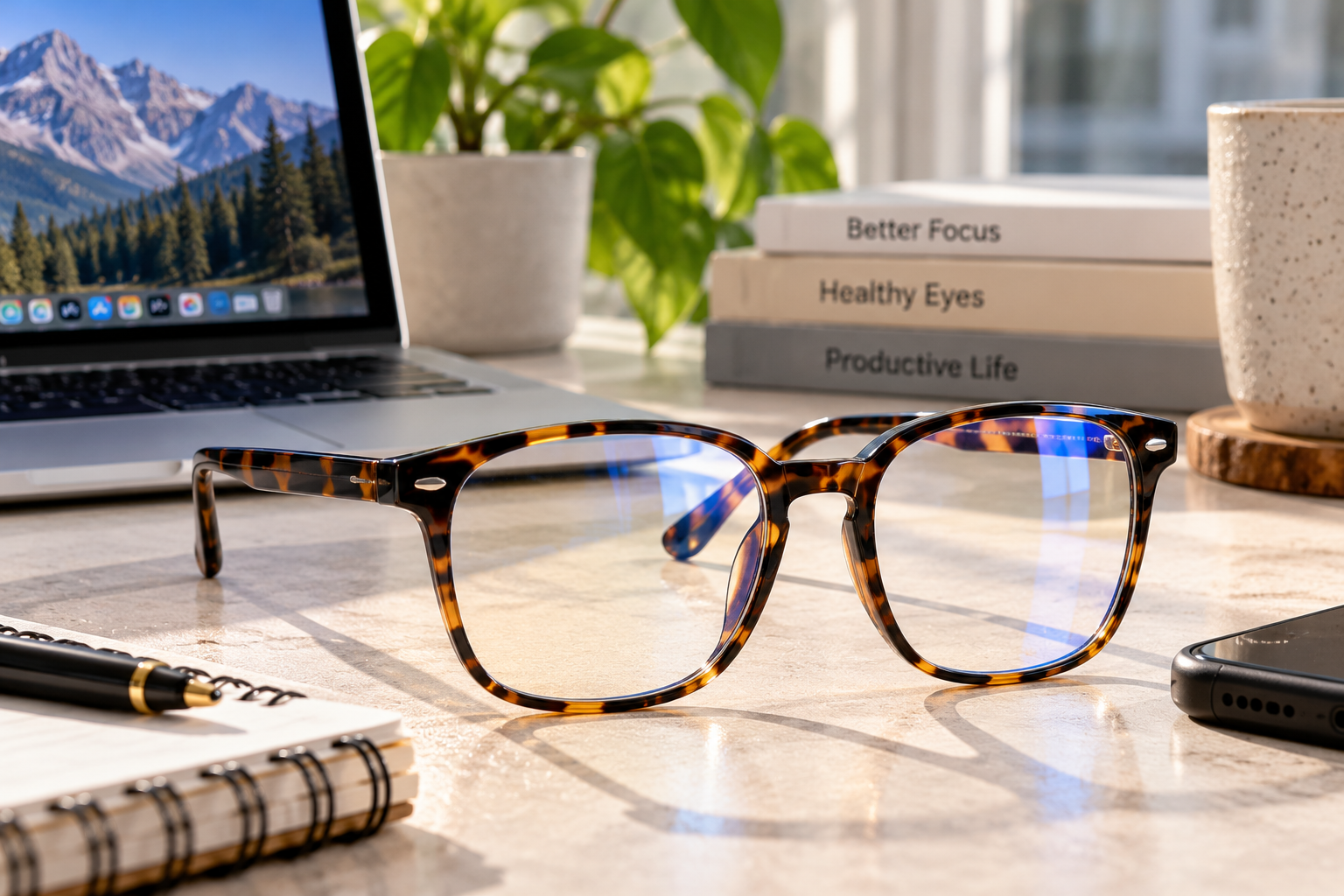
Let’s be honest about why you’re here. You stare at screens most of the day, your eyes feel cooked by 4 p.m., and you’d like a pair of glasses that helps — without making you look like you’re about to weld something. That’s exactly the gap tortoise blue light glasses fill: a warm, classic frame that reads “optical” rather than “gadget,” paired with a lens that trims some of the blue-violet light coming off your laptop.
What Are Tortoise Blue Light Glasses?
Tortoise blue light glasses are non-prescription, reader, or prescription eyeglasses with a mottled brown-and-amber “tortoiseshell” frame pattern and lenses that filter part of the short-wavelength blue light emitted by screens and LED lighting. Most modern versions use acetate or nylon frames, plus anti-glare coatings for screen work.
That pattern has a long and slightly uncomfortable history. Real tortoiseshell came from the hawksbill sea turtle, and the international trade was shut down in the 1970s; today’s frames recreate the look with layered, pigmented plastics, so no turtles were harmed in the making of your Zoom glasses.
Here’s the part most shopping guides skip: the evidence that blue light filtering itself reduces eye strain is weak. We’ll walk through exactly what the research says, which features genuinely improve comfort (spoiler: anti-glare coatings, correct magnification, and fit), and how to choose a pair that earns its spot on your face. Then we’ll break down seven real, widely available options — from under-$25 bundles to a premium acetate pair — so you can match the right frame to your budget, face shape, and screen habits.
Quick Comparison: Tortoise Blue Light Glasses at a Glance
| Product | Frame Material | Lens Type | Brand-Stated Filter | Typical Price Range | Best For |
|---|---|---|---|---|---|
| Felix Gray Roebling | Acetate | Clear, infused filter | ~30% of screen blue light | From around $95 | Felix Gray Roebling: all-day office wear |
| GUNNAR Attaché | Acetate-style frame | Clear (also amber) | 35% clear / 65% amber | $60–$90 | GUNNAR Attaché: spec-driven buyers |
| Peepers by PeeperSpecs Limelight | Polycarbonate | Clear, magnified or plano | “Blue Light Focus” filter | $25–$35 | Peepers by PeeperSpecs Limelight: readers 40+ |
| IZIPIZI Screen #C Tortoise | Acetate/polycarbonate | Light yellow tint | 40% (380–460 nm) | $40–$60 | IZIPIZI Screen #C Tortoise: design lovers |
| GUNNAR Rush Kids | Nylon polymer | Amber | 65% | $30–$45 | GUNNAR Rush Kids: teens and gamers |
| Cyxus Round (8185) | TR90 | Clear | Not clearly quantified | Under $25 | Cyxus Round (8185): budget vintage look |
| livho 2-Pack (Matte Black + Tortoise) | TR90 | Clear | Marketing claims vary | $15–$30 (two pairs) | livho 2-Pack: spares on a budget |
Looking at the table, the real split isn’t tortoise versus tortoise — it’s transparency of specs. GUNNAR Attaché and IZIPIZI Screen #C Tortoise publish concrete filtering numbers, while the budget picks rely on vaguer marketing language. If you care most about honest specs, start with brands that tell you exactly what the lens does; if you mostly want the look plus decent anti-glare, the budget options deliver surprising value.
💬 One click helps other shoppers make an informed choice too! 😊
Top 7 Tortoise Blue Light Glasses: Expert Analysis
Each pick below is a real product sold in the US, with an honest read on what the spec sheet means for your day. One reminder before we start: filter percentages are brand claims, not independently verified lab results, and blue light filtering is only one (minor) part of screen comfort.
1. Felix Gray Roebling — best premium acetate everyday pair
If you want one pair of tortoise blue light glasses that looks like proper prescription eyewear, the Felix Gray Roebling is the safest bet. It’s a rounded-square acetate frame in classic tortoise tones, sized around 49-18-140 (lens width, bridge, temple in millimeters).
In practice, those numbers mean a small-to-medium fit: great for narrower faces, potentially snug on wide ones. Felix Gray says its filter is infused into the lens material rather than painted on as a surface coating, filtering roughly 30% of screen-emitted blue light, and adds a double-sided anti-glare treatment. The infused approach matters less for your eyes than for longevity — there’s no coating layer to peel. The anti-glare treatment is the feature you’ll actually feel, because overhead-light reflections are a common, underrated source of squinting.
Based on comparing the specs, this is the pick for remote workers who live on video calls and want frames that photograph well. Felix Gray also sells reader and prescription versions, and the brand says many FSA/HSA plans reimburse them — worth confirming with your plan administrator first.
Retailer review summaries consistently highlight comfort during long computer sessions and the stylish frame, with some shoppers saying the build feels noticeably better than cheaper pairs they’d tried.
Pros:
- ✅ Genuine optical-quality acetate frame that looks premium
- ✅ Infused filter can’t flake off like cheap coatings
- ✅ Available as plano, readers, or prescription
Cons:
- ❌ Narrow sizing may pinch wider faces
- ❌ Costs several times more than budget alternatives
💰 Typically from around $95 (check the current price) — worth it if you’ll wear them daily for years, overkill for occasional use.
2. GUNNAR Attaché — sharpest spec sheet for clear lenses
The GUNNAR Attaché (tortoise frame, clear lens, model ATT-02309) wins on transparency: Gunnar publishes exactly how much blue light each lens tint filters. GUNNAR has been making computer eyewear since the mid-2000s, and it shows in the details.
The clear lens is rated at 35% blue light filtering with 100% UV protection, while the amber version climbs to 65%. Here’s what that means on paper: the clear lens keeps colors accurate enough for spreadsheets and photo editing, while amber noticeably warms everything — fine for gaming at night, frustrating for design work. Gunnar also offers the Attaché with reader magnification (for example, a tortoise/amber +1.50 version, ATT-02301), which is genuinely useful if you’re starting to hold your phone at arm’s length.
Who is it for? Buyers who want a classic, slightly retro keyhole-style frame but refuse to buy on vague claims. The GUNNAR Attaché is also a smart “bridge” choice between fashion and function: it doesn’t scream gamer gear.
Gunnar listings across major US retailers generally draw positive comments on optical clarity and comfort, though some buyers note that Gunnar’s sizing runs a bit small, so check frame width before ordering.
Pros:
- ✅ Published filter numbers for each lens tint
- ✅ Reader-strength versions available in tortoise
- ✅ Clear lens keeps on-screen colors natural
Cons:
- ❌ Pricier than generic Amazon brands
- ❌ Amber version distorts colors for creative work
💰 Usually in the $60–$90 range — strong value if verified specs matter more to you than brand prestige.
3. Peepers by PeeperSpecs Limelight — best stylish reader for 40+
The Peepers by PeeperSpecs Limelight solves a problem many “blue light” shoppers don’t realize they have: if you’re over 40, your eye strain may come from presbyopia, not screen color. Limelight is an oversized square frame in tortoise, available in magnification strengths or no correction at all.
The specs translate nicely into real life. A 136 mm frame width with 50-21-147 measurements suits average-to-wide faces, and the 21 mm bridge gives more room than most budget frames. Peepers pairs its “Blue Light Focus” baked-in lens filter with a seven-layer anti-reflective coating, dual anti-scratch layers, and UV400 protection. The anti-reflective stack and the right magnification will do more for comfort than the filter itself — and you get both here at a reader-glasses price.
Our analytical take: if you’ve been squinting at your phone and blaming “blue light,” try the lowest magnification that makes text crisp at your normal screen distance (often a lower strength than your book-reading pair). The polycarbonate frame and spring hinges keep it light and forgiving.
Reviews across Peepers styles commonly praise the comfort, cute styling, and solid feel; recurring complaints include occasional durability issues and some wearers finding certain models heavier than expected.
Pros:
- ✅ Combines magnification with blue light filtering
- ✅ Wider fit suits larger faces comfortably
- ✅ Seven-layer anti-glare at a budget price
Cons:
- ❌ Oversized shape overwhelms very petite faces
- ❌ Polycarbonate lacks acetate’s luxe feel
💰 Generally $25–$35 — excellent value for anyone who needs readers anyway.
4. IZIPIZI Screen #C Tortoise — best design-forward unisex pick
From a design studio in Lyon, France, the IZIPIZI Screen #C Tortoise brings Parisian-café minimalism to your desk. The #C style is a retro, rounded-edge square that works on most face shapes, and IZIPIZI notes that tortoise pattern placement varies pair to pair — so yours is genuinely one of a kind.
Spec-wise, IZIPIZI is refreshingly specific: its Screen lenses filter 40% of blue-violet light in the 380–460 nm range, while letting blue-turquoise light (which helps regulate your daily rhythm) pass through. The trade-off is a faint yellow tint — subtle on white documents, noticeable if you’re color-correcting photos. The brand says the model meets European standards for non-prescription eyewear (EN 14139) and the international ISO 12870 standard for frames, which is a reassuring quality marker.
Who should buy it? Style-led shoppers who want something that looks at home in a design studio, plus anyone who’d rather have a light, well-made frame than a heavy acetate statement piece. A reader version exists too.
We couldn’t verify a large pool of US Amazon reviews for this exact tortoise colorway, so we won’t summarize sentiment we can’t confirm. What is verifiable: IZIPIZI is stocked by respected US museum shops, a decent signal of design credibility.
Pros:
- ✅ Specific, wavelength-based filter claims
- ✅ Unique tortoise pattern on every pair
- ✅ Light, minimalist frame for all-day wear
Cons:
- ❌ Faint yellow tint affects color-critical work
- ❌ Fewer verifiable US reviews than big brands
💰 Typically $40–$60 — fair for the design quality, though not a budget play.
5. GUNNAR Rush Kids — best tortoise pair for teens and gamers
The GUNNAR Rush Kids (tortoise frame, amber lens, model RUS-02301) shrinks Gunnar’s lens tech into frames sized for younger faces. It’s a sturdy nylon-polymer frame with an anti-reflective, amber-tinted lens.
Gunnar rates its amber lenses at 65% blue light filtering — about the most you’ll get without going full orange. What that means in practice: screens look warmer, contrast feels punchier in games, and colors shift noticeably. That’s fine for Minecraft marathons, but not for art class or anything color-sensitive. A larger size exists for older kids and teens, so measure before you buy.
Our honest take for parents: no major eye-care body says kids need blue light glasses, and the habits matter more — screen breaks, distance, outdoor time. But if your teen will happily wear these during evening gaming sessions, the amber tint may make late-night screens feel less glaring, and the nylon frame survives backpack life better than delicate acetate.
At the time of research, the Best Buy listing for this model showed a strong average rating (4.7 out of 5 across 58 reviews), with reviewers reporting no notable complaints about size or lens darkness.
Pros:
- ✅ High 65% filter rating for evening screen use
- ✅ Kid-proof nylon polymer frame
- ✅ Two sizes for younger kids and teens
Cons:
- ❌ Amber tint distorts colors noticeably
- ❌ Not a substitute for healthy screen habits
💰 Typically $30–$45 — reasonable for a durable, branded kids’ pair.
6. Cyxus Round (8185) — best budget vintage round frame
The Cyxus Round (8185) proves you don’t need to spend much for a vintage round silhouette. It’s built from TR90, a flexible, ultralight nylon-based material, with clear lenses designed to minimize color distortion.
TR90 is the key spec here: it bends instead of snapping, which is exactly what you want in a pair you’ll toss on the couch or wear with headphones. The clear lens means your screen looks normal, and Cyxus’s Amazon listings mention a lifetime warranty against defects (not accidental damage). Many Cyxus listings also include a “blue light test kit” — a little pen light that visibly stops at the lens. Here’s what most buyers overlook: that demo proves the lens blocks one narrow wavelength from a test light, not that your eyes will feel better.
Who’s it for? Students, first-time buyers, and anyone curious whether they’ll even wear glasses at a desk. Tortoise and leopard-style colorways rotate between listings, so double-check the color selector before you order.
Deal coverage and buyer feedback consistently highlight the clear lenses and low price; build quality and seller service can vary across Cyxus’s many models and storefronts.
Pros:
- ✅ Flexible TR90 frame survives drops and bends
- ✅ Clear lenses keep screen colors natural
- ✅ Very low cost to try the look
Cons:
- ❌ Filter percentage isn’t clearly quantified
- ❌ Tortoise colorway availability changes frequently
💰 Usually under $25 — a low-risk entry point.
7. livho 2-Pack (Matte Black + Tortoise) — best value two-pair bundle
The livho 2-Pack (Matte Black + Tortoise) is the pragmatist’s choice: two square frames, one black and one tortoise, so you can keep a pair at your desk and another in your bag.
The frames use TR90 nylon with stainless steel hinges, polycarbonate lenses, and UV400 protection, with roughly 50 mm lenses that suit average faces. Practically, that means light, flexible frames you won’t panic about losing. One caution: some livho listing titles advertise “99%” blue light blocking on clear lenses. Researchers behind the 2023 Cochrane review noted that typical clear filtering lenses block roughly 10–25% of blue light, and that much higher filtering requires an obvious amber tint. So treat that marketing number skeptically.
Honest verdict: this bundle is about convenience and style, not optical prestige. It’s great for hybrid workers, people who misplace glasses constantly, or couples who want to share.
Multiple shopping roundups name livho a top budget pick for value, while reviewers commonly mention that the very light frames can feel a bit flimsy.
Pros:
- ✅ Two pairs for the price of one budget pair
- ✅ Lightweight TR90 with stainless hinges
- ✅ Tortoise plus black covers every outfit
Cons:
- ❌ Inflated blocking claims in some listings
- ❌ Frames feel less substantial than acetate
💰 Typically $15–$30 for both pairs — outstanding value if style is your main goal.
✨ Don’t miss these classic tortoise picks!
🔍 Take your screen setup to the next level with this carefully curated lineup. Click a highlighted product name to check current pricing and availability. These picks will help you get a comfortable, polished look for every video call and late-night scroll!
How to Choose Tortoise Blue Light Glasses
Use these seven steps to narrow your options fast:
- Start with an eye exam. Uncorrected vision is a leading cause of screen discomfort; the right prescription beats any filter.
- Pick lens tint by task. Clear lenses for daytime and color work; amber only for evening gaming or reading where color accuracy doesn’t matter.
- Prioritize anti-reflective coating. Glare from windows and overhead lights forces squinting — AR coatings tackle that directly.
- Match frame width to your face. Look for total frame width (in mm) close to your current glasses; 130–140 mm suits most adults.
- Choose material for lifestyle. Acetate looks richer and can be adjusted; TR90 and nylon survive drops better.
- Consider magnification if you’re 40+. Low-power readers often relieve “screen fatigue” better than blue light filtering.
- Distrust extreme claims. “99% blocking” on clear lenses doesn’t align with published research on how these lenses work.
The American Academy of Ophthalmology’s guidance on blue light and digital eye strain is blunt: screen strain comes from how we use our eyes — long focus, less blinking — rather than from the color of the light. That’s why steps 1, 3, and 6 do the heavy lifting.
Getting Started: Your First 30 Days with Tortoiseshell Computer Glasses
New tortoiseshell computer glasses can feel odd for a few days, especially if you’ve never worn glasses. Here’s how to make the transition smooth:
Week 1 — Adjust the fit. If the temples press behind your ears or the frame slides down, an optician can heat-adjust acetate frames, often for free. TR90 frames are less adjustable, so return them early if the fit is wrong.
Week 1–2 — Set up your screen, too. Position your monitor about an arm’s length away, with the top of the screen at or slightly below eye level. Match screen brightness to your room. Glasses can’t fix a monitor that’s blasting light in a dark room.
Week 2 — Build the break habit. Pair your glasses with the 20-20-20 rule recommended by both the AAO and the American Optometric Association: every 20 minutes, look at something 20 feet away for 20 seconds. Set a recurring reminder; most people forget by day three.
Week 3 — Learn to clean properly. Rinse lenses under lukewarm water, use a drop of lotion-free dish soap, and dry with microfiber. Paper towels and shirt hems scratch AR coatings over time.
Week 4 — Assess honestly. Do your eyes feel better? If symptoms like blurriness, headaches, or double vision persist, the glasses aren’t the fix — book an eye exam.
Common first-month mistakes: wearing amber lenses for photo editing, cleaning with alcohol wipes (harsh on coatings and acetate finish), and resting glasses lens-down on your desk.
Real-World Scenarios: Matching Tortoise Shell Blue Light Glasses to Your Day
Tortoise shell blue light glasses aren’t one-size-fits-all. Here are three typical profiles and the reasoning behind each match.
👩💼 The Remote Professional (8–10 hours of screens, budget ~$100)
Maya runs back-to-back video calls and edits reports all day. She needs frames that look polished on camera and a clear lens that keeps documents true to color. The Felix Gray Roebling fits best: acetate photographs beautifully, and the double-sided anti-glare tames ring-light reflections. If her face is wider, the GUNNAR Attaché offers similar polish with a published 35% clear-lens spec.
👨🦳 The 50-Something Reader (3–5 hours of screens, budget ~$35)
Dave keeps pushing his phone farther away and blames blue light for his headaches. His real issue is likely presbyopia. The Peepers by PeeperSpecs Limelight at a low magnification gives him crisp text at screen distance plus anti-glare — solving the actual problem at a reader-glasses price.
🎮 The Teen Gamer (2–4 hours nightly, budget ~$40)
Jordan games after homework, often late. Parents want something durable that he’ll actually wear. The GUNNAR Rush Kids amber lens suits evening play where color accuracy doesn’t matter, and the nylon frame survives backpack drops. The bigger win, though, is a household “screens off an hour before bed” rule.
🎓 The Student on a Shoestring (budget under $25)
For a college student who wants the tortoise look without commitment, the Cyxus Round (8185) or the livho 2-Pack (Matte Black + Tortoise) offer flexible TR90 frames — and losing one won’t ruin the month.
Problem → Solution: Fixing Common Complaints
Problem 1: “My glasses keep sliding down.” Solution: The bridge is too wide or the temples are too loose. Acetate frames like the Felix Gray Roebling can be adjusted by an optician; for TR90 frames, choose a narrower bridge measurement next time.
Problem 2: “Everything looks yellow.” Solution: You have an amber or tinted lens. Keep the GUNNAR Rush Kids amber for evening use and switch to a clear-lens option like the GUNNAR Attaché (clear) for daytime and color-sensitive work.
Problem 3: “My eyes still hurt after a full day.” Solution: Filters rarely fix strain on their own. Check screen distance, add the 20-20-20 rule, use artificial tears if your eyes feel dry, and get an eye exam — uncorrected astigmatism or presbyopia is a frequent hidden culprit.
Problem 4: “I see annoying reflections on my lenses.” Solution: Look for multi-layer anti-reflective coatings, like the seven-layer stack on the Peepers by PeeperSpecs Limelight, and reposition lamps so light doesn’t hit lenses from behind you.
Problem 5: “I can’t sleep after late-night scrolling.” Solution: Clear lenses filter too little to meaningfully change evening light exposure. Turn on your device’s night mode, dim the lights, and stop screens earlier; amber lenses are a secondary aid at best.
Blue Light Blocking Glasses Tortoise vs Clear-Lens and Amber Alternatives
When people search for blue light blocking glasses tortoise frames, they’re really choosing between two decisions bundled together: the frame (tortoise style) and the lens (clear, lightly tinted, or amber). The frame is about personal style; the lens is about function and color accuracy.
Clear lenses — like those on the Felix Gray Roebling, GUNNAR Attaché, and Cyxus Round (8185) — keep screens looking normal. They’re the right default for office work, design, and video calls. Lightly tinted lenses like the IZIPIZI Screen #C Tortoise filter a bit more at the cost of a faint warm cast. Amber lenses like the GUNNAR Rush Kids filter the most but visibly change colors.
Here’s how blue light blocking glasses tortoise frames compare with other screen-comfort strategies:
| Option | Typical Cost | What It Actually Does | Best For |
|---|---|---|---|
| Tortoise blue light glasses (clear) | $15–$125 | Mild filtering + anti-glare + style | Daily office and video calls |
| Amber computer glasses | $30–$90 | Strong filtering, warm color shift | Evening gaming, late reading |
| Night mode / screen settings | Free | Warms screen color after dark | Anyone, every evening |
| Eye exam + correct prescription | Varies; often covered | Fixes underlying focusing problems | Persistent strain or headaches |
The table shows something marketing rarely admits: the free and prescription-based options target the actual drivers of eye strain more directly than any filter. That doesn’t make tortoise glasses useless — anti-glare coatings and correct magnification genuinely help — but it does mean you should buy them for comfort and style, not as a medical fix.
Features That Actually Matter (and Ones That Don’t)
Let’s cut through the packaging claims with what the research shows. A 2023 Cochrane systematic review of 17 randomized controlled trials found that blue light filtering spectacle lenses may not reduce short-term eye strain from computer work compared with regular lenses, and the effects on sleep were unclear. The review also found no studies evaluating whether these lenses protect the retina.
✅ Features That Matter
- Anti-reflective coating: Reduces glare from lamps and windows, a real cause of squinting and fatigue.
- Correct magnification or prescription: Over 40? This is often the single biggest comfort upgrade.
- Fit and weight: A frame that pinches or slides creates headaches by itself. Lightweight TR90 or well-fitted acetate both work.
- UV protection: Matters if you wear them outdoors; less relevant at a desk.
❌ Features That Don’t (Much)
- “99% blue light blocking” on clear lenses: Inconsistent with how clear filtering lenses perform.
- Blue light test kits: A fun demo, not evidence of eye benefit.
- “Protects your retina” claims: Not supported by current clinical evidence.
The upshot: the IZIPIZI Screen #C Tortoise and GUNNAR Attaché earn credit for honest, specific specs, while the best comfort value per dollar comes from strong anti-glare coatings — something even the Peepers by PeeperSpecs Limelight delivers at a low price.
Tortoise Blue Light Glasses for Specific Audiences
For Readers Over 40
Presbyopia makes near focus harder, and screens sit right in that zone. Tortoise blue light glasses with magnification, like the Peepers by PeeperSpecs Limelight or GUNNAR Attaché reader versions, address the real issue. Choose a lower strength than your book-reading pair, since screens sit farther away.
For Kids and Teens
The GUNNAR Rush Kids is sturdy and sized properly, but habits matter more than lenses: screen breaks, outdoor time, and an earlier “screens off” time. Talk with your pediatric eye doctor before treating glasses as a cure-all.
For Contact Lens Wearers
Plano (no-correction) tortoise frames let you add anti-glare over contacts. Even better: give your eyes a contact-free evening with glasses, which many eye doctors suggest for dryness.
For Creative Professionals
Stick with clear lenses — the Felix Gray Roebling or the clear GUNNAR Attaché — so your color judgments stay accurate.
Long-Term Cost and Maintenance
Most frames in this guide use cellulose acetate or TR90 nylon. Acetate is richer-looking and adjustable but sensitive to heat (never leave it on a car dashboard). TR90 is lighter and more flexible but harder to adjust.
| Product | Typical Price | Realistic Lifespan | Approx. Cost per Year | Value Verdict |
|---|---|---|---|---|
| Felix Gray Roebling | From ~$95 | 3–5 years | ~$20–$35 | Premium, pays off with daily wear |
| GUNNAR Attaché | $60–$90 | 3–4 years | ~$15–$30 | Strong spec-per-dollar |
| Peepers by PeeperSpecs Limelight | $25–$35 | 1–3 years | ~$10–$30 | Great if you need readers |
| livho 2-Pack (Matte Black + Tortoise) | $15–$30 | 1–2 years | ~$8–$30 | Cheapest way to own spares |
Cost per year narrows the gap more than sticker prices suggest: a premium pair worn daily for four years can cost about the same annually as replacing budget pairs often. The deciding factor is how careful you are — if you lose glasses every few months, the livho 2-Pack (Matte Black + Tortoise) wins easily.
Maintenance checklist:
- Clean with lukewarm water and lotion-free soap weekly.
- Store in a hard case, never loose in a bag.
- Tighten hinge screws every few months.
- Keep acetate away from heat, sunscreen, and hairspray.
Common Mistakes to Avoid When Buying
- Buying for medical claims. Treat “cures eye strain” or “protects your retina” as red flags, not features.
- Ignoring measurements. Always compare frame width and bridge size with glasses you already own.
- Choosing amber for work. It distorts colors for design, shopping, and spreadsheets.
- Skipping the eye exam. Many “blue light” complaints are uncorrected vision problems.
- Overpaying for test kits or gimmicks. Spend on anti-glare and fit instead.
- Forgetting return policies. Fit is personal; buy where returns are easy, such as through Amazon’s standard return window where applicable.
Safety, Regulations, and Standards
In the US, eyeglass lenses — including non-prescription fashion and computer glasses — must meet FDA impact-resistance requirements before they’re sold. That’s a baseline safety rule, not a performance claim. Importantly, blue light filtering glasses are not FDA-approved treatments for eye strain or sleep problems, so health claims in listings are marketing, not medical endorsements.
The Federal Trade Commission requires advertising claims to be truthful and backed by evidence, which is why skepticism toward extreme numbers is smart consumer behavior. Some brands also cite international standards: the IZIPIZI Screen #C Tortoise references EN 14139 for non-prescription eyewear and ISO 12870 for frames, signaling third-party quality benchmarks for build.
For kids, choose impact-resistant lenses and durable frames like the GUNNAR Rush Kids. And if you’re paying with FSA/HSA funds, confirm eligibility with your plan administrator — eligibility typically depends on whether the glasses correct vision (readers or prescription) rather than on blue light filtering alone.
FAQ: Tortoise Blue Light Glasses
❓ Are tortoise blue light glasses worth buying in 2026?
❓ Can I get tortoise blue light glasses with prescription lenses?
❓ What's the best budget tortoise blue light glasses option on Amazon?
❓ Do tortoise shell frames suit every skin tone?
❓ Should I choose clear or amber lenses for computer work?
Conclusion: Find the Tortoise Pair That Actually Fits Your Life
Tortoise blue light glasses are, first and foremost, a great-looking pair of screen glasses — and that’s a perfectly good reason to buy them. The smarter move is buying with clear eyes about what the lens can and can’t do. Current evidence suggests blue light filtering alone does little for eye strain, while anti-glare coatings, correct magnification, good fit, and regular screen breaks make the real difference.
So match the pair to your day. Want a premium everyday frame? The Felix Gray Roebling is the polished choice. Prefer published specs? The GUNNAR Attaché delivers numbers you can trust. Over 40? The Peepers by PeeperSpecs Limelight pairs magnification with anti-glare at a reader price. Love design? The IZIPIZI Screen #C Tortoise is quietly elegant. Shopping for a teen? The GUNNAR Rush Kids survives real life. And if budget rules, the Cyxus Round (8185) and livho 2-Pack (Matte Black + Tortoise) give you the classic tortoise look for very little.
Whatever you choose, book that eye exam if discomfort persists — it’s the single best investment in screen comfort.
🌟 Ready to upgrade your screen style?
👓 Pick the tortoise frame that matches your face, your budget, and your daily screen time. Click any highlighted product to check current pricing and availability — your eyes (and your next video call) will thank you!
Recommended for You
- Blue Eyeglasses for Women: 7 Stunning Frames to Wear in 2026
- Ice Blue Eye Contacts: 7 Smart, Safe Essentials for 2026
- Blue Cosplay Contacts 2026: 7 Smart Picks for Safe, Stunning Eyes
Disclaimer: This post contains affiliate links. As an Amazon Associate, I earn from qualifying purchases made through these links, at no additional cost to you. This article is for general information only and is not medical advice; consult an eye care professional about persistent eye symptoms.
✨ Found this article helpful? Share it with someone who needs it! 💬🤗