In This Article
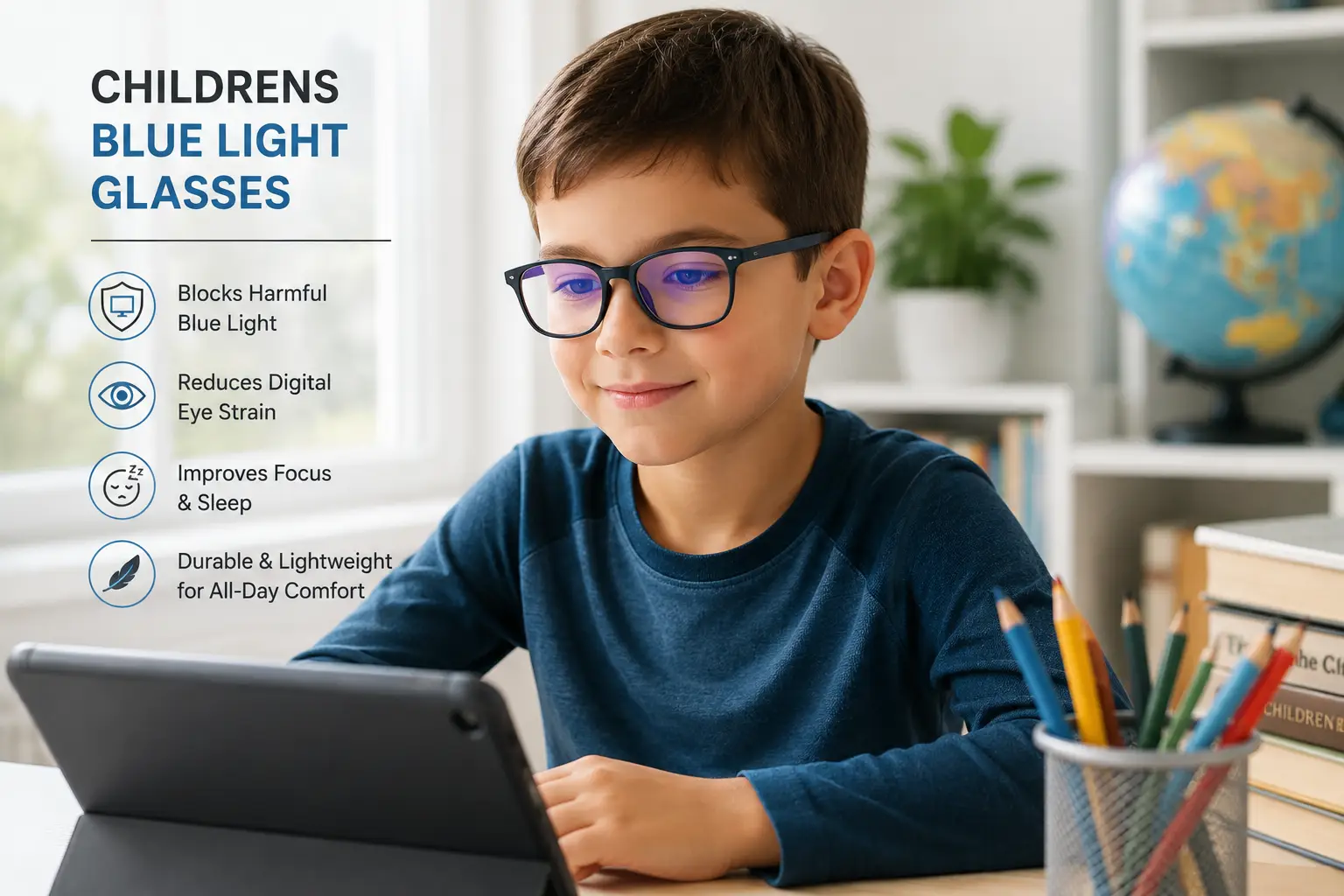
Childrens blue light glasses have gone from a niche accessory to a checkout-line staple in just a few years, and if your kid’s screen time has crept up right along with their after-school workload, it’s easy to see why. In plain terms, childrens blue light glasses are eyewear — usually with a clear or lightly tinted lens — designed to filter a portion of the blue-spectrum light emitted by phones, tablets, computers, and TVs, marketed as a way to ease digital eye strain during long stretches of screen use. Whether they meaningfully change eye comfort is genuinely debated among eye doctors (more on that shortly), but that hasn’t stopped millions of parents from adding a pair to the backpack alongside the pencil case.
This guide skips the marketing fluff. We dug into real, currently available products on Amazon, cross-referenced spec sheets against aggregated customer feedback, and pulled in guidance from ophthalmology and pediatric organizations so you’re not just buying based on a cute frame color. You’ll get seven real options spanning budget multi-packs to premium tinted lenses, a plain-language breakdown of what actually matters when buying for a 6-year-old versus a 12-year-old, and a few blunt truths about what these glasses can and can’t do for your child’s eyes. According to the American Academy of Ophthalmology, there’s no scientific evidence that light from screens damages the eyes — so let’s talk about what these glasses are actually good for, and how to pick a pair your child will actually keep on their face.
Quick Comparison: 7 Childrens Blue Light Glasses at a Glance
Before we dig into the full reviews, here’s a fast snapshot to help you narrow things down by what matters most to your household — budget, age range, or a specific use case like nighttime tablet time.
| Product | Best For | Frame Type | Age Range | Price Range |
|---|---|---|---|---|
| DefenderShield Kids Blue Light Glasses | Evening/night screen use | Rigid amber-tinted, spring hinge | 5–14 | $30–$45 |
| PROSPEK Kids Blue Light Glasses (SHARP) | Best optical clarity | Clear lens, flexible TR90 | 5–12 | $25–$35 |
| Cyxus Kids Blue Light Blocking Glasses | Best all-around mid-range pick | Clear lens, spring hinges | 6–15 | $15–$25 |
| Pro Acme Blue Light Blocking Glasses (2-Pack) | Best value multi-pack | Unbreakable TR90, flexible | 3–12 | $12–$20 |
| Dollger Kids Blue Light Blocking Glasses | Toddlers and active kids | TPEE rubber, ultra-flexible | 3–12 | $10–$16 |
| AHXLL Kids Blue Light Blocking Glasses (2-Pack) | Younger siblings sharing a pair | Silicone-flex, lightweight | 3–9 | $10–$15 |
| Outray Kids Anti Blue Light Glasses | Tightest budget | Basic plastic, spring hinge | 5–12 | $8–$14 |
Looking across the table, the split comes down to durability versus polish: the Pro Acme, Dollger, and AHXLL picks lean on bendable, nearly indestructible frames that forgive a toddler’s rough handling, while the DefenderShield and PROSPEK options invest more in lens quality and a tint calibrated for evening use. The Cyxus pair sits right in the middle, which is probably why it shows up so often in independent roundups. If your child is under 6 or prone to sitting on their glasses, prioritize the flexible-frame group; if you’re buying for a tween who wants something that looks more like “real” glasses, lean toward PROSPEK or Cyxus.
💬 One click helps other shoppers make an informed choice too! 😊
Top 7 Childrens Blue Light Glasses: Expert Analysis
We evaluated each of these seven picks on lens quality, frame durability, comfort for extended wear, and how their real-world reviews stack up against their marketing claims. Every product below is currently available on Amazon in the US, and we’ve noted honest trade-offs — not just the highlight reel.
1. DefenderShield Kids Blue Light Glasses — strongest tint for nighttime screens
The standout feature here is the noticeably amber-toned lens, which DefenderShield positions as its heavier-duty option for kids who use tablets or phones in the hour before bed. Unlike the clear-lens glasses on this list, the tint is visible enough that some parents use these specifically as an evening pair rather than an all-day one.
The frame uses a shatterproof, flexible build with spring hinges, so it survives the inevitable drop onto tile without snapping at the temple — a common failure point on cheaper frames. The amber coating is marketed as filtering a larger share of blue-spectrum light than the clear-lens competitors on this list, which matters most if your family’s concern is screen-driven sleep disruption rather than daytime eye comfort.
Who it’s for: parents specifically worried about screens interfering with bedtime routines, since the visible tint is a deliberate trade-off — it changes on-screen colors slightly, which isn’t ideal for daytime homework or art projects. Reviews consistently mention that the amber tint is more pronounced than kids expect at first, with some children needing a few nights to get used to the color shift, but most parents report their kids adapt within a week. A recurring theme in customer feedback is that the frame holds up well over months of daily backpack transport, though a handful of buyers note the nose pads can feel snug on narrower faces.
Pros:
- ✅ Shatterproof, spring-hinge frame built for daily wear and tear
- ✅ Amber tint purpose-built for evening/pre-bedtime screen sessions
- ✅ Reviews report strong long-term frame durability
Cons:
- ❌ Visible color tint isn’t ideal for daytime or homework use
- ❌ Some kids need an adjustment period before wearing it comfortably
DefenderShield Kids Blue Light Glasses typically run in the $30–$45 range, at the time of writing. For families specifically targeting bedtime screen habits, the tint makes this the most purpose-built option on the list — check the current price before buying, since it sits at the premium end of this roundup.
2. PROSPEK Kids Blue Light Glasses (SHARP) — clearest, most distortion-free lens
PROSPEK Kids Blue Light Glasses (SHARP) leans hard into optical quality, using a lens described as “high optical quality” and largely distortion-free — a detail that matters more than it sounds, since cheap blue-light lenses can introduce a faint warping effect that some kids find genuinely uncomfortable during long reading or gaming sessions.
The line also offers optional magnification (+0.5, +1.0, +1.5) for kids who need a very mild reading boost but don’t have a full prescription, which is a distinguishing feature none of the other six products on this list offer. Frame construction uses a flexible TR90-style material designed to resist the twisting and sitting-on abuse that ends most kids’ eyewear early.
Who it’s for: parents of school-age kids doing serious daily screen-based homework, where lens clarity over many hours matters more than a rock-bottom price. Based on comparing the spec sheet against aggregated buyer feedback, the SHARP clear-lens version is the better starting point for most families, with the magnified variants reserved for kids who’ve shown signs of eye fatigue during near-work. Reviews commonly praise the lack of visible distortion compared to bargain frames, though a few buyers note the frame runs slightly large for the youngest end of the 5–12 age range.
Pros:
- ✅ High-clarity, low-distortion lens noted across reviews
- ✅ Optional mild magnification for near-work fatigue
- ✅ Flexible frame resists everyday bending and twisting
Cons:
- ❌ Sizing runs large for kids on the younger end of the range
- ❌ Costs more than basic clear-lens competitors
Expect to pay in the $25–$35 range for PROSPEK Kids Blue Light Glasses (SHARP), at the time of writing. For homework-heavy households, the lens quality alone can justify the step up from the cheapest options on this list.
3. Cyxus Kids Blue Light Blocking Glasses — best all-around mid-range pick
Cyxus Kids Blue Light Blocking Glasses built its reputation on spring-hinge durability paired with a lifetime warranty — a combination that’s fairly rare at this price point and explains why it’s one of the most frequently recommended picks in independent buying guides, including a direct mention from Healthline.
The spring hinges let the temples flex outward without stressing the frame joint, which matters enormously for kids who take glasses on and off dozens of times a day. Cyxus also sells the line in multiple age-targeted variants (roughly ages 5–8 and 6–15), so you can size closer to your child’s actual face rather than guessing at a one-size-fits-all frame.
Who it’s for: families who want a dependable middle-ground option without paying premium pricing, especially if a warranty matters to your buying decision. What most buyers overlook with this pick is that the lifetime warranty specifically covers manufacturing defects, not accidental damage — worth knowing before you assume a snapped arm is automatically covered. Reviews frequently mention scratched lenses or slightly loose screws arriving out of the box, which points to inconsistent quality control on some units, though replacement requests through the warranty are generally reported as smooth.
Pros:
- ✅ Spring hinges built for repeated on/off use
- ✅ Manufacturer’s lifetime warranty against defects
- ✅ Age-targeted sizing options (5–8 and 6–15 variants)
Cons:
- ❌ Some units arrive with minor QC issues like loose screws
- ❌ Warranty doesn’t cover accidental breakage
Cyxus Kids Blue Light Blocking Glasses generally sit in the $15–$25 range, at the time of writing, making it one of the stronger value plays if the warranty coverage tips the decision in its favor.
4. Pro Acme Blue Light Blocking Glasses (2-Pack) — best value multi-pack
The defining feature of Pro Acme Blue Light Blocking Glasses (2-Pack) is right in the name: you get two pairs per purchase, which immediately solves the “where did the other pair go” problem that plagues households with more than one kid or a particularly forgetful one.
Both pairs use an unbreakable TR90-style flexible frame construction, marketed toward the 3–12 age range and sold across a wide spread of color and pattern combinations, which makes it easy to color-code glasses between siblings. The flexible hinge design is built to bend rather than snap under the kind of stress a toddler applies when yanking glasses off mid-tantrum.
Who it’s for: multi-kid households or budget-conscious parents who’d rather have a backup pair ready than order again when the first one goes missing. Based on aggregated review analysis, the frame durability holds up well relative to the price point, and the two-pack structure effectively halves the cost-per-pair compared to single-unit budget competitors. A common complaint centers on lens tint consistency between the two pairs in a set — a few buyers report one lens looking slightly more yellow-tinted than its twin, which is a minor but real quality-control gap worth knowing about upfront.
Pros:
- ✅ Two pairs per order — built-in backup for lost glasses
- ✅ Unbreakable, flexible frame suited to younger kids
- ✅ Wide range of color and pattern combinations
Cons:
- ❌ Occasional tint inconsistency reported between the two pairs
- ❌ Basic lens coating compared to premium options on this list
At around $12–$20 for the pair, at the time of writing, Pro Acme Blue Light Blocking Glasses (2-Pack) delivers strong value simply by reducing the odds you’re buying a replacement next month.
5. Dollger Kids Blue Light Blocking Glasses — most flexible frame for toddlers
Dollger Kids Blue Light Blocking Glasses uses a TPEE rubber frame — a soft, nearly bendable-in-half material that’s the most forgiving construction on this entire list, making it the go-to pick for the youngest kids in the 3–12 target range.
That rubberized flexibility means the frame can twist, fold, and get sat on without cracking, which matters enormously for toddlers and early elementary kids who haven’t yet learned to treat glasses gently. The square lens shape sits closer to the face than some flexible competitors, reducing the gap that lets peripheral screen glare sneak in around the edges.
Who it’s for: parents of preschool and early-elementary kids who need something that survives daily chaos more than something that looks polished. Here’s what to weigh: the soft rubber build trades a bit of visual refinement for near-total durability, so if your priority is a frame that looks like “real” glasses for an older tween, this isn’t the pick. Reviews consistently highlight the frame’s resilience to bending and dropping, with several parents specifically noting it survived being stepped on — a genuinely useful data point for this age bracket.
Pros:
- ✅ TPEE rubber frame virtually impossible to snap
- ✅ Snug, close-fitting square lens shape
- ✅ Well-suited to preschool and early-elementary ages
Cons:
- ❌ Rubberized look reads as younger, less “grown-up” style
- ❌ Softer frame can look less premium than rigid alternatives
Dollger Kids Blue Light Blocking Glasses are typically priced under $16, at the time of writing, positioning it as one of the most budget-friendly and toddler-tough options in this roundup.
6. AHXLL Kids Blue Light Blocking Glasses (2-Pack) — best for younger siblings sharing frames
AHXLL Kids Blue Light Blocking Glasses (2-Pack) targets a slightly younger window than most competitors here — roughly ages 3–9 — with a lightweight, silicone-flex build designed specifically for smaller faces rather than being a scaled-down adult frame.
The two-pack format includes two distinct colorways in most listings, which works well for younger siblings close in age who’ll inevitably want to borrow each other’s pair. The lightweight construction reduces the pressure point behind the ears that can make even a well-fitted frame uncomfortable after an hour of screen time.
Who it’s for: parents of two younger kids (roughly preschool through early elementary) who want matching-but-distinguishable frames without buying two separate listings. What the spec sheet doesn’t say, but reviews reveal, is that the smaller lens size genuinely fits narrower toddler faces better than most “kids” frames, which are frequently sized closer to a 7-to-10-year-old by default. On the downside, a portion of reviews mention the hinges feeling less sturdy over many months of daily use compared to the spring-hinge options higher on this list.
Pros:
- ✅ Genuinely sized for the 3–9 age range, not just scaled-down adult frames
- ✅ Two colorways per order for sibling sets
- ✅ Lightweight build reduces behind-the-ear pressure
Cons:
- ❌ Hinges reported as less durable over long-term daily use
- ❌ Limited size range once kids outgrow the smaller frame
Priced around $10–$15, at the time of writing, AHXLL Kids Blue Light Blocking Glasses (2-Pack) is a smart pick specifically for the toddler-to-early-elementary window other brands underserve.
7. Outray Kids Anti Blue Light Glasses — tightest budget entry point
Outray Kids Anti Blue Light Glasses is the no-frills option on this list — a straightforward clear-lens frame aimed at the 5–12 range without added extras like magnification tiers or a multi-pack bundle, which keeps the price at the floor of this category.
The frame uses a basic spring-hinge plastic build, which isn’t as bendable as the rubberized options above but still holds up to normal use better than a rigid, non-hinged frame would. It’s a straightforward, no-commitment way to test whether your child will actually keep a pair of blue light glasses on before spending more on a premium option.
Who it’s for: parents testing the waters — if you’re not sure your child will tolerate wearing glasses at all, this is the lowest-risk way to find out before investing in a $30+ pair. Based on comparing this pick against pricier competitors, the core function (a basic blue-light filter on a wearable frame) is present, but the lens coating and long-term frame resilience clearly trail the mid-range and premium picks on this list. Reviews are mixed on longevity, with several buyers noting the hinge loosens after a few months of regular on/off use, though most agree it performs fine for the price for the first several months.
Pros:
- ✅ Lowest price point in this entire roundup
- ✅ Simple, no-fuss frame with no confusing variant options
- ✅ Reasonable low-risk way to test if your child will wear glasses
Cons:
- ❌ Hinge durability reported to decline after several months
- ❌ Lens coating and clarity trail mid-range and premium picks
At roughly $8–$14, at the time of writing, Outray Kids Anti Blue Light Glasses is the pick for cautious first-timers who don’t want to commit real money before knowing whether the glasses will actually get worn.
Full Feature Comparison: All 7 Childrens Blue Light Glasses
| Product | Lens Type | Standout Feature | Price Range | Best For |
|---|---|---|---|---|
| DefenderShield Kids Blue Light Glasses | Amber-tinted | Purpose-built for evening use | $30–$45 | Bedtime screen habits |
| PROSPEK Kids Blue Light Glasses (SHARP) | Clear, low-distortion | Optional mild magnification | $25–$35 | Homework-heavy households |
| Cyxus Kids Blue Light Blocking Glasses | Clear | Lifetime defect warranty | $15–$25 | Balanced, dependable pick |
| Pro Acme Blue Light Blocking Glasses (2-Pack) | Clear | Two pairs per order | $12–$20 | Multi-kid families |
| Dollger Kids Blue Light Blocking Glasses | Clear | TPEE rubber, near-unbreakable | Under $16 | Toddlers, rough handling |
| AHXLL Kids Blue Light Blocking Glasses (2-Pack) | Clear | Sized for ages 3–9 | $10–$15 | Younger siblings |
| Outray Kids Anti Blue Light Glasses | Clear | Lowest price point | $8–$14 | Testing the waters |
Reading across this table, the products cluster into two honest categories: durability-first frames (Dollger, Pro Acme, AHXLL) built to survive small kids, and clarity-or-tint-first frames (PROSPEK, DefenderShield, Cyxus) that prioritize the lens experience for kids old enough to treat glasses more carefully. Outray is the outlier as a genuine budget test-run option rather than a long-term investment. If you’re buying for a child under 7, weight your decision toward the left-hand group; for a tween who’s shown they can handle glasses responsibly, the right-hand group offers a noticeably better wearing experience.
How to Get Your Child Comfortable Wearing Blue Light Glasses
Buying the right pair is only half the job — plenty of well-reviewed glasses end up in a drawer because a child never got past the “these feel weird” stage. Start with short, low-stakes exposure: have your child wear the glasses for 15–20 minutes during a favorite low-pressure activity (a show, not homework) so the first association isn’t stressful. Gradually extend the wear time over the first week rather than expecting all-day tolerance immediately.
Fit matters more than most parents expect. A frame that pinches behind the ears or slides down the nose will get pulled off within minutes regardless of lens quality, so check the fit within the first few days and don’t hesitate to size up or down if your child keeps adjusting the glasses. For kids under 7, the flexible-frame options on this list (Dollger, Pro Acme, AHXLL) tend to have an easier adoption curve simply because they don’t pinch when a child forgets to remove them before running around.
Let your child pick the color or pattern when the option exists — ownership over the choice meaningfully increases willingness to wear it, based on general behavioral patterns parents report across review threads. Finally, model the behavior yourself if you also use blue-light or computer glasses; kids are far more likely to keep glasses on consistently when it’s a shared household habit rather than a rule applied only to them. Clean the lenses with a microfiber cloth weekly, since a smudged lens is one of the most common reasons kids self-report not wanting to wear glasses, even when the fit and comfort are otherwise fine.
✨ Don’t miss these exclusive deals!
🔍 Take your family’s screen-time setup to the next level with this carefully curated lineup. Click a highlighted item to check current pricing and availability. These picks will help you build a comfortable, sustainable routine the whole family will stick with!
Real-World Scenarios: Matching Glasses to Your Child’s Daily Screen Habits
Scenario 1 — The remote-learning grade schooler. If your 8-year-old spends 3–4 hours on a school-issued tablet or laptop for classwork, prioritize daytime lens clarity over tint. The Cyxus Kids Blue Light Blocking Glasses or PROSPEK Kids Blue Light Glasses (SHARP) make sense here, since a tinted lens would distort on-screen colors during actual schoolwork, and the spring-hinge or flexible-frame durability holds up to being put on and off between subjects all day.
Scenario 2 — The evening gamer. If your 11-year-old’s biggest screen block happens in the two hours before bed, the tint on the DefenderShield Kids Blue Light Glasses is actually the point, not a drawback — it’s specifically positioned for that use case, and reviews back up its durability for daily evening sessions.
Scenario 3 — The toddler who mimics an older sibling. If a 4-year-old wants glasses “like their big brother’s” mostly for imitation and short tablet sessions, don’t overspend. The AHXLL Kids Blue Light Blocking Glasses (2-Pack) or Dollger Kids Blue Light Blocking Glasses deliver a genuinely toddler-appropriate fit and near-indestructible frame at a price that won’t sting if it’s lost in a toy bin within a month.
Scenario 4 — The budget-conscious household with three kids. When you’re outfitting multiple children and don’t want to place three separate orders, the Pro Acme Blue Light Blocking Glasses (2-Pack) covers two kids in one purchase, and its wide color range makes it easy to avoid sibling mix-ups. Pair it with a single Outray Kids Anti Blue Light Glasses for a third child who’s less enthusiastic about wearing glasses at all, keeping the total household spend well under $50.
Matching the product to the actual daily pattern — not just the age on the box — is the single biggest factor in whether a pair of glasses gets worn consistently past the first week.
Common Blue Light Glasses Problems and How to Fix Them
Problem: The glasses keep sliding down my child’s nose. This is almost always a sizing issue rather than a defect. Check the frame width against your child’s face width rather than relying on the stated age range, since kids’ face shapes vary widely within the same age bracket; the flexible-frame options (Dollger, AHXLL) tend to grip better on smaller noses due to their soft, slightly tacky material.
Problem: My child says the tinted lenses “look weird” or change colors. This is expected with amber-tinted lenses like DefenderShield Kids Blue Light Glasses and isn’t a defect — it’s the tint doing its job. If color accuracy matters for a specific activity (art homework, for instance), switch to a clear-lens pick like Cyxus or PROSPEK for that task and reserve the tinted pair for evening downtime.
Problem: The hinge feels loose after a few months. Spring hinges on budget frames like Outray Kids Anti Blue Light Glasses can loosen with heavy daily on/off use. A small eyeglass repair kit (widely available for under $10) with a jeweler’s screwdriver can usually tighten the hinge screw in under a minute; if it’s stripped, most brands’ customer service will replace the frame, especially under warranty coverage like Cyxus offers.
Problem: My child refuses to wear them at all. Before assuming the glasses are the problem, rule out fit and lens weirdness first using the checks above. If the resistance is behavioral rather than physical, revisit the gradual-exposure approach from the how-to section above rather than switching products — swapping brands rarely fixes a habit problem.
Problem: I can’t tell if the lenses are actually filtering blue light. Several brands, including Cyxus, ship with a small blue-light test card or flashlight demonstration that shows the filtering effect visually. If yours didn’t include one, a simple test is holding the lens up to a phone’s blue-light-heavy “Night Shift off” screen — a genuine blue-light filter will visibly shift the white balance warmer through the lens.
How to Choose Childrens Blue Light Glasses: 7 Expert Criteria
Picking the right pair comes down to matching a handful of concrete factors to your specific child, rather than chasing the highest blue-light-blocking percentage on the label.
- Frame flexibility matches your child’s age. Kids under 7 benefit from rubberized or TR90 flexible frames that survive rough handling; older kids can usually handle more rigid, polished frames.
- Lens tint matches the use case. Clear lenses suit daytime homework and schoolwork; amber or orange tints suit evening screen sessions where color accuracy matters less.
- Fit is checked against face width, not just age. Age ranges on packaging are a rough guide — actual face width varies enough that a “5–12” frame might fit one 6-year-old and not another.
- Hinge type affects long-term durability. Spring hinges generally outlast fixed hinges for kids who put glasses on and off dozens of times daily.
- Warranty or return policy provides a safety net. Since kids’ glasses take real abuse, a manufacturer warranty (like Cyxus offers) or a friendly Amazon return window reduces your financial risk if the frame fails early.
- Multi-packs make sense for multi-kid households. If you’re buying for more than one child, a two-pack like Pro Acme or AHXLL often costs less per pair than two single purchases.
- Budget should match your confidence the child will actually wear them. If this is your first time buying blue-light glasses for a reluctant kid, start with a budget option like Outray before committing to a premium pick.
Working through these seven criteria in order — starting with age-appropriate flexibility and ending with budget confidence — tends to eliminate most of the guesswork that leads to an unworn pair sitting in a drawer.
Common Mistakes to Avoid When Buying Kids Blue Light Glasses
The single most common mistake is buying based on the highest advertised blue-light-blocking percentage without considering whether that number is independently verified. Blocking percentages on budget eyewear listings are frequently self-reported by the manufacturer rather than lab-tested, so treat them as a rough directional claim rather than a precise spec — prioritize verified frame durability and comfort instead, since those are the factors that actually determine whether the glasses get worn.
A second frequent misstep is sizing purely by the age printed on the box rather than checking actual frame width against your child’s face. This is why review sections for nearly every product on this list include at least some complaints about sizing running large or small — face shape varies enormously even within a single age bracket.
Parents also commonly overbuy on features their child doesn’t need. A magnification option like PROSPEK offers only makes sense if a child has shown specific signs of near-work eye fatigue; adding uncalibrated magnification to a child with normal vision isn’t beneficial and may cause its own discomfort. Similarly, an amber-tinted pair makes little sense as an only pair for a child who mostly uses screens during daylight homework hours.
Finally, don’t assume every child needs blue light glasses at all. As the American Optometric Association has noted in discussing the broader blue-light conversation, much of the alarm around screen-emitted blue light outpaces the actual research base, and basic screen-time habits (breaks, distance, lighting) matter at least as much as any lens technology.
Childrens Blue Light Glasses vs. Screen Filters and the 20-20-20 Rule
Blue light glasses aren’t the only tool marketed for digital eye comfort, and it’s worth understanding how they stack up against the alternatives before assuming glasses are the right first purchase.
| Approach | What It Does | Cost | Effort Required |
|---|---|---|---|
| Childrens blue light glasses | Filters a portion of blue-spectrum light at the eye | $8–$45 one-time | Low (just wear them) |
| Device night-mode/screen filters | Software shifts screen color temperature warmer | Free (built into most devices) | Low (one-time setup) |
| 20-20-20 rule | Behavioral break schedule to reduce eye strain from near-work | Free | Moderate (requires consistency) |
| Physical screen distance/posture adjustments | Reduces strain from proximity and angle | Free | Moderate (requires habit change) |
The analysis here matters: device-level night mode and the 20-20-20 rule are free and, according to the American Academy of Ophthalmology, address the behavioral root causes of digital eye strain (reduced blinking, poor posture, close viewing distance) more directly than a lens filter does. Blue light glasses aren’t a replacement for those habits — they’re better understood as a comfort accessory that some kids find genuinely helpful and others don’t notice at all. The most effective approach for most families combines both: free behavioral habits as the foundation, with glasses as an optional comfort layer on top, particularly for kids who’ve specifically complained about evening screen glare or difficulty winding down after tablet use.
💬 One click helps other shoppers make an informed choice too! 😊
What to Expect: Everyday Performance and Comfort
Set realistic expectations before your child’s first day wearing these: most kids report the biggest adjustment period isn’t visual, it’s tactile — getting used to something resting on the nose and ears for extended periods. That adjustment typically settles within a week for kids who weren’t previously accustomed to any eyewear.
On the clear-lens picks (Cyxus, PROSPEK, Pro Acme, Dollger, AHXLL, Outray), most kids and parents report no noticeable change to on-screen color or clarity, meaning the glasses genuinely function as a “wear and forget” accessory during homework or gaming. On the tinted DefenderShield pick, expect an actual visible color shift — this isn’t a defect, but it does mean color-sensitive tasks like art apps or color-matching games will look different through the lens.
Comfort over multi-hour stretches (think a weekend gaming session or a long car-ride tablet marathon) depends heavily on frame weight and nose-pad design. The lighter, flexible-frame options tend to outperform rigid frames for true all-day comfort, based on the pattern across aggregated reviews, though “all-day” comfort claims should be taken with some skepticism — kids’ tolerance varies enormously, and even a well-fitted frame benefits from being removed periodically. Encourage your child to take the glasses off during non-screen activities like meals or outdoor play; treating them as a screen-specific tool rather than an all-day accessory extends frame lifespan and reduces the odds of loss or damage.
Childrens Blue Light Glasses for Different Ages and Activities
Ages 3–5 (preschool): Prioritize soft, flexible frames above all else — the Dollger and AHXLL picks on this list are specifically built for this bracket. At this age, screen sessions tend to be shorter and more supervised, so lens sophistication matters far less than a frame that survives being sat on.
Ages 6–9 (early elementary): This is the sweet spot for multi-packs like Pro Acme and AHXLL, since kids in this range are learning responsibility around belongings but still lose things regularly. A budget-friendly two-pack absorbs that learning curve without repeated re-purchases.
Ages 10–12 (late elementary/early middle school): Kids in this bracket often want glasses that look less “kiddie,” making Cyxus and PROSPEK stronger fits — both offer a more grown-up frame silhouette alongside genuinely solid lens quality for the homework-heavy years.
Gaming-specific use: For kids whose primary screen time is gaming rather than schoolwork, frame comfort during long, immersive sessions matters more than tint. Look for spring hinges and lightweight builds regardless of age bracket, since gaming sessions tend to run longer and less interrupted than homework blocks.
Remote/hybrid schooling: For kids doing several daytime hours of screen-based coursework, clear lenses are non-negotiable — a tinted pair like DefenderShield would distort educational content in ways that could actually hinder rather than help focus.
Safety, Regulations, and Standards for Kids’ Eyewear
Because these are marketed products for children, it’s worth understanding the regulatory backdrop even though blue light glasses themselves are a fairly unregulated category compared to, say, sunglasses or prescription eyewear. In the US, children’s products broadly fall under the Consumer Product Safety Improvement Act, and legitimate sellers should be able to provide a Children’s Product Certificate confirming third-party testing for things like lead content and choking-hazard risk on small parts — worth checking for if you’re buying from a lesser-known third-party seller rather than an established brand.
Unlike prescription eyewear or true UV-blocking sunglasses (which fall under ANSI Z80.3 testing standards), non-prescription blue-light glasses generally aren’t required to meet a specific optical performance standard, which is part of why blue-light-blocking percentage claims vary so widely and inconsistently between brands. If UV protection specifically matters for your use case (outdoor tablet use, for instance), check the listing explicitly for UV400 labeling rather than assuming a “blue light” label implies UV protection — they’re separate properties addressing separate wavelengths.
On the medical side, it’s worth repeating that neither the American Academy of Ophthalmology nor the American Optometric Association currently recommends blue light glasses as a medically necessary intervention for children; both organizations frame digital eye strain as primarily behavioral in origin. That doesn’t make these products unsafe or pointless — a comfortable, well-fitted, properly certified pair of glasses carries essentially no downside risk — but it does mean you shouldn’t expect them to substitute for actual screen-time management, especially for younger kids, where the American Academy of Pediatrics recommends age-appropriate limits and co-viewing over relying on any single product to offset heavy screen use.
Long-Term Cost and Durability: Are Childrens Blue Light Glasses Worth It?
Thinking about total cost of ownership rather than sticker price changes the calculation meaningfully. A single $10 pair that breaks in two months and gets replaced three times over a school year costs more, and creates more household friction, than a single $25 pair with a spring hinge and a warranty that lasts the full year.
| Price Tier | Typical Lifespan | Total Cost Over 1 Year (Est.) | Best Fit |
|---|---|---|---|
| Budget ($8–$16) | 2–4 months per pair | $24–$48 (2–3 replacements) | Testing willingness to wear |
| Mid-range ($15–$25) | 6–10 months per pair | $15–$25 (1 purchase, maybe 1 replacement) | Most households |
| Premium ($25–$45) | 10–12+ months per pair | $25–$45 (1 purchase) | Heavy daily use, warranty coverage |
The math above suggests the mid-range tier — where Cyxus and the multi-pack options like Pro Acme sit — actually delivers the best value once replacement frequency is factored in, even though the sticker price looks higher than the cheapest budget option. Premium picks like PROSPEK and DefenderShield make the most sense once you already know your child will consistently wear and reasonably care for their glasses, since the upfront cost only pays off with full-year use. For a first purchase with real uncertainty about whether your child will keep them on at all, starting at the budget or mid-range tier limits your downside while you learn your child’s actual habits.
Frequently Asked Questions
❓ Do childrens blue light glasses actually work?
❓ What age can a child start wearing blue light glasses?
❓ Are childrens blue light glasses safe for daily use?
❓ Can childrens blue light glasses be worn over a prescription?
❓ How do I know if childrens blue light glasses are actually filtering blue light?
Conclusion
Choosing the right childrens blue light glasses comes down to being honest about what you actually need them to do. If your goal is genuinely reducing evening screen-related sleep disruption, the tinted DefenderShield Kids Blue Light Glasses is purpose-built for that job. If daytime homework comfort and lens clarity matter most, PROSPEK Kids Blue Light Glasses (SHARP) and Cyxus Kids Blue Light Blocking Glasses are the stronger picks on this list. And if you’re not yet sure your child will tolerate wearing glasses at all, starting cheap with Outray Kids Anti Blue Light Glasses or a durable multi-pack like Pro Acme Blue Light Blocking Glasses (2-Pack) limits your risk while you find out.
None of these seven options are a substitute for the free, behavior-based habits — screen breaks, proper distance, good room lighting, and sensible daily limits — that the American Academy of Pediatrics and eye-health organizations consistently point to as the more evidence-backed way to manage digital eye strain and healthy screen habits in kids. But as a low-risk comfort accessory that plenty of families genuinely find useful, a well-fitted, durable pair of childrens blue light glasses is a reasonable addition to a broader, sensible approach to your child’s screen time. Match the pick to your child’s actual daily habits — not just their age — and you’ll land on a pair that actually stays on their face past the first week.
Recommended for You
- Bright Blue Contacts: 7 Best Picks for a Bold Blue Look (2026)
- 7 Best Aviator Blue Light Glasses in 2026: Ranked & Reviewed
- 7 Best Contacts With Blue Light Filter to Try in 2026
Disclaimer: This post contains affiliate links. As an Amazon Associate, I earn from qualifying purchases made through these links, at no additional cost to you.
✨ Found this article helpful? Share it with someone who needs it! 💬🤗