In This Article
If your eyes feel gritty by 3 p.m. and your Zoom camera has become a mirror you stare into eight hours a day, you’ve probably already considered chunky blue light glasses. The appeal is obvious: a bold, statement-making frame that also promises to take some of the sting out of a screen-heavy routine. But “chunky” isn’t just an aesthetic choice here — thicker acetate and polycarbonate frames tend to hold larger lenses, which means broader coverage against glare and peripheral light spill compared to a thin wire frame.
This guide skips the marketing fluff. We researched real, currently available frames on Amazon, compared their materials, lens coatings, and fit, and pulled in what actual eye-care research says about blue light filtering — including a 2023 Cochrane review and guidance from the American Academy of Ophthalmology. You’ll get seven honest product breakdowns, comparison tables, a buyer’s framework, and answers to the questions people actually type into Google before they buy. Whether you’re after a $15 everyday pair or a hand-cut designer acetate frame, you’ll leave knowing exactly which chunky blue light glasses fit your face, your budget, and your screen time.
What Is a Pair of Chunky Blue Light Glasses?
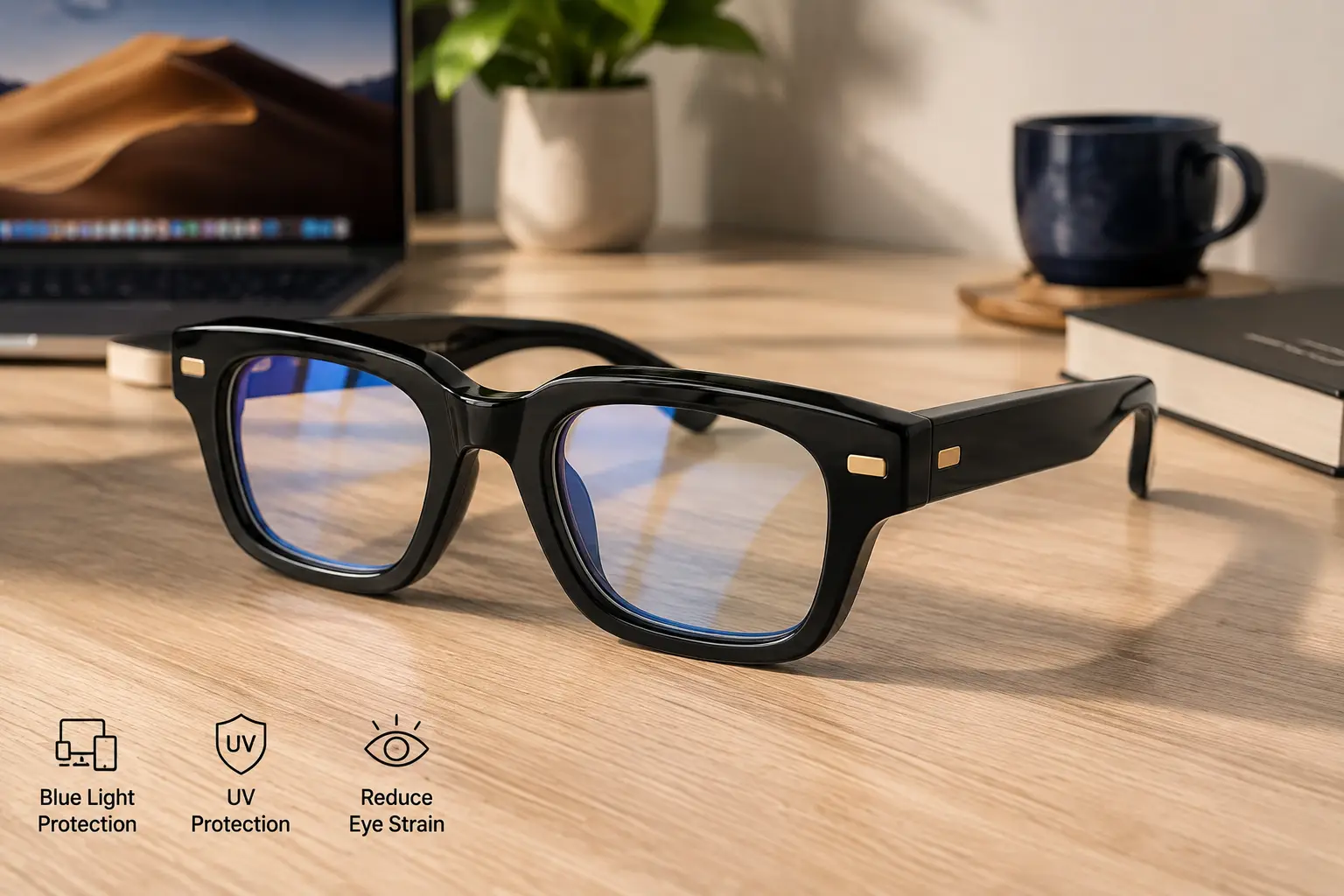
Chunky blue light glasses are eyewear with thick acetate, TR90, or polycarbonate frames — usually oversized square, rectangle, or browline shapes — fitted with lenses that carry a coating or tint designed to filter a portion of high-energy visible (HEV) blue light from screens and LED lighting. They’re sold both with clear, near-invisible coatings and with light amber or yellow tints for stronger filtering, and almost all current models add UV400 protection as a bonus, non-prescription feature.
The “chunky” part matters practically, not just stylistically: a wider frame profile blocks more ambient light from the sides of your eyes, which some wearers find reduces glare-related squinting during long desk sessions.
Quick Comparison: 7 Chunky Blue Light Glasses at a Glance
| Product | Frame Style | Material | Price Range | Best For |
|---|---|---|---|---|
| SOJOS SJ5053 | Oversized square, metal studs | Acetate-look TR90 | Around $18–$22 | Bold everyday style |
| Gaoye Fashion Square | Square, unisex | Polycarbonate | Around $15–$20 | Tight budgets |
| livho High Tech | Oversized rectangle | Polycarbonate | Around $13–$18 | First-time buyers |
| Cyxus Flicker | Thick vintage square | PC (polycarbonate) | Around $28–$32 | All-day desk wear |
| J+S Vision Nerdy Square | Bold square | Acetate-style plastic | Around $20–$26 | Gaming/screen marathons |
| QUAY Hardwire | Oversized square, designer | TR90 | Around $55–$65 | Fashion-forward buyers |
| DIFF Bella | Oversized square, hand-cut | Premium acetate | Around $75–$95 | Long-term investment pair |
Looking at the table, the split is clear: three frames under $25 built for daily, low-stakes wear; two mid-tier options ($26–$65) that add lens quality and brand backing; and one premium acetate frame that behaves more like a designer eyeglass purchase than a screen accessory. Reviews aggregated by Consumer Reports suggest that price alone doesn’t predict comfort — hinge quality and nose-pad fit matter just as much as the brand name on the box.
💬 One click helps other shoppers make an informed choice too! 😊
The 7 Best Chunky Blue Light Glasses in 2026
Below are seven real, currently sold frames spanning entry-level to designer pricing. Every pick below emphasizes an oversized or thick-rimmed silhouette — no thin wire frames made this list.
1. SOJOS SJ5053 — chunkiest silhouette for the price
The SOJOS SJ5053 leans hardest into the “chunky” brief of any pick here, with an oversized square shape finished off by decorative double metal studs at the temples. Its TR90-style frame body is flexible rather than rigid acetate, which matters for anyone who’s snapped a cheap frame by sitting on it — TR90 tends to bend back into shape instead of cracking. The anti-blue-light lens coating is paired with basic anti-glare treatment, and the lens sits wide enough to cut down on light creeping in from the sides during monitor work.
Who should buy this: SOJOS SJ5053 is built for buyers who want their glasses to read as a fashion statement first and a productivity tool second, without spending designer money. Reviews aggregated on the product’s Amazon listing consistently mention the bold look and lightweight feel, with a recurring complaint that the arms run slightly long for smaller face shapes.
Pros:
- ✅ Genuinely oversized coverage for the price point
- ✅ Flexible TR90 build resists snapping
- ✅ Distinct, fashion-forward stud detailing
Cons:
- ❌ Arms can feel loose on narrower head shapes
- ❌ Coating is clear, so filtering strength is modest
Priced around $18–$22, the SOJOS SJ5053 is hard to beat if style is your primary driver and blue light filtering is a nice-to-have bonus.
2. Gaoye Fashion Square — best barebones daily driver
The Gaoye Fashion Square keeps things simple: a straightforward square polycarbonate frame with a clear anti-blue-light lens and spring hinges, which let the temples flex outward slightly instead of digging into your temples during long wear. That spring-hinge detail is worth calling out because it’s genuinely missing from many bargain frames, and it’s the difference between glasses you forget you’re wearing and ones you take off every hour.
Who should buy this: the Gaoye Fashion Square suits anyone testing whether they even like wearing blue light glasses before committing more money, or anyone who needs a backup pair for a bag or desk drawer. Aggregated review sentiment points to strong satisfaction on comfort and fit, with occasional notes that the anti-glare coating shows fingerprints more visibly than pricier alternatives.
Pros:
- ✅ Spring hinges add real all-day comfort
- ✅ Genuinely low price for a chunky square shape
- ✅ Unisex sizing fits a wide range of face widths
Cons:
- ❌ Coating attracts visible fingerprint smudges
- ❌ Lens clarity is a step below mid-tier options
At roughly $15–$20, the Gaoye Fashion Square is a low-risk way to try the category.
3. livho High Tech Blue Light Glasses — most-reviewed entry-level pick
The livho High Tech Blue Light Glasses come in an oversized rectangular tortoise shell design that’s become one of the most purchased styles in this category, largely on the strength of word-of-mouth from remote workers and students. The polycarbonate frame is genuinely lightweight, which matters more than people expect once you’ve worn heavier acetate for six-plus hours straight.
Who should buy this: the livho High Tech Blue Light Glasses are a strong fit for students cramming through late-night study sessions or anyone who wants a “just works” pair without researching lens technology. Aggregated customer sentiment repeatedly highlights the lightweight feel and tortoise finish as standout traits, while some buyers note the lenses run slightly small for those wanting maximum coverage.
Pros:
- ✅ Extremely lightweight for all-day wear
- ✅ Classic tortoise finish suits most outfits
- ✅ Large, well-established buyer base to reference
Cons:
- ❌ Lens height is smaller than other oversized picks
- ❌ Nose pads aren’t adjustable
Around $13–$18, the livho High Tech Blue Light Glasses deliver strong value density for a first purchase.
4. Cyxus Flicker — sturdiest build for daily desk wear
The Cyxus Flicker ships in a genuinely thick-profile square frame — confirmed specs put the lens width around 52mm with a 143mm total frame width — made from a sturdier polycarbonate blend than most sub-$20 competitors. That extra material means more resistance to the frame flex that eventually loosens hinges on cheaper glasses.
Who should buy this: the Cyxus Flicker is worth the small step up in price for anyone who wears their glasses eight-plus hours a day, five days a week, where frame durability compounds in value over a cheaper pair that needs replacing twice a year. Reviews aggregated from buyers frequently cite reduced end-of-day eye fatigue during long computer sessions, alongside a smaller number of comments about the vintage silhouette not suiting narrower faces.
Pros:
- ✅ Documented durable, thicker polycarbonate build
- ✅ UV400 protection layered onto the blue light coating
- ✅ Five color options to match personal style
Cons:
- ❌ Vintage square shape isn’t universally flattering
- ❌ Sits at the higher end of the entry-level bracket
At around $28–$32, the Cyxus Flicker earns its price with materials you can actually feel.
5. J+S Vision Nerdy Square — best for gaming and screen marathons
The J+S Vision Nerdy Square frame is built deliberately oversized and boxy — the “nerdy” naming is intentional marketing, but it also means genuinely wide lens coverage. J+S Vision offers this frame with multiple lens technology tiers, including a stronger amber-tinted option intended for evening or extended-session filtering rather than the barely-there clear coating found on cheaper picks.
Who should buy this: the J+S Vision Nerdy Square is a smart pick for gamers and streamers doing multi-hour sessions under LED lighting, since the tinted lens option is engineered for stronger filtering rather than subtlety. Aggregated feedback tends to praise the sturdier frame hinge, while some reviewers note the tinted lens visibly shifts screen color accuracy, which matters if you’re color-grading or editing photos.
Pros:
- ✅ Multiple lens-strength tiers to choose from
- ✅ Sturdier hinge than most sub-$25 competitors
- ✅ Boxy shape gives genuinely wide coverage
Cons:
- ❌ Tinted lens option alters on-screen color accuracy
- ❌ Bulkier look reads more “gamer” than “office”
Priced around $20–$26 depending on lens choice, the J+S Vision Nerdy Square is purpose-built rather than generic.
6. QUAY Hardwire — most fashion-forward mid-tier pick
The QUAY Hardwire is where this list crosses from “screen accessory” into genuine eyewear fashion. The oversized square TR90 frame is designed first as a sunglasses-adjacent statement piece, with a clear blue-light-filtering lens version added to the same silhouette that QUAY sells in tinted sun lenses — meaning you’re buying an actual design, not a stock frame with a coating slapped on.
Who should buy this: the QUAY Hardwire suits buyers who already shop designer-adjacent sunglasses brands and want their blue light glasses to look intentional on a video call rather than purely functional. Aggregated review sentiment consistently calls out the frame’s fit and finish as a step above drugstore eyewear, with occasional notes that the nose bridge fit runs narrow for some face shapes.
Pros:
- ✅ Genuine fashion-brand design language
- ✅ TR90 build stays lightweight despite the bold size
- ✅ Doubles as a stylish frame beyond just screen use
Cons:
- ❌ Noticeably pricier than functional-first competitors
- ❌ Narrow nose bridge fit isn’t universal
At roughly $55–$65, the QUAY Hardwire is a fashion purchase that happens to filter blue light well, not the reverse.
7. DIFF Bella — best premium, long-term investment pair
The DIFF Bella is the hand-cut acetate option on this list, and it shows in the details: thicker, more rigid oversized square acetate, stainless steel barrel hinges, and a scratch-resistant, backside anti-reflective lens coating layered on top of the blue light filter. This is the frame most likely to survive years of daily wear rather than a single busy semester or work sprint.
Who should buy this: the DIFF Bella makes the most sense for buyers who wear glasses as a core part of their personal style and are willing to pay acetate-eyewear prices for a blue light frame that could otherwise pass for a standard designer pair. Reviews aggregated from buyers frequently praise the substantial, premium feel of the acetate and hinge hardware, while a smaller number mention the price gap versus similar-looking budget frames as a hard sell.
Pros:
- ✅ Hand-cut acetate feels genuinely premium
- ✅ Steel barrel hinges outlast standard plastic hinges
- ✅ Anti-reflective backside coating reduces screen glare
Cons:
- ❌ Priced well above every other pick on this list
- ❌ Overkill if you only wear it occasionally
Around $75–$95, the DIFF Bella is the pick for buyers who see chunky blue light glasses as a wardrobe investment, not a disposable accessory.
✨ Don’t miss these exclusive deals!
🔍 Take your eye comfort routine to the next level with this carefully curated lineup. Click a highlighted item to check current pricing and availability on Amazon. These picks will help you get through late nights, long shifts, and marathon screen sessions with a little less eye fatigue and a lot more style!
Getting Started: Break-In Tips and Care for Your New Chunky Frames
Chunky frames need a slightly different first-30-days routine than thin wire glasses, mostly because their added bulk changes how weight sits on your nose and ears. In the first week, adjust wear time gradually — start with two to three hours rather than a full workday, since a slightly-off nose pad fit is far more noticeable under heavier acetate or polycarbonate.
Clean lenses only with a microfiber cloth and lens spray; paper towels and shirt hems both leave micro-scratches that dull anti-glare coatings over time, especially on the clear-coat budget picks like the Gaoye Fashion Square and livho High Tech Blue Light Glasses. Store them in a hard case rather than a bag pocket — chunky frames are more resistant to snapping than thin ones, but the wider lens surface is also more exposed to scratches when tossed loosely into a backpack.
If the arms feel tight after the first few wears, most TR90 frames like the SOJOS SJ5053 and QUAY Hardwire can be gently warmed with a hairdryer on low heat and reshaped by hand; acetate frames like the DIFF Bella should only be adjusted by an optician, since forcing acetate cold risks cracking it. A common first-month mistake is over-tightening the hinges to “fix” looseness — this usually accelerates wear instead of solving the underlying nose-pad fit issue.
Real-World Scenarios: Matching Chunky Blue Light Glasses to Your Day
The night-class student, budget under $20: juggling a laptop, a part-time job, and 11 p.m. reading assignments, this buyer needs something durable enough to survive a backpack and cheap enough to replace without guilt. The livho High Tech Blue Light Glasses or Gaoye Fashion Square both fit this exact use case — light, inexpensive, and good enough for genuinely long study stretches.
The remote worker on back-to-back video calls: this person is on camera as much as they’re reading a screen, so appearance matters alongside function. The QUAY Hardwire or SOJOS SJ5053 strike that balance — bold enough to look intentional on Zoom, functional enough to ease glare from a ring light or monitor.
The competitive gamer or streamer: multi-hour sessions under RGB lighting call for stronger filtering, not just a light clear coat. The J+S Vision Nerdy Square with its tinted lens option, or the sturdier-built Cyxus Flicker, both hold up better to five-plus-hour sessions than a flimsier budget frame.
The professional who wears glasses as part of their personal brand: for someone in client-facing work who wants their eyewear to read as intentional rather than functional, the DIFF Bella is the pick — it’s the only frame here built to acetate-eyewear standards rather than screen-accessory standards.
Solving Common Blue Light Glasses Problems
Problem: the glasses slide down your nose during long sessions. This is almost always a nose-pad or bridge-fit issue rather than a frame-quality one. Frames with adjustable silicone nose pads, or a slightly narrower bridge fit like the Cyxus Flicker, solve this more reliably than tightening the hinges.
Problem: screens look slightly yellow or warm-toned. This happens with stronger amber-tinted lenses, like the tinted option on the J+S Vision Nerdy Square. If color accuracy matters for your work, switch to a clear-coat lens instead — you’ll trade some filtering strength for true-to-life color.
Problem: the frame feels heavy after a few hours. Acetate and TR90 differ meaningfully in weight; if a premium acetate frame like the DIFF Bella feels heavy, a polycarbonate build like the livho High Tech Blue Light Glasses or Gaoye Fashion Square will feel noticeably lighter for the same coverage.
Problem: no noticeable difference in eye strain. This is common, and it’s honest to say so upfront — filtering lenses address glare and light intensity, but eye strain from screens is driven mainly by focusing distance, blink rate, and screen brightness. Pairing any pair here with the 20-20-20 rule (every 20 minutes, look at something 20 feet away for 20 seconds) does more for strain than the lens tint alone.
Problem: frame arms are too long or too short. Chunky frames vary more in arm length than thin wire frames because the added bulk changes proportions. Check listed temple length in millimeters before buying rather than relying on “one size fits most” language.
How to Choose Chunky Blue Light Glasses
- Decide how much coverage you actually want. A wider, more oversized shape like the DIFF Bella or SOJOS SJ5053 blocks more peripheral light; a moderate square like the Gaoye Fashion Square is less dramatic but still functional.
- Match the frame material to your daily wear pattern. TR90 and polycarbonate flex and resist snapping — better for bags and active days. Acetate looks and feels premium but needs gentler handling.
- Pick clear coating vs. tinted lenses deliberately. Clear coatings, used on most budget picks, filter modestly without changing color perception; tinted lenses like on the J+S Vision Nerdy Square filter more aggressively but shift color accuracy.
- Check for UV400 protection as a baseline. Nearly every frame on this list includes it, but it’s worth confirming the spec sheet on any pair you’re considering outside this guide, since coating quality varies noticeably across cheaper, unbranded listings.
- Consider face width before frame width. Oversized square shapes can overwhelm narrower faces; if you’re unsure, look for listed lens and frame width in millimeters rather than product photos alone.
- Set a realistic budget tier. Entry-level ($13–$25) is fine for testing the category; mid-tier ($25–$65) adds durability and brand design; premium ($75+) is a long-term wardrobe purchase.
- Read aggregated review themes, not star counts alone. A 4-star frame with consistent nose-pad complaints tells you more than a raw rating number — look for what reviewers repeat.
Chunky Blue Light Glasses vs. Thin Wire-Frame Blue Light Glasses
The core trade-off is coverage versus subtlety. Thin wire frames sit closer to the eye and are less visually dominant, which some buyers prefer for a professional look, but their smaller lens area lets in more peripheral glare from monitors and overhead lighting. Chunky frames like the SOJOS SJ5053 or DIFF Bella trade that subtlety for meaningfully larger lens coverage, which matters more in bright, glare-heavy office or gaming setups than in a dim home office.
Durability also splits along the same lines: wire frames rely on thin metal temples that bend out of alignment with repeated on/off handling, while chunky acetate or TR90 builds like the Cyxus Flicker distribute stress across a wider surface and tend to hold their shape longer under daily wear. The trade-off is weight — a wire frame is nearly always lighter than an equivalent chunky one, which matters if you already find any glasses uncomfortable after a few hours.
Common Mistakes to Avoid When Buying Chunky Blue Light Glasses
Buyers most often overestimate how much a lens tint will change how they feel by end of day, treating blue light glasses as a total fix for screen fatigue rather than one piece of a broader habit — proper monitor brightness, screen distance, and blink rate all matter more than the lens itself. A second common mistake is buying purely off a product photo without checking listed frame width, which leads to oversized frames that overwhelm a narrower face or sit too tight on a wider one.
Buyers also frequently skip checking hinge type before purchase, then are surprised when a rigid hinge loosens within a few months of daily on/off use — spring hinges, found on frames like the Gaoye Fashion Square, hold up meaningfully longer under repeated handling. Finally, many shoppers assume a stronger tint always means better filtering value, without weighing the real trade-off of shifted screen color accuracy that comes with amber-tinted lenses like the option on the J+S Vision Nerdy Square.
What to Expect: Everyday Performance
It’s worth being direct about what the current research actually shows. A widely cited 2023 Cochrane systematic review of 17 randomized trials found that blue-light filtering lenses probably make little to no difference to eye strain symptoms, visual performance, or sleep quality compared to non-filtering lenses over the short term studied. That doesn’t mean chunky blue light glasses are worthless — it means their day-to-day benefit is more about comfort, glare reduction, and personal style than a clinically proven fix for digital eye strain.
What reviewers across every product on this list do consistently report is a subjective sense of reduced glare and less squinting during long bright-screen sessions, particularly with oversized shapes that block more peripheral light. Realistically, expect a frame that’s comfortable to wear all day, looks good on camera, and takes the edge off glare — not a device that eliminates screen fatigue on its own.
Long-Term Cost and Maintenance
A $15 pair like the livho High Tech Blue Light Glasses looks cheapest on day one, but if the hinge loosens within six months of daily wear — a common pattern noted in aggregated reviews of budget frames — you may replace it two or three times a year. A $28–$32 frame like the Cyxus Flicker, built with a sturdier polycarbonate blend, often works out cheaper per year of actual wear even though the upfront price is higher.
At the top end, the DIFF Bella‘s steel hinges and hand-cut acetate are designed to be serviced rather than replaced — a loose screw or bent hinge can typically be repaired by any optician, the same way a standard designer eyeglass frame would be. Factor in lens coating longevity too: anti-reflective backside coatings, found on the DIFF Bella, resist the fine scratching that dulls cheaper clear coatings over a year or two of pocket-and-bag storage.
Safety, Regulations, and Standards
Non-prescription blue light glasses like every pick on this list fall outside the FTC’s Eyeglass Rule, which specifically governs prescription eyewear sales and portability — but that doesn’t mean non-prescription frames are unregulated. Sellers are still bound by general FTC truth-in-advertising rules, meaning marketing claims about blue light blocking percentages or “prevents eye damage” language must be substantiated, not just implied by packaging.
Look for UV400 labeling as a genuine, testable standard — it indicates the lens blocks light up to 400 nanometers, covering the full UVA/UVB range, unlike blue-light-blocking claims, which currently have no standardized third-party certification across the industry. If a listing claims a specific blue-light-blocking percentage, treat it as a marketing figure rather than a lab-verified one unless the brand cites independent testing.
Frequently Asked Questions
❓ Do chunky blue light glasses actually reduce eye strain?
❓ Are chunky blue light glasses worth buying without a prescription?
❓ What's the best chunky blue light glasses frame for gaming?
❓ How much should I expect to spend on a good pair of chunky blue light glasses?
❓ Do chunky blue light glasses work for both men and women?
Conclusion
Chunky blue light glasses sit at an honest intersection of style and modest, real-world comfort — not a clinically proven eye-strain cure, but a genuinely useful accessory for anyone spending long hours under screens and office lighting. Across the seven picks in this guide, the right choice comes down to how you weigh budget against durability and design: the livho High Tech Blue Light Glasses and Gaoye Fashion Square cover the low-risk, try-it-first end; the Cyxus Flicker and J+S Vision Nerdy Square add real durability and stronger filtering options for daily desk or gaming use; and the QUAY Hardwire and DIFF Bella deliver genuine designer-grade builds for buyers who want their eyewear to double as a style statement.
Whichever tier you land in, prioritize frame width, hinge type, and coating quality over marketing percentages you can’t verify — those three factors, more than the tint itself, determine whether a pair earns a permanent spot on your desk or ends up in a drawer within a month.
Recommended for You
- Bright Blue Contacts: 7 Best Picks for a Bold Blue Look (2026)
- 7 Best Aviator Blue Light Glasses in 2026: Ranked & Reviewed
- 7 Best Contacts With Blue Light Filter to Try in 2026
Disclaimer: This post contains affiliate links. As an Amazon Associate, I earn from qualifying purchases made through these links, at no additional cost to you.
✨ Found this article helpful? Share it with someone who needs it! 💬🤗