In This Article
What Are Blue Lenses? A 2026 Buyer’s Guide
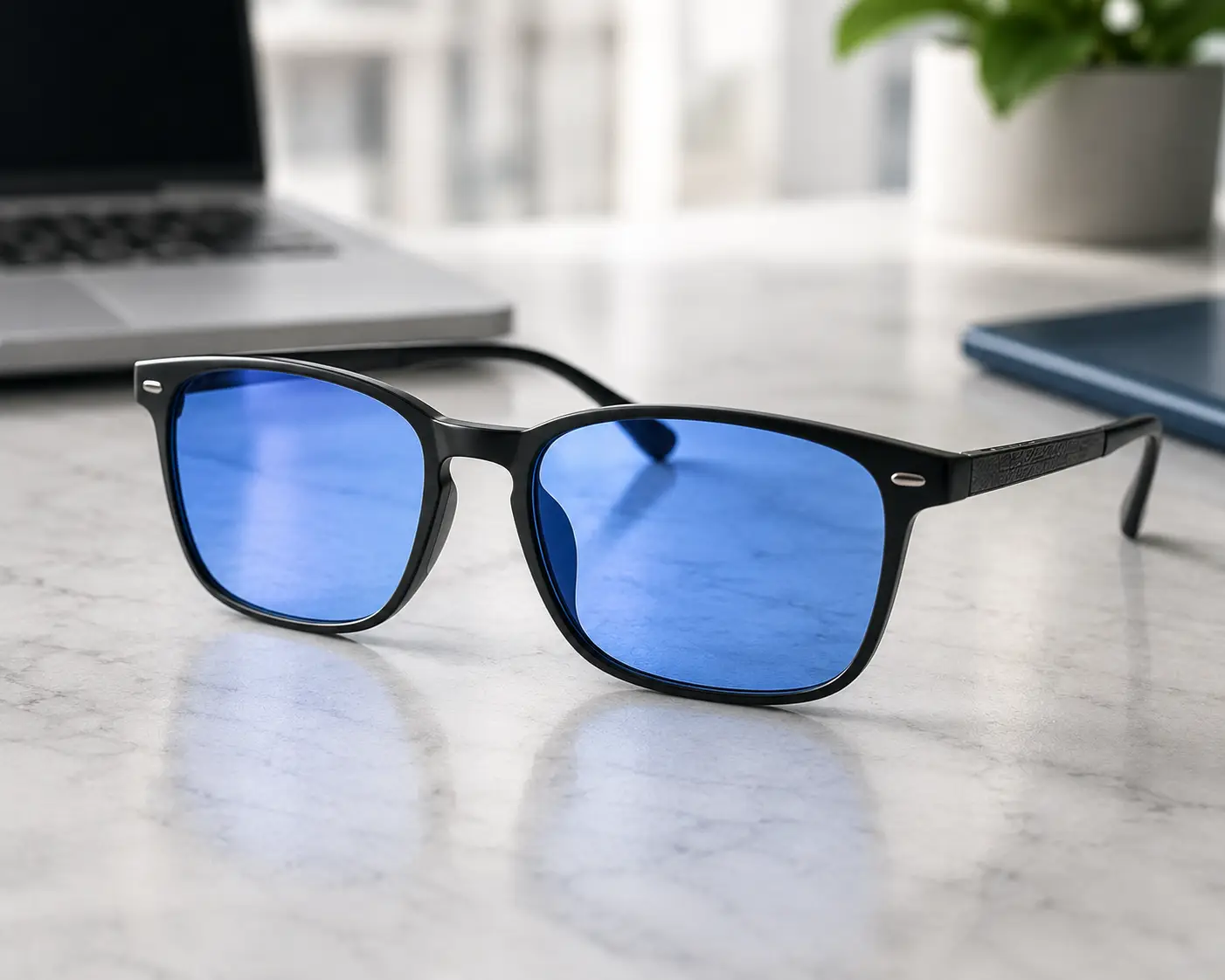
Blue lenses are sunglasses lenses tinted or mirror-coated in shades of blue — from icy sky blue to deep cobalt — built to cut glare, sharpen contrast, and add a distinct pop of color while still blocking harmful UV rays. Unlike the standard gray or brown tints most people default to, blue lenses trade a touch of true-color accuracy for a cooler, brighter field of view that a lot of wearers find easier on the eyes in high-glare conditions.
If you’ve been scrolling Amazon at midnight wondering whether blue lenses are just a passing trend or an actual functional choice, you’re asking the right question. Here’s the honest answer: it’s both. Blue mirror coatings became a fashion staple thanks to aviator styles and beach-brand marketing, but the tint itself does real optical work — it reflects more visible light off the lens surface than a plain tint does, which is why blue mirrors feel noticeably cooler on bright, sunny days. According to the American Academy of Ophthalmology, lens color has almost nothing to do with UV protection on its own — that comes from a separate coating or lens material — but tint does affect contrast, comfort, and how colors appear to you.
This guide skips the fluff. We researched real specs, real aggregated customer feedback, and current market pricing to bring you seven genuinely good blue lens sunglasses, spanning budget pairs under $25 to premium glass-lens options above $300. You’ll also get a practical buying framework, common mistakes to dodge, and answers to the questions people actually search before checking out.
Disclosure: This post contains affiliate links. As an Amazon Associate, we earn from qualifying purchases made through these links, at no additional cost to you.
Quick Comparison: Best Blue Lens Sunglasses at a Glance
Before diving into the full breakdown, here’s a fast snapshot of how these seven pairs stack up on price, lens type, and who each one suits best.
| Product | Best For | Price Range | Lens Type |
|---|---|---|---|
| Ray-Ban Aviator Classic RB3025 | Everyday, timeless style | Around $180–$230 | Blue Flash mirror, polycarbonate |
| Oakley Holbrook Prizm Sapphire | Daily wear with sharper contrast | Around $170–$210 | Prizm Sapphire, O Matter |
| Costa Del Mar Permit 580G | Fishing, boating, open water | Around $270–$330 | Glass 580G blue mirror, polarized |
| Maui Jim Red Sands | Premium color clarity | Around $259–$309 | PolarizedPlus2 Blue Hawaii |
| Knockaround Fast Lanes | Budget polarized, casual wear | Around $35–$45 | Sky blue mirror, polarized |
| Goodr Falkor’s Fever Dream | Running, high-motion activity | Around $25–$35 | Blue mirror, polarized |
| WearMe Pro Full Mirror Blue | Rock-bottom budget | Around $15–$25 | Blue mirror, polarized |
Looking at the table, the split is pretty clean: Ray-Ban Aviator Classic RB3025 and Oakley Holbrook Prizm Sapphire dominate the everyday-style middle ground, Costa Del Mar Permit 580G and Maui Jim Red Sands justify their price with glass optics and premium coatings, and Knockaround Fast Lanes, Goodr Falkor’s Fever Dream, and WearMe Pro Full Mirror Blue prove you don’t need to spend big to get a usable pair of polarized blue lenses. The right pick really comes down to how often you’ll wear them and what you’re doing while you do.
💬 Found your favorite already? One click helps you compare current pricing before you decide! 😊
The 7 Best Blue Lens Sunglasses in 2026
We picked these seven to cover the full range a real shopper encounters: iconic fashion frames, sport-performance options, glass-lens luxury pairs, and budget picks that still get the job done. Every entry below is a real, currently sold product — no filler, no fictional models.
1. Ray-Ban Aviator Classic RB3025 — the icon everyone recognizes
The Ray-Ban Aviator Classic RB3025 in Blue Flash is the pair most people picture the moment you say “blue lenses,” and there’s a reason the silhouette has survived nearly a century of trend cycles. The teardrop lens shape and thin metal frame were originally designed for U.S. Air Force pilots, and that same broad coverage still blocks peripheral glare better than most flat-lens styles on the market today. The Blue Flash mirror coating sits over a G-15 base lens, which means you get true color perception underneath a cool blue reflection rather than a lens that washes everything out. For buyers who want one pair that works with a suit and a T-shirt equally well, this is the safest bet in the lineup — it’s less about cutting-edge lens tech and more about a proven shape that flatters most face sizes. Reviews consistently report that the metal frame holds its shape well over years of use, though a recurring theme in customer feedback is that the nose pads can leave faint marks on oilier skin during hot, humid days.
Pros:
- ✅ Timeless shape that suits most face shapes
- ✅ Durable metal frame built for daily wear
- ✅ Wide availability of replacement lenses and parts
Cons:
- ❌ Nose pads can feel warm or leave marks in humid weather
- ❌ You’re partly paying for the brand name over raw lens tech
At around $180–$230 depending on size and finish, the Ray-Ban Aviator Classic RB3025 isn’t the cheapest option here, but the resale value and decades-long parts availability make it a defensible long-term buy.
2. Oakley Holbrook Prizm Sapphire — sharpest contrast for daily wear
The Oakley Holbrook Prizm Sapphire takes a different approach: instead of a simple mirror coating, Oakley’s Prizm lens technology tunes light transmission across specific wavelengths to boost contrast and definition, and the Sapphire colorway layers a blue mirror finish on top. In practice, that means road markings, terrain edges, and object outlines look crisper than they do through a standard tinted lens — useful whether you’re driving, hiking, or just walking a bright parking lot. The O Matter frame is genuinely lightweight, which matters more than people expect once you’ve worn heavier metal frames for a full day. Based on comparing the specs against Oakley’s standard (non-Prizm) lens options, the Sapphire’s contrast boost is the real differentiator that justifies the step up in price. Reviews consistently mention that the fixed, built-in nose pads (rather than adjustable metal ones) can feel less accommodating for narrower or wider bridge widths, so trying them on — or checking the brand’s fit guide — matters more here than with adjustable-frame styles.
Pros:
- ✅ Prizm lens tech noticeably sharpens contrast and detail
- ✅ Lightweight O Matter frame stays comfortable all day
- ✅ Backed by Oakley’s lens replacement and warranty program
Cons:
- ❌ Fixed nose pads don’t adjust for unusual bridge widths
- ❌ Prizm lenses cost more than Oakley’s standard tint options
Expect to pay around $170–$210 for the Oakley Holbrook Prizm Sapphire, which puts it right alongside the Ray-Ban in price while delivering a meaningfully different lens experience.
3. Costa Del Mar Permit 580G — built for open water and sun glare
Once you get into the Costa Del Mar Permit 580G, you’re in a different category entirely: this is a fishing-and-boating-first design that happens to look sharp on land too. The 580G designation means the blue mirror lens is ground from real glass rather than polycarbonate, which delivers noticeably better optical clarity and scratch resistance — a meaningful upgrade if you’re around sand, saltwater spray, or boat decks regularly. Costa’s 580 lens technology also filters yellow light specifically, which sharpens the contrast between blue water and objects beneath the surface, a detail anglers and boaters consistently point to as the reason they pay the premium. What most casual buyers overlook is that glass lenses, while more scratch-resistant, are also heavier and technically more prone to shattering on hard impact than polycarbonate — a fair trade-off for on-water use, less so for contact sports. Aggregated customer feedback is strongly positive on optical clarity and color contrast on water, with the main complaint being the higher price relative to plastic-lens competitors.
Pros:
- ✅ Glass 580G lens delivers exceptional clarity and scratch resistance
- ✅ Yellow-light filtering sharpens contrast on and near water
- ✅ Hydrolite temple material stays grippy even when wet
Cons:
- ❌ Meaningfully pricier than polycarbonate-lens competitors
- ❌ Glass lenses add weight and aren’t ideal for contact sports
At roughly $270–$330, the Costa Del Mar Permit 580G is a specialist’s purchase — excellent value if you’re on the water often, harder to justify if you’re not.
4. Maui Jim Red Sands — richest color clarity money can buy
The Maui Jim Red Sands pairs a classic aviator-adjacent shape with the brand’s PolarizedPlus2 lens technology, available in the Blue Hawaii colorway for this roundup. What sets Maui Jim apart on paper is a lens construction that combines polarization with multiple anti-reflective and UV-blocking layers bonded directly into the lens rather than applied as a surface coating — which is why the color rendering stays noticeably more vivid than on cheaper mirrored lenses that can mute everything into a blue-gray haze. Here’s what the spec sheet doesn’t say outright, but consistent customer feedback reveals: the difference is most obvious in high-glare, high-contrast environments like beaches and open roads, less so in everyday indoor-adjacent use like walking to your car. This is a pair built for people who already know they want premium optics and are willing to pay for it, not a first blue-lens purchase for someone testing the waters. Reviews frequently praise the color depth and glare cutting, with occasional notes that the price feels steep next to newer direct-to-consumer competitors offering similar polarization at a fraction of the cost.
Pros:
- ✅ PolarizedPlus2 tech delivers vivid, true-to-life color
- ✅ Strong glare reduction in high-contrast, bright environments
- ✅ Reputation for long-term durability backed by a solid warranty
Cons:
- ❌ Premium pricing compared to newer direct-to-consumer brands
- ❌ Overkill for occasional or casual wearers
Priced around $259–$309, the Maui Jim Red Sands rewards frequent, serious sunglasses wearers more than casual, occasional users.
5. Knockaround Fast Lanes — budget polarized without the flimsy feel
The Knockaround Fast Lanes in Sky Blue Mirror is where this list pivots from premium to genuinely affordable, and it’s a solid pivot point. Knockaround built its reputation on polarized, UV400-rated lenses at a fraction of legacy-brand pricing, and the Fast Lanes style follows that formula with a slightly rounded, retro-leaning frame shape. The polarization here does real work cutting reflected glare off pavement and windshields — the same core function you’re paying triple for in the premium picks above, just without the glass lens or brand heritage. What most buyers overlook with budget polarized sunglasses is that polarization quality varies more than people assume; Knockaround’s lenses consistently test as genuinely polarized rather than just tinted, which isn’t true of every sub-$40 pair on Amazon. Aggregated reviews describe the fit as comfortable for average face widths, with a recurring note that the plastic frame, while functional, doesn’t have the same flex memory as pricier acetate or metal frames after repeated bending.
Pros:
- ✅ Genuinely polarized lenses, not just tinted plastic
- ✅ Comfortable, lightweight frame for all-day casual wear
- ✅ Wide range of lens and frame color combinations
Cons:
- ❌ Frame flexibility degrades faster than premium acetate or metal
- ❌ Fewer size/fit options than adjustable metal-frame styles
At around $35–$45, the Knockaround Fast Lanes delivers real polarized performance at a price where losing or scratching a pair doesn’t sting.
6. Goodr Falkor’s Fever Dream — no-slip lenses made for runners
The Goodr Falkor’s Fever Dream is a purpose-built running sunglass with a blue mirror lens, and it solves a problem the fashion-first picks above don’t even try to address: sunglasses that stay put and don’t bounce during high-motion activity. Goodr’s no-slip nose pads and rubberized temple grip are specifically engineered to resist the sweat-and-motion combo that makes regular sunglasses slide down your nose mid-run. The polarized lens still checks the core boxes — UV protection and glare reduction — but the entire design philosophy here is function over formality, right down to the deliberately playful naming convention. Reviews consistently praise the no-bounce fit during runs and workouts, which is the entire reason this brand exists, while a recurring complaint in customer feedback is that the mirror coating on the entry-level lens can show light scratching faster than glass or premium-coated polycarbonate lenses, especially if you’re not using a hard case.
Pros:
- ✅ No-slip, no-bounce fit purpose-built for running and workouts
- ✅ Genuinely polarized lens despite the low price point
- ✅ Lightweight frame you barely notice mid-activity
Cons:
- ❌ Mirror coating shows scratches faster without a hard case
- ❌ Ships with a soft pouch only, no protective hard case
Running around $25–$35, the Goodr Falkor’s Fever Dream is close to a no-brainer if your primary use case is exercise rather than everyday fashion wear.
7. WearMe Pro Full Mirror Blue — rock-bottom price, surprisingly solid
Closing out the list, the WearMe Pro Full Mirror Blue proves that a functional pair of polarized blue lenses doesn’t require a three-figure budget. This is a flat-lens, square-frame style with a full blue mirror coating, positioned squarely as an impulse-buy price point rather than a long-term investment piece. The polarized lens still blocks glare effectively for the price, and UV400 protection is standard across the line, so you’re not sacrificing the core safety function just because the price tag is low. What the spec sheet doesn’t say, but aggregated reviews reveal, is that build quality is noticeably lighter-duty than every other pick on this list — hinges and frame material feel more like a fashion accessory than durable eyewear, which is a fair trade at this price but worth setting expectations around. This is the pair to buy if you want to try the blue-lens look before committing to a pricier pair, or if you go through sunglasses quickly and don’t want the higher cost of loss or damage.
Pros:
- ✅ Extremely low price for genuinely polarized, UV400 lenses
- ✅ On-trend flat-lens mirror look at a fraction of designer pricing
- ✅ Low-risk way to test whether blue lenses suit your style
Cons:
- ❌ Build quality is noticeably lighter-duty than pricier competitors
- ❌ Not built to withstand years of daily heavy use
At just $15–$25, the WearMe Pro Full Mirror Blue is the easiest entry point on this list, and a smart backup pair even if you already own something nicer.
Full Feature Comparison: The 7 Blue Lens Picks Side by Side
| Product | Frame Material | Polarized | Lens Material | Best For |
|---|---|---|---|---|
| Ray-Ban Aviator Classic RB3025 | Metal | Optional (varies by SKU) | Polycarbonate/glass | Everyday style |
| Oakley Holbrook Prizm Sapphire | O Matter (plastic) | Yes | Prizm polycarbonate | Contrast-focused daily wear |
| Costa Del Mar Permit 580G | Nylon/Hydrolite | Yes | Glass (580G) | Fishing and boating |
| Maui Jim Red Sands | Acetate | Yes | PolarizedPlus2 polycarbonate | Premium color clarity |
| Knockaround Fast Lanes | Plastic | Yes | Polycarbonate | Budget everyday wear |
| Goodr Falkor’s Fever Dream | Plastic (flexible) | Yes | Polycarbonate | Running and workouts |
| WearMe Pro Full Mirror Blue | Plastic | Yes | Polycarbonate | Ultra-budget/trial pair |
The clearest pattern in this table is that polarization has become table stakes even at the lowest price points — Knockaround Fast Lanes, Goodr Falkor’s Fever Dream, and WearMe Pro Full Mirror Blue all include it standard, which wasn’t true of budget sunglasses a decade ago. Where the real gap opens up is lens material: only Costa Del Mar Permit 580G uses true glass, which is why it commands a premium despite sharing a “polarized blue mirror” description with pairs costing a tenth of the price.
✨ Ready to compare options side-by-side? Check current availability and pricing on your favorites before they sell out. 🕶️
How to Break In, Adjust, and Care for Your Blue Lens Sunglasses
A new pair of sunglasses rarely fits perfectly out of the box, and blue mirror coatings specifically need a bit more care than plain tinted lenses. Start with the frame: metal frames like the Ray-Ban Aviator Classic RB3025 can be gently bent at the temples by a professional optician to improve fit — never force this yourself, since over-bending weakens the metal at the hinge point. Plastic and acetate frames, including the Oakley Holbrook Prizm Sapphire and Maui Jim Red Sands, typically don’t need bending and instead rely on nose pad or temple tip adjustments.
For the mirror coating itself, always rinse lenses with lukewarm water before wiping — dry-wiping sand or dust across a mirrored surface is the single most common cause of the fine scratching reviewers mention on budget pairs like the WearMe Pro Full Mirror Blue and Goodr Falkor’s Fever Dream. Use a microfiber cloth exclusively, and store every pair in a case (hard case for glass lenses like the Costa Del Mar Permit 580G, soft pouch acceptable for polycarbonate). In the first 30 days, avoid tossing sunglasses loose into a bag or glovebox — that’s when most preventable scratch damage happens, well before any real wear-and-tear sets in.
Real-World Scenarios: Which Blue Lenses Fit Your Life?
Picture three different shoppers. First, a daily commuter who drives 25 minutes each way and wants glare reduction without looking like they’re wearing safety gear — the Ray-Ban Aviator Classic RB3025 or Oakley Holbrook Prizm Sapphire fits that brief, offering all-day comfort and a shape that reads as fashion first, function second.
Second, a weekend angler who spends four to six hours on a boat every Saturday — for that use case, spending more on the Costa Del Mar Permit 580G actually pays off, since the yellow-light-filtering glass lens genuinely improves the ability to spot fish beneath the surface glare, a functional benefit that casual buyers simply don’t need.
Third, a budget-conscious runner training for a half marathon on a tight gear budget — the Goodr Falkor’s Fever Dream at around $25–$35 solves the specific problem of sunglasses sliding or bouncing mid-run, and the lower price means replacing a scratched or lost pair doesn’t derail the training budget. Matching the pair to the actual use case, rather than just the coolest-looking option, is the single biggest factor in whether you’ll still be wearing them in a year.
Common Blue Lens Sunglasses Problems—and How to Fix Them
Problem 1: The mirror coating is scratching faster than expected. This almost always traces back to storage habits rather than a defective lens — switch to a hard case, especially with budget polycarbonate pairs like the WearMe Pro Full Mirror Blue.
Problem 2: The lenses seem too dark for overcast days. Blue mirror coatings reflect more visible light than a plain tint, which can feel excessive in low-light conditions — keep a lighter-tint backup pair, or choose a lower-mirror-percentage option if you’re outdoors in variable light often.
Problem 3: Frame keeps sliding down during activity. This is a fit-and-function mismatch, not a defect — a fashion-first frame like the Ray-Ban Aviator Classic RB3025 simply isn’t built for high-motion use the way the Goodr Falkor’s Fever Dream is.
Problem 4: Colors look slightly “off” or blue-shifted through the lens. That’s an inherent trade-off of blue tints affecting color perception — if true-to-life color rendering matters more to you than the aesthetic, a lens like Maui Jim Red Sands‘ PolarizedPlus2 minimizes this better than a basic mirror coating.
Problem 5: Nose pads are uncomfortable after a few hours. Try a professional adjustment on metal-framed pairs, or size up if you’re between sizes — this is more common with fixed nose-pad designs like the Oakley Holbrook Prizm Sapphire.
How to Choose the Right Blue Lenses
- Decide your primary use case first. Everyday fashion wear, driving, water sports, and running each favor different frames and lens materials — don’t buy the best-looking pair before confirming it fits your actual routine.
- Check whether the lens is genuinely polarized. Polarization cuts reflected glare off water, roads, and pavement; a lens that’s only tinted blue without polarization does far less functional work.
- Match lens material to your environment. Glass lenses like the Costa Del Mar Permit 580G resist scratching better around sand and saltwater; polycarbonate is lighter and more impact-resistant for active use.
- Confirm UV400 protection is listed. This is the actual eye-protection spec that matters — tint color and mirror coating are cosmetic and comfort features layered on top of it.
- Try before committing to a premium pair. If you’ve never worn blue lenses before, start with a budget option like the WearMe Pro Full Mirror Blue to confirm you like the color-shifted view before spending $200+.
- Consider frame fit, not just lens quality. A premium lens in a poorly fitting frame will still slide, pinch, or gap at the temples — fit testing matters as much as the spec sheet.
- Factor in your budget for loss and damage. Sunglasses get lost, sat on, and scratched more than almost any other accessory — buy accordingly.
Common Mistakes to Avoid When Buying Blue Lens Sunglasses
The single biggest mistake buyers make is assuming darker automatically means “more protective.” Lens darkness and UV protection are separate specs entirely — a light blue mirror lens can carry full UV400 protection while a very dark, non-rated lens might not, so always check the listed protection rating rather than judging by how dark the lens looks.
A second common mistake is buying based on photos alone without checking mirror-coating percentage, which affects how reflective and how dark the lens actually appears in person — product photography can make a subtle blue tint look far more dramatic than it is in daylight. Third, plenty of buyers overlook return policies on prescription-ready frames like the Maui Jim Red Sands, where custom lens orders often carry different return terms than standard non-prescription pairs — always confirm this before ordering a prescription upgrade.
Blue Lenses vs. Other Lens Tints: Which Is Right for You?
| Tint Color | Color Accuracy | Best Light Conditions | Common Use Case |
|---|---|---|---|
| Blue | Moderate (cool shift) | Bright, sunny, high-glare | Fashion, driving, water sports |
| Gray | High (neutral) | All-purpose, everyday | General daily wear |
| Brown/Amber | Moderate (warm shift) | Low light, overcast, variable | Golf, fishing, driving |
| Green | High-moderate | Bright to moderate light | All-purpose, outdoor sport |
Gray remains the go-to for buyers who want true color rendering above all else, which is why it’s the default tint on most premium eyewear. Brown and amber tints boost contrast in flatter, lower-light conditions — useful for golf or overcast fishing days — while blue lenses split the difference between fashion appeal and genuine glare-cutting performance in bright conditions, according to comparative testing summarized by NBC News Select. If color-critical tasks like matching paint or reading fine print outdoors matter to your day, gray or green will serve you better than blue.
What to Expect: Everyday Performance of Blue Lens Sunglasses
On paper, a blue mirror lens and a gray polarized lens can share nearly identical UV and polarization specs. In real-world use, the difference shows up in perceived brightness and color temperature — blue lenses tend to feel cooler and slightly dimmer in bright sun, which many wearers describe as more comfortable during long outdoor stretches like beach days or road trips. Reviews across the seven products in this guide consistently describe reduced eye strain in direct sunlight as the top practical benefit, ahead of the aesthetic appeal that first draws most shoppers in. The trade-off is more noticeable in transitional lighting — walking from bright outdoor light into a shaded restaurant patio, for instance — where a blue mirror lens can feel briefly darker than a comparable gray tint until your eyes adjust.
Features That Actually Matter in Blue Lens Sunglasses (and Ones That Don’t)
Polarization, UV400 rating, and lens material are the three specs that genuinely affect how well a pair performs and protects your eyes — everything else is largely comfort and style. Mirror-coating percentage matters for glare reduction but isn’t a safety feature; a 10% mirror and a 60% mirror can carry identical UV protection. Frame material affects durability and weight more than optical performance, and “designer” branding, while it does often correlate with better manufacturing tolerances, isn’t a reliable stand-in for checking the actual lens spec sheet yourself.
What doesn’t matter nearly as much as marketing suggests: exact lens color name (Blue Flash vs. Sky Blue vs. Blue Hawaii are largely branding conventions describing similar physical effects), and “military-grade” or similarly vague durability claims that lack a specific, testable standard behind them, as outlined in ANSI’s Z80.3 sunglasses requirements, the actual technical benchmark manufacturers test against.
Long-Term Cost and Maintenance of Blue Lens Sunglasses
| Product | Typical Lifespan (heavy use) | Replacement Lens Availability | Long-Term Value |
|---|---|---|---|
| Ray-Ban Aviator Classic RB3025 | 5+ years | Excellent, widely available | High |
| Costa Del Mar Permit 580G | 5+ years | Excellent, brand-supported | High for frequent water use |
| Knockaround Fast Lanes | 1–2 years | Limited | Moderate |
| WearMe Pro Full Mirror Blue | Under 1 year (heavy use) | Minimal | Low, but low upfront cost offsets it |
Looking at total cost of ownership rather than sticker price changes the math considerably: the Ray-Ban Aviator Classic RB3025 and Costa Del Mar Permit 580G both carry strong replacement-parts ecosystems, meaning a scratched lens or broken temple doesn’t necessarily mean buying a whole new pair. Budget options like the WearMe Pro Full Mirror Blue flip that equation — you’re not expected to repair them, you’re expected to replace them, which can actually work out cheaper per year if you tend to lose or damage sunglasses frequently regardless of price point.
Safety, Regulations, and Standards for Blue Lens Sunglasses
Nonprescription sunglasses sold in the US fall under FDA guidance that addresses labeling and basic UV-protection claims, while impact resistance and optical quality are typically benchmarked against the voluntary ANSI Z80.3 standard used across the US eyewear industry. Look for UV400 labeling specifically — this confirms the lens blocks essentially all UVA and UVB radiation up to 400 nanometers, the actual protective spec that matters for eye health, regardless of tint color or mirror finish. None of the color, darkness, or mirror-coating choices discussed throughout this guide affect that baseline protection one way or another; they’re comfort and aesthetic layers on top of it. If you wear contact lenses or have specific eye conditions, the American Academy of Ophthalmology recommends checking with your eye doctor about polarization and tint choices that suit your particular needs.
Frequently Asked Questions
❓ Do blue lenses block UV rays the same as other tints?
❓ Are blue mirrored lenses good for driving?
❓ How much should I expect to pay for good blue lenses?
❓ Can I get blue lenses in a prescription version?
❓ Do blue lenses make colors look different than they really are?
Conclusion
Blue lenses earned their popularity honestly: the tint genuinely cuts glare in bright conditions while doubling as one of the more distinctive looks in sunglasses right now. Across this list, the Ray-Ban Aviator Classic RB3025 remains the safest all-around pick for everyday style, the Costa Del Mar Permit 580G and Maui Jim Red Sands justify their premium pricing for anglers and serious daily wearers, and budget options like the Knockaround Fast Lanes, Goodr Falkor’s Fever Dream, and WearMe Pro Full Mirror Blue prove that genuine UV protection and real polarization no longer require a big spend. The right choice ultimately comes down to matching the pair to how you’ll actually use it — commuting, fishing, running, or simply wanting a fresh look for summer — rather than chasing whichever pair looks best in a product photo.
✨ Don’t miss these top-rated blue lens picks!
🔍 Take your eyewear game to the next level with this carefully researched lineup. Click a highlighted pair above to check current pricing and availability before your favorite sells out. These picks will help you find blue lenses that actually fit your life, not just your feed!
Recommended for You
- 7 Best Tinted Spectacles for Light Sensitivity in 2026 (Ranked)
- Thin Eyeglass Frames: 7 Best Lightweight Picks for 2026
- Red Contacts Prescription: 7 Best Options to Try in 2026
Disclaimer: This post contains affiliate links. As an Amazon Associate, I earn from qualifying purchases made through these links, at no additional cost to you.
✨ Found this article helpful? Share it with someone who needs it! 💬🤗