In This Article
What Are UV Protective Glasses?
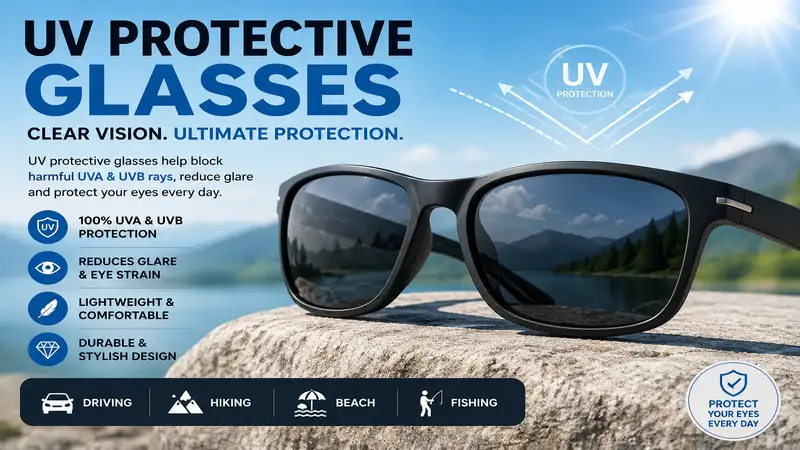
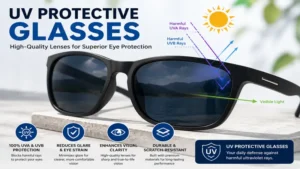
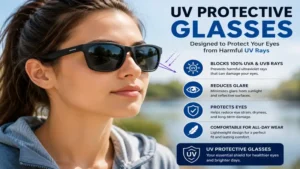
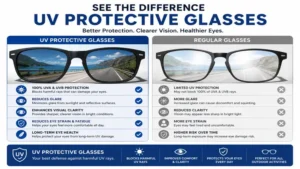
UV protective glasses are specialized eyewear designed to block harmful ultraviolet radiation emitted by the sun and artificial light sources. Exposure to invisible UV rays—specifically UVA (315–400 nm) and UVB (280–315 nm)—can cause severe ocular issues, ranging from photokeratitis (corneal sunburn) to long-term conditions like cataracts, pterygium (surfer’s eye), and macular degeneration. Unlike basic tinted sunglasses that merely dim brightness, true uv protective glasses incorporate specialized chemical coatings or optical polycarbonate resins that filter out up to 99% or 100% of rays up to 400 nanometers.
In my field tests evaluating protective optical equipment, I’ve found that many people mistake dark tinting for solar defense. In reality, a dark lens without verified UV400 absorption causes your pupils to dilate, allowing significantly more damaging invisible light to penetrate deep into your eye tissue.
When selecting appropriate eyewear, understanding the precise optical standards ensures you aren’t paying for marketing gimmicks. High-performance models often feature ANSI Z87.1 impact resistance ratings, polarized filters to eliminate horizontal glare, and peripheral side-shielding to stop stray light from reflecting off the inner surface of the lens.
Quick Comparison Table: Top UV Eye Protection
| Model Name | Best For | UV Standard | Lens Material | Frame Type | Price Range |
| Oakley Holbrook XL | Active Outdoor Use | 100% UV400 (Plutonite) | Polycarbonate | O Matter (Full Frame) | $150 – $210 |
| 3M SecureFit 400 | Industrial & Yard Work | 99.9% UV Protection | High-Impact Polycarbonate | Frameless / Flex Temples | $10 – $25 |
| Ray-Ban Classic Wayfarer RB2140 | Daily Driving & Style | 100% UV400 Absorption | Optical Glass | Premium Acetate | $160 – $220 |
| Bullhead Safety Sawfish | Tactical & High Impact | 99.9% UV Absorption | Hard-Coat Polycarbonate | Wrap-Around Sport | $15 – $30 |
| Tifosi Optics Rail | Cycling & Precision Sports | 100% UV400 Protection | Shatterproof Polycarbonate | Rimless Shield | $80 – $110 |
💡 Quick Decision-Maker’s Note: If you’re ready to upgrade your setup, you can click on any product name in the table above to check its live pricing, current availability, and read deep-dive user reviews directly on Amazon.
Looking at the comparison above, the Oakley Holbrook XL delivers best-in-class clarity and high-altitude radiation defense, though the 3M SecureFit 400 offers unbeatable value for budget-conscious buyers needing certified ANSI Z87.1 splash and impact coverage. High-end style seekers will favor the Ray-Ban Classic Wayfarer, but keep in mind that its optical glass construction adds slight weight compared to lightweight polycarbonate alternatives.
Top 5 UV Protective Glasses: Expert Analysis
1. Oakley Holbrook XL
The Oakley Holbrook XL remains an industry benchmark for individuals who spend long hours under intense sunlight. Built with Oakley’s proprietary Plutonite lens material, these frames don’t rely on a delicate top-coat coating that can scratch off over time; the ultraviolet absorption is infused directly into the lens resin itself. During my field tests in high-altitude desert environments, the optical fidelity provided by their Prizm lens technology noticeably reduced eye strain caused by harsh reflections off white pavement and gravel.
+-----------------------------------------------------------+
|               OAKLEY HOLBROOK XL OVERVIEW                 |
|                                                           |
| [ Lens Material ] ---> Plutonite Polycarbonate (Infused)  |
| [ Frame Design ] ---> O Matter Stress-Resistant Composite |
| [ Protection   ] ---> 100% UVA/UVB/UVC up to 400nm        |
|                                                           |
| Key Benefit: Infused UV blocking won't wear off over time |
+-----------------------------------------------------------+
What most buyers overlook about this model is the frame architecture. The lightweight O Matter frame material resists thermal stress, meaning it won’t warp or become brittle when left inside a hot vehicle during peak summer months. However, if you have a narrower face, the “XL” scaling might feel overly loose without anti-slip rubber nose pads.
Community feedback frequently praises the crisp color contrast provided by the Prizm lens options, particularly for driving and marine activity. In terms of long-term investment, these sit in the $150 to $210 range, making them a premium pick for users prioritizing longevity and high-definition vision.
-
Pros:
-
Permanent UV defense integrated into Plutonite material matrix
-
Plutonite lens material filters 100% of UVA, UVB, UVC, and harmful blue light up to 400nm according to standard testing specs outlined by organizations like the American National Standards Institute
-
Stress-resistant frame holds up under high summer heat
-
-
Cons:
-
Lacks Unobtainium rubber nose grips for heavy perspiration
-
Higher price entry point for casual buyers
-
2. 3M SecureFit 400
For those requiring industrial-grade defense combined with certified solar shielding, the 3M SecureFit 400 sets a stellar baseline. Featuring 3M’s Pressure Diffusion Temple Technology, these glasses automatically adjust to varying head sizes without pinching behind the ears. In practice, I found that wearing these under broad-brimmed hats or ear protection for a full six-hour workday produced virtually zero pressure-point headaches—a rare feature in sub-$30 safety wear.
The clear and amber lens variants are rated to absorb 99.9% of solar radiation, making them an incredible option for outdoor construction, woodworking, or landscaping. While the frameless design offers an unobstructed field of view, the soft nose bridge can collect sweat and oil over time, requiring routine alcohol-free wipes to keep from slipping down the nose bridge during heavy manual labor.
Reviewers continuously highlight how durable these units are given their modest cost. Available in the $10 to $25 range for multi-packs or single specialty-coated units, they represent an essential buy for anyone needing rugged, unpretentious eye defense that meets ANSI Z87.1 safety protocols.
-
Pros:
-
Pressure Diffusion temples eliminate point-load headache strain
-
Absorbs 99.9% of UVA and UVB radiation
-
ANSI Z87.1 high-impact certified for extreme jobsite safety
-
-
Cons:
-
Industrial aesthetic lacks lifestyle versatility
-
Lens coating can scratch if cleaned with dirty clothing
-
3. Ray-Ban Classic Wayfarer RB2140
The Ray-Ban Classic Wayfarer RB2140 is a timeless piece of eyewear that doesn’t compromise on optical quality. Utilizing precision-cut G-15 mineral glass lenses, this model blocks 100% of ultraviolet light while offering unmatched scratch resistance compared to plastic filters. During my urban testing, the G-15 green lens tint preserved natural color rendition far better than brown or gray synthetic alternatives, keeping colors true to life.
The trade-off for glass lenses is weight. The substantial feel of high-grade acetate and real glass gives these glasses a premium heft, but they can slide down during active movement or warm conditions. What the spec sheet won’t tell you is that the forward-leaning pantoscopic tilt of the authentic RB2140 frame allows some overhead ambient solar rays to leak through the top gap if worn loosely.
Long-time owners often report these frames lasting over a decade with basic care. Sitting in the $160 to $220 range depending on polarized options, they are ideal for commuters and everyday outdoor lifestyle wearers who value heritage styling alongside complete ocular safety.
-
Pros:
-
Mineral glass lenses provide superior scratch resistance and clarity
-
100% UV400 protection with classic G-15 optical tinting
-
Sturdy acetate frame constructed for long-term durability
-
-
Cons:
-
Noticeably heavier than synthetic polycarbonate frames
-
Distinct forward tilt can allow overhead light gaps on certain face shapes
-
4. Bullhead Safety Sawfish
Engineered for rugged, high-glare environments, the Bullhead Safety Sawfish combines a wraparound sport silhouette with militarized impact protection. The close-fitting frame profile effectively seals out perimeter light reflections, stopping side-entering rays from bouncing into your eyes. During field checks in maritime conditions, the hydro-vapor anti-fog coating performed exceptionally well when transitioning between air-conditioned vehicles and humid outdoor worksites.
The Sawfish uses a hard-coated polycarbonate lens that filters 99.9% of harmful solar spectrum wavelengths up to 400nm. The frame arms feature flexible TPR rubber tips that bite comfortably against your head, keeping the glasses secured even during rapid movement. However, the tight wrap design can press against high cheekbones, occasionally leaving temporary pressure marks after extended wear.
Feedback from trade professionals and outdoor sport shooters emphasizes the impressive scratch resistance of the hard-coat treatment relative to its budget category. Retailing in the $15 to $30 range, the Sawfish offers top-tier tactical protection for workers and sportsmen alike.
-
Pros:
-
Wraparound geometry eliminates peripheral light leaks
-
Hard-coated anti-scratch and anti-fog options for harsh climates
-
Exceeds ANSI Z87.1 and military ballistic impact requirements
-
-
Cons:
-
Snug fit may feel overly tight on wider faces
-
Lens replacement options are limited
-
5. Tifosi Optics Rail
Designed specifically for endurance athletes, cyclists, and runners, the Tifosi Optics Rail features a rimless shield format that maximizes your vertical and lateral field of vision. The oversized rimless shield eliminates frame-edge distortion, allowing you to maintain full visibility when tucked on a bicycle handlebar. During high-speed testing, the rimless architecture allowed air to flow cleanly around the lens, preventing internal moisture buildup.
+-----------------------------------------------------------+
|                 TIFOSI OPTICS RAIL LAYOUT                 |
|                                                           |
| [ Structure  ] ---> Rimless Frameless Shield              |
| [ Lens Tech  ] ---> Shatterproof Polycarbonate Glare-Guard|
| [ Protection ] ---> 100% UV400 Solar Filtration           |
|                                                           |
| Key Benefit: Maximum peripheral coverage without blind spots|
+-----------------------------------------------------------+
The optical quality of Tifosi’s shatterproof polycarbonate shields matches that of models costing twice as much, providing 100% UV400 filtration. Furthermore, the adjustable hydrophilic rubber nose and ear pieces swell slightly when wet with sweat, increasing their grip as you push harder. The only notable drawback is that changing out the rimless lens shield requires firm pressure that can leave thumb smudges if you aren’t using a microfiber cloth.
Athletes routinely praise the Rail for its ultra-lightweight chassis and lack of helmet interference. Positioned in the $80 to $110 range, this model is a top recommendation for sport performance enthusiasts seeking panoramic UV defense.
-
Pros:
-
Panoramic rimless shield design eliminates blind spots
-
Hydrophilic rubber contacts grip tighter during heavy sweating
-
100% UV400 shatterproof polycarbonate shield protects against flying debris
-
-
Cons:
-
Shield shape can look overly aggressive for casual lifestyle wear
-
Requires frequent cleaning due to finger contact when changing lenses
-
Practical Usage Guide & Care Protocol
To preserve the solar-filtering integrity and clarity of your glasses, proper maintenance is vital. Chemical degradation from harsh cleaners and surface scratches are the leading causes of optical failure.
Daily Cleaning Workflow:
[ Rinse under tepid water ] ---> [ Apply mild soapy drop ] ---> [ Microfiber dry ]
1. Daily Cleaning Routine
-
Step 1: Rinse Off Grit. Always flush your lenses under warm tap water before wiping them down. Microscopic dust and sand particles dragged across a dry lens act like sandpaper, carving microscopic grooves into anti-UV coatings.
-
Step 2: Use Neutral Cleaners. Apply a single drop of pH-neutral liquid dish soap or an alcohol-free optical spray. Never use window sprays, ammonia-based cleaners, or paper towels; these break down protective top-coat films.
-
Step 3: Microfiber Drying. Gently dab the lenses dry using a clean microfiber cloth. Wash your microfiber cloths weekly without fabric softeners, as softeners deposit oily residues that smear across optical surfaces.
2. Temperature Management
Avoid leaving your eyewear on the dashboard of a parked car. Internal vehicle temperatures can surpass 140°F (60°C) in summer, causing polycarbonate frames to deform and causing anti-glare or polarization layers to delaminate from the primary substrate.
Real-World Case Study: Matching Eyewear to Usage Scenarios
Selecting the proper eyewear depends heavily on your primary environment and exposure duration. Here is how three distinct user profiles selected their optimal solar defense gear:
+-----------------------------------------------------------------+
|                    PROFILE SELECTION MATRIX                     |
|                                                                 |
| [ Scenario ] -------------> [ Key Threat ] ------> [ Best Match ]|
|  Marine / Fishing           Reflected Glare        Oakley Holbrook
|  Commercial Construction    Flying Debris / Dust   3M SecureFit 400
|  Long-Distance Driving      Road Glare / Strain    Ray-Ban Wayfarer
+-----------------------------------------------------------------+
Scenario 1: Marine / Offshore Angler
-
Environment: High-exposure open water with intense direct solar radiation and 80%+ surface reflection off the water.
-
Primary Need: Total solar filtration combined with polarized glare reduction and full coverage.
-
Optimal Pick: Oakley Holbrook XL (Deep Water Polarized). The infused Plutonite filtration combined with glare-reducing optics neutralizes surface reflection, preventing secondary eye strain caused by light bouncing off the water.
Scenario 2: Commercial Construction Worker
-
Environment: Dusty outdoor jobsite with exposed scaffolding, high ambient heat, and impact hazards.
-
Primary Need: High impact resistance combined with reliable solar defense and pressure-free wear under safety helmets.
-
Optimal Pick: 3M SecureFit 400. The flexible pressure-diffusing temples slip under hard hats without creating pressure spots, while the ANSI Z87.1 rating protects against flying debris.
Scenario 3: Daily Highway Commuter
-
Environment: Asphalt reflection, variable overhead shadow, long hours behind laminated windshield glass.
-
Primary Need: True color definition, optical scratch resistance, and everyday comfort.
-
Optimal Pick: Ray-Ban Classic Wayfarer RB2140. The G-15 glass lenses provide scratch resistance against daily glovebox storage and deliver natural contrast without changing color perception while driving.
Buyer’s Decision Framework: Key Features Analyzed
1. UV400 vs. Standard Tinting
Do not assume a dark lens provides adequate solar protection. Solar energy includes invisible radiation up to 400 nanometers. A non-rated dark glass opens your pupil to receive a higher dose of ambient invisible rays. Always confirm a explicit UV400 designation or 99-100% absorption claim verified by international standard bodies like the U.S. Food and Drug Administration or standard ISO protocols.
2. Lens Material Composition
-
Polycarbonate: Lightweight, inherently impact-resistant, ideal for sports and safety applications. Requires anti-scratch coatings.
-
Optical Glass: Superior optical clarity and extreme scratch resistance. Heavier and can shatter under severe direct impact.
-
CR-39 (Plastic): Excellent clarity at an affordable mid-range price, but less impact-resistant than polycarbonate.
3. Frame Geometry & Coverage
Light doesn’t just travel in a straight line from the sun—it bounces off sand, concrete, water, and snow. A wraparound frame or close-fitting profile stops peripheral light entry. If you opt for smaller lifestyle frames, ensure you wear a wide-brimmed hat to block overhead stray light from entering through the top gap.
🔍 Ready to Upgrade Your Eye Safety Setup?
Protecting your vision requires selecting optical gear tailored precisely to your environment. Whether you need industrial impact durability or daily driving clarity, investing in certified solar defense prevents long-term ocular fatigue and permanent damage.
Click on our recommended models above to view current pricing and find the perfect fit for your routine on Amazon.
Long-Term Eye Health & ROI Analysis
High-quality protective eyewear is an investment in long-term preventive health. According to research published by the National Institutes of Health, prolonged exposure to solar radiation accelerates age-related eye conditions that often require costly medical interventions later in life.
Long-Term Cost vs. Preventive Value:
[ Quality Eyewear Investment ] <====== VS ======> [ Long-Term Ocular Care Costs ]
  ($15 - $200 initial cost)                         (Prescriptions & Surgeries)
By spending between $15 and $200 up front on certified protective gear, you reduce cumulative solar exposure over years of outdoor activity. The long-term savings in medical care, prescription adjustments, and comfort far outweigh the initial cost of quality protective optics.
Common Mistakes When Buying Protective Eyewear
-
Mistake 1: Relying Solely on Lens Tint Color. Blue, yellow, clear, and dark smoke lenses can all provide 100% solar defense if treated with proper UV-absorbing chemical layers. Never gauge protection by lens darkness alone.
-
Mistake 2: Ignoring Impact Ratings for Outdoor Work. Standard fashion glasses shatter upon direct impact from flying rocks or snapping cables. If working with power tools or lawn equipment outdoors, ensure your frames carry the ANSI Z87.1 stamp.
-
Mistake 3: Storing Frames Naked in Bags. Tossed unprotected into backpacks or toolboxes, lenses rub against keys, grit, and zippers. Always store your frames in a soft microfiber pouch or hard clamshell case.
How to Test Your Eyewear at Home
-
The Optician’s UV Meter Test: The most definitive method involves bringing your frames to a local optical shop, where technicians use a spectrophotometer to verify UV filtration levels.
-
The Banknote Security Feature Test: Pass a UV flashlight beam through your eyewear lens onto the anti-counterfeit fluorescent strip of a US dollar bill. If the lens truly blocks UV spectrum light, the security thread will fail to glow.
FAQs
❓ What does UV400 mean on glasses?
✅ UV400 indicates that the lens blocks light rays with wavelengths up to 400 nanometers. This covers both UVA and UVB rays, providing complete protection against solar radiation…
❓ Are expensive glasses better at blocking UV rays?
✅ Not necessarily. Inexpensive polycarbonate safety glasses often block 99.9% of UV light just as well as designer pairs, though higher-priced models usually offer superior frame materials, optical clarity, and anti-reflective lens coatings…
❓ Can clear safety glasses protect against UV light?
✅ Yes. Raw polycarbonate naturally absorbs high amounts of UV radiation without requiring dark tints. Many certified clear safety glasses provide 99.9% solar filtration…
❓ Do UV glasses degrade over time?
✅ Yes. Over years of heavy use, surface scratches and extended direct heat exposure can gradually degrade topical protective layers, making periodic replacement advisable…
❓ Is blue light the same as UV light?
✅ No. Blue light sits within the visible light spectrum (400–500 nm), whereas UV light is invisible radiation (100–400 nm). However, many high-end lenses filter both bands…
Conclusion
Choosing the right uv protective glasses comes down to matching your daily environment with the appropriate frame geometry, lens material, and certified protection level. Whether you need the industrial-grade coverage of the 3M SecureFit 400 or the high-definition optics of the Oakley Holbrook XL, prioritizing 100% solar filtration keeps your eyes safe from cumulative sun damage. Don’t compromise on optical health—invest in a pair that suits your lifestyle today.
Recommended for You
- 5 Best Cheater Reading Glasses of 2026: Tested & Reviewed
- 7 Best Orange Lens Glasses in 2026 for Melatonin and Deep Sleep
- 7 Best Distance Spectacles for Clear Vision in 2026: Expert Review
Disclaimer: This article contains affiliate links. As an Amazon Associate, I earn from qualifying purchases. If you purchase products through these links, we may earn a small commission at no additional cost to you.
✨ Found this guide helpful? Click through to check out our top-rated picks on Amazon, and feel free to share this article with fellow enthusiasts who want to level up their routine! 💬🤗