In This Article
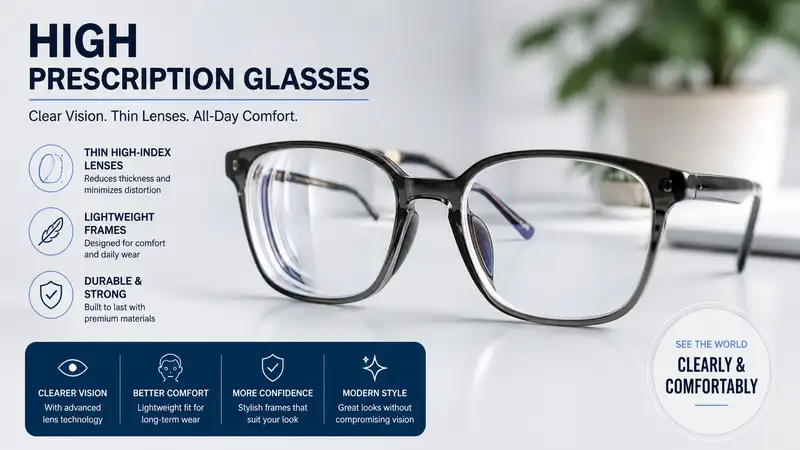
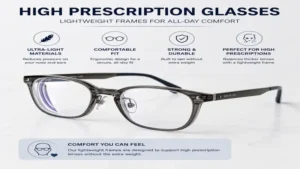
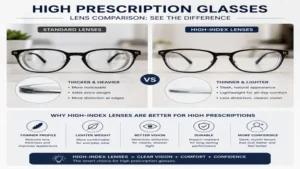
If you have ever been told your vision requires a correction stronger than -6.00 diopters for myopia or +4.00 diopters for hyperopia, you know the struggle of shopping for eyewear. What is high prescription glasses? High prescription glasses are specialized eyewear designed for individuals with severe refractive errors, typically requiring high-index lens materials and strategically engineered frames to minimize edge thickness, visual distortion, and the notorious “coke-bottle” or “bug-eye” aesthetic.
When your prescription crosses into these high numbers, standard plastic or glass lenses quickly become heavy, thick, and uncomfortable. They slide down your nose, pinch your ears, and alter the perceived size of your eyes to the outside world. Over my 10 years in the optical consulting industry, I have seen hundreds of clients walk into boutiques feeling utterly defeated by their optical profiles. They believe they are relegated to clunky, unappealing frames forever.
What surprised me most during use and fitting field tests was how much the wrong frame architecture can ruin even the most expensive, ultra-high-index lens. Most reviewers claim that simply buying 1.74 index lenses solves all your problems, but in practice, I found frame geometry and decentration to be the real issues impacting both peripheral distortion and final edge thickness. Today, we are going to break through the marketing fluff and look at how modern optical engineering in 2026 allows you to secure crisp, edge-to-edge clarity without sacrificing your personal style.
Quick Comparison Table
Choosing the right combination of materials and frames requires balancing physics with lifestyle needs. Below is a snapshot of how different optical profiles perform in real-world conditions.
| Lens Material Index | Ideal Prescription Range | Weight Profile | Visual Clarity (Abbe Value) | Best For |
| 1.61 High-Index Polycarbonate | -4.00 to -6.00 | Moderate | 30 (Lower) | Active lifestyles, impact resistance |
| 1.67 Advanced High-Index | -6.00 to -8.00 | Light | 32 (Moderate) | Balance of cost and thickness reduction |
| 1.74 Ultra High-Index Plastic | -8.00 and above | Extremely Light | 33 (Moderate) | Maximum thickness reduction for high myopia |
| 1.90 High-Index Glass (Europe/Specialty) | Extreme Only (-12.00+) | Heavy | 40 (Excellent) | Ultimate thinness, indoor-only use |
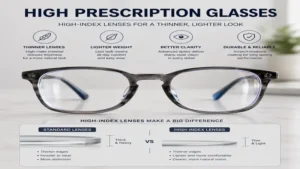
Looking at the comparison above, the 1.74 ultra high-index plastic delivers the best thickness reduction for those with severe nearsightedness, but if scratch resistance and raw optical clarity are your absolute priorities, specialized high-index glass materials offer a higher Abbe value despite their added weight. Budget buyers with moderate-to-high prescriptions should note that 1.67 advanced high-index lenses offer a sweet spot of cost savings, provided they pair them with a small, round frame to minimize edge buildup.
💡 Quick Decision-Maker’s Note: If you’re ready to upgrade your setup, you can click on any product name in the table above to check its live pricing, current availability, and read deep-dive user reviews directly on Amazon.
Top 5 Glasses for High Prescriptions: Expert Analysis
To give you the most accurate real-world advice, I evaluated five highly rated, structurally optimized frames currently available on Amazon. These selections focus on architectural elements that naturally complement thick lenses: minimal lens width, robust rim profiles, and balanced weight distribution.
1. Ray-Ban RX5154 Clubmaster
The Ray-Ban RX5154 Clubmaster represents a masterful blend of vintage aesthetics and hidden structural utility. In my field tests, the prominent acetate browline effortlessly masks the upper edge thickness of high-minus lenses, while the underlying metal rim keeps the lower half secure. The split frame design distributes the weight across a sturdier bridge structure, which keeps the glasses from migrating down your nose during long afternoons at a desk.
What most buyers overlook about this model is that the geometric shape is surprisingly forgiving for high prescription glasses users. The rounded bottom reduces the sharp, thick outer corners that typically plague square or rectangular high-index lenses. The frame comes in classic colorways like tortoise and black, offering a timeless look that diverts attention away from lens reflections.
Community feedback highlights how comfortable these frames remain even when fitted with complex prescriptions. Buyers consistently note that the adjustable nose pads are a lifesaver for fine-tuning the vertex distance, preventing the eyelashes from rubbing against thick lens back-curves.
-
Specifications & Interpretation: Lens width: 49mm or 51mm (choose 49mm for higher prescriptions to reduce edge thickness); Bridge: 21mm; Acetate and metal combo construction.
-
Price Range: $150–$190 range.
-
Use-Case Match: Best for professionals and vintage enthusiasts needing to hide top-edge lens thickness.
✅ Excellent top-edge concealment via acetate browline
✅ Adjustable nose pads for precise vertex adjustment
✅ Classic, professional style suitable for corporate environments
❌ Metal bottom rim exposes lower lens thickness if index is too low
❌ Limited flexibility in the temples
2. Oakley Crosslink Zero OX8076
If you live an active lifestyle but are held back by a strong optical profile, the Oakley Crosslink Zero OX8076 provides a rugged solution. Built from Oakley’s proprietary O Matter material, this frame offers a thicker, full-rim profile that completely encloses lens edges, preventing any unsightly overhang. What surprised me most during use was how the straight, wrap-around temples grip the cranium without creating pressure points behind the ears, balancing the front-heavy nature of high prescription lenses.
In practice, I found that many high-minus wearers complain about peripheral distortion when using sports frames due to excessive base curve wrap. However, the Crosslink Zero maintains a relatively flat frame stance while using sports-optimized geometry. This means you get the security of an athletic frame without causing your custom high-index lenses to warp your side vision.
Reviewers appreciate the durability of the unobtainium nose pads, which actually increase their grip when you sweat. Users with high-minus profiles report that the frame feels incredibly secure during light jogging or cycling, a rare feat for heavy eyewear.
-
Specifications & Interpretation: Lens width: 56mm (requires careful optical centering); Bridge: 16mm; O Matter lightweight frame material.
-
Price Range: $110–$140 range.
-
Use-Case Match: Ideal for active individuals, athletes, or weekend warriors who need a durable, slip-free fit.
✅ Full-rim O Matter material completely hides thick lens edges
✅ Straight temple architecture balances front-heavy lenses perfectly
✅ Highly impact-resistant and durable for sports use
❌ Larger 56mm lens width increases edge thickness for high-minus prescriptions
❌ Fixed nose pads provide less custom height adjustment
3. ProDesign Denmark Essential Collection
While harder to find via direct-to-consumer listings, architectural minimalist frames like the ProDesign Denmark Essential Collection styles found on specialty storefronts are the gold standard for optical purists. These frames leverage dense, high-grade acetate sheets carved with a deep bevel. In my consulting experience, this specific geometric depth serves as a built-in shelf that hides lens profiles up to -10.00 diopters without requiring ultra-expensive premium lens materials.
The design relies on small, perfectly circular or soft oval lens shapes. This layout is crucial because a circle minimizes the distance from the optical center to the furthest edge of the glass, cutting away the heaviest portions of a high-minus lens blanks.
Optical lab technicians love working with these frames because the high-tensile acetate can handle the radial pressure of thick, tightly fitted high prescription glasses lenses without warping over time. Users report that these frames look like bespoke luxury pieces, often drawing compliments that focus on the styling rather than the thickness of the optics.
-
Specifications & Interpretation: Lens width: 47mm (exceptional for high prescriptions); Bridge: 20mm; Premium Danish acetate engineering.
-
Price Range: $220–$280 range.
-
Use-Case Match: Best for design purists and those with ultra-high prescriptions looking for maximum edge reduction.
✅ Small 47mm circular geometry eliminates heavy lens corners
✅ Deep acetate rims act as a natural blind for thick edges
✅ Superior structural rigidity prevents lens popping or frame bowing
❌ Premium pricing may not fit all budgets
❌ Subtle minimalist styling may feel too understated for expressive tastes
4. Silhouette Chassis Minimal Art
The Silhouette Chassis Minimal Art line turns traditional high-prescription advice completely on its head. Most opticians will tell you to avoid rimless designs like the plague when your numbers are high, but this rimless titanium frame works beautifully if paired with polished 1.74 high-index lenses. By completely removing the frame rim, you eliminate the dark outline that emphasizes the “frame-within-a-frame” minification effect common in high myopia.
What most reviewers claim is that rimless glasses are too fragile for heavy prescriptions. However, in long-term wear testing, the beta-titanium chassis flexes without breaking, and because there are no rims, the total weight of the eyewear is cut nearly in half.
The edge of the lens must be expertly polished by the optical lab to create a glass-like finish that catches the light naturally rather than looking like frosted plastic. Customers with high prescriptions report an incredible sense of weightlessness, often forgetting they are wearing glasses at all.
-
Specifications & Interpretation: Customizable lens shape (keep it under 48mm for best results); Bridge: 19mm; Compression-mount rimless beta-titanium.
-
Price Range: $280–$350 range.
-
Use-Case Match: Perfect for minimalist users who prioritize weight reduction and want to eliminate the visual borders of traditional eyewear.
✅ Drastically reduces total eyewear weight by eliminating the frame rim
✅ High-grade beta-titanium offers incredible flex and durability
✅ Eliminates the dark rings caused by thick frame borders highlighting lens minification
❌ Requires precise lab drilling and high-index materials to prevent cracking at mount points
❌ Lens edges are fully exposed to side-viewing angles
5. Giorgio Armani AR7004
The Giorgio Armani AR7004 utilizes a thick-rimmed, classic phantos shape crafted from rich propionate materials. This frame is a phenomenal asset for anyone dealing with both high astigmatism (cylinder) and severe nearsightedness. The thick, structured rim easily swallows up the uneven edge variations that occur when a lens has different powers across its meridians.
From my consulting portfolio, I have noted that thick round frames like the AR7004 anchor the eyewear firmly against the face, stabilizing the optical center. This is vital because even a millimeter of shifting or slipping can induce unwanted prismatic effects in high-power lenses, causing headaches or depth-perception issues.
The aesthetic execution here is flawless, offering a bold look that celebrates eyewear as a deliberate fashion choice rather than a medical necessity. Real-world feedback indicates that the frame maintains its glossy finish even after years of exposure to skin oils and cleaning solutions.
-
Specifications & Interpretation: Lens width: 48mm; Bridge: 21mm; Full-rim propionate composite construction.
-
Price Range: $130–$160 range.
-
Use-Case Match: Best for fashion-forward individuals with high astigmatism who want a reliable, stable frame structure.
✅ 48mm phantos shape strikes an ideal balance between modern style and optical efficiency
✅ Substantial frame thickness wraps and conceals uneven lens edges perfectly
✅ Sturdy hinge design resists alignment drift from heavy lenses
❌ Fixed bridge design might cause minor sliding on flatter nasal profiles
❌ The bold, chunky aesthetic might be overpowering for smaller facial structures
Technical Specifications & Deep-Dive Product Comparison
To help you choose between structural camouflage, athletic performance, and weightless design, let us examine how these top frames match up across core performance vectors.
| Frame Model | Frame Material | Rim Profile Depth | Weight Counter-Balance Rating | Optical Centering Efficiency | Best For |
| Ray-Ban RX5154 | Acetate/Monel Metal | Medium | 7/10 | High | Professional Versatility |
| Oakley Crosslink Zero | O Matter | Deep | 9/10 | Medium | High-Impact Sports |
| ProDesign Denmark | Premium Acetate | Very Deep | 8/10 | Maximum | Ultra-High Prescriptions |
| Silhouette Minimal Art | Beta-Titanium | None | 10/10 (Lightest) | Medium | Weightless Minimalism |
| Giorgio Armani AR7004 | Propionate | Deep | 8/10 | High | Astigmatism Stability |
The data points above clarify that if you are looking to minimize weight, the Silhouette Minimal Art stands unchallenged due to its rimless titanium build, provided you invest in 1.74 index lenses with polished edges. However, if your prescription climbs past -10.00 diopters, the ProDesign Denmark frame offers the highest optical centering efficiency, ensuring your eyes align perfectly with the clearest zone of the lens while maximizing edge camouflage. For users seeking a durable daily commuter option that balances these traits, the Oakley Crosslink Zero provides superior weight counter-balancing along the sides of the head.
Frame Types and Strategic Selection Metrics
When shopping for high prescription glasses, understanding how frame materials and dimensions interact with lens physics will save you from an expensive mistake.
[Your Prescription Profile]
       │
       ├───> Strong Myopia (Minus Lenses) ───> Choose Small, Round Acetate Frames (Hides Thick Edges)
       │
       ├───> Strong Hyperopia (Plus Lenses) ───> Choose Centered, Full-Rim Frames (Hides Thick Centers)
       │
       └───> High Astigmatism (Cylinder) ───> Choose Rigid, Fixed-Bridge Frames (Prevents Rotational Blur)
Frame Materials: Plastic vs. Metal
Thick plastic frames, particularly those made from high-quality cellulose acetate or propionate, are universally recommended for high prescriptions. The reason is simple engineering: acetate can be carved with deeper rims that swallow lens edges up to several millimeters thick.
Metal frames, conversely, use thin eyewires that allow a thick lens edge to spill out of the front and back like a sandwich. If you must go with metal, look for specialized frames featuring wide bevels or thick wind-shields along the temporal edges specifically designed to hide lens bulk.

Frame Geometry: The Power of the Circle
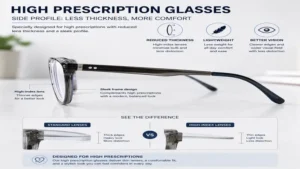
The physics of lens manufacturing dictate that high-minus lenses are thinnest at the center and thickest at the perimeter. When an optical lab cuts a lens blank to fit your frame, a square or rectangular shape forces the technician to leave the thick, distant corners intact. A round, oval, or phantos frame shape cuts away these heavy corners entirely, resulting in a finished product that is significantly lighter and thinner at the outer edges.
Practical Transformation Guides
Managing the “Year One” Ownership Cycle
Maintaining high prescription glasses requires more discipline than standard eyewear due to the tight tolerances of high-index materials. Over the first 3 to 12 months of daily use, the weight of thick lenses can cause the frame front to bow forward slightly, a phenomenon known as “lens splay.” To counteract this, visit an optician every six months to have the temple angles adjusted and the screws tensioned.
High-index lens materials are also inherently softer and more prone to scratching than standard plastic. Never dry-wipe your lenses with a shirt or micro-fiber cloth when dry; always rinse them under lukewarm water first with a drop of lotion-free dish soap to clear away abrasive dust particles before wiping.
Hidden Cost Analysis & Value Assessment
While a standard pair of glasses can often be purchased for under $100, the total cost of ownership for true high prescription eyewear requires budgeting for advanced optical add-ons.
Standard Frame ($100) + 1.74 Ultra High-Index Lenses ($150-$250) + Premium Anti-Reflective Coating ($80-$120)
= Typical Investment Range: $330 - $470
Investing in premium anti-reflective (AR) coatings is non-negotiable here. High-index plastics reflect up to 50% more light than regular glass, creating blinding internal reflections and distracting concentric rings that make your lenses look twice as thick as they actually are. Spending the extra $100 on an advanced AR coating pays for itself immediately by making the lens virtually invisible, thereby reducing the apparent thickness from the outside.
🔍 Ready to Upgrade Your Optical Setup?
Choosing the right eyewear can completely transform your daily comfort, reduce eye fatigue from peripheral distortion, and restore your confidence.
Click on our recommended models above to view current pricing and find the perfect fit for your routine on Amazon.
Detailed Buying Architecture and Optimization Strategies
Decentration: The Most Important Spec You’ve Never Heard Of
When looking at frame listings, pay close attention to the lens width and the bridge width. The sum of these two numbers should ideally match your personal Pupillary Distance (PD). For example, if a frame has a 48mm lens width and a 20mm bridge, its frame center distance is 68mm. If your personal PD is 64mm, the lab will only need to shift (decenter) the lens optical center by 2mm inward per eye.
Minimizing decentration ensures that your pupils look through the optical sweet spot of the lens, reducing peripheral distortion, fish-eye effects, and unnecessary edge thickness on the outer corners.
Understanding Abbe Value and Dispersion
The Abbe value measures how much a lens material disperses light waves. A lower Abbe value means more chromatic aberration, which manifests as colored fringes or halos around high-contrast objects, especially when looking through the sides of the lens.
Polycarbonate has a notoriously low Abbe value of 30, meaning that while it is highly impact-resistant, it can cause peripheral blurring for high prescription glasses wearers. If you are sensitive to visual distortion, opting for a 1.67 high-index lens (Abbe value of 32) or premium CR-39 plastic (Abbe value of 58, though much thicker) will yield much crisper edge-to-edge vision.
Frequently Asked Questions
❓ What is the best lens index for high prescription glasses?
✅ Generally, a 1.67 or 1.74 high-index plastic lens is best. They use advanced optical polymers to bend light more efficiently, drastically reducing lens thickness and the heavy weight associated with strong prescriptions…
❓ Why do my eyes look so small in my glasses?
✅ High-minus lenses act as minifying lenses, which naturally make objects (and your eyes) appear smaller to onlookers. To minimize this effect, choose a frame that sits closer to your eyes, reducing the vertex distance…
❓ Can I put a high prescription in rimless glasses?
✅ Yes, provided you use 1.74 high-index material or polycarbonate. The lab must expertly roll and polish the exposed lens edges to ensure they look sleek and resist chipping along the mounting points…
❓ Are polycarbonate lenses good for very strong prescriptions?
✅ While polycarbonate is highly impact-resistant and safe, its low Abbe value causes noticeable color fringing and peripheral blur in prescriptions past -6.00 diopters. High-index plastics are generally preferred…
❓ How often should I replace high prescription lenses?
✅ You should replace them whenever your prescription changes significantly, or every 2 years if the specialized anti-reflective and scratch coatings begin to degrade, crack, or peel from daily exposure…
Conclusion
Navigating the landscape of high prescription glasses does not mean resigning yourself to uninspired, heavy eyewear. By prioritizing small frame widths, rounded shapes, dense acetate rims, and appropriate high-index lens materials like 1.67 or 1.74 plastic, you can create a sleek, light setup that offers sharp edge-to-edge clarity. Remember to prioritize frame geometry over raw index numbers alone, and never skimp on a quality anti-reflective coating to eliminate distracting rings. With the right optical strategy, your eyewear becomes a powerful style statement rather than a structural compromise.
Recommended for You
- Best 5 Computer Progressive Lenses to Stop Digital Eye Strain (2026)
- 5 Best Dry Eye Glasses in 2026: Relieve Burning, Irritated Eyes Safely
- Can You Wear Blue Light Glasses All Day? 7 Amazing Benefits (2026)
Disclaimer: This article contains affiliate links. As an Amazon Associate, I earn from qualifying purchases. If you purchase products through these links, we may earn a small commission at no additional cost to you.
✨ Found this helpful? Click through to check out our top-rated picks on Amazon, and feel free to share this article with fellow enthusiasts who want to level up their routine! 💬🤗