In This Article
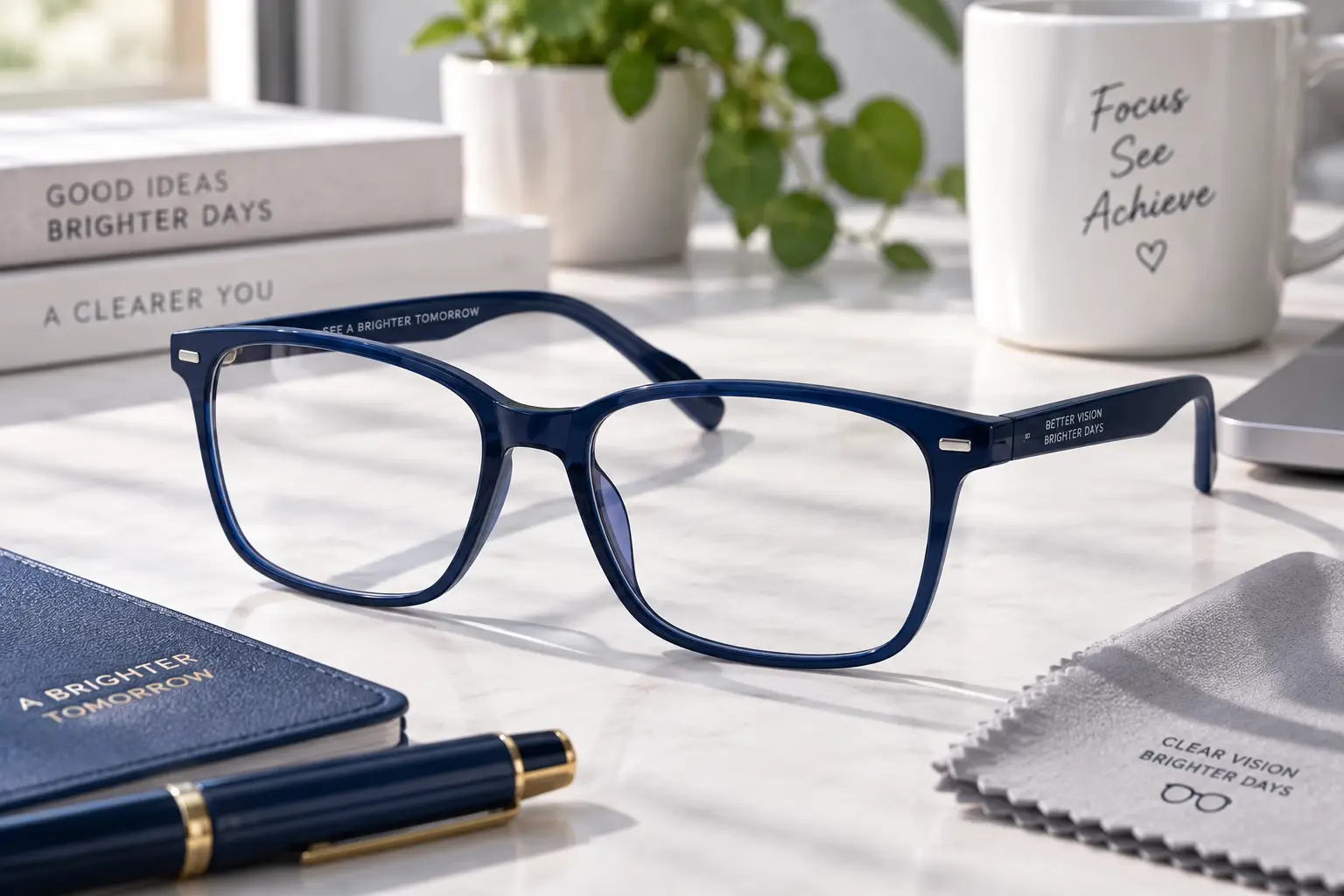
Black frames used to be the “safe” choice. Navy blue glasses are quietly taking over that spot, and for good reason. Navy blue glasses read as darker and more subdued than cobalt or royal blue, but they still carry a warmth that flat black can’t touch — especially against fair or olive skin tones, where jet-black frames can look a little harsh under office lighting.
What is navy blue glasses, exactly, as a category? It refers to eyewear — prescription frames, reading glasses, blue-light glasses, or sunglasses — finished in a deep, near-black blue rather than true black or classic tortoiseshell. The undertone shifts depending on the light: indoors it can read almost black, while direct sunlight brings out the blue.
We dug into real frames currently sold in the US, cross-referenced specs and aggregated customer feedback, and built this guide around seven frames spanning entry-level readers to premium acetate sunglasses. You’ll get a side-by-side comparison, an honest breakdown of what each pair does well (and where it falls short), plus a full buying framework so you’re not guessing at bridge width and hinge type. As an Amazon Associate, this article contains affiliate links, and we may earn a commission on qualifying purchases at no extra cost to you.
Navy Blue Glasses at a Glance
Before the full breakdown, here’s a quick snapshot of how these seven navy blue glasses stack up on category, price range, and who they suit best.
| Product | Category | Price Range | Best For |
|---|---|---|---|
| Ray-Ban Original Wayfarer RB2140 | Sunglasses | $150–$200 | Classic style, all-day sun wear |
| GUNNAR Intercept | Blue light glasses | $60–$90 | Gamers, heavy screen users |
| Eyekepper Spring-Hinge Readers | Reading glasses | Under $20 | Budget everyday readers |
| TIJN Square Blue Light Glasses | Blue light glasses | $15–$25 | Trend-forward office wear |
| Foster Grant Manhattan Readers | Reading glasses | $15–$30 | Drugstore-style convenience |
| Cyxus Rectangular Computer Glasses | Blue light glasses | $15–$25 | Lightweight all-day comfort |
| Peepers Bellevue Readers | Reading glasses | $30–$45 | Boutique styling, women’s fit |
Looking at the table, the Eyekepper Spring-Hinge Readers and TIJN Square Blue Light Glasses offer the lowest cost of entry if you just want a navy pair in rotation. The Ray-Ban Original Wayfarer sits at the top of the price range but justifies it with polycarbonate or glass lens options and a design that’s been refined for decades. If you spend more than six hours a day on a screen, the GUNNAR Intercept and Cyxus frames are worth a closer look for their lens coatings, even though — as we’ll cover honestly below — the eye-strain claims behind blue-light lenses are more contested than marketing copy suggests.
💬 One click helps other shoppers make an informed choice too! 😊
Top 7 Navy Blue Glasses: Expert Analysis
We picked these seven to cover the real range of what “navy blue glasses” means to different shoppers: fashion sunglasses, computer glasses, and everyday readers, across entry-level, mid-range, and premium price points, plus a couple of lesser-known but genuinely solid alternatives.
1. Ray-Ban Original Wayfarer RB2140 — the icon reborn in deep navy
The Wayfarer silhouette barely needs an introduction, and the navy-toned colorways (sold as transparent blue or blue-on-blue finishes depending on the run) give the shape a softer, less severe look than the standard black. Ray-Ban builds the frame from its proprietary acetate rather than generic plastic, which shows up in how the color layers — you can see depth in the navy rather than a flat, single-tone finish.
Key features that matter in practice: the acetate frame resists the yellowing and brittleness that cheaper plastic frames develop after a couple of summers in a hot car, and the hinges are metal-reinforced, which means they tend to hold their tension through years of folding rather than loosening within months. Lens options range from standard tinted to polarized and prescription-ready, so this isn’t a single-purpose sunglass.
This is the pick for someone who wants one pair of sunglasses to wear for the next several years rather than replace every season — the classic shape means it won’t look dated in three years the way a trend-driven frame might. It’s overkill if you just need cheap sun protection for yard work or the beach bag.
Reviews consistently point to the durability of the hinges and the comfort of the nose pads as the standout strengths, while a recurring complaint is that the case Ray-Ban ships in feels thin for the price point. Aggregated sentiment on frame color accuracy is generally positive, though a minority of buyers note the “navy” reads closer to black indoors and only shows its blue undertone in bright light.
Pros:
- ✅ Durable acetate that resists warping and fading
- ✅ Reinforced metal hinges built for years of daily folding
- ✅ Available in prescription, polarized, or standard tint
Cons:
- ❌ Premium price relative to generic navy sunglasses
- ❌ Included case is thinner than competitors at this tier
Expect to pay in the $150–$200 range depending on lens type and retailer promotions; always check the current price, since it shifts with lens upgrades. For a frame this durable, the value holds up over a five-plus year lifespan.
2. GUNNAR Intercept — built for marathon screen sessions
GUNNAR built its name in gaming and esports circles, and the Intercept is one of its more understated frames, offered in a navy/onyx colorway that reads far more professional than GUNNAR’s flashier gaming-branded lines. The frame is lightweight nylon rather than acetate, which matters if you’re wearing it for eight-plus hours a day.
The headline feature is the amber-tinted, blue-light-filtering lens coating, paired with an anti-reflective layer that cuts glare from monitors and overhead fluorescent lighting. In practice, that amber tint is noticeable — this isn’t a clear lens with an invisible coating, so it does shift how colors look on screen, which matters if you do color-sensitive work like photo editing. The lightweight nylon frame also means less pressure on the bridge of the nose during long sessions, something heavier acetate frames can’t match.
This is a strong option for people who already spend most of their day in front of two or three monitors and want a frame that won’t dig into their temples by hour six. It’s a poor fit if you need color-accurate vision for design work, given the amber cast.
Aggregated reviews frequently mention reduced eye fatigue and headaches during long gaming or work sessions, alongside praise for the light frame weight. It’s worth being transparent here: the American Academy of Ophthalmology has stated there’s no scientific evidence that light from digital screens damages the eyes, and several controlled studies have found blue-light lenses don’t outperform clear lenses for reducing digital eye strain. Customer comfort reports for GUNNAR frames are real and worth weighing, but they may reflect the anti-glare coating and better ergonomic fit more than blue-light filtering specifically.
Pros:
- ✅ Lightweight nylon frame for all-day wear
- ✅ Anti-reflective coating meaningfully cuts screen glare
- ✅ Navy/onyx colorway looks professional, not gamer-flashy
Cons:
- ❌ Amber tint noticeably shifts on-screen colors
- ❌ Blue-light benefit claims are more marketing than settled science
Pricing typically lands in the $60–$90 range for non-prescription lenses; prescription inserts cost more. For frequent screen users who value the anti-glare coating and ergonomic fit, this is reasonable value — just don’t buy it purely on blue-light-blocking promises.
3. Eyekepper Spring-Hinge Navy Reading Glasses — no-frills readers done right
Eyekepper has built a loyal following in the budget reading-glasses space by keeping things simple: a plastic frame, spring hinges, and a handful of diopter strengths, usually sold in multi-packs that include a navy option alongside tortoise, black, and red.
The spring-hinge temples are the feature that actually earns its keep here — rather than a rigid hinge that stresses out and cracks after repeated on/off cycles, the spring gives slightly, which means the frame flexes around your ears instead of fighting them. The lenses come in +1.00 through +3.50 magnification, covering the range most presbyopia sufferers need without a prescription. Anti-scratch coating is standard, though it’s a basic coating rather than the multi-layer treatment found on premium lenses.
These are the pair you keep in the kitchen drawer, the car, and your bag simultaneously — the price makes multi-buying practical in a way a single $150 frame doesn’t. They’re not the pair for someone who wants a single, elevated everyday frame; the plastic construction feels exactly as budget as the price suggests.
Reviews consistently highlight the comfortable spring hinges and the value of buying in multi-packs, with a recurring complaint that the exact diopter strength can run slightly stronger or weaker than labeled for some buyers — worth noting if you’re sensitive to small magnification differences.
Pros:
- ✅ Spring hinges flex instead of cracking under stress
- ✅ Wide range of diopter strengths in one multi-pack
- ✅ Low enough cost to keep spares in multiple locations
Cons:
- ❌ Basic anti-scratch coating, not a premium treatment
- ❌ Some buyers report diopter strength varies slightly from labeling
Multi-packs typically run under $20 for several pairs, making the per-pair cost some of the lowest on this list. For pure reading magnification without frills, the value here is hard to beat.
4. TIJN Navy Blue Square Blue Light Blocking Glasses — the trend-forward pick
TIJN has become one of the more visible names in the affordable blue-light-glasses space, largely because its frames lean into current eyewear trends — oversized square lenses, transparent-navy acetate-look plastic — rather than the generic rectangle shape that dominates the budget tier.
The frame uses a TR90 plastic blend rather than standard injection-molded plastic, which practically translates to a frame that bends and returns to shape instead of snapping if you sit on it in a bag — a real risk with cheaper materials. The lenses carry a light anti-blue-light coating and UV protection rating, and the spring hinges here again reduce stress on the temples during repeated wear.
This is a smart pick for anyone shopping by appearance first — the oversized square shape is genuinely on-trend for 2026 — who also wants basic screen-glare reduction as a secondary benefit rather than the primary reason to buy. It’s a weaker choice if you have a narrower face, since the oversized lens shape can overwhelm smaller features.
Aggregated customer sentiment leans positive on style and perceived value for the price, with a recurring theme in reviews that the frame runs slightly large — buyers with narrower faces frequently recommend sizing down or checking the width measurements closely before ordering.
Pros:
- ✅ Flexible TR90 material resists snapping
- ✅ On-trend oversized square shape
- ✅ Spring hinges included at a budget price point
Cons:
- ❌ Runs large; can overwhelm narrower face shapes
- ❌ Blue-light coating is light, not a heavy-duty filter
Expect a price in the $15–$25 range, making this one of the more affordable ways to try the oversized navy trend before committing to a pricier frame.
5. Foster Grant Manhattan Navy Readers — the familiar drugstore name, leveled up
Foster Grant has been a fixture of pharmacy reading-glasses racks for decades, and its Manhattan line brings that same accessibility online with a navy colorway that looks more considered than the brand’s older, more basic designs.
The frame is a lightweight plastic with a slightly beveled temple detail — a small design touch that keeps it from reading as purely utilitarian. Lenses are available across the standard +1.00 to +3.00 diopter range, with an anti-reflective coating that Foster Grant added to its more recent lines to cut glare under office lighting, a genuine upgrade over the brand’s older, coating-free models.
This is the pick for someone who’s bought drugstore readers for years and wants a slightly more polished option without leaving that familiar, trusted price bracket. It’s not the frame for someone chasing a distinctive look — the design is intentionally inoffensive rather than a statement piece.
Real customer feedback tends to praise the familiar comfortable fit longtime Foster Grant wearers already expect, alongside some reports that the hinge tension loosens faster than premium spring hinges after months of daily on/off use.
Pros:
- ✅ Anti-reflective coating cuts office glare
- ✅ Comfortable, familiar drugstore-reader fit
- ✅ Widely available at accessible price points
Cons:
- ❌ Hinge tension can loosen faster than spring-hinge alternatives
- ❌ Design leans conservative rather than distinctive
Prices generally fall between $15 and $30 depending on strength and retailer. For buyers who already trust the brand, this is a low-risk way to add a navy pair to rotation.
6. Cyxus Rectangular Navy Blue Light Blocking Glasses — the office all-rounder
Cyxus targets the same computer-glasses category as GUNNAR but at a noticeably lower price point, with a classic rectangular navy frame that reads more neutral-professional than GUNNAR’s tech-forward styling.
The lenses use a lighter blue-light coating than GUNNAR’s amber-heavy approach, which means far less color distortion on screen — a meaningful trade-off if you do any work where accurate on-screen color matters. The TR90 frame material keeps weight low, and the design skews unisex, fitting comfortably under the “wear it to every video call” category rather than a niche gaming aesthetic.
This is the practical choice for office workers who want a screen-glare frame that doesn’t visually scream “gaming glasses” in a Zoom call, and who’d rather keep color accuracy intact. It’s a step down from GUNNAR in build materials and coating durability, so it may show wear sooner under daily heavy use.
Aggregated reviews frequently mention that the lighter tint is appreciated for looking more natural on video calls, alongside occasional reports of the coating showing minor wear after many months of daily cleaning.
Pros:
- ✅ Minimal color distortion compared to amber-tinted alternatives
- ✅ Lightweight TR90 frame, comfortable for all-day wear
- ✅ Professional rectangular shape suited to office settings
Cons:
- ❌ Coating may show wear sooner than pricier alternatives
- ❌ Build quality steps down from mid-range computer glasses
Typical pricing sits in the $15–$25 range, making it one of the most accessible entries in the computer-glasses category on this list.
7. Peepers Bellevue Navy Readers — boutique styling without the boutique markup
Peepers built its brand specifically around making reading glasses feel like an accessory rather than a medical device, and the Bellevue frame’s navy colorway — often paired with subtle tortoise accents on the temple — reflects that positioning clearly.
The acetate-style frame gives more visual depth to the navy tone than flat injection-molded plastic, closer in feel to the higher-end Ray-Ban frame on this list but at a fraction of the price. Diopter strengths cover the standard reading range, and the design silhouette (slightly cat-eye, slightly rounded) leans toward a women’s fashion fit more than the unisex-rectangle shape most budget readers default to.
This is the pick for someone who wants their readers to double as a style statement rather than something to hide, especially for those who found the plainer options on this list too utilitarian. It’s a weaker fit for anyone who wants a strictly unisex or masculine frame shape, since the silhouette skews feminine.
Reviews consistently praise the distinctive styling and compliment-worthy look, with occasional notes that the frame’s more delicate temple design feels less rugged than heavier-duty options like the Eyekepper spring-hinge frames.
Pros:
- ✅ Acetate-style finish with real visual depth
- ✅ Distinctive, fashion-forward silhouette
- ✅ Comfortable fit reported across most face shapes
Cons:
- ❌ More delicate build than rugged spring-hinge alternatives
- ❌ Silhouette leans feminine, less versatile for unisex wear
Expect a price range of roughly $30–$45. For buyers prioritizing style within the reading-glasses category specifically, this is a reasonable step up from bargain-bin frames.
✨ Don’t miss these exclusive deals! 🔍 Take your eyewear rotation to the next level with this carefully curated lineup. Click a highlighted item to check current pricing and availability. These picks will help you find navy blue glasses the whole family will actually reach for!
How to Choose Navy Blue Glasses
Picking the right pair comes down to five practical criteria, in roughly this order of importance:
- Purpose first. Are you buying sunglasses, prescription frames, computer glasses, or non-prescription readers? Navy is available across all four categories, but the shopping criteria differ completely — UV rating matters for sunglasses, diopter strength matters for readers.
- Frame material. Acetate (like the Ray-Ban and Peepers frames above) holds color depth and resists warping better than injection-molded plastic, but costs more. TR90 plastic (TIJN, Cyxus) splits the difference — flexible and affordable, if a bit less premium-feeling.
- Hinge type. Spring hinges (Eyekepper, TIJN) flex under stress instead of cracking, which matters if the glasses go on and off dozens of times a day. Standard hinges are fine for occasional wear but wear out faster under heavy daily use.
- Face shape and frame width. Navy tends to look sharper on rounder or softer face shapes, since the color adds definition without the harshness of true black. Always check the frame width measurement (usually in millimeters) against your current glasses rather than relying on product photos.
- Lens add-ons. Blue-light coating, anti-reflective treatment, and polarization all add cost. Decide which of these you actually need — see the “Features That Actually Matter” section below before paying extra for a feature that may not deliver its advertised benefit.
Common Mistakes to Avoid When Buying Navy Blue Glasses
Even seasoned online shoppers trip up on a few recurring issues with this category:
Buying navy without checking it in different lighting first. Because navy sits so close to black, product photography under studio lighting can make a frame look nearly indistinguishable from true black — check for customer photos taken in natural light before assuming you know the shade you’re getting.
Ignoring frame width measurements. Product listings almost always include the frame width in millimeters, but shoppers frequently skip this and rely on the model photo instead, then find the frame runs too large or too narrow for their face.
Assuming blue-light coating solves eye strain on its own. As covered above, the research backing blue-light lens claims is weaker than most marketing suggests — pair any blue-light glasses purchase with basic screen habits like the 20-20-20 rule rather than expecting the lenses alone to fix fatigue.
Overlooking hinge type for heavy daily use. A frame worn on and off dozens of times a day needs a spring hinge; a rigid hinge on a frame meant for constant handling is a common cause of early breakage and negative reviews.
Navy Blue Glasses vs. Black Glasses
Black remains the default frame color for a reason — it’s neutral, it hides scuffs well, and it reads as professional in nearly any setting. Navy blue glasses trade a small amount of that neutrality for more visual warmth and depth. Under fluorescent office lighting, black can look flat and one-dimensional, while navy tends to pick up subtle highlights that keep the frame from disappearing into a “just glasses” look.
Where black still wins: matching outfits without a second thought, and a slightly more formal read for interviews or client-facing work where you want zero visual distraction. Navy pulls ahead for everyday wear, casual-professional settings, and skin tones on the fairer or more olive end of the spectrum, where true black can create harsh contrast. If you already own a black pair and want a second frame that still feels versatile but not identical, navy is the safer second choice over anything brighter like cobalt or royal blue.
Real-World Scenarios: Who Should Wear What
The college student on a budget, studying 4+ hours a day at a shared desk. Reasoning: needs something affordable enough to lose or break without panic, and blue-light coating is a nice-to-have rather than a dealbreaker. The Eyekepper Spring-Hinge Readers or TIJN Square Blue Light Glasses fit this budget and daily-handling profile well.
The remote worker doing 8-hour days across multiple monitors. Reasoning: comfort over a full workday and glare reduction on video calls matter more than price. The Cyxus Rectangular Blue Light Glasses offers that balance without the amber tint that can distort colors during design or photo work, while the GUNNAR Intercept suits those who don’t mind the amber cast and want maximum glare reduction.
The retiree who wants one polished pair for reading and errands. Reasoning: durability and comfort across a full day of use matter more than trend-chasing. The Peepers Bellevue Readers or Foster Grant Manhattan Readers deliver a more finished look without a steep price jump.
The frequent flyer who wants one long-term sunglasses investment. Reasoning: values durability and timelessness over trend cycles, and is willing to pay more for a frame that survives years of travel wear. The Ray-Ban Original Wayfarer is built for exactly this use case.
Problem → Solution: Fixing Common Navy Blue Glasses Issues
Problem: The frame feels loose after a few months. Solution: this usually points to hinge wear. Frames with spring hinges, like the Eyekepper or TIJN options above, are more forgiving here; for rigid-hinge frames, a local optical shop can often re-tighten the screw for a few dollars rather than requiring a replacement.
Problem: The navy looks almost black in photos and reviews online. Solution: search specifically for customer-submitted photos in natural daylight rather than relying on studio product shots, since navy’s blue undertone is far more visible outdoors than under indoor lighting.
Problem: Blue-light glasses aren’t reducing eye strain the way marketing promised. Solution: combine the glasses with the basic habits ophthalmologists actually recommend — the 20-20-20 rule (every 20 minutes, look at something 20 feet away for 20 seconds), deliberate blinking, and proper monitor distance — since most digital eye strain traces back to reduced blinking and screen distance rather than blue light itself.
Problem: Readers slide down the nose during the day. Solution: check whether the frame has adjustable silicone nose pads (common on metal frames) versus fixed acetate pads; if sliding persists, a small drop of nose-pad grip wax from an optical shop solves it cheaply.
Problem: Uncertainty about which diopter strength to order for readers. Solution: if you don’t already know your strength from a past prescription or eye exam, most retailers include a printable reading-test chart — measure at your actual reading distance rather than guessing based on age alone, since near-vision needs vary widely.
What to Expect: Everyday Performance
On paper, spec sheets for navy blue glasses look nearly identical across brands — similar frame widths, similar lens coatings, similar diopter ranges. In practice, day-to-day performance comes down to a few things specs alone won’t tell you. Weight matters more than most buyers expect: a frame that feels fine tried on for thirty seconds in front of a mirror can start pressing on the bridge of the nose after six hours of wear, which is why lighter TR90 and nylon frames tend to outperform heavier acetate for all-day screen use, even though acetate wins on visual depth and perceived quality.
Hinge feel is another gap between spec sheet and daily reality — a “metal hinge” claim doesn’t tell you whether it’s spring-loaded or rigid, and that distinction affects how the frame survives months of pocket-and-bag handling. Coating durability is the third variable: anti-reflective and anti-scratch coatings degrade at different rates depending on how the glasses are cleaned, and paper towels or shirt hems (rather than a proper microfiber cloth) are the single biggest cause of premature coating wear reported across nearly every brand in this category.
Navy Blue Glasses for Different Face Shapes and Skin Tones
Frame shape interacts with navy’s coloring differently than it does with black. On rounder faces, angular navy frames (like the Cyxus rectangular shape or TIJN’s squared lenses) add definition without the stark contrast a jet-black frame creates. On more angular or square faces, rounder navy silhouettes — closer to the Peepers Bellevue’s softer shape — balance out sharper jawlines more gently than an equally rounded black frame would, since navy’s added depth keeps the softness from reading as too plain.
On skin tone, navy tends to flatter cooler and neutral undertones especially well, echoing the way navy clothing photographs against fair or olive skin. Warmer skin tones aren’t excluded, but frames with a slight tortoise or brown accent at the temple — a detail found in the Peepers frame — tend to bridge that gap better than a pure, flat navy.
Features That Actually Matter (and Ones That Don’t)
Actually matters: frame material and hinge type, since these determine how the glasses hold up to daily handling far more than any marketed coating does. UV protection rating matters enormously for actual sunglasses — look for a stated UV400 or “100% UV protection” claim rather than assuming a dark tint alone blocks UV, since tint darkness and UV filtering are unrelated properties.
Matters less than marketing suggests: blue-light-blocking percentage claims. As the American Academy of Ophthalmology has stated, there’s no established evidence that screen-emitted blue light damages the eyes, and several clinical trials have found blue-light lenses don’t meaningfully reduce digital eye strain compared to standard lenses. That doesn’t make blue-light glasses worthless — many wearers report the paired anti-glare coating genuinely helps with screen glare — but it means the “blocks 30% of blue light” number on a product listing shouldn’t be the deciding factor in your purchase.
Doesn’t matter much at all: exact frame color-name variations. “Navy,” “midnight blue,” and “deep sapphire” often describe nearly identical shades across different brands’ marketing copy — trust photos and reviews over the marketing name itself.
Long-Term Cost and Maintenance
A $15 pair of navy readers and a $180 pair of navy sunglasses land in very different total-cost-of-ownership brackets, and it’s worth running the math before deciding where to spend. Budget frames (Eyekepper, TIJN, Foster Grant, Cyxus) typically need replacement within one to two years of regular use as hinges loosen and coatings wear, meaning the effective annual cost is roughly $10–$20 even after a couple of replacement cycles. Mid-range frames (GUNNAR, Peepers) often last two to four years with reasonable care, putting annual cost in a similar range once amortized, despite the higher upfront price.
Premium acetate frames like the Ray-Ban Original Wayfarer frequently last five-plus years, and the metal-reinforced hinges mean they’re more likely to be repairable rather than disposable when something does go wrong — most optical shops can replace a screw, tighten a hinge, or swap a nose pad for a small fee rather than requiring a full replacement. Maintenance costs across the board stay low: a microfiber cloth and occasional lens spray designed for coated lenses (avoid ammonia-based glass cleaner on coated lenses, which can strip anti-reflective layers over time) covers nearly all ongoing upkeep.
Safety, Regulations, and Standards
If you’re buying navy blue sunglasses rather than clear reading or computer glasses, US regulation matters more than most shoppers realize. Nonprescription sunglasses sold in the US fall under ANSI Z80.3, a voluntary but widely adopted standard covering UV transmittance, impact resistance, and flammability testing for frames and lenses. Look for a stated UV400 rating or explicit “100% UV protection” language on the listing — tint darkness alone says nothing about UV filtering, and a light-tinted lens with proper UV coating protects your eyes better than a dark lens without one.
For prescription eyewear, frames and lenses fall under separate FDA impact-resistance testing requirements (21 CFR 801.410), which is why prescription lenses in the US are required to be impact-resistant regardless of frame color or brand. Blue-light-filtering claims, by contrast, are not standardized or regulated the same way — as covered above, the percentage of blue light “blocked” varies by manufacturer and isn’t independently verified in most consumer listings, so treat those numbers as marketing claims rather than medical guidance. For general background on how eyewear is categorized and regulated, Wikipedia’s eyeglasses overview is a useful starting reference.
First 30 Days: Breaking In and Maintaining Your New Navy Blue Glasses
The first month with a new pair sets the tone for how long the frame lasts, and a few habits make a real difference. In week one, resist the urge to bend the hinges or arms to “adjust the fit” yourself — most frames need a proper adjustment from an optician’s warm-air tool rather than a cold manual bend, which can stress rigid hinges and crack spring hinges prematurely. Store the glasses in their case every time they’re not on your face for the first few weeks especially; this is the period when scratches from loose pockets or bags do the most damage, before you’ve built the habit of reaching for the case automatically.
Clean lenses only with the microfiber cloth included (or a dedicated lens cloth) and lens spray formulated for coated lenses — shirt hems and paper towels are abrasive enough to visibly degrade anti-reflective and blue-light coatings within weeks of regular use, a mistake reviewers across nearly every brand on this list mention regretting. By the second and third weeks, note whether the frame leaves marks on your nose bridge or slides during exercise; both are signs the nose pads need a minor adjustment, which most optical retailers, including many that also sell online, will do free of charge even if you didn’t buy the glasses in-store. By day 30, a well-fitted pair should feel close to weightless — if you’re still consciously aware of the frame on your face at that point, it’s worth getting the fit checked rather than assuming you’ll adjust to it.
Frequently Asked Questions
❓ Do navy blue glasses look good on everyone?
❓ Are navy blue glasses more expensive than black frames?
❓ Do blue-light glasses in navy frames actually reduce eye strain?
❓ Can I get navy blue glasses with a prescription?
❓ How do I know if navy blue glasses will fit my face?
Conclusion
Navy blue glasses hit a sweet spot that black frames can’t quite reach: enough neutrality to wear with anything, but enough depth and warmth to avoid looking flat under office lighting or in photos. Across the seven frames covered here, the right pick really does depend on what you’re buying them for — the Ray-Ban Original Wayfarer for a sunglasses investment that lasts years, the GUNNAR Intercept or Cyxus Rectangular Blue Light Glasses for heavy screen days, and the Eyekepper, TIJN, Foster Grant, or Peepers Bellevue readers depending on how much you want to spend on everyday reading glasses versus how much personality you want the frame to have.
Whichever category fits your situation, prioritize frame material and hinge type over marketed coatings and percentage claims — those two factors predict how long the glasses will actually last far more reliably than a blue-light-blocking number on the listing. Check current prices before buying, since they shift regularly, and give any new pair those first 30 days to properly break in before judging the fit.
✨ Ready to find your pair? Check today’s pricing on any of the navy blue glasses above and see which fits your style and budget best!
Recommended for You
- Blue Mens Glasses: 7 Best Picks to Beat Eye Strain (2026)
- Blue Eyewear Frames: 7 Best Picks for 2026 (Full Buying Guide)
- 7 Best Natural Blue Contact Lenses for Dark Eyes in 2026 (Real Picks)
Disclaimer: This post contains affiliate links. As an Amazon Associate, I earn from qualifying purchases made through these links, at no additional cost to you.
✨ Found this article helpful? Share it with someone who needs it! 💬🤗