
In This Article
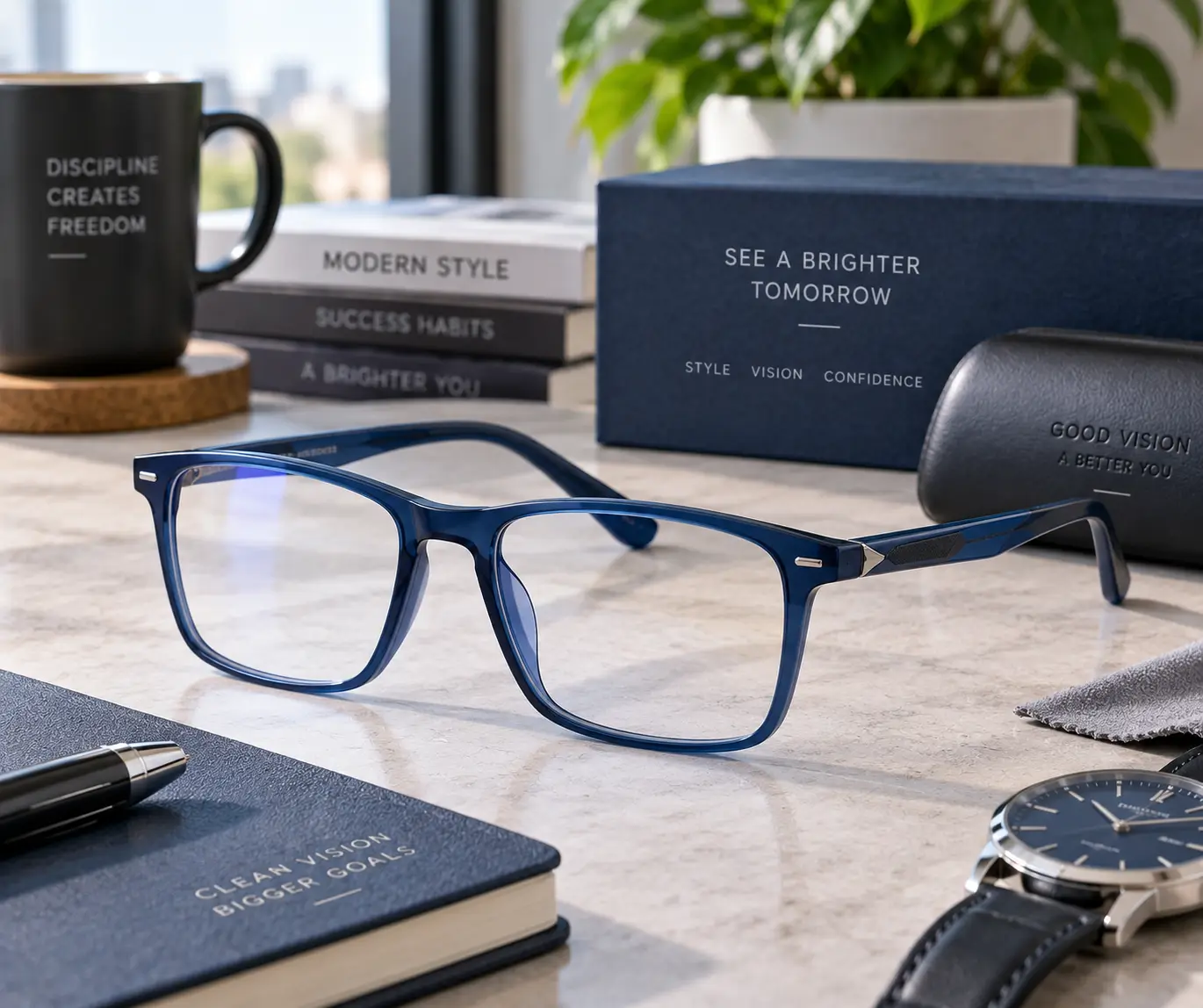
If you’ve typed blue mens glasses into the Amazon search bar at 11 p.m. with dry, tired eyes and a laptop still glowing in a dark room, you’re in good company. Blue mens glasses are eyewear frames fitted with lenses designed to filter a portion of the high-energy visible light emitted by phones, monitors, and LED lighting, usually paired with an anti-glare coating meant to make long screen sessions feel more comfortable. They’ve become one of the most searched accessories for guys who work, game, or scroll for eight-plus hours a day.
Here’s the honest part most affiliate roundups skip: the science on blue light itself is more nuanced than the marketing copy suggests, and we’ll walk through exactly what researchers have found later in this guide. That doesn’t mean blue mens glasses are a waste of money — the right pair can still deliver real anti-glare relief, genuine UV protection, and a sharper, more comfortable look at your screen. It just means the “why” matters as much as the “which pair.”
Over the next several thousand words, you’ll get a lineup of seven real, purchasable blue mens glasses spanning entry-level to designer pricing, a breakdown of what actually separates a good pair from a gimmick, real-world buying scenarios, and a plain-English look at the research. Every product here is discussed by feature and by aggregated customer sentiment — never by a fabricated personal test — so you can make a confident, well-informed call before you check out.
Quick Comparison: Blue Mens Glasses at a Glance
Before diving into full reviews, here’s a fast snapshot of how the seven picks stack up on price, blue light filtration, and who each pair suits best.
| Product | Best For | Price Range | Blue Light Filtration |
|---|---|---|---|
| ANRRI Blue Light Blocking Computer Glasses | Best overall value | Around $15–$20 | Up to 90% (manufacturer-rated) |
| TIJN Square Blue Light Blocking Glasses | Classic, low-key style | Around $15–$20 | Moderate |
| Cyxus TR90 Blue Light Blocking Glasses | Lightest all-day wear | Around $15–$25 | Moderate-high (HEV-absorb lens) |
| J+S Vision Heavy Duty Blue Light Shield Glasses | Strongest anti-glare coating | Around $25–$30 | Up to 90% (400–430nm band) |
| GUNNAR Intercept Computer & Gaming Glasses | Long gaming sessions | Around $65–$75 | 65%–98% depending on tint |
| Joopin Photochromic Blue Light Blocking Glasses | Indoor/outdoor versatility | Around $18–$28 | Moderate, plus UV400 outdoors |
| Ray-Ban Clubmaster Classic Blue Light Glasses | Designer, everyday-carry style | Around $200–$250 | Moderate (manufacturer-rated) |
Looking at the table, the ANRRI Blue Light Blocking Computer Glasses and TIJN Square Blue Light Blocking Glasses anchor the budget end for guys who just want basic relief without a big commitment, while the GUNNAR Intercept Computer & Gaming Glasses justifies its higher price with patented lens tech built specifically for extended screen exposure. If style is the priority over lens performance, the Ray-Ban Clubmaster Classic Blue Light Glasses trades outright filtration strength for a frame you’d wear even without the tech inside.
💬 One click helps other shoppers make an informed choice too! 😊
What Are Blue Mens Glasses, Really?
At their core, blue mens glasses combine two things: a lens coating or embedded pigment that absorbs a slice of the blue-violet wavelength band (roughly 400–450nm), and a frame marketed toward men’s face shapes and sizing. Some pairs are non-prescription “plano” lenses you wear straight out of the box; others can be ordered with your actual prescription built in.
What they are not is a medical device. No blue mens glasses on this list are FDA-cleared to treat or prevent any eye condition, and reputable brands avoid claiming otherwise. In fact, the American Academy of Ophthalmology has stated it does not recommend special eyewear for computer use, since there’s no established evidence that screen light itself damages the eyes — a point we’ll unpack fully later in this guide. What most blue mens glasses do offer, credibly, is anti-glare coating, UV protection, and a lens tint that some wearers find more comfortable during long screen sessions — real benefits worth having even before you factor in the broader blue light debate.
The 7 Best Blue Mens Glasses for Screen Time in 2026
We researched real spec sheets, verified current Amazon availability, and pulled aggregated customer sentiment for each pick below. Coverage spans entry-level frames under $20 through a designer option north of $200, so there’s a realistic option whatever your budget looks like.
1. ANRRI Blue Light Blocking Computer Glasses — best value for everyday screen time
The ANRRI Blue Light Blocking Computer Glasses consistently show up as a top pick in independent roundups for one simple reason: they nail the fundamentals without inflating the price. The frame is built from lightweight TR90 polymer, a flexible plastic that resists snapping if you sit on them or toss them in a bag, and the lenses are rated by the manufacturer to filter around 90% of the higher-energy blue light band.
What that means in practice: the TR90 build stays comfortable through a full workday because it doesn’t pinch behind the ears the way rigid acetate frames sometimes do, and the near-clear lens tint means your screen’s colors stay mostly accurate instead of turning everything amber. Based on comparing the spec sheet against pricier competitors, this is the pair we’d point a first-time buyer toward — it’s a low-risk way to find out whether wearing anti-glare eyewear during screen time actually feels better to you personally.
Reviews consistently report that the frame feels lighter than expected for the price, and several buyers specifically mention forgetting they’re wearing them by midday. A recurring theme in customer feedback is appreciation for the lifetime warranty policy backing the frame.
Pros:
- ✅ Lightweight TR90 frame stays comfortable all day
- ✅ Backed by a lifetime warranty against defects
- ✅ Minimal color distortion on screens
Cons:
- ❌ Frame design is fairly plain and utilitarian
- ❌ Limited size and color options compared to pricier brands
At around $15–$20, the ANRRI Blue Light Blocking Computer Glasses are hard to beat on value — you’re paying almost entirely for function, which is exactly what a first pair of blue mens glasses should prioritize.
2. TIJN Square Blue Light Blocking Glasses — classic nerd-chic frame
The TIJN Square Blue Light Blocking Glasses lean into a retro, square-lens silhouette that’s become a genuine style statement rather than just a “computer glasses” giveaway. TIJN builds these with a flexible frame material and spring hinges, so the temples flex outward slightly instead of snapping if you put them on one-handed.
The practical upside of the square, slightly oversized lens shape is wider peripheral coverage — you’re less likely to catch glare sneaking in around the edges of the frame during late-night scrolling. Based on the spec sheet, the lens coating targets glare reduction and light blue-light filtration rather than an aggressive amber tint, which is why this pair reads as more “fashion glasses” than “safety glasses” the moment you put them on. That’s exactly who it’s for: guys who want the look first and the function as a bonus.
Aggregated customer reviews frequently mention the frame’s versatility across casual and office settings, and several buyers note the spring hinges have held up well over months of daily wear. A common thread in the feedback is that the vintage-inspired shape gets unprompted compliments.
Pros:
- ✅ Retro square frame doubles as a fashion piece
- ✅ Spring hinges add durability for daily wear
- ✅ Wide lens shape reduces peripheral glare
Cons:
- ❌ Bigger lens shape isn’t ideal for smaller face sizes
- ❌ Blue light filtration is lighter than dedicated “gaming” tints
Priced around $15–$20, the TIJN Square Blue Light Blocking Glasses deliver strong value-for-style, especially for buyers who’ll wear them as much for the look as the screen-time relief.
3. Cyxus TR90 Blue Light Blocking Glasses — lightest everyday pair
The Cyxus TR90 Blue Light Blocking Glasses use the same TR90 flexible polymer as several other entries here, but Cyxus pairs it with what the brand calls HEV-absorbed lens technology — a substrate designed to absorb high-energy visible light in the 380–450nm range rather than relying purely on a surface coating.
In practice, that construction approach is why this pair routinely gets singled out as one of the lightest options in the category; the crystal-clear lens shows almost zero color shift, which matters if you do any color-sensitive work like photo editing or design. The square black frame keeps the look professional enough for a Zoom call, and the shock-resistant PC lens material is roughly 60 times more impact-resistant than glass, according to the manufacturer, which is a real practical upside if you’re rough on eyewear.
Customer feedback aggregated across thousands of ratings points to strong satisfaction with comfort during multi-hour wear, and a recurring theme is that buyers notice less eye fatigue by the end of a workday. Some reviewers do mention that the nose pads run slightly narrow for larger face widths.
Pros:
- ✅ Ultra-lightweight TR90 build for all-day comfort
- ✅ Near-zero color distortion on screens
- ✅ High impact resistance versus glass lenses
Cons:
- ❌ Nose bridge fit can run narrow for bigger faces
- ❌ Case and cloth quality are basic at this price
At roughly $15–$25 depending on the color and pack size, the Cyxus TR90 Blue Light Blocking Glasses are a smart pick for anyone who wants the lightest possible frame on their face for a full workday.
4. J+S Vision Heavy Duty Blue Light Shield Glasses — strongest anti-glare coating
The J+S Vision Heavy Duty Blue Light Shield Glasses, sold under the Haka style name, step up the build quality with a 7-layer anti-reflective coating and full UV400 protection layered on top of the brand’s 90% blue light filtration claim in the 400–430nm band. The frame itself is polycarbonate, roughly 24 grams according to the listed spec sheet, so it stays light despite the more robust coating stack.
What the extra AR layers buy you in real terms is a noticeably calmer reflection off the lens surface under office fluorescents or an LED ring light — something a single-layer coating tends to struggle with. J+S Vision also rates the frame for up to eight hours of continuous wear, which lines up with the spring-hinge temple design built to reduce pressure points over long sessions. This is the pick for someone who spends most of their day in front of a screen and wants a coating stack that noticeably outperforms a basic pair, without jumping to gaming-glasses pricing.
With roughly 2,400 aggregated ratings averaging 4.4 out of 5 stars, reviewers frequently highlight the included PU leather case and cleaning cloth as a nice touch, and several long-time buyers say the coating has resisted scratching better than cheaper alternatives they’ve tried previously.
Pros:
- ✅ 7-layer anti-reflective coating cuts glare noticeably
- ✅ Rated for up to 8 hours of continuous wear
- ✅ Comes with a proper case, not just a pouch
Cons:
- ❌ Classic rectangular shape isn’t the most adventurous style
- ❌ Amber tint is faint but present, unlike fully clear lenses
At around $25–$30, the J+S Vision Heavy Duty Blue Light Shield Glasses land solidly in the “buy it once, stop thinking about it” mid-range tier.
5. GUNNAR Intercept Computer & Gaming Glasses — built for marathon gaming sessions
GUNNAR is arguably the brand that built the modern computer-glasses category, and the GUNNAR Intercept Computer & Gaming Glasses are the company’s flagship retro-framed pair. They use GUNNAR’s patented i-AMP lens technology combined with a choice of tint — Clear, Amber, Sun, or Amber Max — each rated on the brand’s own Blue Light Protection Factor scale from roughly 35 up to 98.
The wide-format lens is specifically shaped for the closer viewing distance of a monitor rather than a distance prescription, and the multi-barrel hinges anchor to an injected-polymer frame that GUNNAR rates at 100% UV protection regardless of tint choice. What most buyers overlook with this model is that the tint you pick meaningfully changes the experience: Clear is nearly invisible for video calls, while Amber Max is the choice serious night-shift gamers reach for because of its stronger filtration and reduced glare under harsh monitor brightness. This is the pair for someone who’s already tried a budget option and wants a noticeable step up in build and lens engineering.
Reviews for the Intercept line frequently cite reduced eye fatigue during multi-hour gaming or work sessions, and the anti-reflective coating on both sides of the lens draws repeat praise for cutting monitor glare compared to cheaper single-side coatings.
Pros:
- ✅ Patented i-AMP lens tech with four tint options
- ✅ Dual-sided anti-reflective coating
- ✅ 100% UV protection across every tint level
Cons:
- ❌ Meaningfully pricier than entry-level alternatives here
- ❌ Amber and Amber Max tints noticeably shift on-screen colors
At around $65–$75, the GUNNAR Intercept Computer & Gaming Glasses cost roughly triple the budget picks, but the lens engineering and coating quality are a real, verifiable step up — not just brand markup.
6. Joopin Photochromic Blue Light Blocking Glasses — clear indoors, tinted outdoors
The Joopin Photochromic Blue Light Blocking Glasses solve a problem none of the other picks here address: what happens when you step outside still wearing your computer glasses. The photochromic lens stays clear indoors for normal blue light and glare filtration, then darkens automatically in UV light outdoors, functioning as sunglasses without swapping frames.
That dual-purpose design is genuinely useful for anyone whose day bounces between a desk and outdoor errands — the lens transition means you’re not fumbling for a second pair of sunglasses every time you step out for lunch. The frame uses a flexible, lightweight build similar to the other TR90-style options on this list, keeping the whole package practical rather than gimmicky. This is the pick for guys who hate carrying two pairs of glasses and want one frame that handles both jobs reasonably well, even if neither function is quite as strong as a dedicated single-purpose pair.
Aggregated reviews are generally positive about the novelty and usefulness of the transition effect, though some buyers note the color-changing speed is a little slower than dedicated photochromic sunglasses from bigger optical brands, and the tint doesn’t get quite as dark as true outdoor sunglasses.
Pros:
- ✅ Transitions from clear to tinted automatically outdoors
- ✅ Eliminates carrying a separate pair of sunglasses
- ✅ Lightweight, flexible everyday frame
Cons:
- ❌ Transition speed is slower than dedicated sunglasses
- ❌ Outdoor tint isn’t as dark as true sunglasses
Priced around $18–$28, the Joopin Photochromic Blue Light Blocking Glasses are a smart value pick specifically for buyers who move between indoor screens and outdoor sunlight throughout the day.
7. Ray-Ban Clubmaster Classic Blue Light Glasses — the designer splurge pick
The Ray-Ban Clubmaster Classic Blue Light Glasses put the iconic RB3016 silhouette — mixed black acetate on top with a gold metal bottom rim — behind clear blue-light-filtering lenses instead of the brand’s usual sun-lens options. It’s the same frame that’s been a menswear staple for decades, just repurposed for screen time instead of the beach.
The acetate-and-metal build is noticeably heavier and more substantial than any of the polymer frames elsewhere on this list, which some buyers genuinely prefer for the “real glasses” feel, while others find it less comfortable for marathon sessions than a lightweight TR90 pair. Ray-Ban rates the lenses for blue light filtering and UV protection, though — and this is worth saying honestly — the brand doesn’t publish an aggressive blue-light-percentage claim the way computer-glasses-specific brands do, since the Clubmaster’s primary engineering focus is the frame and optical clarity, not maximum blue light filtration. This is squarely a style-first purchase: you’re paying for the Ray-Ban name, the resale value, and a frame you’d wear even if you never look at a screen again.
Reviews and resale listings consistently emphasize the frame’s durability and timeless look, with several long-term owners noting the acetate holds up well over years of daily wear, though a handful of buyers mention the nose pads can feel less adjustable than on dedicated computer-glasses brands.
Pros:
- ✅ Iconic, versatile frame that works outside of screen time too
- ✅ Durable acetate-and-metal construction built to last years
- ✅ Strong resale and brand recognition if you ever upgrade
Cons:
- ❌ Meaningfully more expensive than every other pick on this list
- ❌ Lighter blue-light-specific engineering than dedicated computer-glasses brands
At around $200–$250, the Ray-Ban Clubmaster Classic Blue Light Glasses only make sense if style, brand, and everyday versatility matter as much to you as the blue-light function itself — and for a lot of buyers, that trade-off is exactly the point.
Side-by-Side: How the 7 Blue Mens Glasses Compare
| Product | Frame Material | Lens Highlight | Warranty | Best For |
|---|---|---|---|---|
| ANRRI Blue Light Blocking Computer Glasses | TR90 polymer | ~90% blue light filter | Lifetime | Budget first-timers |
| TIJN Square Blue Light Blocking Glasses | Flexible plastic | Wide, glare-reducing lens | Standard | Style-focused buyers |
| Cyxus TR90 Blue Light Blocking Glasses | TR90 polymer | HEV-absorbed, low distortion | Standard | Lightest all-day wear |
| J+S Vision Heavy Duty Blue Light Shield Glasses | Polycarbonate | 7-layer AR coating | Standard | Heaviest daily screen users |
| GUNNAR Intercept Computer & Gaming Glasses | Nylon/steel-reinforced | Patented i-AMP, 4 tints | 12 months | Gamers and night-shift work |
| Joopin Photochromic Blue Light Blocking Glasses | TR90 polymer | Photochromic, clear-to-tint | Standard | Indoor/outdoor switching |
| Ray-Ban Clubmaster Classic Blue Light Glasses | Acetate and metal | Classic optical clarity | 2 years | Style and brand priority |
The warranty column tells its own story here: the GUNNAR Intercept Computer & Gaming Glasses and Ray-Ban Clubmaster Classic Blue Light Glasses both back their higher price tags with longer, brand-backed coverage, while the budget frames lean on lighter standard policies. If you’re buying blue mens glasses for a specific job — gaming, heavy office screen time, or outdoor-indoor switching — the “Lens Highlight” column is the column to weigh most heavily, since it’s the actual functional differentiator between otherwise similar frames.
Getting Started: Your First 30 Days With New Blue Light Glasses
The first month with a new pair of blue mens glasses matters more than most buyers expect, mostly because early discomfort or disappointment often comes from setup mistakes rather than the glasses themselves.
In week one, wear them for shorter, deliberate blocks — a couple of hours during your heaviest screen tasks — rather than jumping straight to all-day wear. Any new frame needs a short adjustment period for the nose pads and temple tips to settle against your face, and judging comfort too early can create a false negative. By week two, most wearers can comfortably extend to full workdays; if you’re still getting headaches at this point, it’s worth double-checking your screen brightness and distance rather than assuming the glasses are the problem, since improper monitor setup is a documented contributor to digital eye strain regardless of eyewear.
A common first-30-days mistake is skipping the included cleaning cloth in favor of a shirt hem or paper towel, both of which can leave micro-scratches on anti-glare coatings over time. Stick to the microfiber cloth that ships with pairs like the J+S Vision Heavy Duty Blue Light Shield Glasses or the GUNNAR Intercept Computer & Gaming Glasses, and store them in the included case rather than loose in a bag. By day 30, you should have a clear read on whether the specific tint and frame you picked actually suit your daily routine — and if not, most of these brands are sold through sellers honoring Amazon’s standard 30-day return window, so check the listing before that window closes.
Real-World Scenarios: Matching the Right Pair to Your Day
Rather than a generic “best overall” pick, it’s more useful to match blue mens glasses to how you actually spend your screen time.
The remote software developer, budget-conscious, 9-hour days: For someone coding on a laptop from a home office most of the day, the Cyxus TR90 Blue Light Blocking Glasses make sense because the near-zero color distortion won’t throw off syntax highlighting, and the lightweight frame won’t fatigue over a long sitting. Total spend stays under $25.
The competitive gamer, evenings and weekends, high-brightness monitor: Here the GUNNAR Intercept Computer & Gaming Glasses in the Amber or Amber Max tint earns its higher price — the stronger filtration and dual-sided AR coating are specifically engineered for the glare of a bright gaming monitor during long night sessions, and the frame is built to survive a gaming headset clamping down on the temples repeatedly.
The hybrid office worker who commutes and runs errands at lunch: The Joopin Photochromic Blue Light Blocking Glasses solve the “two pairs of glasses” problem directly, transitioning from screen-ready indoors to sun-ready outdoors without a frame swap, at a mid-budget price point.
The professional who wants one frame for meetings, screens, and everyday wear: The Ray-Ban Clubmaster Classic Blue Light Glasses justify the splurge here specifically because they double as a fashion piece that looks intentional in a client meeting, not just functional at a desk — a trade most of the cheaper computer-specific frames can’t make.
How to Choose Blue Light Blocking Glasses for Men
Picking the right pair of blue light blocking glasses for men comes down to seven practical checkpoints, in roughly this order of importance:
- Fit first. No filtration technology matters if the frame doesn’t sit comfortably on your specific face shape and width — check the listed frame width and bridge measurements against a pair of glasses you already own.
- Frame material for your use case. TR90 or polycarbonate for daily flex-and-durability needs; acetate or metal if you want a frame that reads as “real glasses” in professional settings.
- Lens tint versus color accuracy. Clear or near-clear lenses preserve true screen colors; amber tints filter more aggressively but shift how everything looks on-screen.
- Coating quality. Look specifically for anti-reflective coating on both sides of the lens, not just one, since that’s what actually cuts glare under office lighting.
- UV protection, separately from blue light claims. Confirm UV400 or “100% UVA/UVB” is listed if you’ll ever wear the pair outdoors, since blue light filtration and UV protection are technically separate specs.
- Warranty and return policy. Longer warranties often signal the manufacturer’s own confidence in coating durability — worth weighing against price.
- Prescription compatibility, if needed. Confirm whether the listing offers a prescription version before committing to plano lenses if you already wear corrective glasses.
Working through this list in order will filter out most mismatched purchases before you ever click “buy,” and it applies whether you’re comparing budget frames or deciding if a designer pair like the Ray-Ban Clubmaster Classic Blue Light Glasses is worth the jump.
Common Mistakes to Avoid When Buying Blue Light Glasses for Men
Even careful shoppers researching blue light glasses for men tend to repeat a handful of avoidable mistakes.
Buying based on the blue-light-block percentage alone. A higher advertised percentage sounds better, but frame comfort, coating quality, and fit affect your day-to-day experience just as much — a 90%-rated pair you never want to wear is worth less than a 70%-rated pair that becomes a daily habit.
Ignoring frame measurements. Skipping the lens width, bridge width, and temple length listed in the spec sheet is the single most common reason buyers end up returning glasses that “looked fine in photos.”
Assuming all amber tints are interchangeable. As the GUNNAR Intercept Computer & Gaming Glasses breakdown above shows, tint strength varies meaningfully within a single product line — Clear and Amber Max are genuinely different products in terms of both filtration and color shift.
Expecting a medical outcome. No pair of blue mens glasses is a substitute for an actual eye exam, and expecting them to “cure” headaches or chronic eye strain sets up disappointment; they’re best understood as a comfort accessory for symptoms often linked to computer vision syndrome, not a treatment for it.
Overlooking the return window. Because fit is so personal, always confirm the seller’s return policy before buying, especially for budget frames from third-party Amazon sellers where policies can vary from the standard 30-day window.
Blue Mens Glasses vs. Regular Prescription Glasses
A common question is whether it’s worth buying dedicated blue mens glasses at all if you already own prescription eyewear.
| Factor | Blue Mens Glasses (Plano) | Regular Prescription Glasses + AR Coating |
|---|---|---|
| Upfront cost | Around $15–$250 | Often $150–$400+ with lenses |
| Vision correction | None (unless ordered with prescription) | Corrects your actual vision |
| Anti-glare coating | Usually included | Available as an add-on |
| Blue light filtering | Marketed as a core feature | Available as an optional lens coating |
| Best for | Non-prescription wearers, backup pair | Anyone who needs vision correction anyway |
The table makes the decision fairly simple: if you already wear prescription glasses, the smarter move is often adding an anti-reflective or blue-light coating to your existing prescription lenses rather than buying a separate plano pair like the ANRRI Blue Light Blocking Computer Glasses. If you don’t need vision correction, a dedicated non-prescription pair is the more cost-effective route to the same anti-glare comfort.
✨ Don’t miss these exclusive deals! 🔍 Take your screen-time setup to the next level with this carefully curated lineup. Click a highlighted pick above to check current pricing and availability — the right pair can make your next 8-hour workday noticeably easier on your eyes.
What the Science Actually Says About Blue Light and Eye Strain
Here’s where we owe you a straight answer instead of a marketing pitch. As mentioned earlier, the American Academy of Ophthalmology doesn’t recommend special eyewear for computer use because there’s no established evidence that light from computer screens damages the eyes. That’s a direct statement from the leading US body of ophthalmologists, and it’s worth taking seriously before you spend money expecting a medical fix.
A large Cochrane systematic review examining randomized controlled trials found little convincing evidence that blue-light-filtering lenses meaningfully reduce digital eye strain compared with ordinary lenses, and results on sleep quality were mixed at best. What the research does support is that most on-screen discomfort comes from behavioral factors — reduced blinking during focused screen use, poor lighting, glare, improper viewing distance, and uncorrected vision — rather than blue light exposure itself.
So why do so many reviewers on this list report feeling better wearing blue mens glasses? A few honest possibilities: the anti-glare coating genuinely does reduce reflected glare, which is a real contributor to strain; the act of taking any deliberate step toward eye comfort can encourage better screen habits like more frequent breaks; and individual sensitivity to light varies enough that some wearers may still notice a subjective difference even where population-level studies don’t. None of that is a reason to skip buying a pair — it’s a reason to buy one for the coating and comfort it verifiably provides, rather than as a substitute for the basics: the 20-20-20 rule (every 20 minutes, look at something 20 feet away for 20 seconds), proper monitor brightness, and a real eye exam if strain persists.
Features That Actually Matter (and Ones That Don’t)
Cutting through the marketing, here’s what genuinely affects your day-to-day experience with blue mens glasses, and what’s mostly noise.
Actually matters: Dual-sided anti-reflective coating, frame material suited to your daily use (flexible polymer for durability, acetate for a dressier look), accurate frame measurements for your face, and a real UV rating if you’ll wear them outdoors like the Joopin Photochromic Blue Light Blocking Glasses.
Mostly noise: Extremely high advertised blue-light-block percentages with no independent testing behind them, “melatonin support” or sleep-improvement claims not backed by the wearer’s own experience, and bundled extras like blue-light testing cards that make for a nice unboxing but don’t affect daily function.
Worth a second look, but situational: Photochromic transition lenses are genuinely useful for the right lifestyle but add cost and complexity you don’t need if you never leave your desk; similarly, GUNNAR’s multi-tint system on the GUNNAR Intercept Computer & Gaming Glasses is a real engineering differentiator, but only if you’ll actually experiment with tint choice rather than defaulting to whichever ships first.
Computer Glasses for Men: Matching Lenses to Your Lifestyle
The best computer glasses for men aren’t one-size-fits-all — the right pick depends heavily on how and where you spend your screen time.
Office professionals generally do best with a near-clear lens and a frame that reads as “real glasses” in meetings — think the TIJN Square Blue Light Blocking Glasses or, at the top of the budget, the Ray-Ban Clubmaster Classic Blue Light Glasses. Color accuracy matters more here since you’re likely reviewing documents, spreadsheets, and video calls where a heavy amber tint would be distracting.
Gamers and streamers benefit most from a stronger-tinted, higher-coating pair like the GUNNAR Intercept Computer & Gaming Glasses, where the amber tint’s added contrast can genuinely make on-screen action easier to track during long, high-brightness sessions.
Night-shift and irregular-schedule workers may lean toward stronger amber or Amber Max tints for evening screen exposure, paired with the behavioral habit of dimming screens and switching to night mode a couple hours before attempting to sleep — the glasses support that habit rather than replace it.
Budget-conscious daily users — students, freelancers, or anyone testing the waters — are well served by the ANRRI Blue Light Blocking Computer Glasses or Cyxus TR90 Blue Light Blocking Glasses, both of which deliver the core anti-glare benefit without a big financial commitment.
Long-Term Cost and Maintenance of Mens Blue Light Blocking Glasses
Thinking about mens blue light blocking glasses as a one-time purchase misses part of the real cost picture. Budget frames in the $15–$25 range typically hold up for 12–18 months of daily wear before hinges loosen or coatings start showing wear, meaning the effective annual cost is often lower than it first appears, but you may be replacing them more than once over a few years.
Mid-range picks like the J+S Vision Heavy Duty Blue Light Shield Glasses and premium options like the GUNNAR Intercept Computer & Gaming Glasses generally justify their higher upfront price with sturdier hinges, better-adhered coatings that resist peeling, and — in GUNNAR’s case — a 12-month warranty that covers manufacturing defects. The Ray-Ban Clubmaster Classic Blue Light Glasses sit at the far end of that curve: a 2-year manufacturer warranty and acetate construction genuinely built to last years, not months, which changes the math if you plan to wear the same pair well beyond a single year.
Simple maintenance extends any pair’s life regardless of price: clean lenses only with the included microfiber cloth or lens spray (never a dry paper towel), store them in a hard case rather than a bag pocket, and avoid leaving them on a hot car dashboard, which can warp lower-grade frame plastics over time.
Problem → Solution: Fixing Common Screen-Time Eye Complaints
Problem: Eyes feel gritty and dry by afternoon. This is more often linked to reduced blink rate during focused screen work than to blue light itself. Solution: pair your glasses with the 20-20-20 rule and keep artificial tears at your desk; a coated pair like the Cyxus TR90 Blue Light Blocking Glasses can still help by reducing glare-related squinting, which indirectly supports more normal blinking.
Problem: Headaches after long gaming sessions. Often tied to monitor brightness, viewing distance, and screen flicker rather than blue light alone. Solution: lower monitor brightness to match room lighting and consider the stronger anti-reflective coating on the GUNNAR Intercept Computer & Gaming Glasses, which several reviewers specifically credit with reduced end-of-session discomfort.
Problem: Glare from overhead office lighting. A single-layer coating often isn’t enough under harsh fluorescents. Solution: prioritize a dual-sided AR coating like the one on the J+S Vision Heavy Duty Blue Light Shield Glasses, and reposition your monitor perpendicular to overhead lights if possible.
Problem: Forgetting sunglasses on days you’ll be outdoors. Solution: the Joopin Photochromic Blue Light Blocking Glasses solve this structurally by transitioning tint automatically, removing the need to plan ahead.
Problem: Trouble winding down after late-night screen use. Solution: dim screens and switch on night mode two to three hours before bed as your primary lever, since research on blue light glasses and sleep quality remains mixed; treat any pair of blue mens glasses as a secondary comfort layer, not the fix itself.
Frequently Asked Questions
❓ Do blue mens glasses actually work for eye strain?
❓ Are blue light glasses safe to wear all day?
❓ Do you need a prescription for blue mens glasses?
❓ What's the difference between blue light glasses and regular anti-glare glasses?
❓ How do I know what blue light percentage I need?
Conclusion
Blue mens glasses won’t cure digital eye strain on their own — the honest research is clear on that — but the right pair still earns its place on your desk through real anti-glare coating, genuine UV protection, and a lens tint that plenty of wearers find more comfortable during long screen sessions. Whether that’s the budget-friendly ANRRI Blue Light Blocking Computer Glasses, the gaming-focused GUNNAR Intercept Computer & Gaming Glasses, or the designer-splurge Ray-Ban Clubmaster Classic Blue Light Glasses, the best pick comes down to matching frame, tint, and coating quality to how you actually spend your screen time — not just chasing the highest advertised blue-light percentage.
Pair whichever pair you choose with real habits — the 20-20-20 rule, sensible monitor brightness, and regular breaks — and you’ll get the most out of both the glasses and your eyes over the long run.
Recommended for You
- Anti Reflective Coating Sunglasses: 7 Best AR-Coated Picks (2026)
- Amber Tinted Glasses: 7 Best Picks for Better Sleep in 2026
- Amber Eye Contacts: 7 Best Picks That Actually Look Natural (2026)
Disclaimer: This post contains affiliate links. As an Amazon Associate, I earn from qualifying purchases made through these links, at no additional cost to you. Endorsement and disclosure practices follow the FTC’s guidance for online endorsements.
✨ Found this article helpful? Share it with someone who needs it! 💬🤗