In This Article
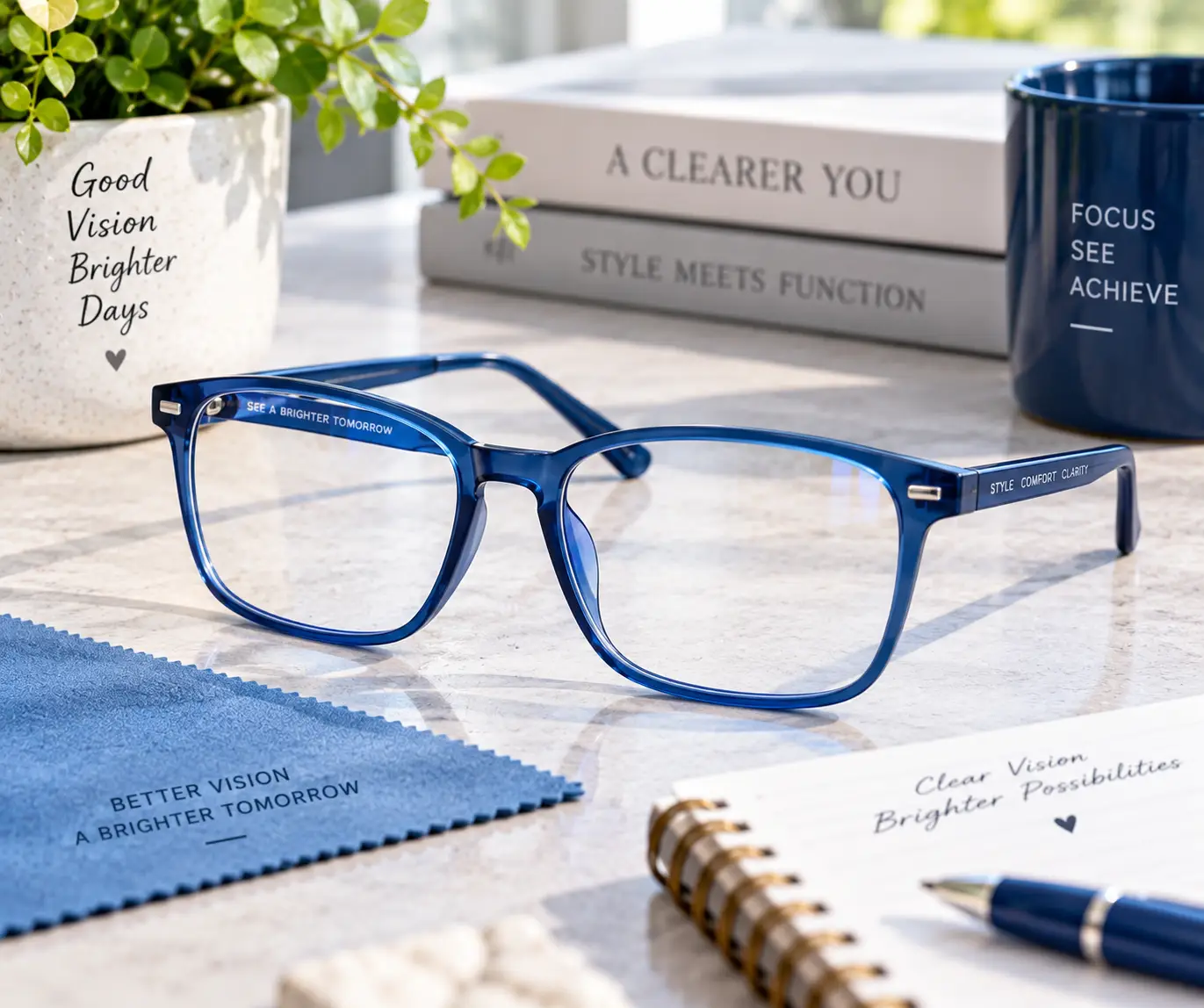
If you’ve spent any time scrolling through eyewear lately, you’ve probably noticed blue eyewear frames are having a real moment. What used to be a niche color choice reserved for statement pieces has become one of the most requested frame colors in optical shops and on Amazon alike, and for good reason: blue reads as fresh and a little more expressive than black or tortoise without tipping into “look at me” territory. Whether you’re replacing a prescription pair, adding a pair of blue light blocking glasses frames to your desk setup, or just want something that doesn’t look like everyone else’s frames, this guide walks through what actually matters before you buy.
Blue eyewear frames are eyeglass or sunglass frames finished in a blue hue, ranging from pale crystal blue to deep navy, made in materials like acetate, metal, or TR90, and worn for both prescription correction and non-prescription style or screen-time comfort. The shade, material, and shape you pick change how the frame fits your face, how long it holds up, and how it reads with your skin tone — which is exactly what we’ll unpack below.
Below, you’ll find seven real, currently available blue eyewear frames spanning budget to designer pricing, a side-by-side comparison table, an honest breakdown of what blue light blocking glasses frames can and can’t do, and practical advice for choosing blue glasses frames for women, navy blue eyeglass frames for men, and everything in between. According to Wikipedia’s overview of cellulose acetate, the material most premium frames are built from, acetate’s ability to hold vivid, layered color is a big part of why blue frames look so different depending on the brand and batch — something worth knowing before you compare two “blue” frames that look nothing alike in person.
Quick Comparison: Blue Eyewear Frames at a Glance
Before diving into full reviews, here’s a fast side-by-side look at how these seven options stack up on price range, material, and who each one suits best.
| Product | Frame Material | Style | Price Range | Best For |
|---|---|---|---|---|
| Ray-Ban RB5445 | Acetate | Square | $150–$200 | Classic, all-day prescription wear |
| Ray-Ban RB7176 | Injected/Acetate | Rectangle | $130–$170 | Transparent-blue wayfarer fans |
| Calvin Klein CK22506 | Acetate | Square | $70–$110 | Minimalist office style |
| Kate Spade Jonae | Metal | Square | $90–$140 | Statement metal frames for women |
| TIJN Olisa | TR90 | Oval | Under $20 | Budget screen-time glasses |
| FEISEDY B0240 | Acetate/Plastic | Oversized Cat-Eye | Under $25 | Bold, trend-forward everyday wear |
| Cyxus 8169 | TR90 | Rectangle | $20–$30 | Lightweight all-day computer use |
Looking at this table, the split is pretty clean: the two Ray-Ban RB5445 and Ray-Ban RB7176 options anchor the high end with acetate builds and warranty-backed brand support, Calvin Klein CK22506 and Kate Spade Jonae occupy the mid-range designer lane, and TIJN Olisa, FEISEDY B0240, and Cyxus 8169 cover anyone who wants blue light blocking glasses frames without a big commitment. If budget is your main filter, the under-$30 trio delivers real functional value; if you want a frame you’ll wear for years on a single prescription, the acetate options from Ray-Ban RB5445 are worth the extra spend.
💬 One click helps other shoppers make an informed choice too! 😊
Top 7 Blue Eyewear Frames: Expert Analysis
1. Ray-Ban RB5445 — timeless acetate square in true blue
The Ray-Ban RB5445 takes Ray-Ban’s structured square silhouette and finishes it in a fresh, saturated blue acetate that reads far more modern than the brand’s usual tortoise and black lineup. The full-rim design uses durable injected acetate, which means the color runs through the material rather than sitting on top as a coating — practically, that means the blue won’t flake or fade the way a painted finish would after a couple of years of daily wear. Its 54mm lens width and 145mm temple length put it in a true medium-to-wide fit, so it tends to suit oval, heart, and longer face shapes better than very narrow faces.
Based on comparing the specs against Ray-Ban’s other optical lines, this is squarely a daily-driver prescription frame rather than a fashion-forward statement piece, which is exactly what makes it a smart pick for someone who wants one dependable pair rather than several trend pieces. Reviews of Ray-Ban’s acetate optical frames consistently note strong hinge durability and comfortable weight distribution, though buyers with narrower faces sometimes find the standard width runs slightly large. What most buyers overlook is that Ray-Ban backs its authentic frames with a multi-year manufacturer warranty through authorized retailers — a detail worth confirming with your seller before checkout.
Pros:
- ✅ True-through color acetate resists fading over years
- ✅ Structured square shape flatters most oval faces
- ✅ Backed by an established brand warranty
Cons:
- ❌ Runs wide for narrower or petite face shapes
- ❌ Premium pricing versus unbranded acetate alternatives
At around $150–$200 depending on lens package, the Ray-Ban RB5445 is a solid value if you plan to wear one pair daily for several years rather than rotating styles.
2. Ray-Ban RB7176 — transparent blue with wayfarer DNA
The Ray-Ban RB7176 takes the brand’s most recognizable silhouette — the wayfarer — and reworks it into a rectangular optical frame finished in polished, semi-transparent blue. That translucency is the real distinguishing feature here: unlike the opaque Ray-Ban RB5445, light passes through the frame edges slightly, giving it a lighter, almost weightless look on the face even though the build quality is identical Ray-Ban injected material. The 54mm lens size and 140mm temple length keep it a touch more compact than the RB5445, which practically means it sits better on narrower faces.
What sets this frame apart in the wayfarer-adjacent category is that it manages to look casual and polished at once — useful if you want one pair that works in a video call and on a weekend coffee run. Reviews of Ray-Ban’s transparent acetate optical frames report that the finish is more scratch-resistant than expected for a translucent material, though a handful of buyers mention the color reads more gray-blue than true blue depending on lighting, so checking product photos under different lighting conditions before ordering is worth the extra minute.
Pros:
- ✅ Iconic wayfarer shape in a fresh translucent finish
- ✅ Slightly narrower fit suits more face widths
- ✅ Versatile enough for both casual and office wear
Cons:
- ❌ Color can read more gray than blue in some lighting
- ❌ Translucent finish shows minor scuffs more visibly than opaque acetate
Priced around $130–$170, the Ray-Ban RB7176 delivers brand-name durability at a slightly gentler price than the RB5445, making it a strong pick for wayfarer loyalists.
3. Calvin Klein CK22506 — minimalist blue for the office
The Calvin Klein CK22506 leans into the brand’s signature minimalism: a clean square acetate frame in solid blue with none of the decorative hardware or logo branding that can date a frame quickly. The lightweight acetate construction and 52mm lens width make this one of the more universally flattering shapes in this lineup, since a moderate square shape tends to balance round and oval faces without overwhelming smaller features.
The practical case for this frame is understated versatility — it’s the kind of pair that reads professional in a client meeting but doesn’t look out of place at dinner afterward. Based on comparing it with flashier designer options, what most buyers overlook is that Calvin Klein’s optical frames typically use standard-width fittings that work well with a broad range of prescription strengths, including higher indexes, without the lens looking overly thick at the edges. Aggregated reviews of Calvin Klein’s acetate eyewear consistently describe the fit as comfortable for extended wear, with occasional notes that the nose pads sit a little high for very low nose bridges.
Pros:
- ✅ Minimalist design ages well and rarely looks dated
- ✅ Moderate width flatters both round and oval faces
- ✅ Handles higher prescription strengths cleanly
Cons:
- ❌ Nose pad height may not suit low nose bridges
- ❌ Limited color variation within the blue colorway
Expect to pay somewhere between $70 and $110 for the Calvin Klein CK22506, which lands it as a genuinely practical mid-tier choice.
4. Kate Spade Jonae — sparkling metal blue for statement style
The Kate Spade Jonae swaps acetate for a lightweight metal build finished in blue, giving it a noticeably different visual weight than the other frames on this list — thinner rims, a more delicate bridge, and often a subtle glittered or patterned accent that plays well with the brand’s playful design language. At a 51mm lens width, it runs on the smaller, more precise side, which practically means it suits narrower or petite faces better than the wider acetate options above.
What makes this frame worth the higher price tag isn’t just the aesthetics — metal construction typically flexes and springs back rather than cracking under pressure, which matters if you toss glasses in a bag frequently. Reviews of Kate Spade’s metal optical frames consistently highlight the detail work (engraved temples, subtle color-blocking) as a differentiator from mass-market metal frames, though some buyers note the thinner metal rims require slightly more careful handling than a thicker acetate build.
Pros:
- ✅ Delicate metal build suits smaller or narrower faces
- ✅ Distinctive design details set it apart from basic frames
- ✅ Flexible metal resists cracking from bag storage
Cons:
- ❌ Thinner rims need more careful handling than acetate
- ❌ Smaller lens width may not suit wider faces
At roughly $90–$140, the Kate Spade Jonae is priced for buyers who want a designer statement piece rather than a purely functional frame.
5. TIJN Olisa — budget-friendly oval with blue-light filtering
The TIJN Olisa shifts gears entirely: a budget-friendly, retro oval frame in TR90 plastic, built primarily for people who want blue light blocking glasses frames for gaming or computer use rather than a prescription-first daily pair. TR90 is a flexible thermoplastic that’s noticeably lighter than acetate and bends without snapping, which practically means it survives being sat on or dropped far better than a rigid frame would.
This is the frame to reach for if you’re testing whether you even like wearing blue light glasses before committing to a pricier pair — the low cost of entry lowers the stakes considerably. Aggregated reviews of TIJN’s blue light blocking lines consistently mention the lightweight comfort for multi-hour wear and note that the retro oval shape suits both men and women, though a recurring theme in feedback is that the amber-tinted lens option changes screen colors more than buyers expect, so the clear-lens version is the safer first purchase.
Pros:
- ✅ TR90 material flexes instead of snapping under pressure
- ✅ Comfortable for multi-hour screen sessions
- ✅ Unisex oval shape suits a wide range of faces
Cons:
- ❌ Amber lens tint noticeably shifts on-screen colors
- ❌ Build quality feels less premium than acetate options
At under $20, the TIJN Olisa is an easy low-risk way to try blue light blocking glasses frames without much financial commitment.
6. FEISEDY B0240 — oversized cat-eye in bold blue
The FEISEDY B0240 goes in a bolder direction with an oversized cat-eye silhouette in a vivid blue finish, designed as a fashion-forward, non-prescription-friendly frame that doubles as a blue light filter. The oversized lens coverage is the standout feature here — it shields more of the eye area from screen glare than a standard-sized frame, which practically means more consistent comfort during long stretches at a monitor.
This frame is best understood as a style statement first and a functional pair second; it’s designed for someone who wants their glasses to be a visible part of their outfit rather than something that disappears on the face. Reviews of FEISEDY’s cat-eye blue light lines consistently praise the dramatic shape for photos and everyday styling, while some buyers note the oversized fit can feel heavy after several hours compared to the smaller TR90 options on this list.
Pros:
- ✅ Oversized coverage shields more of the eye area
- ✅ Bold cat-eye shape doubles as a fashion statement
- ✅ Affordable enough to match to multiple outfits
Cons:
- ❌ Larger size can feel heavier during extended wear
- ❌ Dramatic shape isn’t suited to conservative dress codes
Priced under $25, the FEISEDY B0240 delivers strong style-per-dollar for anyone who wants their blue eyewear frames to make a statement.
7. Cyxus 8169 — featherlight frames for all-day screen time
The Cyxus 8169 rounds out the lineup as the lightest, most function-focused option, built in flexible TR90 material and marketed specifically toward people dealing with prolonged computer use and associated eye fatigue. Its rectangular shape and minimal frame weight are the defining features — at just a few grams, it’s designed to disappear on the face during marathon work sessions rather than adding pressure to the nose or temples.
The honest case for this frame is practical, not aspirational: it’s not trying to be a fashion piece, it’s trying to be the pair you forget you’re wearing by hour six of a workday. Reviews of Cyxus’s lightweight computer glasses lines consistently cite the low weight and spring hinges as the top-rated features, with occasional feedback that the minimal styling feels plain compared to more fashion-forward options like the FEISEDY B0240 above.
Pros:
- ✅ Extremely lightweight for all-day comfort
- ✅ Spring hinges add durability for frequent adjustment
- ✅ Rectangular shape suits most face proportions
Cons:
- ❌ Minimal styling lacks the visual flair of designer options
- ❌ Less structured feel than rigid acetate frames
At around $20–$30, the Cyxus 8169 earns its spot as the practical workhorse pick in this comparison.
How to Choose the Right Blue Eyewear Frames for Your Face and Life
Picking blue eyewear frames comes down to more than just liking the color — the shade, material, and shape all interact with your face and daily routine differently. Here’s a step-by-step framework to narrow things down before you buy.
- Identify your face shape first. Round faces generally look sharper in square frames like the Calvin Klein CK22506; angular faces often soften nicely with oval shapes like the TIJN Olisa.
- Match the blue shade to your skin’s undertone. Cooler, icy blues tend to flatter cooler undertones, while deeper navy or muted blues work broadly across warm and neutral tones.
- Decide if this is a prescription-first or screen-time-first pair. Prescription-focused shoppers should prioritize acetate builds like Ray-Ban RB5445; screen-time shoppers should look at TR90 options like Cyxus 8169.
- Set a realistic material budget. Acetate and metal cost more but last longer; TR90 plastic costs less and flexes better under daily wear and tear.
- Consider how often you’ll swap styles. If you like variety, a budget frame like FEISEDY B0240 lets you own multiple colorways for the price of one designer pair.
- Check the frame width against your face width. A frame that’s too wide will slide, and one that’s too narrow will pinch at the temples — measure an existing pair you own for reference.
- Confirm return and warranty policies before buying online, since blue’s exact shade can shift noticeably between screens and in-person lighting.
Real-World Scenarios: Matching Blue Frames to Your Day
Different lifestyles call for different frames, and seeing how real buyer profiles map to these products makes the decision more concrete.
If you’re a remote worker logging six-plus hours on video calls daily, lightweight comfort matters more than fashion statement — the Cyxus 8169 or TIJN Olisa fit that use case well, since both prioritize low weight and flexible hinges over decorative detail. If you’re a young professional attending client meetings several times a week on a moderate accessories budget, the Calvin Klein CK22506 threads the needle between polished and approachable without designer-metal pricing. And if you’re someone who treats glasses as a fashion accessory and rotates styles seasonally, a lower-cost, high-impact pick like the FEISEDY B0240 lets you build a small rotation instead of committing to one frame for years — while someone prioritizing longevity and brand backing over rotation would be better served putting that same budget into a single pair like the Ray-Ban RB5445.
Common Blue Eyewear Frame Problems — and How to Fix Them
Even well-made frames run into predictable issues. Here’s how to solve the most common ones.
Problem: The frame color looked different online than in person. Blue is one of the trickiest colors to photograph accurately — solution: check multiple product photos across different lighting and, when possible, read reviews that specifically mention color accuracy, as several reviewers for the Ray-Ban RB7176 have flagged this exact issue.
Problem: Glasses slide down during the day. This usually means the frame is slightly too wide or the nose pads aren’t adjusted — solution: on metal frames like the Kate Spade Jonae, nose pads can typically be gently bent for a tighter fit; on one-piece acetate or TR90 frames, sizing down is the better fix.
Problem: Screen colors look off through blue light lenses. Amber or yellow-tinted blue light coatings, like the option on the TIJN Olisa, shift color perception more than clear coatings — solution: choose a clear-lens blue light option if color accuracy for design or photo work matters.
Problem: Hinges loosen with heavy daily use. Solution: spring hinges, found on frames like the Cyxus 8169, are specifically built to absorb this stress better than fixed hinges and are worth prioritizing if you’re hard on your glasses.
Common Mistakes to Avoid When Buying Blue Eyewear Frames
The biggest mistake buyers make is choosing a shade of blue based on a single product photo rather than checking how it renders across multiple images and lighting conditions — blue frames are notoriously hard to photograph consistently, and what looks navy on one screen can look nearly gray-blue on another. A second common misstep is assuming all “blue light blocking” lenses perform identically; coating quality and filtering percentage vary by manufacturer, and cheaper unbranded lenses don’t always disclose what wavelength range they actually block. Buyers also frequently skip checking frame width measurements against their existing glasses, leading to returns over sizing rather than actual product defects. Finally, it’s easy to underestimate how differently acetate and TR90 frames feel by hour eight of wear — what feels fine trying a frame on for thirty seconds in a mirror can feel very different after a full workday, so checking material type against your actual daily wear time matters more than most buyers realize.
✨ Don’t miss these exclusive deals!
🔍 Take your eyewear rotation to the next level with this carefully curated lineup. Click a highlighted item to check current pricing and availability. These picks will help you find a pair the whole family will actually reach for.
Blue Eyewear Frames vs. Black and Tortoise Frames
Blue sits in an interesting middle ground compared to the two most common frame colors on the market.
| Factor | Blue Frames | Black Frames | Tortoise Frames |
|---|---|---|---|
| Versatility | Moderate — pairs best with cool or neutral tones | High — works with nearly any outfit or skin tone | High — warm, works well with most skin tones |
| Visual Impact | Fresh, slightly more expressive | Classic, low-key | Warm, textured, classic |
| Skin Tone Match | Best with cool/neutral undertones | Universal | Best with warm/neutral undertones |
| Trend Longevity | Currently rising in popularity | Timeless, never trends out | Timeless, cyclical popularity |
Looking at this comparison, black frames remain the safest universal choice for someone who wants their glasses to disappear into any outfit, while tortoise leans warmer and works especially well for buyers with golden or olive undertones. Blue eyewear frames, by contrast, offer a middle path: more personality than black, but without the boldness of a truly saturated color like red or green — which is exactly why options like the Calvin Klein CK22506 and Ray-Ban RB5445 have found a steady audience among buyers who want to stand out subtly rather than dramatically.
Blue Light Blocking Glasses Frames: What They Actually Do
Blue light blocking glasses frames are marketed heavily around reducing digital eye strain, but the honest picture is more nuanced than most product listings suggest. A widely cited Cochrane systematic review, led by researchers at the University of Melbourne and covering 17 randomized controlled trials across 619 participants, found no strong short-term evidence that blue-light-filtering lenses reduce eye strain compared to regular lenses, and could not draw firm conclusions about long-term retinal effects either way. That finding lines up with public guidance from eye-care professional bodies, as discussed in this science-based analysis of the blue light debate, which notes that most digital eye strain actually stems from reduced blink rate during screen use rather than blue light exposure itself.
None of this means blue light blocking glasses frames are pointless — plenty of wearers, including reviewers of the Cyxus 8169 and TIJN Olisa in this lineup, report subjectively feeling more comfortable during long screen sessions, and there’s no established harm in wearing them. What it does mean is that the honest sales pitch isn’t “these will cure your eye strain,” it’s “these may help some people feel more comfortable, and even if the blue-light-filtering effect is modest, a well-fitted, comfortable frame with anti-glare coating still supports better posture and fewer squint-induced headaches during screen-heavy days.” If eye strain is a persistent problem, research summarized by the National Center for Health Research points to screen breaks, proper lighting, and blink frequency as the better-supported first interventions, with blue light glasses treated as a comfort add-on rather than a fix.
Blue Glasses Frames for Women vs. Navy Blue Eyeglass Frames for Men
Blue Glasses Frames for Women
Blue glasses frames for women tend to skew toward more delicate proportions and detail-forward design, which is exactly why metal options like the Kate Spade Jonae and oversized cat-eye shapes like the FEISEDY B0240 dominate this segment — narrower bridges, smaller lens heights, and decorative touches like glitter acetate or engraved temples show up far more often in women’s-marketed blue frames than in unisex lines. Practically, this means women with narrower or more angular face shapes often get a better out-of-the-box fit from designer women’s lines than from unisex budget frames, though nothing stops anyone from choosing across gendered marketing categories based on fit alone.
Navy Blue Eyeglass Frames for Men
Navy blue eyeglass frames marketed toward men typically lean into deeper, more muted shades rather than bright or pastel blues, paired with wider, more structured shapes — the Ray-Ban RB5445 and Ray-Ban RB7176 both fall into this category, with wider lens widths and heavier acetate or injected builds that hold up to daily wear without looking delicate. Practically speaking, navy reads as more conservative and office-appropriate than brighter blues, which is part of why it’s become a popular alternative to basic black for buyers who want a subtle color shift without looking less professional.
Long-Term Cost and Maintenance
The upfront price tag on blue eyewear frames only tells part of the cost story. Acetate frames like the Ray-Ban RB5445 and Calvin Klein CK22506 cost more initially but typically last three to five years of daily wear with proper care, meaning the effective annual cost often comes out lower than replacing a $20 pair every six months. TR90 options like the Cyxus 8169 and TIJN Olisa cost far less upfront and hold up well to physical stress, but the coatings — especially anti-reflective and blue-light coatings — tend to wear thinner over time than on premium acetate builds, so budget frames may need lens or coating refreshes sooner even if the frame itself survives. Metal frames like the Kate Spade Jonae sit in between: the frame itself can last many years, but thinner metal components are more prone to needing occasional adjustment or nose pad replacement, which is typically a low-cost fix at any optical shop. Across all materials, keeping frames in a hard case when not worn and cleaning lenses with a microfiber cloth rather than clothing fabric meaningfully extends the life of both the frame finish and any specialty coatings.
Safety, Regulations, and Standards
Prescription eyewear sold in the U.S. is generally expected to meet impact-resistance standards under ANSI Z80.1 for dress eyewear, and FDA guidance requires impact-resistant lens material for everyday prescription glasses regardless of frame color or brand — a baseline that applies whether you’re buying the designer Kate Spade Jonae or a budget frame like the FEISEDY B0240. On the marketing side, claims about blue light filtering percentages or health benefits fall under general FTC truth-in-advertising rules, meaning sellers are expected to be able to substantiate specific numeric claims (like “blocks 90% of blue light”) rather than using them as unverifiable marketing language. As this article does throughout, any affiliate recommendation should disclose the relationship clearly, in line with FTC guidance on endorsements and affiliate disclosures, so readers always know when a link supports the site financially.
Frequently Asked Questions
❓ What's the best shade of blue eyewear frames for fair skin tones?
❓ Do blue light blocking glasses frames actually reduce eye strain?
❓ Are navy blue eyeglass frames considered unisex?
❓ How much do blue glasses frames for women typically cost?
❓ Can I get blue eyewear frames with prescription lenses quickly?
Conclusion
Blue eyewear frames have earned their popularity honestly — they offer a genuine middle ground between the safety of black and the warmth of tortoise, with enough shade variation to flatter nearly any skin tone if you choose carefully. For a dependable daily prescription pair, the acetate-built Ray-Ban RB5445 and Ray-Ban RB7176 are worth the investment; for polished, budget-conscious versatility, the Calvin Klein CK22506 is hard to beat; and if you’re testing blue light blocking glasses frames for the first time without a big commitment, the TIJN Olisa or Cyxus 8169 make that trial low-risk. Whichever direction you go, prioritize fit and material over color alone — the right blue frame should feel as good by hour eight as it looks in the mirror at checkout.
🔍 Ready to find your pair? Compare the options above, check current pricing, and pick the blue eyewear frames that match how you’ll actually wear them.
Recommended for You
- Anti Reflective Coating Sunglasses: 7 Best AR-Coated Picks (2026)
- Amber Tinted Glasses: 7 Best Picks for Better Sleep in 2026
- Amber Eye Contacts: 7 Best Picks That Actually Look Natural (2026)
Disclaimer: This post contains affiliate links. As an Amazon Associate, I earn from qualifying purchases made through these links, at no additional cost to you.
✨ Found this article helpful? Share it with someone who needs it! 💬🤗