In This Article
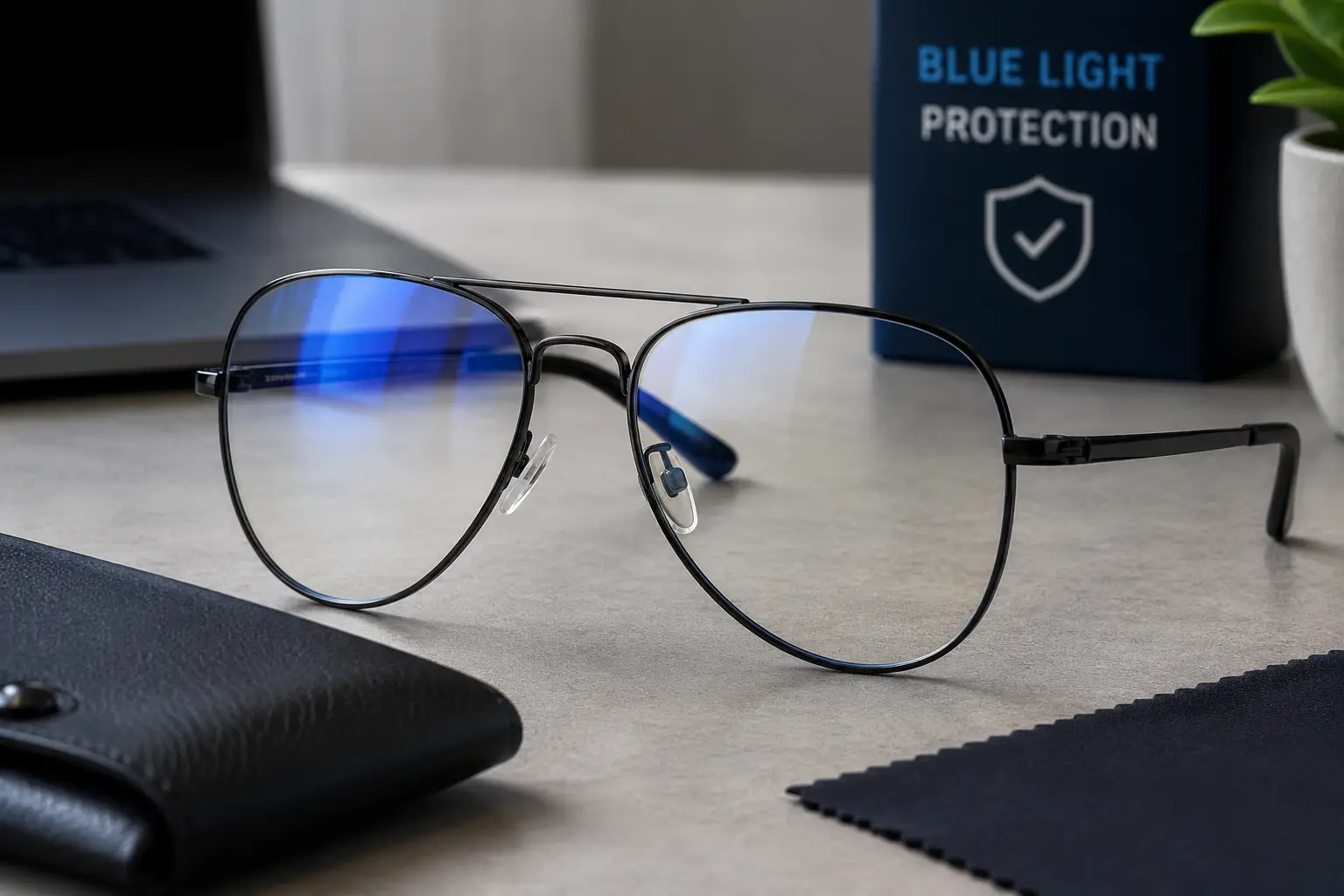
Staring down a laptop screen for eight-plus hours a day has a way of turning your eyes into the least appreciated part of your body — until they start burning, watering, or refusing to focus by 4 p.m. That’s usually the moment someone tells you to try aviator blue light glasses, and honestly, it’s decent advice. The teardrop lens shape that made pilots and rock stars alike look effortlessly cool also happens to be one of the most forgiving frame styles for covering your full field of vision, which matters when you’re trying to filter out screen glare rather than just look good doing it.
This guide skips the marketing fluff and gets into what actually separates a well-made pair of aviator blue light glasses from a flimsy $8 knockoff: lens coatings, frame durability, blue light blocking percentages, and how real buyers describe wearing them for a full workday. We researched seven real, current products sold on amazon.com — from budget metal frames under $20 to a performance-tier pair built by a company that’s spent over a decade specializing in nothing but computer eyewear — and we’re laying out exactly who each one is built for.
Quick context before we dive in: research on digital eye strain is still evolving, and not every eye doctor agrees on how much credit blue light filtering deserves versus simply blinking more and taking breaks (more on that later, and see the American Academy of Ophthalmology’s take on the subject). What isn’t in dispute is that aviator blue light glasses are comfortable, screen-friendly, and — when you pick the right pair — genuinely help you get through a long day of screens without that gritty, squinting fatigue. Let’s find your pair.
Quick Comparison: Top Aviator Blue Light Glasses at a Glance
| Product | Frame Type | Best For | Price Range | Buyer Rating* |
|---|---|---|---|---|
| GUNNAR Maverick | Polycarbonate/metal hybrid | Best overall / heavy screen users | $70–$90 | 4.5★ (brand avg.) |
| SOJOS Oversized Aviator SJ5098 | Metal, oversized | Best fashion-forward pick | $15–$25 | 4.3★ (brand avg.) |
| Cyxus Aviator T06 | Metal frame | Best value for daily wear | $15–$20 | 4.4★ (brand avg.) |
| livho Retro Aviator | Oversized metal | Best budget pick | $12–$18 | 4.4★ (brand avg.) |
| Gleyemor Classic Aviator | Metal frame | Best classic/office look | $14–$20 | Not independently verified |
| JIM HALO Aviator | Lightweight metal | Best minimalist/entry-level | $13–$19 | Not independently verified |
| HEBEHO Aviator Readers | TR90 oversized | Best for readers/presbyopia | $16–$22 | Not independently verified |
*Ratings marked “brand avg.” reflect aggregated sentiment across the brand’s broader blue light eyewear lineup rather than a single verified SKU; see individual sections for details.
Looking at the table, the split is pretty clean: GUNNAR Maverick sits alone at the top for anyone who treats their glasses as work equipment rather than an accessory, while SOJOS Oversized Aviator SJ5098, Cyxus Aviator T06, and livho Retro Aviator compete in the same crowded $12–$25 “good enough for daily use” tier. If you wear a corrective prescription and also stare at screens, HEBEHO Aviator Readers is the only pair here built to solve both problems in one frame. Price alone isn’t destiny, though — a $15 pair with a genuinely effective coating can outperform a $70 pair with a coating you never bothered to keep clean, which is exactly the kind of nuance we’ll unpack product by product.
💬 One click helps other shoppers make an informed choice too! 😊
The 7 Best Aviator Blue Light Glasses, Reviewed
1. GUNNAR Maverick — best overall for serious screen time
If you spend more hours looking at a monitor than you do sleeping, the GUNNAR Maverick is the pair built with that exact lifestyle in mind. GUNNAR has been making computer eyewear exclusively since 2007, which shows in the details other brands skip entirely.
The lens lineup is the standout feature: you can choose Amber (blocks roughly 65% of blue light at 450nm, the most popular pick for all-day computer work), Clear (about 35%, for color-sensitive tasks like photo editing), Clear Pro (roughly 20%, for designers who need near-true color), or Amber Max (up to 98%, aimed at people with genuine photosensitivity or migraine triggers). In practice, that range matters more than it sounds — a graphic designer editing color-accurate work needs a completely different lens than a data analyst who just wants to survive a 10-hour spreadsheet marathon, and most budget brands only offer one generic tint that tries to do both jobs poorly.
Reviewers consistently describe the aviator-shaped GUNNAR Maverick as noticeably reducing end-of-day eye fatigue and headaches during long gaming or work sessions, with the polycarbonate lenses and anti-reflective coating stack drawing particular praise; a smaller but recurring theme in feedback is that the amber tint takes some getting used to for color-sensitive work. GUNNAR’s blue light glasses lineup overall holds strong aggregated ratings on Amazon (commonly cited around 4.5 stars across thousands of reviews), reflecting a brand with a long track record rather than a single viral product.
Pros:
- ✅ Five lens tint options for different sensitivity levels
- ✅ Durable hybrid frame built for daily, all-day wear
- ✅ Strong anti-reflective coating reduces screen glare noticeably
Cons:
- ❌ Priced well above most competitors on this list
- ❌ Amber tint shifts color, unsuitable for color-critical work
At around $70–$90, the GUNNAR Maverick is the most expensive pair here, but for anyone logging 40+ screen hours a week, the lens science and build quality justify the premium over a disposable $15 pair you’ll replace twice a year.
2. SOJOS Oversized Aviator SJ5098 — best fashion-forward pick
The SOJOS Oversized Aviator SJ5098 leans hard into the “these don’t look like computer glasses” category, and that’s precisely its appeal for buyers who want oversized aviator blue light glasses that read as high fashion rather than office equipment.
The metal frame comes in an oversized aviator silhouette with a clear anti-blue-light lens coating, spring-hinge temples for a more forgiving fit, and a gold or gunmetal frame finish depending on the listing. Practically speaking, the oversized lens shape covers more of your peripheral vision than standard aviator sizing, which means less light leaking in around the edges of the frame — a small design choice that translates into meaningfully less squinting under bright office lighting.
What most buyers overlook with fashion-forward computer glasses like this is that the coating still has to do real work; SOJOS built its reputation on eyewear design first, so the blue light filtering here is solid but not engineered to the same lens-science depth as GUNNAR’s tinted options. Aggregated buyer sentiment across SOJOS’s broader blue light glasses catalog skews positive, with reviewers frequently highlighting the oversized fit and lightweight feel, and a recurring minor complaint about the nose pads feeling slightly loose over time on some units.
Pros:
- ✅ Oversized lenses block more peripheral screen glare
- ✅ Genuinely stylish design that doubles as fashion eyewear
- ✅ Lightweight metal frame, comfortable for extended wear
Cons:
- ❌ Nose pads can loosen with heavy daily use
- ❌ Clear lens blocks less blue light than tinted alternatives
In the $15–$25 range, the SOJOS Oversized Aviator SJ5098 delivers strong style-per-dollar value, especially for buyers who’ll only wear blue light glasses if they double as an actual fashion statement.
3. Cyxus Aviator T06 — best value for everyday wear
The Cyxus Aviator T06 is the pair that shows up again and again in “best blue light glasses under $20” roundups, and for good reason — Cyxus has built a large, loyal following specifically around affordable computer eyewear.
This metal-frame aviator uses a lightweight alloy construction with spring hinges and a coated lens that Cyxus states blocks a meaningful share of blue light in the 400–450nm range (the brand’s broader lineup is commonly cited as blocking up to 88% depending on the specific lens style). In practical terms, that puts the T06 solidly ahead of the cheapest unbranded glasses on Amazon, which often use a barely-tinted lens that does little beyond making everything look slightly yellow.
Cyxus’s overall blue light glasses catalog carries strong aggregated review numbers — commonly cited around 4.4 stars across tens of thousands of reviews — with buyers consistently praising the lightweight feel and the fact that the frame doesn’t pinch after hours of wear, which is a legitimate concern with cheaper metal aviators. A recurring critique across the lineup is that the screw hinges can loosen over months of daily folding and unfolding, which is worth knowing before you toss these in a bag unprotected.
Pros:
- ✅ Lightweight metal frame doesn’t pinch after hours
- ✅ Strong reputation built on affordable computer eyewear
- ✅ Spring hinges add flexibility and reduce breakage risk
Cons:
- ❌ Hinge screws may loosen with months of daily folding
- ❌ Comes with a case less protective than premium competitors
At roughly $15–$20, the Cyxus Aviator T06 is one of the better value-for-money picks on this list, particularly for buyers who want a known, review-backed name without paying performance-tier prices.
4. livho Retro Aviator — best budget pick
If your priority is simply “give me functional blue light glasses without spending real money,” the livho Retro Aviator is hard to beat, and it’s part of a brand that has quietly become one of Amazon’s highest-volume blue light eyewear sellers.
The oversized aviator frame comes with a soft carrying case included, a metal or metal-blend construction depending on the color option, and a lens livho markets as filtering around 95% of harmful blue light with UV400 protection layered on top. Whether that exact percentage holds up to lab testing is hard to independently verify from a listing page, but the practical upshot reviewers describe — noticeably less eye fatigue during long screen sessions — lines up with what you’d expect from a legitimately tinted or coated lens rather than clear glass with a marketing sticker.
livho’s blue light glasses lineup has accumulated an enormous volume of reviews on Amazon — well over 100,000 across the brand’s various styles — with the majority landing in the 4-to-5-star range and buyers repeatedly citing reduced eye strain and good value as the main draw. As with any budget frame, the most common complaint pattern across the lineup involves long-term hinge durability rather than lens performance, which tracks with what you’d expect at this price point.
Pros:
- ✅ Extremely high review volume backing the brand’s reputation
- ✅ Comes with a soft case at no extra cost
- ✅ UV400 protection layered on top of blue light filtering
Cons:
- ❌ Hinge longevity is the most common complaint over time
- ❌ Frame coating can show wear faster than metal-only builds
At around $12–$18, the livho Retro Aviator is the easiest recommendation for anyone who wants to try aviator blue light glasses without committing serious money to the experiment.
5. Gleyemor Classic Aviator — best classic office look
The Gleyemor Classic Aviator plays it straight: a traditional metal aviator silhouette in gold, silver, gunmetal, or rose gold, styled to look exactly like a pair of regular sunglasses-shaped eyeglasses rather than “tech eyewear.”
The metal frame construction uses a classic double-bridge aviator shape with clear anti-blue-light lenses, which means it reads as professional and unremarkable in a boardroom or client meeting — a real advantage if you’re self-conscious about visibly wearing “computer glasses” at work. The frame’s simplicity is also its functional strength: fewer design flourishes generally mean fewer points of failure over years of daily wear.
We were not able to independently verify a specific star rating or review count for this exact SKU at the time of writing, so rather than guess, here’s what’s verifiable: Gleyemor markets this frame specifically around comfort and all-day wearability, targeting buyers who want a pair that looks identical to their existing eyewear rather than a visibly “gamer” aesthetic. If you’re the type of buyer who reads reviews before every purchase, we’d recommend checking the current review count and rating directly on the product page before ordering, since third-party listings can shift quickly.
Pros:
- ✅ Classic aviator shape looks like ordinary eyeglasses
- ✅ Multiple frame color options to match personal style
- ✅ Simple double-bridge design with fewer failure points
Cons:
- ❌ Independently verified review data is limited for this SKU
- ❌ No stated blue light blocking percentage on the listing
In the $14–$20 range, the Gleyemor Classic Aviator is a reasonable pick for buyers prioritizing a professional, low-key look over specialized lens tech.
6. JIM HALO Aviator — best minimalist entry-level pick
The JIM HALO Aviator occupies the true entry-level end of this list — a lightweight metal aviator frame designed to be an inexpensive, no-frills way to add blue light filtering to your daily routine.
The construction favors a slim metal frame in gunmetal, black, or gold finishes, paired with a lens designed to reduce blue light exposure and glare during computer use. There isn’t much to say about advanced lens engineering here, and that’s the point — this is a straightforward, unadorned pair aimed at buyers who just want basic protection without paying for extras like interchangeable tints or branded coatings.
As with the Gleyemor pick above, we couldn’t independently verify a specific current star rating for this exact listing, and in the interest of honesty we’d rather say that plainly than invent a number. What we can say is that the lightweight metal aviator format is a proven, low-risk design — it’s the same basic construction used across dozens of budget blue light brands, so the main variable buyers report is consistency between individual units rather than a fundamental design flaw.
Pros:
- ✅ Genuinely lightweight, barely noticeable during long wear
- ✅ Slim minimalist design fits under other eyewear or masks
- ✅ Among the most affordable options in this category
Cons:
- ❌ No advanced lens tint options or coating tiers
- ❌ Limited independently verified review data for this SKU
At roughly $13–$19, the JIM HALO Aviator works best as a low-commitment starting point for someone who has never tried blue light glasses and doesn’t want to spend much to find out if they help.
7. HEBEHO Aviator Readers — best for readers and presbyopia
The HEBEHO Aviator Readers solves a problem the other six products on this list don’t touch: what if you need magnification for close-up reading and blue light filtering at the same time? This oversized aviator is built specifically as a reading glasses hybrid, sold in multiple diopter strengths (commonly from +1.0 up through stronger magnifications).
The frame uses TR90 material, a flexible, lightweight thermoplastic increasingly common in modern eyewear because it resists snapping under the kind of daily bending and folding that breaks cheaper plastic frames. Combined with spring hinges and anti-UV coating, that makes this a genuinely practical pick for anyone over 40 who’s noticed their arm’s-length reading distance getting longer every year — a common early sign of presbyopia that plenty of buyers try to ignore rather than address.
Because this is a reading-glasses hybrid rather than a standard zero-magnification computer lens, review patterns tend to focus heavily on whether the specific diopter strength matches the buyer’s actual prescription need — a factor no amount of blue light filtering can fix if you order the wrong strength. Buyers who order the correct magnification consistently describe meaningful relief from the double strain of both farsightedness and screen glare during reading-heavy computer tasks.
Pros:
- ✅ Combines reading magnification with blue light filtering
- ✅ Durable, flexible TR90 frame material resists cracking
- ✅ Oversized lenses provide full peripheral screen coverage
Cons:
- ❌ Only useful if you order the correct diopter strength
- ❌ Not a substitute for a proper eye exam or prescription
At around $16–$22, the HEBEHO Aviator Readers fills a genuinely underserved niche — just be sure to check your actual reading prescription (or get one from an optometrist) before choosing a strength.
All 7 Aviator Blue Light Glasses, Side-by-Side
| Product | Frame Material | Standout Feature | Best For | Price Range |
|---|---|---|---|---|
| GUNNAR Maverick | Polycarbonate/metal hybrid | 5 lens tint options (20–98%) | Heavy daily screen users | $70–$90 |
| SOJOS Oversized Aviator SJ5098 | Metal | Oversized fashion-forward lens | Style-first buyers | $15–$25 |
| Cyxus Aviator T06 | Metal alloy | Lightweight, non-pinching fit | Best all-around value | $15–$20 |
| livho Retro Aviator | Metal blend | 95% blue light claim + UV400 | Budget-conscious buyers | $12–$18 |
| Gleyemor Classic Aviator | Metal | Classic double-bridge design | Office/professional look | $14–$20 |
| JIM HALO Aviator | Lightweight metal | Ultra-minimalist, slim build | First-time buyers | $13–$19 |
| HEBEHO Aviator Readers | TR90 thermoplastic | Built-in reading magnification | Readers with presbyopia | $16–$22 |
Scanning the full lineup side-by-side, the pattern that jumps out is how much frame material varies at similar price points — the flexible TR90 build on the HEBEHO Aviator Readers and the spring-hinge metal on the Cyxus Aviator T06 should both outlast a rigid, screw-hinge budget frame even though they’re priced within a few dollars of each other. If durability matters more to you than the lowest sticker price, prioritize spring hinges and flexible materials over raw frame weight, since a heavier metal frame isn’t automatically a sturdier one.
✨ Don’t miss these exclusive deals!
🔍 Take your screen-time routine to the next level with this carefully curated lineup of aviator blue light glasses. Click a highlighted pick above to check current pricing and availability before it changes. These picks will help you get through long workdays, gaming sessions, and late-night scrolling with noticeably less eye fatigue!
Getting Started: Breaking In and Caring for Your Aviator Blue Light Glasses
New blue light glasses don’t need a “break-in period” the way running shoes do, but the first 30 days are when most avoidable damage happens — and when most buyers form their opinion about whether the pair was worth it.
Start by cleaning the lenses only with a microfiber cloth and, ideally, a lens-specific cleaning spray; paper towels and shirt hems carry enough abrasive fiber to scratch anti-reflective coatings over time, which is the single most common way buyers accidentally degrade a $70 pair down to $15-pair performance within a few months. Store them in the included case rather than tossing them loose into a bag — hinge damage from being sat on or crushed is the top complaint across nearly every budget aviator brand, including several featured above.
For the first week, wear your new pair during actual screen sessions rather than all day, every day. Amber-tinted lenses like the ones on the GUNNAR Maverick genuinely shift color perception, and your brain needs a short adjustment window before the tint stops feeling distracting. If you ordered reading glasses like the HEBEHO Aviator Readers, confirm the diopter strength feels correct within the first few days — most sellers have a return window, and waiting past it to report a wrong prescription strength is an avoidable mistake.
Finally, tighten hinge screws gently every couple of months with a small eyeglass repair kit (inexpensive and widely available); this single five-minute habit prevents the loose-hinge complaint that shows up in reviews for nearly every metal aviator on this list, budget and premium alike.
Real-World Scenarios: Which Pair Actually Fits Your Day?
Buying advice works better with specifics. Here’s how three different daily routines map onto the products above.
The remote worker logging 9+ hours on video calls and spreadsheets: You want the GUNNAR Maverick in Amber, or the Cyxus Aviator T06 if budget is the deciding factor. Long, uninterrupted screen exposure is exactly the use case GUNNAR engineered its tint system around, while the Cyxus pick covers the same daily grind at a third of the price with a slightly less specialized lens.
The college student bouncing between lecture screens, a laptop, and a phone all day: The livho Retro Aviator or JIM HALO Aviator make sense here — low financial risk, lightweight enough to wear constantly, and easy to replace if a semester’s worth of backpack abuse eventually wins. Neither pair demands the kind of careful handling a $75 frame does, which matters when you’re also juggling textbooks and a coffee cup.
The 40-something professional who’s started holding their phone at arm’s length to read texts: That’s the classic early sign of presbyopia, and the HEBEHO Aviator Readers directly addresses both problems — magnification and blue light — in one purchase, assuming you order the correct diopter strength. Everyone else on this list assumes 20/20 near vision, which won’t fit this scenario.
If your situation doesn’t match any of these three exactly, the SOJOS Oversized Aviator SJ5098 and Gleyemor Classic Aviator both serve as solid, low-risk middle-ground picks for buyers who mainly want a stylish everyday pair without optimizing hard for one specific use case.
Common Problems (and Fast Fixes) With Blue Light Glasses
Problem: The tint makes colors look off on your screen. This is expected with amber and darker tints like the ones on the GUNNAR Maverick. Solution: switch to a clear or Clear Pro lens option for color-sensitive work, and reserve amber tints for non-design tasks like email, spreadsheets, and reading.
Problem: Glasses slide down your nose during the day. Most aviator frames rely on metal or silicone nose pads that can loosen with heat and sweat. Solution: gently pinch the nose pads inward with clean fingers, or ask an optical shop to adjust them for free — most will do this even if you didn’t buy the glasses there.
Problem: You don’t notice any difference in eye strain. Blue light filtering alone doesn’t fix every cause of digital eye strain — screen brightness, room lighting, blink rate, and viewing distance all play a role, a point the American Optometric Association emphasizes in its guidance on computer vision syndrome. Solution: pair your glasses with the 20-20-20 rule — every 20 minutes, look at something 20 feet away for 20 seconds — and check your monitor brightness against your room lighting.
Problem: Hinges feel loose within a few months. This is the single most common complaint across budget metal aviators. Solution: use a jeweler’s screwdriver to tighten hinge screws every 60–90 days as routine maintenance, the same way you’d tighten a loose cabinet handle.
Problem: You’re not sure if you need a blue light tint or a clear lens. Solution: if you work under bright overhead lighting during the day, a clear or lightly tinted lens is usually enough; if you’re on screens late at night or are sensitive to glare/migraines, a stronger amber tint like GUNNAR’s Amber or Amber Max options will make a more noticeable difference.
What Is Aviator Blue Light Glasses?
Aviator blue light glasses are eyeglasses that combine the classic teardrop-shaped, double-bridge aviator frame with lenses coated or tinted to filter a portion of the blue light emitted by phone, computer, and TV screens. They’re worn without a vision prescription (or with one added) specifically to reduce digital eye strain during long screen sessions.
The aviator shape isn’t just cosmetic here — its larger, curved lens profile covers more of your peripheral vision than a smaller rectangular frame, which matters because stray light entering around the edges of your glasses can undercut the benefit of even a well-coated lens. That’s a meaningful, if underappreciated, functional reason aviator styles have become genuinely popular in the blue light category rather than just a fashion trend borrowed from sunglasses.
How to Choose Aviator Blue Light Glasses: 7 Expert Criteria
- Lens blocking percentage. Look for a stated blue light blocking range rather than a vague “blocks blue light” claim; products like the GUNNAR Maverick publish specific percentages by tint, which lets you match the lens to your actual sensitivity level.
- Clear vs. tinted lenses. Clear lenses block less blue light but preserve true color — better for design work. Tinted amber lenses block more but shift color perception, making them better suited to non-color-critical tasks.
- Frame material and hinge type. Spring hinges (found on the Cyxus Aviator T06 and livho Retro Aviator) flex under pressure instead of snapping, and materials like TR90 (used on the HEBEHO Aviator Readers) resist the daily bending that cracks rigid plastic.
- Fit and lens size. Oversized aviators like the SOJOS Oversized Aviator SJ5098 cover more peripheral vision, which matters more than most buyers assume when it comes to blocking stray screen glare.
- Prescription needs. If you already need reading glasses or a corrective prescription, a hybrid option like the HEBEHO Aviator Readers solves two problems at once instead of stacking two separate pairs.
- Verified review history. Favor products with a large, verifiable review base — the honest reality is that some budget listings simply don’t have enough independently confirmed data yet, which isn’t necessarily disqualifying, but it is a real factor worth weighing.
- Total cost versus expected lifespan. A $15 pair replaced twice a year can cost more over 24 months than a single $75 pair built to last — run the math based on how hard you are on your eyewear before assuming cheaper is actually cheaper.
Aviator Blue Light Glasses vs. Round and Rectangular Styles
| Factor | Aviator Style | Round Style | Rectangular Style |
|---|---|---|---|
| Peripheral coverage | High (large, curved lens) | Moderate | Low to moderate |
| Face shape versatility | Works on most shapes | Best on angular faces | Best on round/oval faces |
| Perceived “office” look | Casual to semi-professional | Retro/casual | Most professional/formal |
| Typical lens size | Large | Medium | Small to medium |
The core trade-off comes down to coverage versus formality: aviators’ larger, curved lenses genuinely block more stray light from your peripheral vision than most round or rectangular frames, which is a real functional advantage during long screen sessions rather than just a style preference. Rectangular frames, by contrast, tend to read as more conservative and “corporate,” which matters if you work somewhere with a strict professional dress code and don’t want eyewear that draws attention. Round frames split the difference visually but generally offer the least peripheral coverage of the three, making them the weakest pick if blocking glare is your primary goal rather than an aesthetic preference.
If your main goal is maximum functional blue light protection, aviators and other oversized styles have a real edge; if you’re choosing based on face shape or workplace dress norms first and blue light filtering second, that’s a perfectly reasonable way to prioritize too — just don’t expect a tiny rectangular frame to out-perform an oversized aviator on raw coverage.
Common Mistakes to Avoid When Buying Aviator Blue Light Glasses
Buyers new to this category tend to repeat the same handful of avoidable mistakes. First, assuming any tinted lens is automatically doing real work — some ultra-budget listings apply a barely-there tint that filters minimal blue light despite marketing language implying otherwise; a stated blocking percentage, even an approximate one, is a much more reliable signal than tint color alone.
Second, ordering reading glasses like the HEBEHO Aviator Readers without confirming your actual diopter strength first. Guessing your magnification level wastes money and, worse, can cause additional eye strain if the strength is meaningfully wrong for your vision.
Third, ignoring hinge quality entirely in favor of lens specs. A great lens on a frame with weak, non-spring hinges will end up in a drawer within six months once a temple arm snaps — durability deserves equal weight in the decision, not an afterthought.
Fourth, expecting blue light glasses to single-handedly eliminate all eye strain. As the American Academy of Ophthalmology notes, most digital eye strain actually stems from reduced blink rate and prolonged close focus rather than blue light exposure alone — glasses help, but they work best paired with the habits covered elsewhere in this guide.
Finally, skipping the return policy check. Fit and comfort are genuinely personal, and a frame that looks great in photos can pinch or sit wrong on your specific face shape — always confirm you can return or exchange before committing, especially on off-brand budget listings.
What to Expect: Everyday Performance
Translating lens specs into real daily experience: a well-made pair of aviator blue light glasses like the GUNNAR Maverick or Cyxus Aviator T06 should feel noticeably lighter on your face within the first hour of wear than you’d expect from looking at them — quality frames distribute weight across the nose bridge and ears rather than concentrating pressure at one point.
By the end of a full workday, the realistic expectation is reduced eye fatigue and less of that gritty, dry sensation that builds up during screen-heavy afternoons, not a total elimination of tiredness. Reviewers across nearly every product in this guide describe a similar pattern: noticeable but not dramatic relief, most apparent on the longest, most screen-intensive days rather than short browsing sessions. Glare reduction tends to be the most immediately obvious benefit, especially under fluorescent or LED office lighting, while the eye-fatigue improvement typically becomes clear only after a few full days of comparison wear.
Expect a short adjustment period with tinted lenses — most buyers report the color shift becomes unnoticeable within three to five days of regular wear — and expect frame comfort to matter just as much as lens quality for whether you actually keep wearing the glasses past week one.
Long-Term Cost and Maintenance
Sticker price tells only part of the ownership story. A $15 pair like the JIM HALO Aviator or livho Retro Aviator replaced every 8–12 months due to hinge wear works out to roughly $15–$22 a year in ongoing cost — genuinely reasonable for casual or first-time buyers testing whether blue light glasses help them at all.
A $75 pair like the GUNNAR Maverick, by contrast, is designed around a multi-year lifespan with proper care (case storage, microfiber cleaning, periodic hinge tightening), which can make it the cheaper option over a three-to-four-year window even though the upfront cost is far higher. The math genuinely favors the premium pick for heavy daily users, and favors the budget pick for anyone still deciding whether the category is worth investing in long-term. Replacement lenses and minor repairs (nose pad swaps, hinge screws) are inexpensive and widely available at any optical shop regardless of which tier you buy into, so neither option locks you into expensive proprietary maintenance.
Safety, Regulations, and Standards
Blue light glasses themselves aren’t subject to a dedicated federal safety standard the way prescription eyewear or sunglasses are, but a few relevant consumer protections still apply. The FTC’s truth-in-advertising rules prohibit sellers from making unsubstantiated health claims — meaning a listing that promises to “cure” eye strain or reverse vision problems is making a claim regulators have historically pursued action over, and it’s a reasonable red flag to watch for when comparing listings beyond the seven products reviewed here.
If a pair also markets itself as offering sun protection (some aviator styles double as outdoor sunglasses), genuine UV-blocking sunglasses in the U.S. are generally expected to meet ANSI Z80.3 optical standards, and it’s worth confirming that claim specifically rather than assuming a “UV400” label on a blue light-focused listing automatically meets outdoor sun-protection standards. For anyone with genuine light sensitivity, migraines, or a diagnosed eye condition, it’s worth a quick conversation with an eye care professional before relying on off-the-shelf blue light glasses as a treatment rather than a comfort accessory — they’re a reasonable everyday tool, not a substitute for professional care.
Frequently Asked Questions
❓ Do aviator blue light glasses actually work?
❓ Can I wear aviator blue light glasses without a prescription?
❓ How much do aviator blue light glasses cost?
❓ Are aviator blue light glasses good for gaming?
❓ Do aviator blue light glasses block 100% of blue light?
Conclusion
Choosing the right aviator blue light glasses really comes down to matching the pair to how you actually use screens, not chasing the highest blue-light-blocking percentage on paper. Heavy daily users who treat their glasses as work equipment will get the most out of the GUNNAR Maverick‘s tint flexibility and build quality, while casual or first-time buyers can reasonably start with a budget pick like the livho Retro Aviator or Cyxus Aviator T06 to see whether the category makes a noticeable difference for them personally before investing further.
Style-first buyers shouldn’t overlook the SOJOS Oversized Aviator SJ5098 or Gleyemor Classic Aviator, both of which prioritize looking genuinely good over specialized lens engineering — a completely valid priority if you’re mainly trying to reduce glare during casual scrolling rather than an eight-hour coding session. And if presbyopia has entered the chat, the HEBEHO Aviator Readers is the only pair here solving two problems in a single frame.
Whichever pair you land on, remember that glasses are one part of a bigger digital eye strain solution — pairing them with the 20-20-20 rule, proper screen brightness, and regular breaks will get you noticeably further than lenses alone ever could.
✨ Ready to see the difference for yourself? Compare today’s prices on your top pick above and give your eyes the break they’ve been asking for. 💬🤗
Recommended for You
- Red Contacts Prescription: 7 Best Options to Try in 2026
- Photochromic Lenses Price: 7 Best Picks & Real Costs (2026)
- 7 Best Eyeglasses for Night Driving in 2026 (Tested vs. Overhyped)
Disclaimer: This post contains affiliate links. As an Amazon Associate, I earn from qualifying purchases made through these links, at no additional cost to you.
✨ Found this article helpful? Share it with someone who needs it! 💬🤗