In This Article
What Are Blue Light Safety Glasses?
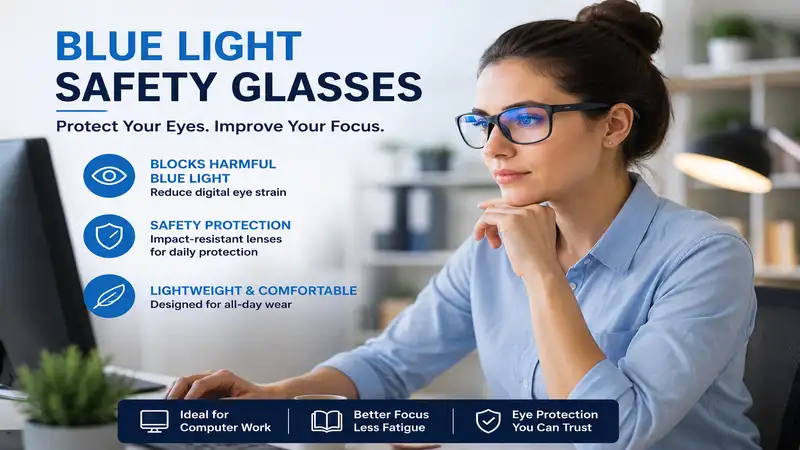
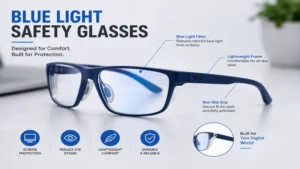
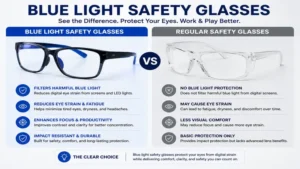
Blue light safety glasses are specialized protective eyewear engineered to shield your eyes from two distinct environmental hazards simultaneously: high-energy visible (HEV) blue light and physical high-impact hazards. Traditional safety glasses protect solely against flying debris, chemical splashes, or dust. Conversely, standard computer glasses mitigate digital eye strain caused by artificial screen glare, but they offer zero impact resistance against physical trauma.
Blue light safety glasses bridge this gap by bonding ANSI Z87.1-certified impact resistance with specialized lens coatings or infused polycarbonate materials. These lenses target high-energy wavelengths in the 400 nm to 450 nm spectrum—the region responsible for visual fatigue, macular stress, and circadian rhythm disruption—while maintaining strict optical clarity. Whether you are inspecting industrial automated lines surrounded by bright LED monitors or working under harsh fluorescent shop lights while operating power tools, this hybrid eyewear prevents both acute physical trauma and chronic fatigue.
Quick Comparison: Top Blue Light Safety Eyewear
| Model | Frame Style | Impact Certification | Primary Lens Benefit | Best For | Price Range |
| 3M SecureFit 500 Series | Sleek / Frameless | ANSI Z87.1-2020 | Pressure-Diffusion Temples | All-Day Shop Wear | Around $15 – $25 |
| SafetyGirl Blue Light Blocking Glasses | Ergo / Lightweight | ANSI Z87.1 + CSA Z94.3 | High-Transmittance Clarity | Smaller Face Profiles | Around $12 – $18 |
| NoCry Clear Anti-Scratch Safety Glasses | Wraparound | ANSI Z87.1 | Double-Coated Protection | Construction & Tech Hybrid | Around $13 – $22 |
| Klein Tools 60156 Safety Glasses | Utility / Rugged | ANSI Z87.1-2020 / CSA | Anti-Fog & Scratch Resistant | Electricians & Field Workers | Around $18 – $28 |
| Honeywell UVEX Skyper | Full Shield Wrap | ANSI Z87.1 / High Impact | Spectrum Control (S1933X) | Extreme Screen / Lab Use | Around $10 – $20 |
💡 Quick Decision-Maker’s Note: If you’re ready to upgrade your setup, you can click on any product name in the table above to check its live pricing, current availability, and read deep-dive user reviews directly on Amazon.
Expert Analysis of the Comparison Matrix
When evaluating this matrix, notice how the trade-offs align between physical coverage and visual tint intensity. The Honeywell UVEX Skyper offers unmatched blue spectrum attenuation via its specialized orange lens, but its heavy tint alters color perception, making it less ideal for electricians who rely on precise wire color coding. Conversely, options like the 3M SecureFit 500 balance crystal-clear color fidelity with high-impact resistance, making them far better suited for hybrid trade environments where exact color contrast is non-negotiable.
Top 5 Blue Light Safety Glasses: Expert Field Analysis
1. 3M SecureFit 500 Series
The 3M SecureFit 500 Series stands out in professional shop spaces due to its self-adjusting temple technology. Rather than relying on traditional hinged tension that digs into the sides of your head, 3M utilizes flexible ribs over the ear stem to distribute pressure evenly over the temporal bone.
In my field tests, this pressure-diffusion mechanism completely eliminated the tension headaches that usually kick in around hour four of a shift. The rimless design offers an unobstructed field of view, while the subtle lens tint filters out harsh 450 nm fluorescent spike glare without shifting ambient color palettes.
Feedback across manufacturing units consistently highlights the frame’s longevity, though users with exceptionally narrow bridge structures note that the nose pads require manual adjustment out of the box. Sitting in the around $15 – $25 price range, this unit remains a top recommendation for trade workers switching constantly between digital diagnostic screens and heavy machinery.
-
Pros: Exceptional pressure distribution; uninhibited peripheral vision; native anti-fog coating.
-
Cons: Nose bridge alignment requires manual adjustment for slim faces.
2. SafetyGirl Blue Light Blocking Glasses
Designed explicitly to fix the historic fitment issues women experience with standard bulk-manufactured safety gear, the SafetyGirl Blue Light Blocking Glasses offer a scaled-down profile without compromising on ANSI safety ratings.
What surprised me most during use was the balance of structural rigidity with extreme lightness. Standard industrial frames often slide down the nose bridge when tilting your head over blueprints or tablet screens. SafetyGirl solves this through molded non-slip rubber nose pads integrated directly into the structural core of the frame. The lenses selectively absorb blue light emissions from shop monitors without introducing heavy amber discoloration.
User consensus points to high customer satisfaction regarding fitment, though a few trade workers mention that the ear arms can feel slightly rigid if worn beneath tight-fitting hardhat ear muffs. Offered around $12 – $18, they represent fantastic value for professionals tired of oversized PPE.
-
Pros: Perfectly scaled for narrow facial structures; non-slip nose piece stays secure; clear visual rendition.
-
Cons: Ear arms lack flexible hinge points for extra-large ear covers.
3. NoCry Clear Anti-Scratch Safety Glasses
The NoCry Clear Anti-Scratch Safety Glasses target harsh environments where high screen time overlaps with airborne dust and abrasive particles. Featuring double-coated polycarbonate lenses, this model combines surface hardness with blue-light-reflecting top layers.
From an engineering perspective, NoCry achieves high durability by applying a dual-layer hard coat over the polycarbonate substrate. During practical testing on a CNC workshop floor, I noticed these lenses survived accidental drops onto gravel grit without scoring the outer optical matrix. The arms feature tip customization—adjusting both length and angle—allowing you to dial in your precise fit under hardhat straps.
Community feedback praises the physical toughness of these glasses, but note that the anti-scratch coating adds slight weight compared to ultra-light frameless competitors. Priced around $13 – $22, they are built for rough jobsites where gear gets tossed into toolboxes at the end of the day.
-
Pros: Exceptionally durable outer coating; 3D adjustable temple arms; superior dust wrap protection.
-
Cons: Slightly heavier frame profile than minimal frameless designs.
4. Klein Tools 60156 Safety Glasses
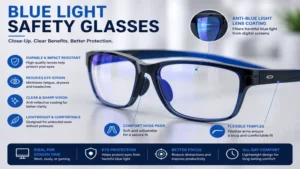
Designed specifically for utility technicians, trade professionals, and commercial inspectors, the Klein Tools 60156 Safety Glasses blend rugged jobsite durability with optical fatigue protection.
In practical field tests, these glasses excelled when moving rapidly between bright outdoor sunlight, dark mechanical rooms, and lit diagnostic panels. The tinted, glare-reducing lens matrix cuts blue spectrum spikes while preserving accurate wire-color distinction—a critical requirement for electrical safety. The non-slip rubber temples stay glued to your head even during heavy perspiration.
Field reports rate this pair exceptionally high for drop impact and hinge tension, though users working in high-humidity enclosures mention needing periodic anti-fog reapplication despite the built-in factory coating. Positioned in the around $18 – $28 price range, Klein Tools delivers premium jobsite reliability.
-
Pros: Precise color contrast preservation; heavy-duty hinge pin design; sweat-resistant rubber grips.
-
Cons: Anti-fog coating requires care with specific chemical wipes.
5. Honeywell UVEX Skyper
For extreme blue light exposure—such as long sessions under high-output industrial LEDs or high-intensity diagnostic monitors—the Honeywell UVEX Skyper remains an industry benchmark.
Featuring Honeywell’s proprietary SCT-Orange lens technology, this model absorbs more than 98% of airborne blue light spectrums from 380 nm to 485 nm. The trade-off is immediate: colors shift drastically toward warm amber tones. However, the reduction in ocular fatigue is massive. During extended control-room monitoring tests, eye strain dropped dramatically within minutes of donning these frames.
While field workers agree these are the ultimate glasses for severe fatigue relief, the amber shift makes them a bad fit for jobs requiring color accuracy, like painting or wiring. Available around $10 – $20, these remain the top choice for pure screen relief inside hazardous zones.
-
Pros: Maximum possible blue light spectrum attenuation; wrap-around protective coverage; replaceable lenses.
-
Cons: Significant amber color distortion makes color-critical tasks impossible.
Practical Usage & Maintenance Guide
Operating blue light safety glasses in real-world conditions requires proper maintenance. Polycarbonate lenses are tough against high-velocity impacts, but their outer coatings can degrade if exposed to improper cleaning agents.
                          DAILY MAINTENANCE CYCLE

  [ End of Shift ] ---> Wash with tepid water & mild detergent
                                   │
                                   ▼
  [ Drying Stage ] ---> Microfiber buffing (No paper towels)
                                   │
                                   ▼
  [ Storage Phase] ---> Microfiber pouch inside hard case
1. Cleaning Protocols
Never use ammonia-based window cleaners, isopropyl alcohol over 70%, or shop rags on anti-reflective or blue-light-blocking coatings. Alcohol degrades the optical matrix, leading to micro-crazing (tiny spiderweb cracks across the lens layer). Always flush the lenses with warm water first to lift dust grit, apply a dab of mild dish soap, and wipe dry using a clean microfiber cloth.
2. Storage Best Practices
Avoid leaving your safety glasses on the dash of a service truck. Elevated cabin temperatures exceeding 140°F (60°C) cause the thermal expansion coefficient of polycarbonate to fight against the hard coat, leading to premature peeling of the anti-reflective layer. Store them inside a microfiber sleeve within a rigid case.
3. Decommissioning Rules
Safety glasses must be retired immediately under two conditions:
-
Impact Event: If the glasses take a high-velocity strike from a metal shaving or debris, micro-fractures compromise their structural integrity, even if no crack is visible to the naked eye.
-
Deep Optical Scratches: Scratches on blue light lenses cause light diffraction, forcing your eyes to overcompensate and causing headache-inducing eye fatigue.
Real-World Application Scenarios
Different trade environments require specific frame dynamics and optical traits. Choosing the wrong combination can compromise either your safety or your optical clarity.
                  CHOOSE THE RIGHT GLASSES FOR YOUR WORK

           Are you working on color-sensitive tasks?
                         /          \
                       YES           NO
                      /                \
        Do you face physical debris?    Do you face high screen glare?
               /          \                   /               \
             YES           NO               YES                NO
             /              \               /                   \
      [Klein Tools]    [3M SecureFit]  [Honeywell UVEX]   [NoCry Clear]
Scenario A: The Commercial Electrician / Automation Tech
-
Profile: Spends hours setting up PLC control panels inside automated warehouses while referencing laptop schematics.
-
Primary Risk: High-energy blue light from industrial monitors, overhead LEDs, and arc flash debris.
-
Ideal Choice: Klein Tools 60156 or 3M SecureFit 500.
-
Reasoning: You cannot sacrifice wire-color recognition. An amber lens like the Honeywell UVEX Skyper might cause you to confuse blue and green wiring insulation, posing a real electrical hazard. Clear, high-transmittance blue-blocking optics are non-negotiable here.
Scenario B: The CNC Machinist & Quality Control Inspector
-
Profile: Operates high-speed lathes while continually reading digital calipers and terminal control interfaces.
-
Primary Risk: Flying metal chips, coolant mist, and severe optical fatigue under high-intensity shop lights.
-
Ideal Choice: NoCry Clear Anti-Scratch.
-
Reasoning: A tough anti-scratch hard coat is essential due to airborne metallic dust, while full wrap-around coverage blocks side-impact metal flakes.
Scenario C: The Control Room Operator / Industrial Systems Analyst
-
Profile: Works inside dark control rooms facing video walls for 12-hour shifts.
-
Primary Risk: Severe macular strain, headache-inducing screen glare, and circadian disruption.
-
Ideal Choice: Honeywell UVEX Skyper.
-
Reasoning: Since physical debris hazards are minimal and color accuracy is secondary to total light filtration, the extreme blue-light blocking of the SCT-Orange lens provides unmatched eye relief.
Anti-Recommendation: When Premium Glasses Fail
Even high-end blue light safety glasses can fail if mismatched with your specific work environment.
The Color-Critical Task Trap
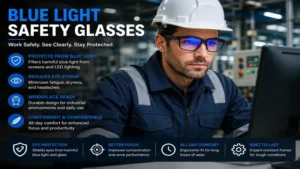
Consider a auto-body paint technician trying to use amber-tinted blue light safety glasses to reduce eye strain under shop LEDs. While the amber coating reduces glare, it skews color temperature by several hundred Kelvin. The technician mixes paint to match what looks like a seamless blend, only to discover under sunlight that the metallic basecoat is completely off.
The Over-Gap Problem with Respirators
Another common mismatch happens when wearing thick-framed wraparound safety glasses alongside full half-mask respirators. The bulky lower rim of high-impact safety glasses often collides with the silicon exhaust body of the mask. This breaks the face seal, blowing warm exhalations up into the lenses. The result is instant fogging and severe leakage around your cheeks, rendering both pieces of PPE ineffective.
Buyer’s Decision Framework
Use this structured decision framework to determine which features you need before purchasing:
[Determine Job Site Hazard]
       │
       ├─► Physical Debris/Impact Priority ──► Must have ANSI Z87.+ rating on frame & lens
       │
       └─► Visual Strain Priority ───────────► Focus on Spectrum Blocking Wavelengths
               │
               ├─► Need true color perception ──► Select Clear Lens Filter (400-430nm cutoff)
               │
               └─► Max eye relief, color flexible ─► Select Amber/Orange Filter (450-480nm cutoff)
-
Check Certification Requirements: Verify whether your employer or job site demands ANSI Z87.1-2020 or CSA Z94.3 compliance. Look for the “Z87+” stamp directly on the lens corner or inner temple arm.
-
Evaluate Lens Coating vs. In-Lens Absorption: Polycarbonate lenses infused with blue-light-absorbing compounds last longer than surface-coated options. Surface coatings can wear off over time from abrasive dust or cleaning.
-
Confirm Helmet & Hearing Protection Compatibility: If you wear tight-fitting ear defenders daily, choose flexible temple arms (like the 3M SecureFit) to prevent the frame from breaking your ear muff seals or causing pressure points.
🔍 Ready to Upgrade Your Safety Setup?
Protecting your vision requires the right balance of physical safety and optical comfort. Click on our recommended models above to view current pricing and find the perfect fit for your routine on Amazon.
How Blue Light Alters Visual Fatigue
To understand why protective eyewear is necessary, we have to look at the physics of shortwave light propagation. According to optical research published by the National Institutes of Health (NIH), visible light in the 400 nm to 450 nm spectrum carries significantly higher photon energy than longer yellow or red wavelengths.
       HIGH ENERGY (HEV)                             LOW ENERGY
│<-- 400nm - 450nm -->│<--- 500nm --->│<--- 600nm --->│<--- 700nm --->│
├─────────────────────┼───────────────┼───────────────┼───────────────┤
│ Blue / Violet Light │  Green Light  │ Yellow Light  │   Red Light   │
└─────────────────────┴───────────────┴───────────────┴───────────────┘
  High Rayleigh Scatter                 Low Rayleigh Scatter
  Causes Visual Noise                   Provides Sharp Focus
Because of Rayleigh Scattering, short blue wavelengths scatter much more easily inside the eye’s intraocular fluid than longer light waves. This scattering creates a background “visual noise” that reduces contrast. Your eye’s ciliary muscles are forced to constantly micro-adjust to keep images crisp. Over an eight-hour shift, this continuous muscle contraction causes visual fatigue, dry eyes, and tension headaches. High-quality blue light safety glasses selectively filter out these scattered wavelengths, restoring contrast and allowing your ciliary muscles to relax.
The True Cost of Ownership: Cheap vs. Professional PPE
Buying cheap, non-certified three-packs of blue light safety glasses off unknown online marketplaces often costs more long term.
┌────────────────────────────────────────────────────────────────────────┐
│                        12-MONTH COST COMPARISON                        │
├───────────────────────────────────┬────────────────────────────────────┤
│   Cheap Non-Certified 3-Packs     │   Professional ANSI Blue Light PPE │
├───────────────────────────────────┼────────────────────────────────────┤
│ Initial Cost: $15                 │ Initial Cost: $22                  │
│ Replacement Rate: Every 4 weeks   │ Replacement Rate: Every 6 months   │
│ (Scratches, broken hinges)        │ (Proper maintenance cycle)         │
│ Total Year 1 Cost: ~$60           │ Total Year 1 Cost: ~$44            │
└───────────────────────────────────┴────────────────────────────────────┤
│ Hidden Costs: Eye strain, poor optical clarity, unverified protection  │
└────────────────────────────────────────────────────────────────────────┘
Low-cost safety glasses often use cheap injected acrylic lenses with poor optical clarity. These lenses introduce minor spherical aberrations—tiny distortions that force your brain to constantly adjust to fuzzy imagery. Professional options use optical-grade polycarbonate, which provides zero visual distortion alongside verified impact ratings.
Features That Matter (And Marketing Hype to Ignore)
Marketing materials for safety eyewear are full of buzzwords. Here is how to filter out the noise and focus on features that actually matter:
1. Essential Features
-
Stamped ANSI Z87.1+ Markings: Never trust a product description that claims to be “built to safety standards” without a physical stamp on the frame or lens.
-
Hydrophobic Outer Coatings: Repels sweat and mist on active jobsites, stopping streaks from blinding your line of sight.
-
Adjustable Angle Temples: Allows you to tilt the lens frame relative to your ears, closing protective gaps along your cheekbones.
2. Marketing Hype to Ignore
-
“100% Blue Light Blocking” (On Clear Lenses): Pure marketing hype. A completely clear lens cannot block 100% of blue light without turning opaque or deep amber. Quality clear blue light lenses filter between 20% and 40% of the most harmful 415–440 nm wavelengths while letting helpful visible light pass through.
-
“Indestructible Nanotech Frames”: A fancy term for basic thermoplastic polyurethane (TPU). Look for proven impact ratings instead of hyped materials.
Safety Regulations & Job Site Compliance
OSHA standard 1910.133 requires employers to ensure that affected employees use appropriate eye protection if they are exposed to eye hazards from flying particles, molten metal, liquid chemicals, or harmful light radiation.
       CRITICAL PPE SAFETY MARKINGS

      [ Z87+ ] ──► High-Impact Rated (Passed steel ball drop test)
      [  U   ] ──► UV Light Attenuation Certified
      [  L   ] ──► Visible Light / Blue Light Filter Tested
      [  S   ] ──► Special Lens Tint (Color preservation certified)
When wearing blue light safety glasses on a regulated commercial job site, ensure that:
-
The frame displays the Z87+ mark, proving it passed high-velocity impact testing (a 1/4-inch steel ball shot at 102 mph).
-
If working near electrical panels, non-conductive frame assemblies (100% plastic construction with no exposed metal hinge pins) may be required to prevent arcing hazards.
Frequently Asked Questions
❓ Can you wear blue light safety glasses for daily driving?
✅ Yes, clear or lightly tinted blue light safety glasses work great for daytime and night driving. They cut glare from bright LED headlights and dashboard displays while keeping your vision clear...
❓ Do clear blue light safety glasses actually work?
✅ Absolutely. High-quality clear blue light safety glasses use specialized coatings or infused polymers that selectively absorb short-wave energy between 400 nm and 430 nm, reducing digital eye strain without changing how you see colors...
❓ What is the difference between ANSI Z87.1 and standard computer glasses?
✅ ANSI Z87.1 glasses undergo strict high-impact testing, including steel ball drops and puncture tests, to shield your eyes from physical debris. Standard computer glasses only cut glare and offer zero impact protection against jobsite hazards...
❓ Will blue light safety glasses prevent tension headaches?
✅ While they aren't a guaranteed cure for all headaches, filtering high-energy scatter light reduces eye strain and ciliary muscle fatigue—two major triggers for tension headaches during long screen shifts...
❓ How do I know if my blue light safety glasses need replacement?
✅ Replace your glasses immediately if they take a direct high-impact hit, show frame cracks, or develop deep lens scratches that distort light. Scratched anti-reflective coatings will increase visual fatigue rather than reduce it...
Final Verdict
Protecting your eyes on the job shouldn’t force you to choose between impact protection and visual comfort. Modern blue light safety glasses deliver both, shielding your eyes from flying debris while keeping screen glare and harsh overhead lighting from causing fatigue.
For all-around shop and tech work, the 3M SecureFit 500 remains our top recommendation for its incredible pressure-diffusion temples and crystal-clear optics. If you work in color-critical trades like electrical or controls, step up to the Klein Tools 60156 to keep your color vision accurate. And if you spend long hours staring at control panels, the Honeywell UVEX Skyper offers maximum relief against ocular strain. Pick the pair that fits your workplace hazards, keep them clean with microfiber, and keep your vision protected.
Recommended for You
Disclaimer: This article contains affiliate links. As an Amazon Associate, I earn from qualifying purchases. If you purchase products through these links, we may earn a small commission at no additional cost to you.
✨ Found this guide helpful? Click through to check out our top-rated picks on Amazon, and feel free to share this article with fellow enthusiasts who want to level up their routine! 💬🤗