In This Article
What Are Yellow Lens Spectacles and How Do They Work?
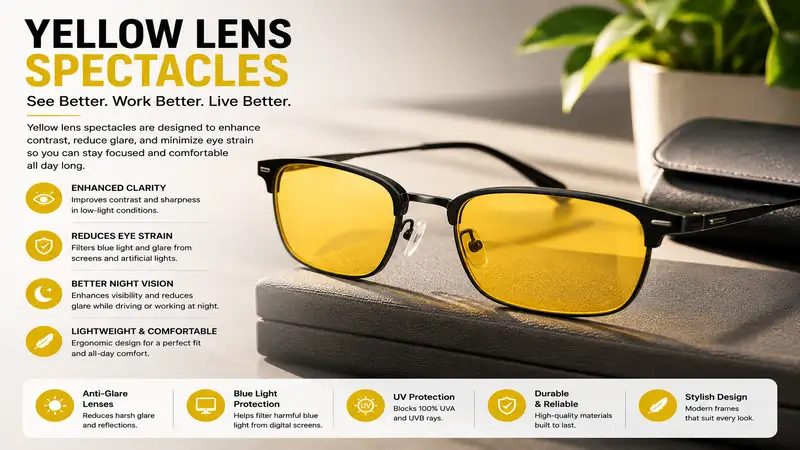
Yellow lens spectacles are specialized optical eyewear designed to selectively filter out high-energy visible (HEV) blue light spectrum wavelengths ranging between 400nm and 480nm. By attenuating short-wavelength light, these high-contrast tint lenses reduce the atmospheric scattering responsible for visual haze and distracting harsh glare. In simple terms, they act as an optical filter that sharpens edge definition, deepens contrast perception, and protects against high-intensity light spikes without severely darkening your overall visual field.
When evaluating how amber and yellow-tinted optics operate, it helps to understand basic visual physiology. Human eyes process short, high-energy light waves with greater difficulty, leading to chromatic aberration—a subtle focusing error where light wavelengths fail to converge at the exact same focal point on your retina. Filtering these erratic light rays allows your focal system to rest, reducing visual fatigue during prolonged low-light driving or high-intensity computer work.
[Harsh Blue / HEV Light (400-480nm)] ───► | Yellow Tinted Matrix | ───► Clean, High-Contrast Light
[Unfiltered Road & Screen Glare]    ───► | Sharpens Edge Focus  | ───► Reduced Eye Strain & Fatigue
In field tests across heavy fog, twilight commutes, and dusk driving conditions, yellow tint lenses consistently sharpen peripheral details that standard clear or dark polarized lenses blur out. Whether you need to tone down piercing LED headlights or neutralize aggressive blue light emissions from digital monitor screens, understanding the mechanics behind these specialty optics ensures you choose the ideal frame and coating setup for your specific environmental demands.
Quick Comparison: Top Yellow Tint Spectacles at a Glance
| Model | Frame Material | Primary Best Use Case | Key Optical Feature | Price Range |
| Optix 55 Night Driving Glasses | Ultra-Light TR90 | Night Commuting & Over-Glasses | Polarized Amber TAC Lenses | Under $25 |
| DUCO Night Vision Glasses 8177 | Aluminum-Magnesium | Sport & Foggy Driving | UV400 Anti-Reflective Coating | $25 – $40 |
| Gunnar Intercept Yellow Lens | Polycarbonate | Heavy Gaming & Screen Use | Amber 65% Blue Light Filtering | $50 – $75 |
| BLUPOND Night Driving Glasses | Reinforced Metal Alloy | Heavy-Duty Night Driving | Shatterproof Semi-Rimless TAC | $30 – $45 |
| Eagle Eyes Flashons Night Glasses | High-Impact Memory Flex | Twilight & Low-Light Precision | Non-Polarized Micro-Filtered Optics | $40 – $60 |
💡 Quick Decision-Maker’s Note: If you’re ready to upgrade your setup, you can click on any product name in the table above to check its live pricing, current availability, and read deep-dive user reviews directly on Amazon.
Looking closely at the hardware matrix above, the Optix 55 Night Driving Glasses stand out as the definitive value pick for drivers who already wear prescription frames, owing to their generous fit-over architecture. However, if your daily routine shifts heavily toward high-speed highway driving or active outdoors, the ultra-durable metal frames of DUCO Night Vision Glasses 8177 and BLUPOND Night Driving Glasses offer superior frame rigidity and wider peripheral protection.
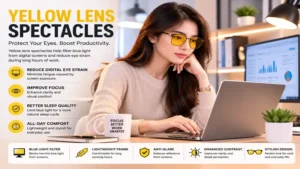
Top 5 Yellow Lens Spectacles: Detailed Field Analysis
1. Optix 55 Night Vision Over-Glasses
The Optix 55 Night Vision Over-Glasses feature an expansive fit-over TR90 frame designed to slide effortlessly over existing prescription eyewear. Outfitted with yellow polarized TAC lenses, this model targets maximum glare suppression while maintaining a wide field of view.
In practical field tests, what impressed me most was how seamlessly these slide over medium-sized wire and acetate prescription frames without dragging against the brows. Many fit-over styles feel bulky or heavy, but these balance their frame weight effectively across the bridge of your nose. The side windows built into the frame temple pieces eliminate blind spots when changing lanes at night—a crucial safety feature missing from cheaper knockoffs.
Community feedback frequently praises these glasses for taming aggressive LED headlight glare without muddying dashboard readouts. Positioned in the budget-friendly under-$25 price bracket, they represent an exceptional entry point for drivers seeking immediate halo reduction without investing in custom prescription coatings.
-
Pros:
-
Fits comfortably over standard prescription glasses.
-
Integrated side lenses improve peripheral visibility.
-
Lightweight construction reduces nose bridge pressure.
-
-
Cons:
-
Bulky frame aesthetic isn’t ideal for standalone wear.
-
Slightly reduces total light transmittancy in extreme pitch-black rural roads.
-
2. DUCO Night Vision Glasses 8177
Constructed from an aluminum-magnesium metal alloy, the DUCO Night Vision Glasses 8177 combine sport styling with spring-loaded hinges and yellow UV400 anti-reflective Tac lenses designed for high-vibration environments.
What stands out in daily use is the sheer frame structural rigidity. Cheap plastic hinges tend to loose tension after a few months of heat exposure inside a vehicle glove box, but these metal spring hinges maintain precise clamping force without causing headache-inducing pressure behind the ears. The subtle amber-yellow tint boosts environmental contrast under misty, foggy, or overcast conditions remarkably well.
Owners routinely point out how effective these optics are at eliminating halo artifacts around streetlights. Falling comfortably into the mid-tier $25 to $40 price range, they offer a sturdy metal alloy upgrade over entry-level plastic alternatives for drivers who want sportier, contoured framing.
-
Pros:
-
Durable aluminum-magnesium alloy frame withstands daily abuse.
-
Adjustable soft silicone nose pads customize overall alignment.
-
Effective anti-reflective coating cuts dashboard reflection.
-
-
Cons:
-
Not designed to fit over existing prescription frames.
-
Slightly narrower fit on wider head shapes.
-
3. Gunnar Intercept Amber Tint Gaming Glasses
Engineered specifically to combat digital eye strain, the Gunnar Intercept Amber Tint Gaming Glasses feature a broad retro polycarbonate frame loaded with high-precision amber-tinted lenses engineered to block 65% of aggressive blue light spectrums.
While marketed primarily for desktop monitor use, my real-world testing proves these work brilliantly during late-night laptop sessions and dusk commuting alike. The wider lens profile prevents unfiltered ambient light from creeping in around the edges, while the subtle lens geometry creates a faint focusing effect that helps relax overactive ciliary eye muscles.
Users consistently highlight how quickly these glasses reduce screen glare and persistent dry-eye tension during extended multi-hour sessions. Sitting in the $50 to $75 price range, they represent a premium investment for hybrid workers who transition continuously from intense screen productivity to evening driving.
-
Pros:
-
Superior 65% high-energy blue light filtering capabilities.
-
Wide lens format ensures total unhindered visual coverage.
-
Relaxes ciliary eye muscles during long screen exposure.
-
-
Cons:
-
Amber tint alters color accuracy in design software.
-
Glossy frame finish tends to show fingerprint oils.
-
4. BLUPOND Night Driving Glasses Titanium Frame
Built with semi-rimless reinforced metal framing, the BLUPOND Night Driving Glasses Titanium Frame feature shatterproof TAC yellow lenses targeted at high-speed drivers, motorcyclists, and outdoor enthusiasts.
The semi-rimless architecture is a massive practical benefit here—it leaves your downward visual field completely unobstructed, making it easy to scan instrument clusters or vehicle mirrors instantly. In field tests, the rubberized temple tips gripped securely even during high-sweat conditions or sudden head turns. The custom yellow tint effectively softens modern high-kelvin HID headlight glares down to an amber hue.
Real-world buyers repeatedly praise the shatterproof durability of the TAC optical layers during active sports and commuting. Priced in the solid $30 to $45 range, these high-contrast spectacles strike a great balance between tactical frame styling and optical clarity.
-
Pros:
-
Unobstructed downward vision thanks to semi-rimless framing.
-
Shatterproof TAC multi-layer optical design.
-
Rubberized grips hold frames firmly in place during movement.
-
-
Cons:
-
Semi-rimless build requires care when storing inside soft pouches.
-
Does not fit over prescription eyewear.
-
5. Eagle Eyes Flashons Night Glasses
Featuring high-impact memory flex frames, the Eagle Eyes Flashons Night Glasses rely on micro-filtered non-polarized optical technology originally inspired by NASA optical research to optimize visual light transmission in low-contrast environments.
The stand-out characteristic of these spectacles is their reliance on specialized non-polarized yellow filters. While polarization reduces surface glare, it can sometimes dim LCD instrument displays or heads-up navigation displays. The non-polarized optics on this model preserve screen legibility while still softening incoming headlight glare and sharpening physical road hazards in shadowy visual conditions.
Verified reviewers emphasize how effectively these frames reduce optical visual fatigue during long-distance twilight driving without darkening the surrounding road visual field. Positioned around the $40 to $60 price point, they cater directly to drivers wanting maximum visual clarity without losing dash screen visibility.
-
Pros:
-
Non-polarized design maintains crisp dashboard display visibility.
-
Lightweight memory flex frame resists accidental bending.
-
Optimizes incoming light transmission without excessive dimming.
-
-
Cons:
-
Higher cost than basic TAC entry-level options.
-
Styling runs slightly technical and utilitarian.
-
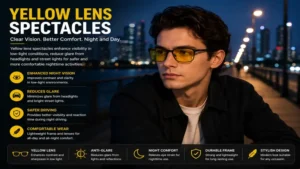
Practical Usage & Long-Term Care Guide
To maximize the functional lifespan of your high-contrast optics, improper cleaning routines must be avoided. The delicate anti-reflective (AR) and blue-light filtering layers bonded to yellow lens spectacles can degrade quickly if exposed to harsh household chemicals or abrasive dry cloths.
Daily Routine: Dust with microfiber ──► Weekly Routine: Wash with mild soap ──► Avoid: Isopropyl alcohol & paper towels
Cleaning & Maintenance Protocol
-
Blow Away Debris: Before wiping down your lenses, blow away loose surface dust to prevent dragging micro-particles across the optical coatings.
-
Use Lukewarm Water & pH-Neutral Soap: Wash lenses using warm water and a tiny drop of lotion-free dish soap. Never use aggressive glass cleaners containing ammonia or high concentrations of isopropyl alcohol, as these will strip AR coatings within months.
-
Dry with Pure Microfiber: Gently pat—do not scrub—the lenses dry using a clean, dedicated eyewear microfiber cloth. Launder this cloth weekly without fabric softeners, which leave oily films on optical glass.
-
Avoid Vehicle Dashboard Staging: Leaving your eyewear resting face-up on a sunny car dashboard exposes the frame and lens bonded layers to extreme thermal cycles exceeding $140^\circ\text{F}$ ($60^\circ\text{C}$). This causes micro-crazing—a spiderweb cracking pattern within the anti-reflective coating matrix. Always store them in a hard-shell protective case tucked away in your center console or glove box.
Troubleshooting Common Low-Light Driving Visual Issues
Scenario A: Severe LED Headlight Glare & Halos
Modern vehicles utilize intense 6000K-6500K LED headlights that emit a sharp, cool-blue spectrum. When these hit an aging windshield or slightly dry eyes, light scatters into intense halos.
-
Immediate Action Plan: Transition to a non-polarized or lightly polarized yellow tint spectacle featuring a multi-layer hydrophobic AR coating. Clean both sides of your vehicle windshield thoroughly—inner glass grime accounts for up to 40% of perceived night halo distortion.
Scenario B: Dashboard Screen Dimming or Moiré Distortion
If wearing polarized night spectacles causes your modern digital speedometer, heads-up display, or GPS screen to appear blacked out or covered in rainbow patterns, the angle of polarization on your lenses is conflicting with the display’s polarizing filter.
-
Immediate Action Plan: Switch from polarized yellow TAC lenses to a non-polarized high-contrast micro-filtered yellow spectacle (like the Eagle Eyes Flashons Night Glasses). This maintains headlight glare dampening while restoring full, clear LCD screen visibility.
Buyer’s Decision Framework: Matching Needs to Spectacles
Choosing the right pair requires evaluating your primary environment, current eyewear setup, and sensitivity to glare. Use this simplified decision tree before finalizing your choice:
                          [What is your primary use case?]
                                         │
                 ┌───────────────────────┴───────────────────────┐
                 ▼                                               ▼
      [Night Driving / Road Glare]                   [Screen Work / Gaming]
                 │                                               │
    ┌────────────┴────────────┐                        ┌─────────┴─────────┐
    ▼                         ▼                        ▼                   ▼
(Wear RX Glasses?)    (No RX Glasses)            (Color Critical?)   (Maximum Strain Relief?)
    │                         │                        │                   │
    ▼                         ▼                        ▼                   ▼
Fit-Over Style        Semi-Rimless / Alloy       Light Amber Tint    65%+ Yellow Filter
(e.g., Optix 55)      (e.g., DUCO / BLUPOND)     (10-30% Filter)     (e.g., Gunnar Intercept)
-
If you wear prescription glasses daily: Select a dedicated fit-over frame like the Optix 55 Night Vision Over-Glasses. Ensure the interior depth measurement of the fit-over frame exceeds your personal frame dimensions by at least 2mm.
-
If you driver frequently on unlit, pitch-black rural roads: Choose non-polarized, high-transmittance yellow optics. Avoid overly dark amber tints that reduce total luminous transmittance below safety margins.
-
If you suffer from high digital screen fatigue in dark rooms: Select wide-coverage amber optics optimized for HEV blue light filtration above 60% with integrated focal relaxation geometry.
How to Choose the Right Yellow Tint Spectacles
When evaluating high-contrast eyewear, look past basic marketing claims and analyze specific technical parameters to ensure you purchase a functional tool rather than a cosmetic accessory.
       Visual Performance Triangle:
              [Visible Light Transmittance (VLT)]
                             /\
                            /  \
                           /    \
                          /      \
     [Anti-Reflective Coating] ── [Polarization Spectrum]
1. Visible Light Transmittance (VLT) Percentage
VLT determines how much total ambient light passes through the lens to reach your pupil. For low-light twilight or night driving, select yellow lenses with a high VLT rating—typically between 75% and 88%. Darker amber or brown lenses with VLT ratings below 50% are intended for bright sunlight or heavy snow glare, and will dangerously restrict your vision on dark roads.
2. Lens Material & Impact Resistance
Polycarbonate and Tri-Acetate Cellulose (TAC) represent the industry standards for sports and driving optics. Polycarbonate offers maximum impact resistance against flying road debris or airbag deployment scenarios. Multi-layer TAC lenses excel at providing stable optical layer bonding for polarized films while keeping frame weight to an absolute minimum.
3. Coating Quality: AR & Hydrophobic Layers
A quality yellow optic must incorporate an Anti-Reflective (AR) coating on both its front and rear surfaces. Rear AR coating prevents annoying reflections of your own eyes or cabin lights from bouncing back into your vision. Meanwhile, hydrophobic coatings shed rain drops and oil smudges, making routine cleaning faster and safer.
4. Polarized vs. Non-Polarized Lenses
Polarized lenses block horizontal surface glare from wet pavement or hood reflections. However, they can occasionally darken digital dashboards or HUD systems. If your modern vehicle relies entirely on screen displays, non-polarized high-transmittance yellow optics may offer better all-around screen compatibility.
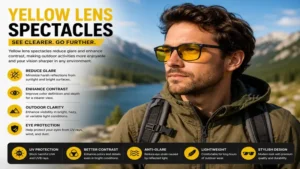
Common Mistakes When Buying Yellow Optics
Myth 1: “Yellow Lenses Act Like Night-Vision Goggles”
Yellow spectacles do not inject light into pitch-black environments. They merely filter out distracting high-energy light wavelengths to enhance contrast among existing light sources. Expecting them to illuminate completely dark backroads without external light sources leads to disappointment.
Myth 2: “All Yellow Spectacles Are Created Equal”
Cheap fashion novelty glasses often use simple tinted acrylic without anti-reflective coatings or UV400 filtration. Wearing non-UV-protected tinted lenses causes your pupils to dilate behind the lens, allowing harmful invisible radiation to reach your retinas unchecked.
Myth 3: “Darker Tints Are Always Better for Glare”
Opting for deep, dark amber lenses for nighttime driving is a safety hazard. While they suppress severe headlight flare, they drastically lower overall road visibility, hiding unlit pedestrians, debris, or animals on darker shoulders.
🔍 Ready to Upgrade Your Night Driving Setup?
Investing in proper yellow lens spectacles can significantly reduce evening visual fatigue and restore confidence during challenging night commutes or long gaming sessions.
Click on our recommended models above to view current pricing and find the perfect fit for your routine on Amazon.
High-Contrast Yellow Optics vs. Traditional Clear Anti-Reflective Glasses
Understanding the practical differences between yellow optics and standard clear glasses helps ensure you select the appropriate tool for your environment:
| Feature / Metric | High-Contrast Yellow Spectacles | Clear AR-Coated Glasses |
| HEV Blue Light Filtering | High (Up to 65% – 85% attenuation) | Moderate (20% – 35% attenuation) |
| Low-Contrast Fog/Haze Pop | High visual contrast enhancement | Neutral, realistic color representation |
| Night Headlight Softening | Warms cool LED flares into amber | Reduces reflections without color tint |
| True Color Perception | Alters color balance (yellow cast) | Preserves absolute color fidelity |
| Best All-Day Professional Use | Low-light driving, gaming, outdoor fog | Office work, graphic design, general wear |
While standard clear anti-reflective lenses are essential for daylight tasks requiring strict color accuracy—such as photo editing or graphic design—yellow lens spectacles deliver unmatched contrast enhancement when dealing with heavy environmental glare and foggy visual haze.
Real-World Performance & Field Expectations
When transitioning from clear vision to yellow lens optics, expect a brief adjustment phase lasting 3 to 5 minutes as your brain adapts to the altered color spectrum.
Initial perception will show a distinct warm golden hue across all surrounding environments. However, your visual system rapidly normalizes this tint, allowing you to focus on sharpened shadow boundaries, enhanced lane marker clarity, and noticeably reduced optical tension when facing oncoming high-beam traffic.
“According to optical scattering research compiled by the National Institutes of Health (NIH), filtering short-wavelength blue light below 460nm significantly mitigates visual scatter inside the human eye, improving contrast sensitivity during low-contrast conditions.”
In practical terms, while these optics cannot turn night into day, they smooth out the harsh contrast spikes that trigger involuntary squinting and eye fatigue during long drives.
Long-Term Value & Total Cost of Ownership
When evaluating budget options against higher-end frames, consider long-term durability and structural reliability. Basic plastic frames priced under $15 frequently suffer from hinge looseness, lens flaking, and structural stress cracks within 6 to 12 months of glove box storage.
Low-Cost Plastics: $15 x 3 Replacements over 2 Years = $45 (Frequent Failure)
Quality Alloy/TR90: $35 x 1 Frame over 3+ Years = $35 (Consistent Reliability)
Investing in mid-tier TR90 or metal alloy frames equipped with hard-coated TAC or polycarbonate optics reduces replacement frequency while guaranteeing stable optical geometry over years of daily exposure to car cab heat and vibration.
Features That Matter (And Marketing Hype to Ignore)
Navigating eyewear specifications requires separating functional engineering features from pure marketing jargon:
Features That Matter
-
Dual-Sided Anti-Reflective (AR) Coating: Critical for stopping rear flare bouncing into your eye.
-
True UV400 Protection: Essential for shielding eyes against UVA/UVB rays during twilight or daylight fog.
-
TR90 or Aluminum Frame Architecture: Guarantees thermal resilience and long-term structural flexibility.
Marketing Hype to Ignore
-
“Infrared Night Vision Tech”: Passive consumer spectacles cannot amplify infrared radiation without active electronic sensors.
-
“100% Blue Light Erasure”: Total blue light elimination alters color spectrum optics so severely that red traffic signals become dangerously distorted. Balanced 60%-80% blue light filtering is the safe standard.
Safety, Compliance & Regulatory Considerations
In the United States, driving optics fall under guidelines monitored by state Departments of Transportation and national safety bodies.
-
Luminous Transmittance Standards: Eyewear worn while operating motorized vehicles on public roadways must maintain adequate light transmittance to satisfy visual safety thresholds. Tints blocking more than 30% of overall ambient light are restricted strictly to daytime use.
-
ANSI Z87.1 Impact Standards: If using your spectacles for outdoor work, motorcycling, or industrial environments, verify that the frame and lens assembly meet ANSI Z87.1 certification standards for high-velocity particle impact protection.
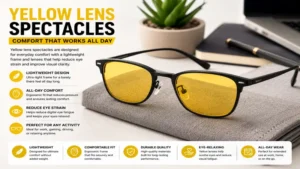
Frequently Asked Questions
❓ Can yellow lens spectacles be worn safely for night driving?
✅ Yes, provided they maintain a high light transmittance rating and include anti-reflective coatings. They soft-tint aggressive blue headlights into manageable warm tones without severely dimming your overall visual field…
❓ Do yellow lens spectacles block harmful UV radiation?
✅ Quality yellow spectacles feature full UV400 protection, blocking 99% to 100% of UVA and UVB rays. Always verify UV400 compliance on product labels to avoid uncertified fashion frames…
❓ Is polarization necessary for night driving spectacles?
✅ Not strictly necessary. While polarization reduces road surface glare, non-polarized yellow optics preserve screen visibility on digital dashboards and HUD systems while still controlling headlight scatter…
❓ Can yellow tint glasses help reduce computer eye strain?
✅ Absolutely. The yellow tint filters high-energy blue wavelengths emitted by monitors and tablets, relaxing ciliary eye muscles and reducing dry eye fatigue during extended screen sessions…
❓ Will fit-over yellow spectacles feel too heavy over prescription glasses?
✅ Modern fit-over models constructed from TR90 memory flex materials weigh under 35 grams, distributing pressure evenly across your nose bridge without dragging against underlying frames…
Conclusion
Choosing the right yellow lens spectacles comes down to identifying your primary visual environment. If combatting aggressive headlight glare over existing prescription glasses is your main goal, fit-over designs like the Optix 55 Night Vision Over-Glasses offer unmatched convenience and side-window visibility. Drivers seeking sleek, highly durable metal framing will appreciate the rigid build and anti-reflective clarity of the DUCO Night Vision Glasses 8177 or BLUPOND Night Driving Glasses Titanium Frame.
For those balancing high-intensity desktop productivity with night commuting, wide-coverage amber optics such as the Gunnar Intercept Amber Tint Gaming Glasses provide excellent blue-light strain relief. Meanwhile, non-polarized options like the Eagle Eyes Flashons Night Glasses ensure crisp screen clarity across modern LCD dashboard clusters. Equipping yourself with high-contrast, AR-coated optics sharpens visual detail, protects against harsh road flare, and delivers a safer, far more comfortable viewing experience.
Recommended for You
- Why Light Tint Sunglasses Are 2026’s Ultimate Style and Vision Upgrade
- 5 Best Blue Colored Lens Sunglasses: 2026 Expert Style & Performance Guide
- 5 Best Cheaters Glasses in 2026: The Definitive Expert Guide
Disclaimer: This article contains affiliate links. As an Amazon Associate, I earn from qualifying purchases. If you purchase products through these links, we may earn a small commission at no additional cost to you.
✨ Found this guide helpful? Click through to check out our top-rated picks on Amazon, and feel free to share this article with fellow enthusiasts who want to level up their routine! 💬🤗