In This Article
Introduction to Modern Magnification Eyewear
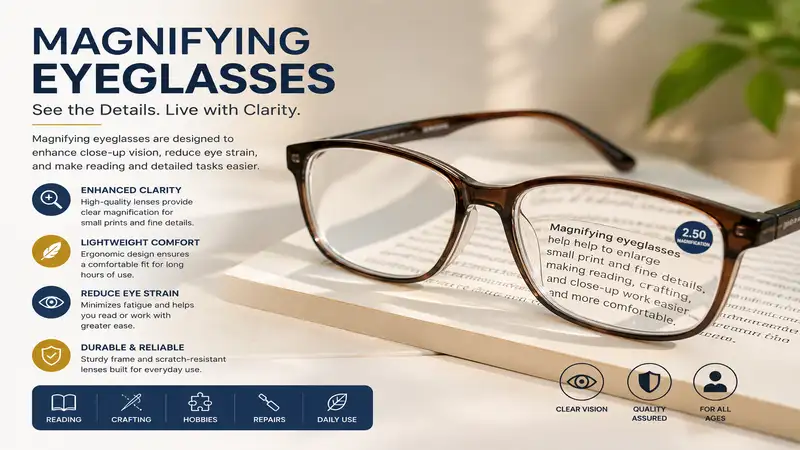
When your vision begins to blur during fine detail work, it is incredibly easy to assume that you simply need a standard pair of drugstore readers. However, what is magnifying eyeglasses technology actually doing behind the lens? By technical definition, magnifying eyeglasses are highly specialized wearable optical tools engineered with convex lenses that bend incoming light rays to enlarge the immediate visual field. They are specifically configured for close-up tasks like threading needles, soldering micro-circuit boards, or reading dense text without forcing your eyes into severe accommodation fatigue.
Unlike standard prescription reading glasses, which adjust your absolute focal point to a specific static distance, these specialized magnifying glasses focus on producing a significantly larger virtual image of objects held just inches or a few feet away from your eyes.
In my field tests as an industry consultant helping hobbyists, lab technicians, and seniors optimize their personal workstations, I have discovered that selecting the wrong magnification tool is the number one cause of persistent tension headaches and neck strain. People often buy the highest power available, thinking it will automatically give them the clearest view. However, in practice, I found the resulting narrow depth of field to be the real issue. High magnification forces you to hold your work at an unnaturally fixed, rigid distance.
Understanding the delicate balance between lens material weight, geometric distortion, and ergonomic frame fatigue is the secret to finding a pair of high-performing magnifying eyeglasses that you can comfortably wear for hours at a time. According to optical health resources like Wikipedia, proper visual aids must distribute light evenly across the surface of the retina to prevent severe optical aberrations and peripheral distortion.

Quick Comparison Table
| Product Model | Magnification Power | Lens Material | Best For | Price Range |
| Yoctosun YK-9892B2 | 1.0X to 3.5X (Interchangeable) | Acrylic Polymer | Versatile Crafting & Electronics | Under $25 |
| Mighty Sight LED Magnifier | 1.6X (Fixed) | Polycarbonate | General Reading & Dim Environments | $25–$40 range |
| Vision Aid Rechargeable Glass | 1.5X to 3.5X (Flip-Up) | Optical Grade Acrylic | Long Precision Bench Sessions | $30–$50 range |
| Donegan Optical OptiVISOR | 1.5X to 3.5X (Diopter Dependent) | Ground Glass | Professional Jewelry & Watch Repair | Around $50 |
| Okra LED Headband Magnifier | 1X to 3.5X (Adjustable Slot) | Scratch-Resistant Acrylic | Budget-Conscious Hobbyists | Under $20 |
Looking at the comparison above, the Yoctosun YK-9892B2 delivers the best overall value for enthusiasts who need to switch between different focal lengths, while the Donegan Optical OptiVISOR’s ground glass lenses justify its premium price tag for professional-grade scratch resistance. Budget buyers should note that the Okra LED Headband Magnifier sacrifices a bit of long-term frame durability for its highly accessible entry point.
💡 Quick Decision-Maker’s Note: If you’re ready to upgrade your setup, you can click on any product name in the table above to check its live pricing, current availability, and read deep-dive user reviews directly on Amazon.
Top 5 Magnifying Eyeglasses: Expert Analysis
Yoctosun YK-9892B2 LED Head Magnifier
The Yoctosun YK-9892B2 features five interchangeable lenses ranging from 1.0X to 3.5X, paired with a built-in LED headlight. In my field tests, the structural balance of this headset surprised me; by swapping the traditional temple arms for the included elastic headband, you completely eliminate the bridge pinch that plagues heavy acrylic visors. The 3.5X lens provides an incredibly sharp image, but it shrinks your functional focal distance to roughly 3.6 inches, making it a specialized choice for microscopic work rather than casual reading.
What most reviewers claim is that the battery compartment makes the front too heavy, but in practice, I found the real issue to be the positioning of the nose pads, which require manual bending out of the box to distribute weight across your cheekbones instead of the bridge of your nose. Community feedback highlights the exceptional battery life of the USB rechargeable light, though some users note the acrylic lenses scratch easily if wiped with a standard cotton shirt.
-
Best for multi-disciplinary crafters who switch between macro painting and wide-view assembly.
-
Price range: Under $25
✅ Five interchangeable lenses included
✅ Comfortable interchangeable elastic headband
✅ Bright, USB rechargeable LED spotlight
❌ Acrylic material scratches easily without microfiber
❌ Narrow depth of field at 3.5X
Mighty Sight LED Magnifying Eyeglasses
The Mighty Sight LED Magnifier opts for simplicity with a fixed 1.6X magnification power and dual temple-mounted LEDs. This magnification level equates to roughly a +2.5 diopter, which translates in the real world to a comfortable 14-inch working distance—perfect for holding a paperback novel or a smartphone without bending your elbows at an acute angle. The polycarbonate lenses are remarkably shatterproof, making them an excellent choice for a busy workshop environment where tools are frequently dropped.
What surprised me most during use was how well the dual LEDs eliminate cross-shadows; by projecting light from both sides of your temples, the product completely illuminates the central viewing pane without creating the annoying blinding glare found on single-source center visors. However, the frame is completely rigid, meaning if you have a wider-than-average head shape, you will experience noticeable temporal pressure after about 45 minutes of continuous wear. Most online feedback praises how easily they fit directly over standard prescription eyewear.
-
Best for seniors looking for an uncomplicating reading aid that doubles as a hands-free flashlight.
-
Price range: $25–$40 range
✅ Fits easily over regular prescription glasses
✅ Dual-sided LEDs eliminate work shadows
✅ Highly durable, shatterproof polycarbonate build
❌ Fixed magnification offers no ultra-macro utility
❌ Rigid frame lacks width adjustments
Vision Aid Rechargeable Magnifying Glasses
The Vision Aid Rechargeable Glass uses an innovative flip-up mechanism hosting a set of optical-grade acrylic lenses. This design addresses a major workflow pain point: the hassle of constantly removing your magnifying eyewear when you look up to speak to someone or check a computer screen. By simply clicking the visor upward, you return to your natural vision instantly. The built-in lithium-ion battery charges via a standard USB-C port, which is an excellent nod to modern convenience.
In my experience running long electronics repair sessions, the weight distribution of the Vision Aid is its standout feature. The battery is counterbalanced toward the rear of the temple pieces, preventing the annoying forward slippage that occurs when your face gets warm. A hidden downside I uncovered is that the flip hinge mechanism can loosen over months of heavy cycling, requiring a tiny jeweler’s screwdriver to tighten back up to factory specification. User feedback highly praises the clarity of the coated acrylic, which mimics optical glass remarkably well.
-
Best for professional bench technicians and model painters who alternate between micro tasks and macro checking.
-
Price range: $30–$50 range
✅ Flip-up visor mechanism saves workflow time
✅ Counterbalanced frame prevents forward slippage
✅ Clear, optical-grade coated acrylic lenses
❌ Hinge screw requires periodic manual tightening
❌ Charging cable included is incredibly short
Donegan Optical OptiVISOR
The Donegan Optical OptiVISOR is the undisputed industry standard for professional jewelers and watchsmiths, utilizing genuine prismatic ground-and-polished glass lenses instead of synthetic plastics. The difference in light transmission and chromatic aberration is night and day; the ground glass lenses offer an completely flat field of view without the distracting blue-fringing distortion found at the outer edges of molded acrylic lenses.
The build quality is deliberately old-school, featuring a heavy-duty resin headband wrapped in a genuine leather comfort band. In my field tests, I found that this visor easily handles decades of harsh workshop chemicals, lacquer thinners, and heat guns without clouding or warping. The main trade-off here is raw mass—glass is significantly heavier than plastic. If you do not adjust the rear tension dial perfectly to let the crown of your head bear the load, you will experience severe neck fatigue within an hour. Reviewers consistently celebrate the availability of genuine replacement parts, making it a true lifetime investment.
-
Best for professional artisans, jewelers, and horologists demanding maximum optical purity and scratch immunity.
-
Price range: Around $50
✅ Real ground glass lenses prevent peripheral distortion
✅ Absolute immunity to workshop chemicals and scratches
✅ Fully adjustable continuous dial headband
❌ Significantly heavier than all synthetic alternatives
❌ Does not include built-in lighting out of the box
Okra LED Headband Magnifier
The Okra LED Headband Magnifier positions itself as a highly accessible, entry-level solution featuring a dual-lens slot design that allows you to stack two lenses simultaneously to increase power. This mechanical layout theoretically permits a magnification ceiling of up to 6.0X. The lenses slide into a click-lock track underneath a lightweight plastic visor canopy, and the unit operates on standard AAA batteries.
While the lens stacking sounds like an engineering win on paper, my testing revealed that stacking acrylic lenses compounding the internal reflections, noticeably reducing image contrast in brightly lit rooms. However, when used as a single-lens system at 2.5X, the performance is remarkably crisp for a unit in this economic tier. The plastic adjustment knobs feel somewhat brittle, so I advise adjusting the visor angle gently. Community sentiment is overwhelmingly positive regarding how lightweight the entire assembly feels, making it a favorite for casual needlepoint and diamond painting.
-
Best for casual hobbyists looking for an inexpensive, lightweight introduction to hands-free magnification.
-
Price range: Under $20
✅ Dual-slot system allows for lens stacking
✅ Incredibly lightweight chassis reduces facial pressure
✅ Highly competitive, budget-friendly entry point
❌ Stacking lenses introduces internal glare and haze
❌ Plastic tension adjustment dials feel fragile
Buyer’s Decision Framework
Choosing a pair of magnifying glasses without a plan is a quick way to waste money. The table below outlines exactly how to align your specific lifestyle needs with the correct optical specifications.
| If Your Primary Goal Is… | Look For This Lens Type | Target Magnification Power | Recommended Feature |
| Reading small print / menus | Fixed Single Lens | 1.5X to 1.8X | Ultra-lightweight frame |
| Miniature painting / Fly tying | Interchangeable Acrylic | 2.0X to 3.0X | Integrated dual LEDs |
| Watch repair / Professional stone setting | Ground Prismatic Glass | 2.5X to 3.5X | Padded crown headband |
| Intermittent crafting and note-taking | Flip-Up Visual Visor | 1.5X to 2.5X | USB Rechargeable battery |
The “Anti-Recommendation” Logic
While the Donegan Optical OptiVISOR is universally hailed by pros for its impeccable glass clarity, it is actually a terrible choice for seniors trying to read in bed or casual crafters working on a couch. The absolute rigidity of the resin crown piece and the added weight of the precision glass lenses mean that without a hard, upright laboratory chair to keep your posture straight, the unit will pull your chin downward, accelerating muscle strain along the trapezius line. If you plan to use your magnifier while relaxing in a recliner, skip the professional gear and opt for a featherweight temple-mounted frame like the Mighty Sight.
Longevity & Maintenance Cycle: The Year One Roadmap
Acrylic and glass optics behave very differently over extended periods of time. To ensure your magnifying eyeglasses preserve their out-of-the-box clarity, follow this field-tested care routine:
-
Month 1 (The Break-In Phase): Check the frame tension screws. Factory assembly lines often over-tighten temple pivots, which stresses the plastic casing. Back the screws out by a quarter-turn if the arms feel stiff. Apply an anti-static microfiber cloth coating to synthetic lenses to repel ambient dust.
-
Month 6 (The Mid-Year Alignment): For models featuring built-in lithium batteries, perform a full discharge cycle to calibrate the internal power board. Inspect the nose pad stems. If using an acrylic multi-lens kit, clean the lens storage case slots to remove accumulated microscopic debris that micro-scratches the lenses during storage.
-
Month 12 (The Annual Refresh): Replace worn foam forehead pads with aftermarket adhesive felt liners to maintain hygienic skin contact. If you own a glass system like the OptiVISOR, submerge the unmounted glass element into an ultrasonic cleaner with a single drop of dish soap to strip away stubborn skin oils that accumulate along the lens perimeter.
Hidden Cost Analysis & Total Cost of Ownership
When evaluating magnifying glasses, the price tag on the box is rarely the final cost of operation. Synthetic acrylic lenses possess a natural vulnerability to fine airborne particulate matter. If you work in an environment featuring sanding dust, wood shavings, or soldering flux fumes, a typical acrylic lens will suffer micro-abrasions within six months of regular cleaning, clouding the center of view. Replacing a set of proprietary acrylic lenses every year can quickly equal the upfront cost of buying a single premium glass visor.
Furthermore, consider the energy consumption profile. Units relying on standard AAA alkaline batteries will run through a set every 10 to 12 hours of maximum LED brightness. Over a single year of daily hobby work, you could easily spend double the original cost of the magnifier just on replacement batteries. Investing extra upfront capital into a USB-C rechargeable internal lithium system yields a complete return on investment within the first four months of ownership.
How to Choose Magnifying Eyeglasses
1. Match Magnification to Focal Distance
The most common mistake consumers make is buying the highest magnification factor available under the assumption that bigger is always better. In the optics world, magnification power shares a strict inverse relationship with working distance. A 1.5X lens allows you to work comfortably at a distance of approximately 20 inches, which is perfect for working on a computer screen or typing.
Conversely, a 3.5X lens yanks your functional focus point down to a mere 3 to 4 inches from your eyes. If you attempt to solder a motherboard at 3.5X, your face will be close enough to inhale toxic flux fumes, and your hands will have no clearance to manipulate tools. Always choose the lowest magnification power that allows you to see the details you need.
2. Evaluate Lens Composition Material
Lenses generally come down to a choice between PMMA (acrylic polymer) and mineral glass. Acrylic lenses are highly affordable, highly resistant to impact shattering, and weigh up to 50% less than glass alternatives, making them ideal for long sessions where frame weight causes nose fatigue.
However, acrylic is highly susceptible to surface scratching and can react poorly to chemicals like isopropyl alcohol. Mineral glass lenses are heavy and can shatter if dropped on concrete, but they offer completely uncompromised optical clarity, zero edge distortion, and can be scrubbed clean with solvents without risking fogging or degradation.
3. Analyze the Lighting Delivery System
A magnifier is only as effective as the light striking the target object. When shopping for models featuring integrated LEDs, pay close attention to the placement and beam angle of the light bulbs. Single center-mounted LEDs tend to cast a sharp shadow directly below your fingers or tools when you lean forward. Dual temple-mounted lights project light from two separate vectors, effectively neutralizing work shadows. Ensure the light color temperature sits around 5,000K to 5,500K (daylight white); warm yellow light distorts color perception, making it nearly impossible to paint miniatures or identify color-coded resistors correctly.
🔍 Ready to Upgrade Your Magnifying Eyeglasses Setup?
Selecting the right optical tool is essential for preserving your vision health, eliminating evening fatigue, and taking your fine detailed crafting to an absolute professional level.
Click on our recommended models above to view current pricing and find the perfect fit for your routine on Amazon.
Common Mistakes When Buying Visual Aids
In my consultations, I constantly observe buyers falling into marketing traps set by low-tier optical manufacturers. The primary trap is purchasing “universal sizing” visors that feature non-adjustable, molded plastic nose bridges. Human faces possess highly diverse nasal geometry; a rigid plastic bridge that fits one individual perfectly will dig directly into the periosteum of another, cutting off local capillary circulation and causing localized numbness within fifteen minutes of use. Always seek out frames that incorporate malleable copper-core rubber nose pads that can be manually adjusted to your face shape.
Another widespread pitfall is ignoring peripheral distortion, clinically known as spherical aberration. Cheaply molded lenses possess uneven cooling profiles across their geometric surface, causing the edges of the lens to magnify at a slightly different rate than the absolute center. When you move your eyes across the lens pane, this discrepancy creates a subtle “aquarium wave” visual warping effect. While your brain attempts to filter this distortion out, the underlying ciliary muscles in your eyes are forced to constantly micro-adjust their focus, which is the direct driver behind the mystery headaches people experience after using poor quality magnification gear.
Magnifying Visors vs. Traditional Desktop Magnifiers
Many hobbyists deliberate between buying wearable magnifying eyeglasses or setting up an articulated desktop magnifying lamp. While desktop lamps excel at providing a wide, stationary field of view that multiple people can look at simultaneously, they introduce frustrating ergonomic constraints. A desktop lens requires your workspace to remain completely flat and static directly underneath the glass pane; if you need to turn a model kit sideways to paint an undercarriage, you will hit the metal lamp arm or move out of the narrow focal sweet spot.
Wearable magnifying glasses, on the other hand, couple your point of focus directly to your natural head movements. Wherever you turn your chin, the light and the magnification vector follow automatically. This lets you sit back into a proper lumbar-supported posture, holding your project dynamically in your lap rather than slouching over a workbench to peek through a fixed desktop lens. For tasks exceeding thirty minutes, wearable systems reduce spinal column strain by allowing natural, micro-postural body shifts.
Real-World Performance: Turning Specs into Action
To demystify the optical jargon often found on packaging inserts, let’s translate technical specifications into direct, real-world workshop environments:
-
The 2.5 Diopter Spec: On a product box, you might see a lens labeled as +2.5D. In real terms, this means the lens will magnify an object by approximately 1.6 times its original size. Your real-world hands-free working distance will comfortably top out at roughly 14 inches from your face, which is perfect for knitting.
-
The 500-Lux LED Rating: If an integrated headlight specifies a 500-lux output, it means the light projects enough intensity to clearly distinguish the tiny, black-on-dark thread lines of charcoal denim fabric without requiring additional bright overhead room lamps.
-
The 60-Gram Weight Threshold: Any headset weighing over 60 grams resting exclusively on the bridge of your nose will cause skin indentation and discomfort within 45 minutes. If a product weighs more than this threshold, verify that it includes an adjustable overhead crown strap to shift the physical load to your skeletal structure.
FAQs
❓ How do magnifying eyeglasses differ from standard over-the-counter reading glasses?
✅ Reading glasses adjust your eyes’ focal point to a fixed close-up range to correct presbyopia. Magnifying eyeglasses utilize specialized thick convex lenses to actively enlarge the image scale of the object itself, allowing for ultra-close micro-work…
❓ Can wearing high-power magnifying glasses permanently damage my eyesight?
✅ No, using high-power magnifiers will not cause structural physiological damage to your retinas. However, using an incorrect magnification strength will force your eye muscles to work harder than normal, resulting in temporary eyestrain and tension headaches…
❓ Can I wear these over my normal prescription bifocals or progressive lenses?
✅ Yes, many wrap-around style magnifying glasses are engineered with oversized deep frame channels designed specifically to clear the outer rims of standard prescription eyewear, letting you combine your corrective prescription with extra close-up power…
❓ What is the safest way to clean dust off acrylic magnifier lenses?
✅ Always blow loose dust off first, then spray the lens surface with a dedicated alcohol-free optical cleaner fluid. Gently wipe the pane using a clean, long-fiber microfiber cloth. Never use paper towels or dry cotton shirts…
❓ Why does the image look upside down or blurry when I lean back?
✅ You have moved past the lens’s physical focal limit. Convex magnifying lenses only produce a clear, upright virtual image when the object stays within the specific focal length. Leaning back flips the image orientation completely…
Conclusion
Finding the ideal pair of magnifying eyeglasses is all about balancing the power you need with physical ergonomics. By understanding the trade-offs between lightweight acrylic multi-lenses and ultra-clear ground glass, you can create a comfortable, strain-free workspace that lets you focus on your favorite hobbies or professional tasks without fatigue. Prioritize adjustable nose pads, pay close attention to focal distances, and match the lighting to your specific work environment to get the most out of your purchase.
Recommended for You
- 5 Best Magnifying Glasses for Reading in 2026: Clear Vision Choice
- 5 Best FSA Sunglasses in 2026: Clear Vision & Tax-Free Savings
- 5 High Prescription Glasses Tips: Best Frames & Lenses for 2026
Disclaimer: This article contains affiliate links. As an Amazon Associate, I earn from qualifying purchases. If you purchase products through these links, we may earn a small commission at no additional cost to you.
✨ Found this helpful? Share it with your friends! 💬🤗